
Alfalfa and Clover
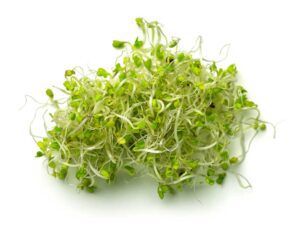
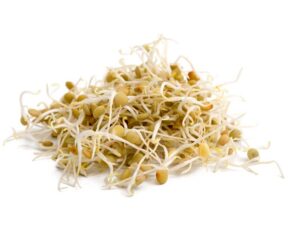
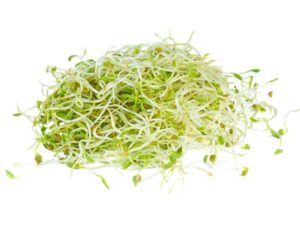
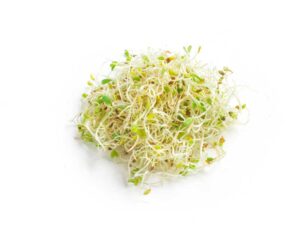
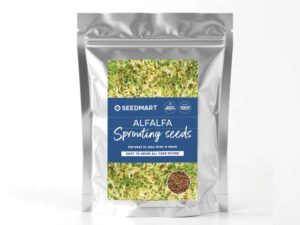
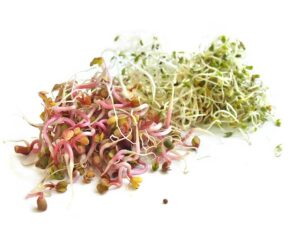
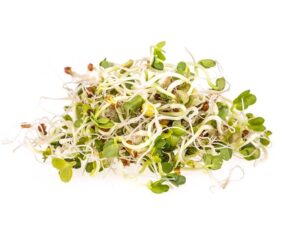
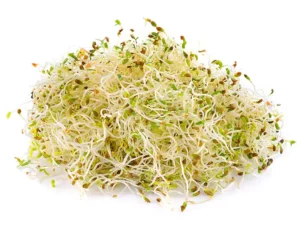
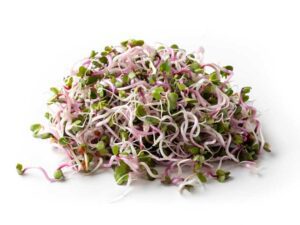
Alfalfa and clover produce fine, tender sprouts with a mild flavour. They are commonly used in sandwiches, wraps, salads and mixed sprout blends.




Sprouting seed buying guide
Sprouting seeds are grown without soil and harvested shortly after germination. The young shoot, seed and root are generally eaten together, making sprouts a quick and convenient crop that can be grown in jars, trays, bags or purpose-built sprouters.
Seedmart supplies sprouting seeds for households, cafés, restaurants, health food businesses and commercial sprout producers throughout Australia. Our range includes popular varieties such as broccoli, alfalfa, mung beans, radish, fenugreek, clover, lentils and peas, with packet and bulk quantities available across many products.
The best seeds for sprouting will depend on the flavour, texture, growing time, sprouting method and quantity you require.
Many sprouts are ready to harvest within approximately three to seven days.
Sprouts can be grown on a kitchen bench without a garden, potting mix or large growing area.
Short growing cycles make it practical to start fresh batches throughout the year.
Choose from mild, nutty, sweet, peppery, spicy, crisp and aromatic sprouts.
Add freshly harvested sprouts to salads, wraps, sandwiches, bowls and other meals.
Choose smaller packs for household sprouting or bulk seed for frequent and commercial production.
Some sprouting seeds are selected for quick and reliable germination, while others are grown for flavour, texture, appearance or suitability for particular sprouting systems.
| Growing Goal | Recommended Varieties | Why Choose Them? |
|---|---|---|
| Easy for beginners | Alfalfa, broccoli, radish and mung beans | Popular varieties with straightforward growing methods and relatively quick development. |
| Fast-growing sprouts | Lentils, radish, mung beans and fenugreek | Useful when a short crop cycle and frequent harvests are priorities. |
| Mild flavour | Alfalfa, clover and broccoli | Gentle flavours that combine easily with salads, sandwiches and mixed sprouts. |
| Crisp texture | Mung beans, peas and lentils | Larger seeds generally produce more substantial sprouts with a firm texture. |
| Peppery or spicy flavour | Radish, mustard and rocket | Add a noticeable peppery or spicy character to meals and sprout mixes. |
| Distinctive flavour | Fenugreek, onion and garlic chives | Suitable for growers seeking stronger or more aromatic sprouts. |
| Mixed sprouting | Alfalfa, clover, broccoli and radish | Varieties with compatible growing habits may be combined to create varied flavour and texture. |
| High-volume production | Mung beans, alfalfa, broccoli and radish | Widely recognised varieties suited to repeated sowing and larger seed quantities. |
Alfalfa and clover produce fine, tender sprouts with a mild flavour. They are commonly used in sandwiches, wraps, salads and mixed sprout blends.
Broccoli sprouts have a fresh brassica flavour that is generally milder than mature broccoli. They are popular for household and regular sprouting.
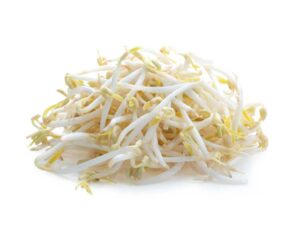
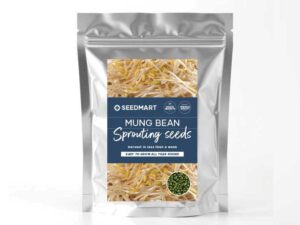
Mung beans produce thick, crunchy sprouts. They are commonly grown in specialised sprouters or containers that allow good drainage and expansion.
Radish sprouts develop a fresh peppery flavour and are useful for adding colour and noticeable heat to salads and sandwiches.
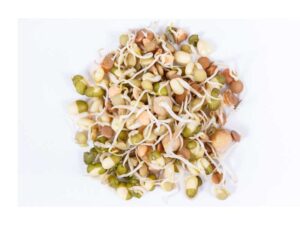
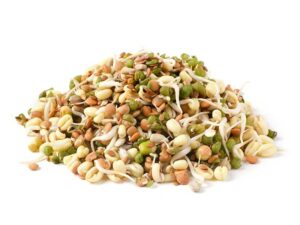
Sprouted lentils and chickpeas have a substantial texture and mild, earthy or nutty flavour.
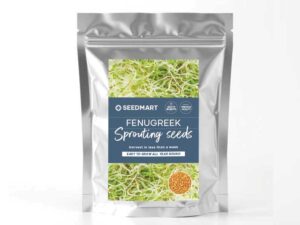
Fenugreek sprouts develop a distinctive aromatic flavour that may become stronger as the sprouts grow.
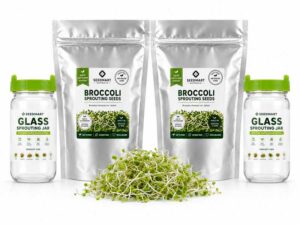
Broccoli is one of the most widely grown sprouting varieties. The small seeds are generally grown in jars or sprouters and produce fine green sprouts with a mild brassica flavour.
Alfalfa produces fine, tender sprouts suitable for salads, sandwiches and mixed sprout blends. The seeds expand considerably during germination and require good airflow and drainage.
Mung beans produce thick, crisp shoots. They require more growing space than fine seeds and are commonly grown under pressure or weight to encourage substantial stems.
Radish sprouts are fast-growing and develop a peppery flavour. Green and coloured varieties can also add visual contrast to mixed sprouts.
Fenugreek produces vigorous sprouts with a distinctive flavour. It is generally harvested young before the flavour becomes overly strong.
Clover produces fine sprouts similar in appearance and growing habit to alfalfa. Its mild flavour makes it useful in salads and sprouting blends.
Lentils germinate quickly and produce compact sprouts with a firm texture. They are generally harvested when the root has emerged and before long leafy growth develops.
Peas produce larger sprouts with a sweet, fresh flavour. They require more room than fine sprouting seeds and may also be grown for longer as pea shoots.
Sprouting time varies according to the seed variety, room temperature, soaking period, rinse frequency, airflow and preferred harvest stage. The following periods are general guides only.
| Typical Harvest Period | Examples | General Characteristics |
|---|---|---|
| 2–4 days | Lentils, chickpeas and some peas | Larger seeds that may be eaten soon after a short root has developed. |
| 3–5 days | Radish, fenugreek, mustard and mung beans | Fast-growing sprouts that establish quickly under suitable conditions. |
| 3–6 days | Broccoli and other brassicas | Fine sprouts generally harvested after the shoots have expanded and begun to colour. |
| 4–7 days | Alfalfa and clover | Fine sprouts that require thorough draining and adequate airflow as the leaves develop. |
| 5–10 days | Onion, garlic chives and some aromatic varieties | Slower-growing seeds that may require additional time and careful moisture management. |
Growing periods are approximate. Check the individual product page for variety-specific soaking, rinsing and harvest guidance.
Sprouts and microgreens can be grown from some of the same seed varieties, but they are produced and harvested differently.
| Sprouts | Microgreens |
|---|---|
| Usually grown without soil in jars, sprouters, bags or specialised equipment. | Usually grown in trays using soil, coco coir, fibre mats or another growing medium. |
| The shoot, seed and root are generally consumed together. | The stem and leaves are cut above the growing medium, leaving the seed and roots behind. |
| Usually harvested shortly after germination. | Usually harvested after the seed leaves open and the crop has developed colour and height. |
| Commonly ready within approximately three to seven days. | Commonly ready within approximately seven to 21 days. |
| Often grown largely without light until the final stage. | Require suitable light after germination to develop leaves and colour. |
| Require regular rinsing and complete drainage. | Require a growing medium or mat and careful irrigation. |
Looking for seeds to grow in trays? Browse our microgreen seeds range for varieties intended to be grown in a medium and harvested above the roots.
Seeds intended for edible sprout production should be selected carefully. Not every packet of garden seed is suitable for growing sprouts that will be eaten shortly after germination.
Use seed that has not been treated with fungicides, insecticides or other chemicals that make it unsuitable for edible sprout production.
Good germination is important because sprouting uses a high density of seed and the entire crop develops within a short period.
Clean seed with minimal foreign material is easier to rinse, inspect and manage during the sprouting process.
Choose a species and variety commonly used for edible sprouts. Some garden plants should not be consumed at the sprout stage.
Do not assume that every vegetable seed is suitable for sprouting. Check the product description and treatment status before growing any seed for consumption as sprouts.
Smaller quantities are suitable for households trialling new varieties, producing occasional jars or growing several types of sprouts in rotation.
Bulk sprouting seed is generally more economical for businesses and households producing sprouts regularly.
Compare value using the cost per kilogram as well as the pack price. Seed size, soaking requirements and batch sowing rates vary significantly between fine seeds such as broccoli and larger seeds such as mung beans and peas.
A glass jar fitted with a mesh lid is suitable for many fine and medium-sized seeds. The jar should allow easy rinsing, complete drainage and adequate airflow.
Stackable tray sprouters allow several varieties to be grown at once. They are useful for growers who want separate batches on a regular schedule.
Sprouting bags provide drainage and airflow and may be useful for larger seeds. They should be cleaned and dried thoroughly between batches.
Mung beans benefit from a container that provides sufficient space, drainage and, where appropriate, gentle pressure to encourage thick shoots.
Soaking and growing times vary substantially between varieties. Follow the instructions provided on the individual product page rather than applying one method to every type of sprouting seed.
Sprouts are grown in warm and moist conditions, so clean equipment, good-quality seed and careful handling are important throughout the production process.
Wash and sanitise jars, lids, trays, bags and utensils before each batch. Allow equipment to dry properly between uses.
Use clean drinking-quality water for soaking and rinsing. Replace rinse water rather than allowing sprouts to remain in used water.
Standing water and poor drainage can create stagnant conditions. After every rinse, position the sprouter so excess water can drain away.
Avoid overcrowding the sprouting container. Good airflow helps the batch drain and reduces persistent surface moisture.
Check sprouts regularly. Discard a batch if it develops slime, an unpleasant odour, unusual discolouration or other signs of spoilage.
After harvesting and draining, transfer sprouts to a clean container and refrigerate promptly.
Raw sprouts may not be suitable for everyone. People who are pregnant, elderly, very young or immunocompromised should seek appropriate food-safety guidance before consuming raw sprouts.
Commercial sprout production involves more than choosing the lowest-priced seed. Germination, usable yield, labour, cleaning procedures, batch consistency, growing time and food-safety controls all affect the actual cost and reliability of production.
Consistent germination helps produce an even batch and reduces the proportion of ungerminated seed remaining at harvest.
A lower kilogram price does not necessarily produce a lower batch cost if the seed has inconsistent germination or requires additional sorting and handling.
Consider the final quantity of saleable sprouts produced from each kilogram of seed rather than comparing seed price alone.
Rinsing, draining, cleaning, harvesting and packing requirements should be included when calculating production costs.
Commercial growers may need to maintain records covering seed lots, sowing dates, cleaning procedures, harvest dates and distribution.
Regular producers should consider seasonal availability, minimum order quantities and suitable substitute varieties when planning production.
Food businesses are responsible for meeting applicable food-safety and regulatory requirements. Commercial growers should establish suitable hygiene, traceability, testing and batch-management procedures for their operation.
Alfalfa, broccoli, radish and mung beans are popular starting points. Alfalfa, broccoli and radish can be grown in jars or tray sprouters, while mung beans require more room as they expand.
Many varieties are ready within approximately three to seven days. Lentils may be harvested earlier, while alfalfa, clover and slower aromatic varieties may require additional time.
No. Sprouts are usually grown without soil in jars, trays, bags or specialised sprouters. The seed is soaked, rinsed regularly and kept moist while excess water is allowed to drain.
Some vegetable seeds can be grown as sprouts, but only when the species is suitable for consumption at the sprout stage and the seed has not received an unsuitable chemical treatment. Always check the product information before use.
Many sprouts are rinsed approximately two or more times daily, but the correct frequency depends on the variety, temperature, humidity and sprouting equipment. The sprouts should remain moist while being allowed to drain completely.
Most sprouting seeds benefit from soaking before germination. Fine seeds generally require shorter soaking periods, while large beans, peas and chickpeas may require a longer soak. Follow the directions for the individual variety.
Slime may result from excessive seed density, poor drainage, stagnant water, inadequate airflow, excessive warmth or deterioration of the batch. Discard sprouts that have become slimy or developed an unpleasant odour, then clean the equipment thoroughly before restarting.
Poor germination may be caused by unsuitable seed, old or damaged seed, incorrect soaking, extreme temperatures or insufficient moisture. Check the germination information and conduct a small trial before using a large quantity.
Most sprouts do not require strong sunlight. They are often grown in low light during early development and placed in indirect light near harvest if green leaves or additional colour are wanted.
Sprouts are grown without soil and are generally eaten with the seed and root attached. Microgreens are grown for longer in a medium and are cut above the roots after the seed leaves have opened.
The correct amount depends on the seed size and jar capacity. Fine seeds such as broccoli and alfalfa require less space initially but expand substantially, while mung beans, peas and chickpeas require considerably more room. Avoid filling the jar too densely.
Yes, provided the seeds have compatible soaking periods, growing times and rinse requirements. Fine seeds such as alfalfa, clover and some brassicas are often easier to combine than seeds with substantially different sizes and growing habits.
Drain the sprouts thoroughly, transfer them to a clean container and refrigerate promptly. Persistent moisture inside the storage container can reduce storage life, so the sprouts should not be packed while excessively wet.
Some varieties can be used for both methods, but sprouts and microgreens are grown differently. Check the individual product description to confirm whether the seed is intended for sprouting, microgreen production or both.
Sprouting seeds for Australian growers
Seedmart supplies sprouting seeds for household jars, sprouting trays, food businesses and commercial production. Pack sizes vary by variety, with bulk quantities available across many widely grown sprouting crops.
Review the individual product pages for pack options, soaking guidance, growing instructions and variety-specific information before ordering.