

Warm Growing Medium
Capsicum seed germinates most reliably in consistently warm seed-raising mix. Cold soil can substantially slow or prevent emergence.
Capsicum seed buying and growing guide
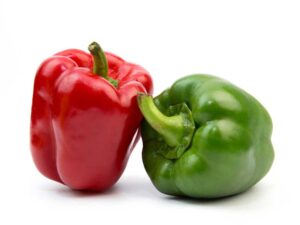
Capsicums are productive warm-season vegetables grown for their crisp, hollow fruit and mild, sweet flavour. Often called bell peppers or sweet peppers in other countries, capsicums may be harvested green or left on the plant to mature into colours such as red, yellow, orange, chocolate or purple, depending on the variety.
Seedmart supplies capsicum seeds in Australia for backyard gardeners, market gardeners, schools, community gardens and commercial growers. The available range may include traditional bell capsicums, compact fruiting types, distinctive colours and varieties suitable for fresh eating, roasting, stuffing, preserving and cooking.
The best capsicum variety will depend on your climate, available growing space, preferred fruit size and colour, intended use and whether you are growing in garden beds, protected cropping systems or containers.
Growing from seed provides access to colours, fruit shapes and traditional varieties that may not be available as seedlings.
Capsicum plants thrive during warm weather and can continue producing fruit over an extended season under suitable conditions.
Fruit may be harvested green or allowed to develop its mature colour and a generally sweeter flavour.
Grow capsicums in vegetable beds, raised gardens, large pots or protected cropping systems.
Use fresh capsicum in salads and sandwiches or add it to stir-fries, sauces, roasts, preserves and stuffed dishes.
Choose smaller packs for home growing or larger quantities on selected varieties for frequent and commercial sowing.
Capsicum varieties differ in plant habit, fruit size, wall thickness, shape, colour and time to maturity. Use the following guide to narrow your selection.
| Growing Goal | Capsicum Type | Why Choose It? |
|---|---|---|
| Reliable all-purpose harvests | Traditional blocky bell capsicums | Produce familiar, thick-walled fruit suitable for fresh eating, stuffing, roasting and cooking. |
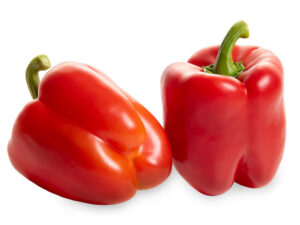
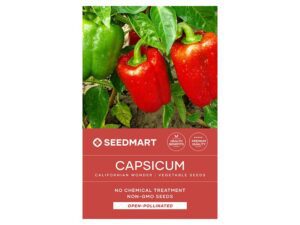
| Green and red fruit | Bell varieties such as Californian Wonder or Yolo Wonder | Fruit can generally be picked green or left to mature fully and develop its final colour. |
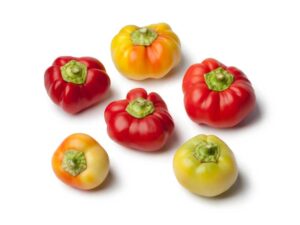
| Distinctive colour | Yellow, orange, chocolate or mixed-colour varieties | Add visual interest to home gardens, market displays, salads and cooked dishes. |
| Container growing | Compact or moderately sized plants | Suitable for large pots where sunlight, moisture and nutrients can be managed carefully. |
| Fresh eating | Sweet, crisp and thick-walled varieties | Provide firm texture and mild flavour for salads, sandwiches, platters and snacks. |
| Roasting or preserving | Fleshy, mature-coloured fruit | Develop rich flavour when roasted and can be used in sauces, relishes and preserves. |
| Frequent or commercial sowing | Varieties available in larger seed quantities | Bulk packs may provide better value where substantial plant numbers are required. |
In Australian English, the mild, block-shaped fruits of Capsicum annuum are normally called capsicums. In North America and some international seed catalogues, the same vegetables are commonly called bell peppers or sweet peppers.
Capsicums and chillies belong to the same botanical genus, but the term capsicum is generally used in Australia for varieties with little or no noticeable heat. Variety descriptions should always be checked carefully when selecting seed, particularly where an overseas name includes the word “pepper”.
Searching for bell pepper seeds? In Australia, these are generally sold as capsicum seeds. Browse the products above for available sweet and bell-shaped varieties.
Capsicums need a long period of warm weather to germinate, establish and ripen a useful crop. The correct planting time therefore depends more on local temperature and frost risk than on a single national sowing date.
| Australian Climate | General Sowing Approach | Important Considerations |
|---|---|---|
| Tropical and warm subtropical | Sow during warm, relatively settled conditions and avoid the most stressful periods of extreme heat or heavy rain. | Good airflow, drainage, pest management and regular watering are particularly important. |
| Subtropical | Raise seed in late winter or spring once reliable warmth can be provided, with additional sowings possible through the warmer season. | Protect young seedlings from cold nights and avoid transplanting into cold soil. |
| Temperate | Start seed under protection before the main spring planting period, then transplant after frost risk has passed and the soil has warmed. | An early protected start gives plants more time to flower and mature fruit before autumn temperatures fall. |
| Cool temperate | Sow indoors, in a greenhouse or with controlled bottom heat before outdoor conditions become suitable. | Choose a warm, sheltered position and avoid planting outside too early. |
Planting periods are general guides only. Local frost dates, elevation, coastal influence, seasonal weather and protected growing conditions can all change the appropriate sowing time.
Capsicum seed germinates most reliably in consistently warm seed-raising mix. Cold soil can substantially slow or prevent emergence.
Keep the mix evenly moist but not saturated. Waterlogging reduces aeration and can contribute to seed or seedling losses.
Sow seed approximately 5 mm deep or follow the directions supplied with the individual variety. Avoid burying small seed too deeply.
Capsicum is usually slower to emerge than many common vegetables. Continue providing warmth and moisture rather than repeatedly disturbing the mix.
How long do capsicum seeds take to germinate? Under suitably warm and consistent conditions, emergence commonly begins within approximately 7 to 21 days. Cooler or fluctuating conditions may result in slower and less even germination.
Do not sow capsicum seed into cold, wet garden soil. Poor emergence is frequently caused by insufficient warmth, excessive moisture or a combination of both.
Once the seedlings are established, capsicums need strong light, fertile soil, consistent moisture and a sufficiently long warm season. Avoid allowing young plants to become severely root-bound, chilled or water-stressed before transplanting.
Capsicums can grow successfully in containers when each plant has adequate root space, drainage, sunlight, water and nutrition.
Potted capsicums dry out and exhaust nutrients more quickly than plants growing in open ground.
Can capsicum grow in pots? Yes. A large, free-draining container is preferable because restricted root space and rapidly drying potting mix can limit plant growth and fruit production.
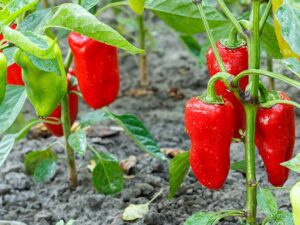
Many capsicums begin green and change colour as they mature. Depending on the variety, mature fruit may become red, yellow, orange, chocolate, purple or another colour. A green capsicum is therefore not necessarily a separate type; it may simply be fruit harvested before full colour development.
| Harvest Stage | General Characteristics | Why Harvest Then? |
|---|---|---|
| Full-sized green fruit | Firm texture, fresh flavour and the characteristic green colour. | Allows an earlier harvest and may encourage the plant to continue setting fruit. |
| Partially coloured fruit | Fruit is transitioning from green towards its mature colour. | Useful where a balance between earlier picking and sweeter flavour is preferred. |
| Fully mature colour | Generally sweeter flavour and the final colour associated with the variety. | Preferred for colourful salads, roasting, preserving and seed saving from suitable open-pollinated varieties. |
The precise colour sequence and mature colour depend on the variety. Refer to the individual product description before ordering.
Growing time varies according to variety, temperature, planting date, transplant size, soil fertility and the stage at which the fruit is harvested. Capsicums generally require a longer growing period than quick crops such as lettuce or radish.
As a broad guide, allow approximately:
| Growth Stage | Indicative Period | What Affects It? |
|---|---|---|
| Seed germination | Approximately 7–21 days | Growing-medium temperature, moisture, seed vigour and temperature consistency. |
| Seedling development | Approximately 6–10 weeks | Light, warmth, container size, nutrition and whether plants experience cold stress. |
| Transplant to first useful harvest | Often approximately 10–16 weeks | Variety, fruit size, weather, plant health and whether fruit is picked green or fully coloured. |
These periods are general estimates, not guaranteed maturity dates. Check the individual variety description for any more specific information supplied.
The seed-raising mix may be too cold, too wet, too dry or heavily compacted. Provide steady warmth, gentle moisture and adequate drainage.
Seedlings stretching towards a light source generally need stronger, more even light. Increase light exposure without suddenly scorching tender plants.
Temperature extremes, moisture stress, low light and excessive nitrogen can interfere with flowering and fruit set.
Restricted roots, insufficient sunlight, irregular watering, nutrient imbalance or heavy fruit load can reduce fruit development.
Blossom-end rot is associated with calcium movement within the plant and is commonly aggravated by irregular soil moisture. Maintain more consistent watering.
Inspect plants regularly for caterpillars, sap-sucking insects, snails, fruit fly activity and disease symptoms. Use controls appropriate to the pest and crop.
Smaller seed quantities suit gardeners growing a few plants, trialling a new variety or combining several colours in one garden.
Larger quantities may suit growers raising substantial numbers of plants or scheduling repeated sowings.
Check the individual product page before ordering. Pack sizes, availability, plant characteristics and variety-specific growing information can differ across the capsicum range.
Commercial capsicum production requires more than comparing packet or kilogram prices. Germination, seedling uniformity, establishment, plant spacing, maturity period, fruit quality, market preference and pack-out percentage all influence the real cost and value of a crop.
Uniform emergence simplifies propagation, transplant scheduling and crop management.
Select varieties and sowing dates that provide enough warm growing time for fruit to reach the required market stage.
Consider mature colour, wall thickness, fruit shape, size and intended market rather than choosing on yield alone.
Test new varieties under your production conditions before adopting them across a large planting area.
Seed availability can vary between seasons and lots. Commercial growers should confirm current stock, required quantity and lead time before finalising planting schedules.
Sow capsicum seed approximately 5 mm deep in moist, free-draining seed-raising mix. Maintain consistent warmth, keep the mix evenly moist and provide strong light after germination. Harden the seedlings gradually and transplant them into fertile soil after frost risk has passed and outdoor conditions are reliably warm.
Capsicum seeds commonly begin germinating within approximately 7 to 21 days under warm, consistent conditions. Germination may take longer where the seed-raising mix is cool or temperatures fluctuate substantially.
Capsicum seed requires a reliably warm growing medium. A temperature around 21–28°C is generally suitable for germination, with consistency being particularly important. Protected propagation or bottom heat may be useful in cooler regions.
The best time depends on climate. In temperate and cool regions, seed is generally started under protection before spring and seedlings are planted outside after frost risk has passed. In subtropical and tropical climates, sowing can be timed for warm conditions while avoiding periods of excessive heat, heavy rain or other seasonal stress.
Yes. Grow one plant in a large container with drainage holes, premium potting mix and a sunny position. Potted capsicums require regular watering and feeding because the limited volume of potting mix dries and loses nutrients faster than garden soil.
Capsicums generally perform best in full sun. Strong sunlight supports compact plant growth, flowering and fruit development. In very hot climates, limited protection from severe afternoon heat may reduce plant and fruit stress.
The complete period from sowing to harvest varies by variety and conditions. Seedling production may take approximately 6 to 10 weeks, followed by roughly 10 to 16 weeks from transplanting to a useful harvest. Fully coloured fruit generally remains on the plant longer than fruit harvested green.
Many green capsicums will change to red, yellow, orange or another mature colour when left on the plant, but the final colour depends on the variety. Some fruit is intentionally harvested green before this colour change occurs.
Yes, in common usage. Australians usually call the mild, hollow fruit capsicum, while North American sources commonly use bell pepper or sweet pepper. These names may refer to the same types of Capsicum annuum.
Capsicums are naturally short-lived perennial plants in suitable frost-free climates, but they are commonly grown as annual vegetables. Cold weather, frost, disease and declining productivity often limit their useful lifespan.
Not every plant requires staking, but support can be valuable for tall varieties or plants carrying several heavy fruits. Installing a stake or cage early reduces the risk of root disturbance later.
Capsicums and tomatoes have broadly similar requirements and can grow in the same general area when they have sufficient space, sunlight, water and nutrients. Because both belong to the Solanaceae family and may share pests and diseases, crop rotation and regular monitoring remain important.
Seed can be saved from fully mature fruit of suitable open-pollinated varieties. Capsicums can cross-pollinate with compatible varieties, however, and seed collected from hybrid plants may not produce plants identical to the parent. Check the individual product description before saving seed.
Capsicum seeds for Australian growers
Seedmart supplies capsicum seed for home gardens, container growing, market gardens and larger propagation programs. Browse the available varieties above to compare fruit shape, colour, pack size and intended use.
Review each product page for current availability and variety-specific information, then select the seed quantity that best suits your garden or production requirements.