
Compact Green Rosettes
Small spoon-shaped leaves develop close to the ground in neat clusters.
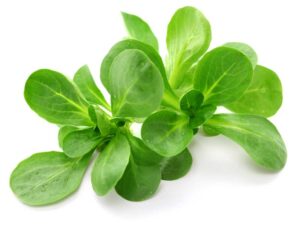

Corn salad seed buying and growing guide
Corn salad is a compact cool-season leafy vegetable grown for its tender dark-green leaves, mild nutty flavour and small rosette-shaped plants. It is also widely known as mâche, lamb’s lettuce and field salad.
Seedmart supplies corn salad mâche seeds for home gardens, raised beds, window boxes, containers, market gardens and commercial baby-leaf production throughout Australia. The crop is botanically classified as Valerianella locusta and is unrelated to sweet corn, despite the common name corn salad.
Corn salad performs best during cool to mild conditions and can tolerate light frost. Harvest the leaves while young for their finest texture, cut complete rosettes at maturity or grow the untreated seed as delicate microgreens and baby leaf.
Corn salad grows through cool autumn and winter conditions when many warm-season salad crops are unavailable.
The tender leaves have a delicate, slightly sweet flavour suited to fresh salads, sandwiches and garnishes.
Young leaves can be picked earlier, while mature compact rosettes are generally ready within several weeks.
Low-growing plants suit pots, troughs, window boxes, raised planters and compact urban gardens.
Grow the seed for microgreens, baby leaves, individual leaf picking or complete mature plants.
Choose smaller quantities for household gardens or larger packs for repeated and commercial sowings.
Corn salad is a low-growing leafy vegetable that forms small rosettes of smooth, spoon-shaped green leaves. It belongs to the Caprifoliaceae family and is botanically distinct from lettuce, spinach, rocket and sweet corn.
The name “corn salad” comes from its historical tendency to grow as a plant of cultivated grain fields. In older European usage, the word “corn” referred broadly to cereal crops rather than only maize or sweet corn.
Corn salad plants generally produce:
Small spoon-shaped leaves develop close to the ground in neat clusters.
Young foliage has a soft texture and delicate flavour suited primarily to fresh use.
The crop establishes and produces best in mild soil and cool air temperatures.
As temperatures rise, mature plants produce branching stems bearing small pale flowers and seed.
Corn salad historically grew among cereal crops and around cultivated fields. In European English, “corn” traditionally referred to the principal grain crop of a region rather than specifically to maize.
The plant became known as corn salad because its young leaves were collected and eaten as a salad vegetable.
The name can now cause confusion because modern Australian and North American shoppers generally associate corn with sweet corn.
For clearer identification, the crop may be labelled as:
Yes. Corn salad and mâche are common names for the same leafy vegetable, Valerianella locusta.
| Name | Common Usage | Meaning |
|---|---|---|
| Corn salad | English gardening and seed terminology | Refers to the plant’s historical association with cultivated grain fields. |
| Mâche | French and culinary terminology | Commonly used by chefs, restaurants and specialty salad suppliers. |
| Lamb’s lettuce | British and European usage | May refer to the small leaf shape or the plant’s availability during lambing season. |
| Field salad | European gardening terminology | Reflects the plant’s traditional occurrence in fields. |
| Rapunzel | German and historical European usage | An older regional name associated with edible rosette greens. |
No. Corn salad is often called lamb’s lettuce, but it is not a true lettuce.
True lettuce belongs to the species Lactuca sativa. Corn salad belongs to the species Valerianella locusta.
| Corn Salad or Mâche | True Lettuce |
|---|---|
| Botanical name: Valerianella locusta. | Botanical name: Lactuca sativa. |
| Forms compact rosettes of small spoon-shaped leaves. | Can form loose leaves, upright heads or dense round heads. |
| Has a mild, slightly sweet and nutty flavour. | Flavour ranges from mild and sweet to crisp or slightly bitter. |
| Prefers cool to cold growing conditions. | Most lettuce prefers cool to mild conditions but varies by type. |
| Tolerates light frost well. | Frost tolerance varies considerably between lettuce varieties. |
| Generally harvested as leaves or complete small rosettes. | Harvested as baby leaf, individual leaves or complete heads. |
Corn salad and spinach are both cool-season leafy vegetables, but they differ botanically, structurally and in flavour.
| Corn Salad | English Spinach |
|---|---|
| Valerianella locusta | Spinacia oleracea |
| Produces small rounded or spoon-shaped leaves. | Produces broader smooth, semi-savoy or crinkled leaves. |
| Has a mild, nutty and slightly sweet flavour. | Has a fuller earthy green flavour. |
| Generally eaten raw in salads and garnishes. | Commonly eaten raw when young or cooked when mature. |
| Forms small compact rosettes approximately 15–20 cm high. | Forms larger rosettes with greater individual leaf weight. |
| Particularly suited to cool winter salad production. | Suited to baby leaf, mature leaves and cooked-green markets. |
Corn salad and rocket are both used in fresh salads but provide very different flavours.
| Corn Salad | Rocket |
|---|---|
| Mild, nutty and slightly sweet flavour. | Peppery, mustard-like and sometimes spicy flavour. |
| Soft, rounded leaves. | Elongated or deeply divided leaves. |
| Forms compact low rosettes. | Forms upright leafy rosettes and later flower stems. |
| Best suited to delicate salads and garnishes. | Provides stronger flavour in salads, pizzas, pasta and sandwiches. |
| Slow to establish in unsuitable warm soil. | Generally germinates and grows rapidly across a broader mild-season window. |
Corn salad has a mild, fresh and slightly sweet flavour with subtle nutty and earthy notes. It is substantially less bitter and peppery than rocket.
Small leaves have a delicate texture suited to salads, sandwiches and garnishes.
Larger leaves develop a slightly stronger flavour while remaining relatively mild.
Steady growth through cool conditions generally produces the best texture and flavour.
Warm weather can reduce tenderness and cause plants to begin flowering.
Corn salad provides a delicate foundation for dressings, nuts, fruit, cheese and vegetables.
Small intact rosettes provide attractive shape and colour on finished dishes.
Yes. Corn salad is primarily grown as a fresh salad green.
Young leaves and complete small rosettes can be washed and used raw in:
The leaves are delicate and should be dressed shortly before serving to prevent wilting.
Corn salad is a cool-season annual that grows best in mild soil, moist free-draining ground and full sun to partial shade.
Plan crops for autumn, winter and mild spring conditions rather than hot summer production.
Corn salad generally establishes most reliably when sown directly where it will grow.
Keep the shallow seedbed consistently moist during germination and leaf development.
Pick leaves or complete rosettes before warm weather triggers elongated flowering growth.
Corn salad is generally planted from late summer through winter. Cool-climate growers can continue sowing into spring while conditions remain mild.
| Climate Zone | General Sowing Period | Growing Notes |
|---|---|---|
| Cool | February to October | Sow from late summer through spring, avoiding waterlogged soil and prolonged warm conditions. |
| Temperate | February to September | Autumn and winter provide the most reliable production period. |
| Subtropical | March to August | Grow through the coolest months and provide afternoon shade as temperatures rise. |
| Tropical | May to July | Use the coolest part of the dry season and select a protected position. |
| Arid | March to August | Maintain moisture and protect plants from drying winds and warm afternoon conditions. |
These sowing periods are general guides. Local temperature, frost, elevation, humidity and irrigation availability should also be considered.
| Location | General Planting Guide | Key Considerations |
|---|---|---|
| Brisbane and South East Queensland | March to August | Grow through autumn and winter and provide afternoon shade near the beginning and end of the season. |
| Sydney and coastal New South Wales | February to September | Autumn and winter crops are reliable where soil remains moist and well drained. |
| Inland New South Wales | February to August | Allow for frost while maintaining moisture during dry conditions. |
| Melbourne and Victoria | February to October | Cool conditions support a long growing window where drainage remains adequate. |
| Canberra and cool inland districts | February to April and August to October | Use autumn and spring windows and protect small seedlings during severe frost. |
| Adelaide and South Australia | March to September | Maintain consistent moisture through dry autumn and spring weather. |
| Perth and south-west Western Australia | March to September | Autumn and winter generally provide suitable temperatures and seasonal rainfall. |
| Tasmania | February to October | Corn salad suits the cool climate, but current Seedmart quarantine restrictions prevent shipment of this product to Tasmania. |
| Darwin and tropical northern Australia | May to July | Use the coolest available dry-season window and protect plants from heat. |
Corn salad is generally direct-sown because the plants are compact and can be disturbed by transplanting.
Plant corn salad seeds approximately 5–10 mm deep.
Corn salad is well suited to direct sowing in its final growing position.
Use troughs, window boxes or broad pots with suitable drainage.
Corn salad commonly germinates within approximately 7–14 days under suitable cool conditions.
An approximate soil-temperature range of 10–20°C supports reliable establishment.
The shallow seedbed should remain consistently moist without becoming waterlogged.
Seed planted too deeply may emerge slowly or fail to reach the surface.
High soil temperatures can cause slow, irregular or reduced germination.
Corn salad seed should be covered lightly rather than left completely exposed.
Plant the seed approximately 5–10 mm deep and maintain moisture until seedlings emerge.
After germination, provide bright light to develop compact rosettes.
Insufficient light can produce:
Yes, but direct sowing is generally simpler and reduces root disturbance.
Where transplanting is required, raise seedlings in small individual cells and move them while young.
When transplanting:
Spacing depends on whether the crop is intended for microgreens, baby leaf or mature rosettes.
| Harvest Goal | Approximate Spacing | General Result |
|---|---|---|
| Microgreens | Dense tray sowing | Young seedlings harvested shortly after the cotyledons and first true leaves develop. |
| Baby leaf | Approximately 2–5 cm or densely sown rows | High plant population for tender young-leaf cutting. |
| Small whole rosettes | Approximately 5–10 cm | Compact young plants suited to salad mixes and garnishes. |
| Mature rosettes | Approximately 10–15 cm | Allows plants to develop full clusters of rounded leaves. |
| Row spacing | Approximately 20–25 cm | Provides access for weeding, watering and harvest. |
Corn salad generally forms low rosettes approximately 15–20 cm high before flowering.
Plants grown for baby leaf remain substantially smaller. Once bolting begins, flower stems extend above the rosette and the plant loses its compact salad form.
Plant size is influenced by:
Yes. Corn salad is particularly suitable for pots, troughs, window boxes and raised containers because of its compact root system and low growth habit.
Use a broad container to maximise the planting area.
Shallow containers can lose moisture quickly.
Corn salad grows in full sun to partial shade.
Full sun supports compact growth during cool weather. Partial shade can extend the season and reduce heat stress as temperatures rise.
Heavy shade may result in:
In subtropical and warm temperate regions, morning sun with light afternoon shade is often useful.
Corn salad requires even moisture for tender, well-formed leaves.
Water gently and deeply enough to maintain the shallow root zone without saturating the soil.
Corn salad generally benefits from:
Corn salad commonly reaches mature harvest approximately 40–60 days after sowing. Microgreens and baby leaves are harvested earlier.
| Harvest Stage | Typical Period | General Characteristics |
|---|---|---|
| Microgreens | Approximately 14–25 days | Fine young shoots with mild mâche flavour. |
| Baby leaf | Approximately 25–40 days | Tender young foliage for salad mixes. |
| Small whole rosettes | Approximately 35–50 days | Compact plants suitable for garnish and fresh salad packs. |
| Mature rosettes | Approximately 40–60 days | Full clusters of rounded leaves for complete-plant harvest. |
| Flower and seed production | Longer than the vegetable harvest period | Plants elongate, flower and produce mature seed as conditions warm. |
Growing time varies with temperature, soil moisture, plant density, sunlight and preferred harvest size.
Corn salad can be harvested as individual leaves, baby leaf or complete rosettes.
| Harvest Method | How It Works | Best Suited To |
|---|---|---|
| Individual leaf picking | Remove selected outside leaves while leaving the central rosette intact. | Small household harvests and extended picking. |
| Baby leaf cutting | Cut young foliage above the crown using clean equipment. | Salad mixes and dense commercial sowings. |
| Complete rosette harvest | Cut the plant immediately above or just below soil level. | Fresh-market packs, garnishes and complete salad rosettes. |
| Microgreen harvest | Cut young seedlings above the growing medium. | Restaurants, garnishes and speciality microgreen production. |
Harvest during the cooler part of the day where practical and cool the leaves promptly.
Corn salad can provide limited regrowth when the central crown remains undamaged.
Individual outer-leaf picking offers the longest harvest period. Baby-leaf crops may produce another cut when they are harvested above the growing point.
For regrowth:
Complete rosette harvesting generally removes the plant and does not provide a second crop.
Yes. Corn salad is well suited to baby-leaf production.
Baby-leaf crops are sown more densely than mature rosettes and harvested while the leaves remain small and tender.
For baby leaf:
Yes. Seedmart’s current Corn Salad Mâche seed is untreated and is listed as suitable for microgreen production.
Corn salad microgreens generally require:
Corn salad grows close to the ground and can hold soil around the base of its rosettes.
Combine corn salad with soft herbs, vegetables, fruit, nuts, cheese and light dressings.
Use small leaves in sandwiches, rolls, wraps and filled baguettes.
Use intact rosettes to add shape, colour and delicate flavour to plated dishes.
Fold the leaves into cooled potato dishes shortly before serving.
Pair the nutty leaves with pear, apple, citrus, walnuts, soft cheese or blue cheese.
Add the leaves after cooking or allow them to wilt lightly from residual heat.
Corn salad can be cooked, but its delicate texture makes it better suited to fresh use or very brief wilting.
It may be:
Prolonged cooking can cause the leaves to lose their texture, colour and distinctive mild flavour.
Corn salad leaves are delicate and should be cooled promptly after harvesting.
For household storage:
Complete rosettes may store better than heavily cut or bruised leaves.
Corn salad is not well suited to freezing for later salad use because the leaves become soft after thawing.
Where frozen, it is best reserved for:
For fresh salads, grow smaller successive crops and use the leaves soon after harvest.
Yes. Corn salad begins producing elongated flowering stems as temperatures rise and the plant reaches maturity.
Bolting can be encouraged by:
Increasing temperatures shorten the cool-season harvest period.
Older rosettes naturally progress towards flowering and seed production.
Repeated drying can reduce leaf quality and accelerate reproduction.
Seasonal changes in light and temperature encourage spring flowering.
Leaves remain edible during early bolting but generally become smaller, firmer and less attractive for fresh-market use.
Corn salad can self-seed where mature plants are allowed to flower and release viable seed.
To limit unwanted seedlings:
To encourage natural reseeding, allow selected healthy plants to flower and mature. Seedlings may emerge when cool, moist conditions return.
Corn salad is generally grown as a cool-season annual.
The plant germinates, produces a leafy rosette, flowers and sets seed within one growing cycle.
It does not normally regrow indefinitely from the same crown. Continued supply comes from successive sowing or naturally dropped seed.
Warm soil, deep sowing, dry seedbeds and waterlogging can reduce emergence.
Low light, crowding and excessive moisture can produce pale, elongated growth.
Warm weather, drought and plant maturity can shorten the harvest period.
Old foliage, excess water, drought, poor nutrition or disease can cause yellowing.
Slugs, snails and other chewing pests can damage low-growing rosettes.
Soil splash and low growth can make harvest cleaning more labour intensive.
Corn salad can be affected by slugs, snails, aphids and other small foliage pests.
Management options include:
Corn salad can share cool-season gardens with crops that have compatible water and light requirements.
Potential neighbouring crops include:
Corn salad can also be used as a short cool-season crop beneath or between slower-growing vegetables.
Yes. Seedmart’s current Corn Salad Mâche variety is open pollinated and can produce seed where plants are allowed to flower and mature.
To save corn salad seed:
Smaller quantities suit household gardens, containers and growers trialling mâche for the first time.
Larger seed quantities can support scheduled baby-leaf, microgreen and complete-rosette production.
Commercial corn-salad production requires uniform establishment, clean leaves and a defined harvest stage.
Use corn salad, mâche and lamb’s lettuce together so chefs, retailers and consumers can identify the crop.
Microgreen, baby leaf and whole-rosette production require different sowing densities and schedules.
Even germination supports consistent rosette size, leaf shape and harvest timing.
Low-growing rosettes can collect grit and soil splash, increasing washing and handling requirements.
Warm conditions can rapidly shorten the harvest window and reduce saleable quality.
The delicate leaves should be cooled promptly and protected from wilting, crushing and excess moisture.
Corn salad is the cool-season leafy vegetable Valerianella locusta, grown for small tender leaves with a mild nutty flavour.
No. The corn salad plant is unrelated to sweet corn. Its name comes from its historical association with cultivated grain fields.
Yes. Corn salad and mâche are names for the same plant, Valerianella locusta.
Yes. Lamb’s lettuce is another common name for corn salad or mâche.
No. Corn salad is not a true lettuce. True lettuce is Lactuca sativa, while corn salad is Valerianella locusta.
Corn salad has a mild, slightly sweet and nutty flavour with soft, tender leaves.
Yes. It is primarily eaten raw in salads, sandwiches, wraps and garnishes.
Yes, but it is delicate and is best wilted briefly or added to warm dishes immediately before serving.
Direct-sow the seed approximately 5–10 mm deep in cool, moist, free-draining soil and thin the seedlings according to the intended harvest.
Corn salad is generally planted from late summer through winter. Cool-climate growers can continue sowing into spring.
Around Brisbane, corn salad is generally best sown from March to August for autumn and winter production.
Around Melbourne, corn salad can generally be sown from February through October while conditions remain cool.
Plant corn salad seed approximately 5–10 mm deep and cover it lightly with fine soil.
Corn salad commonly germinates within approximately 7–14 days under suitable cool conditions.
An approximate soil-temperature range of 10–20°C supports reliable germination.
Yes, but direct sowing is generally simpler. Transplant seedlings while young and keep the root ball intact.
Mature rosettes are generally spaced approximately 10–15 cm apart, with rows around 20–25 cm apart.
Corn salad generally forms compact rosettes approximately 15–20 cm high before flowering.
Yes. Corn salad grows well in pots, window boxes, troughs and raised containers with adequate moisture and drainage.
Corn salad grows in full sun to partial shade. Afternoon shade can help extend the season in warmer climates.
Mature rosettes are generally ready approximately 40–60 days after sowing. Baby leaves and microgreens are harvested earlier.
Pick individual outside leaves, cut baby leaf above the crown or harvest the complete mature rosette near soil level.
It can provide limited regrowth when harvested above the crown or picked leaf by leaf. Complete rosette harvesting removes the plant.
Yes. Sow more densely and harvest the leaves while they remain small and tender.
Yes. Seedmart’s current seed is untreated and is listed as suitable for microgreen production.
Separate dense rosettes, rinse gently in clean cool water and dry carefully without crushing the leaves.
Refrigerate promptly in a suitable container or produce bag and protect the delicate leaves from crushing and excess moisture.
It can be frozen for cooked or blended dishes, but thawed leaves are unsuitable for fresh salads.
Yes. Corn salad is cold tolerant and can withstand light frost once established.
Yes. Rising temperatures, longer days, plant maturity and moisture stress can trigger flowering.
Yes. Plants allowed to flower and produce mature seed can generate volunteer seedlings during later cool conditions.
Corn salad is generally grown as a cool-season annual.
Warm soil, deep sowing, a dry seedbed, waterlogging or poor seed-to-soil contact can reduce germination.
Warm weather, longer days, drought stress and plant maturity commonly cause corn salad to bolt.
Possible causes include old foliage, waterlogging, drought, poor nutrition, root stress or disease.
Corn salad can share beds with lettuce, spinach, rocket, radish, spring onions, carrots, beetroot, peas and young brassicas.
Yes. Allow healthy open-pollinated plants to flower and produce fully mature dry seed.
The current product is identified as having no chemical treatment. Check the product specifications before each order because seed lots can change.
Yes. The current product is identified as open pollinated and non-hybrid.
The current product specification lists approximately 600 seeds per gram.
The current product is available in 25 g, 100 g and 1 kg quantities.
The current product page states that this seed is not shipped to Tasmania because of quarantine restrictions.
Corn salad, mâche and lamb’s lettuce seeds for Australian growers
Seedmart supplies Corn Salad Mâche seed for household gardens, pots, raised beds, market gardens, restaurants and commercial leafy-green production. Grow this cool-season Valerianella locusta crop for delicate microgreens, tender baby leaves and compact mature rosettes with a mild nutty flavour.
Review the product page for current pack sizes, seed treatment, specifications, quarantine restrictions and ordering information before purchasing.