
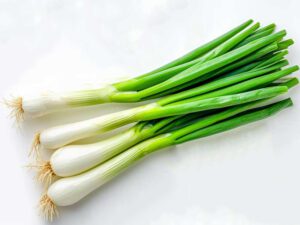
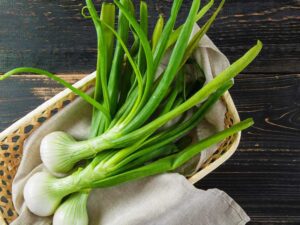
Brown Bulb Onions
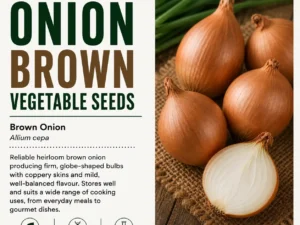
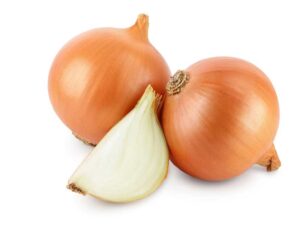
Brown onions are widely used for cooking and are commonly selected where firm mature bulbs and storage potential are required.



Onion seed buying and growing guide
Onions are cool-season allium vegetables grown for mature bulbs, mild immature bulbs, edible green leaves or bunching stems. Varieties differ in bulb colour, shape, pungency, storage potential, maturity period and response to day length.
Seedmart supplies onion seeds in Australia for backyard gardeners, container growers, market gardeners and commercial vegetable producers. The range includes brown, white and red bulb onions together with green and red bunching onion varieties.
The best onion seed will depend on your climate, sowing season, latitude, preferred bulb colour, storage requirements and whether you want mature bulbs or fresh bunching onions.
Growing from seed provides access to different bulb colours, shapes and bunching-onion types.
Harvest young onions early or allow suitable varieties to develop mature storage bulbs.
Onions have upright foliage and can be grown in rows, raised beds and containers.
Choose brown, white, red and coloured bunching-onion varieties.
Grow mild fresh onions, bunching stems or mature bulbs intended for curing and storage.
Choose smaller packs for household planting or larger quantities for frequent and commercial production.
Onion varieties should be selected by more than colour alone. Bulb formation, planting date, day-length response, storage ability and intended harvest stage all influence which onion will perform best.
| Growing Goal | Recommended Onion Type | Why Choose It? |
|---|---|---|
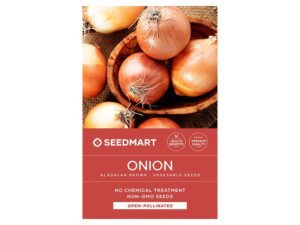
| Traditional brown bulbs | Gladalan Brown or Brown Odourless | Produce familiar brown-skinned onions suited to general cooking and mature bulb harvests. |
| White bulbs | Gladalan White, White Odourless or Early White | Provide pale skins and white flesh for fresh use, cooking and specialist markets. |
| Red bulbs | Red Odourless | Add red-purple colour to salads, pickles, cooking and fresh-market displays. |
| Fresh green stems | Green Bunching Onion | Grown mainly for slender white stems and green leaves rather than mature storage bulbs. |
| Coloured bunching onions | Red Bunching Onion | Combines fresh bunching growth with red or purple pigmentation around the lower stem. |
| Successive fresh harvests | Bunching onion varieties | Small sowings can be made at intervals for a continuing supply of fresh stems. |
| Bulk bulb production | Varieties suited to the local production region | Correct day-length response and planting time are critical for reliable bulb formation. |
Brown onions are widely used for cooking and are commonly selected where firm mature bulbs and storage potential are required.
White onions produce pale skins and flesh and may be used fresh, cooked, pickled or sold into specialist markets.
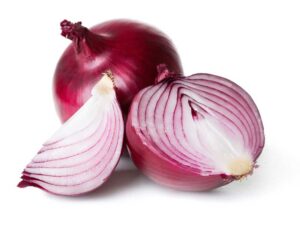
Red onions provide coloured skins and internal rings suited to salads, pickling and general kitchen use.
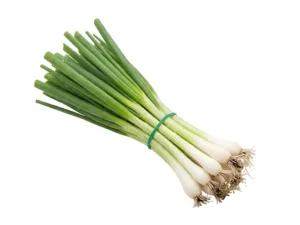
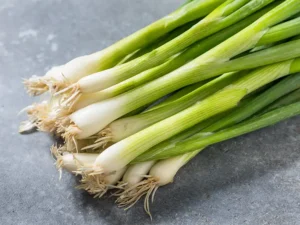
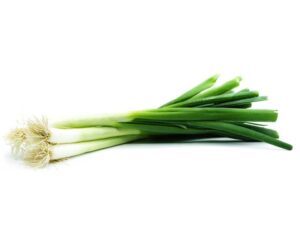
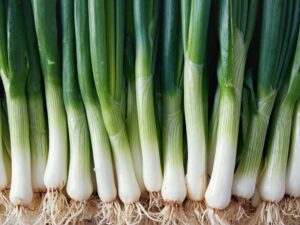
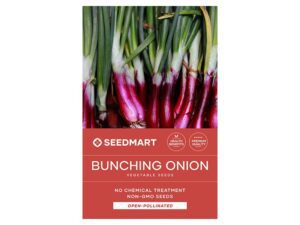
Bunching onions are grown mainly for their mild stems and leaves rather than a large mature bulb.
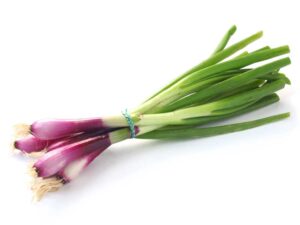
Red bunching types add coloured lower stems to fresh bunches and mixed vegetable displays.
| Bulb Onions | Bunching Onions |
|---|---|
| Selected to form an enlarged mature bulb. | Selected mainly for slender stems and green leaves. |
| Bulb formation is strongly influenced by day length and planting season. | Can generally be harvested before significant bulb formation occurs. |
| Usually require wider final spacing. | Can be grown more closely in rows or clumps. |
| Harvested after tops begin declining and bulbs mature. | Harvested while stems and foliage remain fresh and tender. |
| Suitable varieties may be cured for storage. | Usually marketed or used fresh soon after harvest. |
Spring onion, green onion and bunching onion are overlapping terms. In Australia, spring onion commonly refers to onions harvested with fresh green leaves and a slender white or lightly swollen base.
Bulb onions respond to the number of daylight hours they receive. When the variety’s required day length is reached, the plant begins directing growth into bulb formation.
A variety poorly matched to the grower’s latitude or planting season may produce excessive leaf growth, form only a small bulb or begin bulbing before the plant has developed enough foliage.
| Day-Length Type | General Requirement | Australian Relevance |
|---|---|---|
| Short-day onions | Begin forming bulbs under relatively shorter daylight periods. | Generally more relevant to lower-latitude and warmer Australian production regions. |
| Intermediate-day onions | Require a moderate day length before bulbing. | May suit parts of temperate Australia, depending on variety and planting season. |
| Long-day onions | Require longer summer daylight before bulbs develop. | More relevant to higher-latitude and cooler southern production districts. |
| Bunching onions | Generally selected for stems and leaves rather than large bulbs. | Day-length matching is less critical where the crop is harvested young. |
Day-length classification is variety-specific. Confirm the suitability of a bulb onion for your region before committing to a large planting.
Onions are usually sown so seedlings establish during cool weather and develop enough foliage before bulb formation begins. The correct period varies with climate, latitude, variety and intended harvest stage.
| Australian Climate | General Sowing Approach | Important Considerations |
|---|---|---|
| Tropical | Sow suitable short-day or bunching onions during the coolest, least humid part of the year. | Bulb production can be difficult without varieties suited to low latitudes and warm winters. |
| Subtropical | Sow mainly through autumn and early winter. | Select short-day or locally suitable varieties and avoid severe summer heat during establishment. |
| Warm temperate | Sow from autumn into winter, depending on the variety and local frost conditions. | Intermediate-day or locally adapted varieties may be suitable. |
| Cool temperate | Sow from autumn through winter or raise seedlings for spring planting, depending on variety. | Long-day onions may perform better in higher-latitude districts. |
| Bunching onion production | Sow over a longer period where severe heat or frost can be avoided. | Successive sowings provide a more continuous supply of fresh stems. |
These planting periods are general guides only. Latitude, elevation, frost, local temperature and variety-specific day-length response can change the correct sowing time.
Onion seed germinates under cool to mild conditions and does not usually require the high temperatures needed by chilli or eggplant seed.
Sow the seed approximately 5–10 mm deep in a fine, free-draining growing medium.
Keep the seedbed evenly moist because fine onion seedlings can dry rapidly near the surface.
Onion seed generally loses vigour faster than many common vegetable seeds, so suitable storage and seed age are important.
How long do onion seeds take to germinate? Onion seed commonly begins germinating within approximately 7–14 days under suitable conditions, although cool soil may extend the emergence period.
Onions can be direct-sown into prepared soil or raised in seedling trays before transplanting. The best method depends on weed pressure, irrigation, labour and the required final plant spacing.
| Direct Sowing | Raising Seedlings |
|---|---|
| Seed is planted where the crop will mature. | Seed is started in trays, punnets or a nursery bed. |
| Reduces transplant handling and labour. | Provides greater control over germination and early establishment. |
| Fine seedlings compete directly with weeds. | Larger seedlings can be placed into prepared weed-free rows. |
| Requires accurate seed placement and irrigation. | Allows precise final spacing at transplanting. |
| Useful for commercial drilled crops and bunching-onion rows. | Useful for household gardens and carefully scheduled bulb crops. |
Spacing determines whether onions develop slender stems, small fresh bulbs or larger mature bulbs.
| Growing Goal | General Spacing | Considerations |
|---|---|---|
| Young spring onions | Approximately 2–4 cm apart | Harvest before substantial bulb enlargement. |
| Bunching onions | Approximately 2–5 cm apart or grown in small clumps | Closer planting supports slender stems and efficient bunch production. |
| Small bulb onions | Approximately 5–8 cm apart | Useful where smaller bulbs are preferred. |
| Full-sized bulb onions | Approximately 8–12 cm apart | Wider spacing allows greater bulb expansion. |
| Commercial rows | Depends on variety, equipment and market specification | Allow access for weed control, irrigation and harvesting. |
Follow the individual product directions where a variety requires different spacing.
Onions can be grown in pots where the container provides sufficient width, drainage, sunlight and soil depth.
Potted onions require consistent moisture and regular weed control because their root zone is relatively limited.
Can onions grow in pots? Yes. Bunching onions and smaller bulb crops are especially suitable for wide, free-draining containers.
Onions generally perform best in full sun. Strong light supports leaf development, and each healthy leaf contributes to the eventual bulb structure.
Partial shade can reduce growth and bulb size. In very hot climates, the crop should be timed for cooler weather rather than placed in deep shade.
Growing time varies with variety, sowing date, climate, day-length response and the stage at which the crop is harvested.
| Growth or Harvest Stage | Indicative Period | General Characteristics |
|---|---|---|
| Seed germination | Approximately 7–14 days | Emergence from moist, fine soil under cool to mild conditions. |
| Young spring onions | Approximately 8–12 weeks | Harvested while stems are slender and foliage remains fresh. |
| Bunching onions | Approximately 10–16 weeks | Timing varies with required stem thickness and variety. |
| Bulb onions | Approximately 5–8 months | Require sufficient leaf growth followed by the correct day length for bulbing. |
| Storage-ready bulbs | Additional curing period after harvest | Bulbs must dry adequately before long-term storage. |
These periods are general guides. Bulb onions are especially sensitive to sowing date, day length and regional climate.
Onion plants first produce leaves and roots. When the required day length and seasonal conditions are reached, the bases of the leaves begin swelling to form the bulb.
The number and health of the leaves established before bulbing influence the plant’s eventual bulb potential. Early stress, late planting, crowding or unsuitable day length can therefore reduce bulb size.
Do not remove healthy onion leaves during active growth. Each leaf contributes to the layers that form the mature bulb.
The variety may not receive the daylight period required to initiate bulb formation in your region.
Plants may begin bulbing before they have developed enough leaves to support a large bulb.
Closely spaced plants compete for light, nutrients and room for bulb expansion.
Heavy late nitrogen feeding may encourage continued leaf growth and delay maturity.
Shaded plants may produce weak foliage and undersized bulbs.
Drought, waterlogging, root damage and severe temperature stress can restrict bulb development.
Bulb onions are generally ready to harvest when the foliage begins yellowing, softening and falling naturally. Bunching onions are harvested earlier while their stems and leaves remain fresh.
| Onion Type | Harvest Indicators | Harvest Method |
|---|---|---|
| Spring or young onions | Stems have reached the preferred thickness and leaves remain green. | Lift the complete plant and use promptly. |
| Bunching onions | Several slender stems have reached marketable size. | Lift whole plants or divide established clumps where appropriate. |
| Fresh bulb onions | Bulbs have enlarged but tops remain partly green. | Lift for immediate use without expecting extended storage. |
| Mature bulb onions | Tops yellow, soften and fall as the neck begins drying. | Lift carefully and move bulbs to a protected curing area. |
| Storage onions | Outer skins and necks are dry after curing. | Trim and store only sound, fully dried bulbs. |
Loosen the soil with a fork where necessary and lift bulbs without cutting or bruising them. Do not pull forcefully where roots remain firmly anchored.
Harvest during dry weather where possible. Damaged, thick-necked or diseased onions should be used promptly rather than placed into long-term storage.
Curing dries the outer skins and neck of a mature bulb before storage. It is suitable for storage-type bulb onions but is not normally required for fresh bunching onions.
Not every onion is a long-storage variety. Storage life depends on genetics, bulb maturity, curing, damage, humidity and temperature.
A sprouting kitchen onion can produce additional green leaves when planted, but it will not normally produce several new large storage bulbs from the same original bulb.
The planted bulb may divide, flower or continue using its stored reserves. This can be useful for harvesting green shoots or observing the onion life cycle, but it is not a reliable substitute for growing a uniform bulb crop from suitable seed.
For predictable bulb size and variety, begin with named onion seed. Sprouting supermarket onions may be old, treated, hybrid-derived or poorly suited to your local day length.
Bulb onions are normally harvested as complete plants and do not regrow a second mature bulb after lifting. Bunching onions may continue producing when established clumps are divided or only selected stems are removed.
Green leaves cut from a mature bulb can regrow temporarily, but repeated cutting reduces the plant’s ability to enlarge and mature a bulb.
Onions have upright foliage and can share garden space with crops that have compatible seasonal, light and moisture requirements. Companion planting does not eliminate pests or diseases.
| Planting Option | General Compatibility | Considerations |
|---|---|---|
| Carrots | Use different parts of the soil profile | Maintain clear rows so fine seedlings are not disturbed during weed control. |
| Lettuce | Lettuce can occupy space between young onion rows | Harvest lettuce before it heavily shades the onions. |
| Beetroot | Shares cool-season growing conditions | Allow adequate spacing and avoid competition for moisture. |
| Brassicas | Can grow during similar seasonal periods | Position onions where expanding brassica leaves will not shade them. |
| Herbs and flowers | Can increase garden diversity | Select species requiring similar irrigation and soil conditions. |
| Other alliums | Have similar growing requirements | They also share onion thrips, diseases and soil-related problems. |
The seed may be old, the soil too dry or saturated, or the sowing depth excessive.
Insufficient light, excessive moisture and stagnant airflow can produce weak growth.
Late planting, unsuitable day length, crowding, weed competition and early stress can reduce bulb size.
Excess nitrogen, delayed maturity or unsuitable conditions can prevent necks from drying properly.
Cold stress followed by warm conditions can trigger bolting, particularly in large young plants.
Onion thrips can cause pale streaking, silvery foliage and reduced plant vigour.
Waterlogged soil, damaged bulbs, poor curing and disease can contribute to decay.
Incomplete maturity, unsuitable variety, warmth or high humidity can shorten storage life.
Onions are naturally biennial plants. They generally produce leaves and a bulb during the first growing period, then flower and produce seed after exposure to suitable cool conditions.
Gardeners normally harvest bulb onions during the first year. Seed production requires selected bulbs to survive, regrow and flower during a later season.
Smaller quantities suit gardeners growing several rows, comparing bulb colours or making successive bunching-onion sowings.
Larger quantities may suit growers producing bulb onions, fresh bunches, transplants or repeated seasonal crops.
Compare commercial value by more than seed price. Germination, regional adaptation, bulb uniformity, storage losses, harvest labour and market specification all influence the real value of an onion crop.
Commercial onion production requires careful variety selection, regional planning and harvest management. Day-length response, establishment, bulb specification, maturity concentration and storage performance all affect production efficiency.
Choose bulb onions matched to the latitude, planting date and production window.
Even emergence supports uniform plant stands and predictable bulb development.
Select varieties by colour, size, shape, pungency and intended fresh or storage market.
Crop maturity, curing, handling damage and storage conditions affect saleable yield.
Australian onion seed availability can vary. Commercial growers should confirm current stock, day-length classification, seed treatment, pack size and required quantity before finalising planting schedules.
Sow onion seed approximately 5–10 mm deep in moist, fine seed-raising mix or prepared soil. Provide bright light after germination, keep seedlings weed-free and transplant or thin them to the spacing required for bunching onions or mature bulbs.
Onion seeds commonly germinate within approximately 7–14 days under cool to mild, evenly moist conditions. Cooler soil or ageing seed may extend the emergence period.
Sow onion seed approximately 5–10 mm deep and cover it lightly with fine soil or seed-raising mix.
Yes. Onion seed can be direct-sown into fine, prepared soil. Maintain consistent surface moisture and control weeds carefully around the fine seedlings.
Onions are commonly sown from autumn through winter, but the correct period depends on climate, latitude and variety. Short-day onions generally suit warmer lower-latitude districts, while long-day onions are more relevant to cooler southern regions.
Yes. Onions are commonly established during autumn and winter. Growth may slow during severe cold, but cool conditions allow plants to develop foliage before bulb formation begins.
Yes. Onions generally require full sun for strong leaf development and useful bulb formation. Partial shade can reduce bulb size.
Yes. Use a wide, free-draining container in full sun. Bunching onions can be spaced closely, while bulb onions need enough room for the mature bulb to expand.
Plant bunching onions approximately 2–5 cm apart. Full-sized bulb onions generally require around 8–12 cm, depending on the required bulb size and variety.
Young spring onions may be ready within approximately 8–12 weeks. Mature bulb onions commonly require around five to eight months, depending on variety, climate and sowing date.
Harvest mature bulb onions when the tops yellow, soften and begin falling naturally. Bunching onions can be harvested earlier once their stems reach the preferred thickness.
Loosen the soil and lift the bulbs carefully without cutting or bruising them. Harvest during dry weather where possible and cure storage onions under cover with good ventilation.
Mature bulb onions are generally ready when most tops begin yellowing and falling and the necks start drying. Fresh onions may be harvested earlier for immediate use.
The variety may be unsuited to your regional day length, the crop may have been planted too late or the plants may be overcrowded, shaded or stressed.
These terms describe the approximate daylight period that triggers bulb formation. Short-day onions begin bulbing under shorter days, while long-day onions require longer summer daylight.
The terms overlap. Bunching onions are varieties selected mainly for slender stems and leaves, while spring onion may also describe ordinary onions harvested before a mature bulb forms.
Yes, a sprouting bulb can produce green leaves and may divide or flower. It does not normally produce several uniform new storage bulbs and is less predictable than growing named onion seed.
Green leaves may regrow after cutting, but repeated removal reduces the plant’s ability to form a mature bulb. Established bunching onions tolerate selective harvesting better than bulb onions.
Place mature, undamaged bulbs in a dry, shaded and well-ventilated area until their necks and outer skins are fully dry. Store only sound bulbs after curing.
Onions may bolt after exposure to cold followed by warmer conditions, particularly when plants are already well developed. Bolted onions generally have reduced storage quality.
Bulb onions are naturally biennial but are usually grown as annual vegetables and harvested during their first season. Some bunching onions can persist and divide for several seasons.
Seed can be saved from suitable open-pollinated varieties. Selected bulbs must survive, regrow and flower during a later season. Onions can cross-pollinate, so isolation is required to maintain varietal purity.
Onion seed for Australian growers
Seedmart supplies onion seed for backyard gardens, container growing, market gardens and larger vegetable production. The range includes brown, white and red bulb onions together with green and red bunching varieties, with larger quantities available on selected lines.
Review the individual product pages for current availability, pack options, day-length information, seed treatment and variety-specific growing guidance before ordering.