

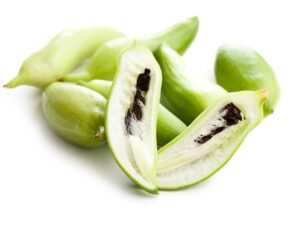
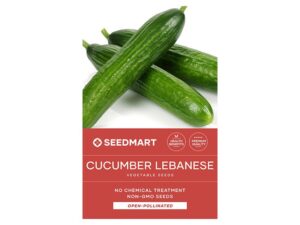
Lebanese Cucumbers
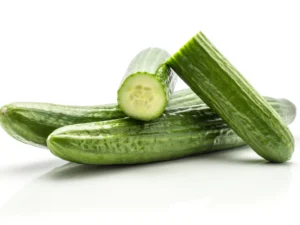
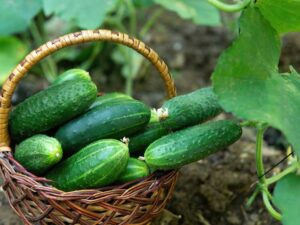
Lebanese cucumbers produce relatively short, tender fruit commonly harvested while young. They are widely used in salads, sandwiches and fresh vegetable dishes.




Cucumber seed buying and growing guide
Cucumbers are warm-season vegetables grown for crisp, refreshing fruit that may be eaten fresh, added to salads or harvested young for pickling. Varieties differ in fruit length, shape, skin texture, flavour, growth habit, maturity and suitability for trellises, garden beds or containers.
Seedmart supplies cucumber seeds for home gardeners, market gardeners and commercial vegetable growers throughout Australia. Choose from Lebanese cucumbers, long Continental types, traditional slicing varieties, compact container cucumbers, round Crystal Apple fruit and small pickling gherkins.
The best cucumber seed will depend on your climate, available space, preferred fruit size, growing method and whether the crop is intended for slicing, fresh eating, pickling or commercial production.
Cucumber vines grow rapidly during warm weather and can begin producing fruit within a relatively short season.
Many varieties can be trained onto trellises to save ground space and keep fruit easier to inspect and harvest.
Bush and short-vined cucumbers are available for containers, raised beds and smaller gardens.
Healthy plants can continue flowering and setting fruit when cucumbers are picked regularly.
Choose slicing varieties for salads and snacks or smaller gherkins for pickling and preserving.
Select smaller packs for household gardens or larger quantities for repeated and commercial planting.
Some cucumber varieties are selected for long slicing fruit, while others are grown for compact plants, mild skins, round fruit or small pickling cucumbers.
| Growing Goal | Recommended Varieties | Why Choose Them? |
|---|---|---|
| Fresh slicing cucumbers | Marketmore 76, Poinsett 76 and Burpless | Produce familiar green fruit suited to salads, sandwiches and general fresh eating. |
| Long cucumbers | Continental Long | Develops elongated fruit suited to slicing and premium fresh presentation. |
| Lebanese cucumbers | Lebanese Cucumber | Produces relatively small, tender fruit commonly harvested young for fresh eating. |
| Pickling | Pickling Gherkin | Forms compact fruit suited to harvesting young for pickles and preserves. |
| Containers and small gardens | Spacemaster | Develops a more compact growth habit than vigorous full-length climbing varieties. |
| Round specialty fruit | Crystal Apple | Produces pale, rounded fruit with a distinctive appearance for home and specialty markets. |
| Trellised production | Lebanese, Marketmore 76, Poinsett 76 and Burpless | Vigorous vines can be trained vertically for improved access and efficient use of space. |
| Market garden production | Lebanese, Continental Long, Marketmore 76 and Poinsett 76 | Recognisable cucumber types suited to scheduled planting and repeated fresh harvests. |
Lebanese cucumbers produce relatively short, tender fruit commonly harvested while young. They are widely used in salads, sandwiches and fresh vegetable dishes.
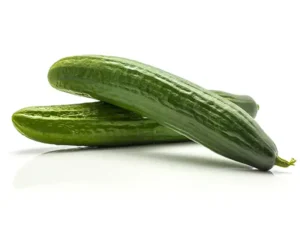
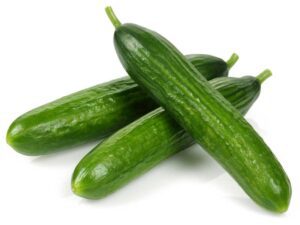
Continental cucumbers develop elongated fruit suited to slicing, salads and fresh-market presentation.
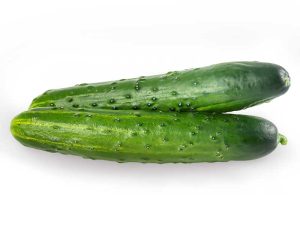
Traditional slicing cucumbers produce medium-to-long green fruit with broad household and market use.
Burpless types are selected for relatively mild eating quality and fruit suited to fresh slicing.
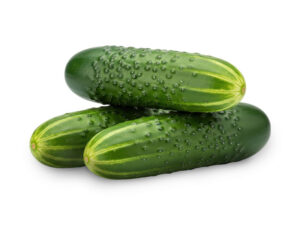
Pickling cucumbers are harvested while small and firm for jars, brines and other preserved products.
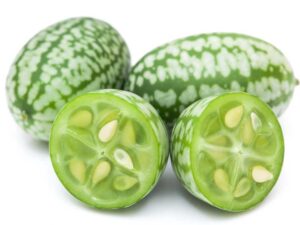
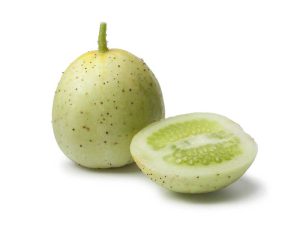
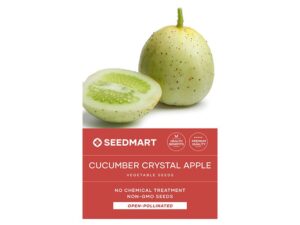
Crystal Apple develops pale, rounded fruit that differs noticeably from conventional long green cucumbers.
Slicing and pickling cucumbers may be grown in similar conditions, but they are selected for different fruit characteristics and harvest sizes.
| Slicing Cucumbers | Pickling Cucumbers |
|---|---|
| Generally harvested as medium or long fruit. | Usually harvested while relatively small and compact. |
| Selected primarily for fresh eating and slicing. | Selected for firmness, compact size and preserving. |
| Commonly have smooth or moderately textured skins. | May have more pronounced bumps or spines. |
| Used in salads, sandwiches, wraps and fresh dishes. | Used for whole, sliced or fermented pickles. |
| Fruit may remain on the vine longer before reaching harvest size. | Requires frequent picking before fruit becomes oversized. |
These cucumber types differ mainly in fruit size, presentation and preferred harvest stage.
| Cucumber Type | General Characteristics | Suitable Uses |
|---|---|---|
| Lebanese cucumber | Shorter, tender green fruit generally harvested young. | Fresh eating, salads, lunchboxes and market sales. |
| Continental cucumber | Long, slender fruit with a premium slicing presentation. | Salads, sandwiches, catering and retail produce. |
| Traditional slicing cucumber | Medium-to-long green fruit with broad adaptability and familiar appearance. | General household use, slicing and fresh markets. |
| Burpless cucumber | Long fruit selected for relatively mild flavour and fresh eating. | Salads, sandwiches and freshly sliced dishes. |
| Round cucumber | Compact rounded fruit with distinctive colour and shape. | Specialty gardens, fresh eating and novelty markets. |
Cucumbers are warm-season vines requiring full sun, fertile soil, reliable moisture and protection from frost. They can be grown along the ground, trained vertically or planted in large containers.
Plant after frost risk has passed and the soil has warmed sufficiently for rapid germination and growth.
Choose an open position receiving strong direct light for most of the day.
Consistent watering supports fruit development and helps reduce stress-related bitterness or misshapen cucumbers.
Regular picking prevents fruit from becoming oversized and encourages continued flower and fruit production.
Cucumbers should be planted during warm, frost-free weather. The best planting period varies according to climate and the length of the local growing season.
| Climate Zone | General Sowing Period | Growing Notes |
|---|---|---|
| Cool | October to January | Wait until frost risk has passed and the soil has warmed. Early seedlings may benefit from protection. |
| Temperate | September to January | Plant through spring and early summer, allowing sufficient warm weather for repeated harvests. |
| Subtropical | August to March | Plant through the warm season while avoiding prolonged cold, waterlogging and severe midsummer stress. |
| Tropical | March to September | The drier months often provide easier disease management and more reliable fruit quality. |
| Arid | August to February | Provide dependable irrigation and protect plants from severe hot winds where necessary. |
These planting periods are general guides. Local frost dates, rainfall, soil temperature, elevation and seasonal extremes should also be considered.
Regional planting dates should be adjusted according to local frost risk, summer heat, humidity and rainfall.
| Location | General Planting Guide | Key Considerations |
|---|---|---|
| Brisbane and South East Queensland | August to March | Spring and early autumn are generally reliable. Maintain airflow and drainage during humid summer conditions. |
| Sydney and coastal New South Wales | September to January | Plant after cool soil has warmed and protect young vines from late cold conditions. |
| Inland New South Wales | October to January | Wait until frost risk has passed and avoid very late crops that cannot mature before autumn cooling. |
| Melbourne and Victoria | October to January | Plant after frost and use the warmest part of the year for establishment, flowering and harvest. |
| Adelaide and South Australia | September to January | Provide consistent irrigation and mulch during dry summer weather. |
| Perth and south-west Western Australia | September to January | Spring and early summer planting is generally reliable where moisture is available. |
| Tasmania | November to January | Use a warm, sheltered position and select varieties that mature within the shorter growing season. |
| Darwin and tropical northern Australia | March to August | Dry-season production can reduce excessive disease pressure and waterlogging. |
Cucumber seeds may be direct-sown into warm garden soil or raised in individual cells before transplanting. Direct sowing reduces root disturbance, while protected seedling production can provide an earlier start in cooler areas.
Plant cucumber seeds approximately 1–2 cm deep. Cover them lightly with fine soil and water gently after sowing.
Use shallow planting and wait until the soil has warmed.
Slightly deeper sowing can help maintain moisture around the seed.
Cucumber seeds commonly germinate within approximately 4–10 days in warm soil. Germination may take longer where temperatures are cool.
Warm soil supports faster emergence and more vigorous early growth.
Cold, saturated soil can cause seeds to rot before they emerge.
Seed planted approximately 1–2 cm deep remains protected while emerging readily.
Provide strong light immediately after emergence to develop compact, healthy plants.
Yes. Cucumber seedlings can be transplanted while young, although their roots should be disturbed as little as possible.
Use individual cells or small pots rather than sowing many seedlings together. Transplant once the plants have developed several true leaves but before the roots circle densely around the container.
Harden seedlings gradually before planting outdoors. Move them into the garden during mild conditions and water immediately after transplanting.
Spacing depends on whether the plants are trellised, allowed to spread across the ground or grown as compact varieties.
| Growing Method | Approximate Plant Spacing | General Guidance |
|---|---|---|
| Trellised cucumbers | Approximately 30–50 cm | Vertical training allows closer spacing while maintaining harvest access. |
| Ground-grown vines | Approximately 60–100 cm | Provide enough room for vines to spread without severe crowding. |
| Compact or bush varieties | Approximately 30–45 cm | Suitable for raised beds and larger containers. |
| Commercial rows | Adjusted to variety and harvest system | Row spacing should allow irrigation, airflow, picking and machinery access. |
Cucumbers do not always require a trellis, but most vining varieties benefit from vertical support.
| Trellised Cucumbers | Ground-Grown Cucumbers |
|---|---|
| Use less ground space. | Require a broader garden area. |
| Fruit is easier to see and harvest. | Fruit can become hidden beneath leaves. |
| Improved airflow may reduce prolonged leaf wetness. | Dense foliage can remain damp near the soil. |
| Long fruit may hang straighter. | Fruit can curve or rest directly on the ground. |
| Plants require a strong support structure. | No vertical structure is required. |
Install a strong trellis before or shortly after planting. Mature cucumber vines carrying multiple fruits can place substantial weight on the structure.
Suitable supports include:
Guide the first vines towards the support and weave or tie them loosely where necessary. Once established, tendrils will attach to the structure.
Avoid forcing or twisting brittle stems. Check ties regularly and loosen them before they constrict the growing vine.
The total vine length varies substantially by variety and growing conditions.
Vigorous climbing cucumbers may produce vines approximately 1.5–3 metres long or more. Compact varieties such as Spacemaster develop shorter growth suitable for small gardens and containers.
Trellis height does not need to equal the full potential vine length. Vines can be directed sideways or allowed to grow over the top once they reach the upper support.
Cucumbers can be grown successfully in pots where sufficient soil volume, drainage, sunlight and support are provided.
Compact varieties are easiest to manage, although vining cucumbers can also grow in large containers with a strong trellis.
Use a large, stable container for each cucumber plant.
Cucumber plants in pots can dry out rapidly during hot weather.
Many cucumber varieties begin producing harvestable fruit approximately 50–75 days after sowing. The actual period depends on variety, temperature, transplanting, sunlight, water and fertility.
| Cucumber Group | Typical Period | General Characteristics |
|---|---|---|
| Pickling cucumbers | Approximately 45–60 days | Small fruit is harvested early and requires frequent picking. |
| Lebanese cucumbers | Approximately 50–65 days | Young tender fruit can begin forming relatively early in warm conditions. |
| Traditional slicing cucumbers | Approximately 55–75 days | Medium-to-long fruit harvested repeatedly over the season. |
| Long Continental types | Approximately 60–80 days | Require sufficient vine growth and fruit development before harvest. |
| Compact varieties | Approximately 50–70 days | Useful where space is limited and an earlier crop is preferred. |
Growing times are general guides. Review individual product descriptions for variety-specific maturity information.
Many cucumber plants produce separate male and female flowers on the same vine. Male flowers commonly appear first, followed later by female flowers with a small immature cucumber behind the petals.
Pollinating insects transfer pollen from male flowers to female flowers. Poor pollination can produce small, curved or partially developed fruit.
Support pollination by:
Hand pollination can assist where female flowers are dropping or fruit begins developing unevenly.
Identify a freshly opened male flower without a miniature cucumber behind it. Remove the petals carefully and touch the pollen-covered centre against the centre of an open female flower.
Alternatively, transfer pollen using a small clean brush. Pollinate during the morning while flowers are fresh and receptive.
Cucumbers require consistent moisture, particularly during flowering and fruit development. The exact frequency depends on temperature, soil type, rainfall, plant size and whether the crop is grown in containers.
Water deeply enough to moisten the active root zone. Avoid repeatedly applying only a small amount to the surface.
Mulching around established plants can:
Pruning is optional for most home-grown cucumbers. Plants can produce successfully without intensive pruning when they have adequate spacing and airflow.
Light pruning may be useful for trellised plants where growth becomes excessively dense.
Consider removing:
Do not remove large amounts of healthy foliage. Leaves are required to support fruit development and protect cucumbers from excessive sun exposure.
Cucumbers should be harvested while firm, crisp and before the seeds become large and hard. The ideal size depends on variety.
| Cucumber Type | General Harvest Stage | Harvest Notes |
|---|---|---|
| Pickling gherkin | Small and firm | Pick frequently before fruit becomes oversized or develops a large seed cavity. |
| Lebanese cucumber | Young, smooth and tender | Harvest before the fruit becomes thick, yellow or strongly seeded. |
| Slicing cucumber | Full length but still firm | Pick while colour remains fresh green and skin texture suits the variety. |
| Continental cucumber | Long and evenly developed | Harvest before the base becomes swollen or fruit begins yellowing. |
| Crystal Apple | Rounded and pale | Pick while the fruit remains firm and before it becomes over-mature. |
A cucumber is generally ready when it has reached the expected size for the variety, feels firm and has developed its normal skin colour.
Signs of harvest readiness include:
Use clean scissors, snips or a knife to cut the fruit from the vine. Leave a short section of stem attached where appropriate.
Do not pull or twist fruit forcefully, as cucumber stems and vines can break easily.
Check plants every one to three days during peak production. Fruit can increase in size rapidly during warm weather.
Cucumber bitterness can be influenced by variety, heat, drought, irregular watering, root stress and over-mature fruit.
To reduce bitterness:
Avoid allowing the soil to alternate repeatedly between severe dryness and saturation.
Do not leave mature fruit on the vine until it becomes yellow and heavily seeded.
Mulch and careful cultivation can reduce root-zone heat and physical damage.
Choose cucumber types suited to the local climate and intended harvest.
Cucumbers can share beds with crops that have compatible growing seasons, watering requirements and spacing.
Potential neighbouring crops include:
Avoid allowing large neighbouring crops to shade cucumber vines heavily or restrict airflow. Companion planting does not replace correct spacing, crop rotation or pest management.
Cucumbers and zucchini have similar preferences for warm weather, full sun, fertile soil and regular watering, so they can grow in the same general area.
However, both develop large leaves and vigorous growth. Provide sufficient spacing so the plants do not compete heavily or create dense, humid foliage.
They do not normally cross-pollinate with one another because they belong to different species, although varieties within the same compatible species may cross where seed is being saved.
Cold soil, waterlogging, deep sowing and seed rot can reduce emergence.
The plant may initially be producing male flowers, or female flowers may not be receiving adequate pollen.
Incomplete pollination, physical obstruction and uneven growth can result in curved cucumbers.
Fruit commonly turns yellow when over-mature, although colour varies with specialty varieties.
Powdery mildew and other leaf diseases can develop as plants age or when conditions favour infection.
Heat, dry soil, root damage, waterlogging or disease can cause vines to wilt.
Smaller quantities are suitable for household gardens, raised beds, containers and growers comparing several cucumber types.
Bulk cucumber seed can be more economical for growers making repeated plantings for fresh-market and processing production.
Commercial cucumber production requires varieties suited to the target fruit specification, planting season, training system and available harvest labour.
Consistent length, diameter, colour and shape simplify grading, packing and market presentation.
Compact, open or vigorous vines require different plant densities and training systems.
Cucumbers may require picking several times each week during peak production.
Varieties differ in their response to powdery mildew, downy mildew, viruses and other crop problems.
Fruit should be cooled promptly and protected from moisture loss and physical damage.
Select Lebanese, Continental, slicing, pickling or specialty fruit according to established customer requirements.
Cucumbers grow readily during warm weather when provided with full sun, fertile soil and consistent moisture. Trellising, pollination and regular harvesting are the main management requirements.
Sow cucumber seeds approximately 1–2 cm deep into warm soil or individual seedling cells. Maintain moisture, provide full sun and transplant carefully if the plants are started separately.
Cucumbers are generally planted from spring through summer after frost risk has passed. Tropical growers often plant during the drier months.
Cucumbers are generally planted around Melbourne from October to January, once the soil has warmed and frost risk has passed.
Cucumbers can generally be planted in Brisbane from late winter through early autumn. Spring and early autumn often provide reliable warm conditions without the most severe summer stress.
Plant cucumber seeds approximately 1–2 cm deep. Cover lightly and avoid sowing into cold or saturated soil.
Cucumber seeds commonly germinate in approximately 4–10 days when the soil is warm. Cool conditions may delay emergence.
Soaking is generally unnecessary. Sow dry seed into warm, moderately moist soil and avoid waterlogging.
Yes. Transplant while seedlings are young and keep the root ball intact. Avoid allowing the plants to become severely pot-bound.
Trellised cucumbers can generally be spaced approximately 30–50 cm apart. Ground-grown vines may require 60–100 cm or more.
No, but many vining varieties benefit from one. Trellising saves ground space, improves access and can keep fruit cleaner.
A trellis approximately 1.5–2 metres high is suitable for many garden cucumbers. Longer vines can be directed sideways or over the top.
Vigorous cucumber vines may reach approximately 1.5–3 metres or more. Compact varieties develop considerably shorter growth.
Yes. Use a large container with approximately 25–40 litres of growing medium per plant and provide a trellis for climbing varieties.
Many cucumbers begin producing harvestable fruit approximately 50–75 days after sowing. Pickling and compact varieties may begin earlier.
Yes. Cucumbers generally perform best with at least six to eight hours of direct sunlight. Light afternoon shade may help during extreme heat.
Water often enough to maintain consistent soil moisture. Frequency depends on temperature, soil, rainfall, plant size and whether the crop is grown in containers.
Early flowers are often male and naturally fall without producing fruit. Later female flowers require successful pollination unless the variety can set fruit without it.
Transfer pollen from a freshly opened male flower to the centre of a female flower using the flower itself or a small clean brush.
Heavy pruning is usually unnecessary. Remove damaged or diseased leaves and lightly thin severely crowded growth where airflow is poor.
Pick cucumbers once they reach the expected size for the variety but remain firm, crisp and evenly coloured. Harvest before they become yellow and heavily seeded.
The fruit should have reached its expected length or diameter, feel firm and display the normal skin colour for the variety.
Check productive plants every one to three days. Frequent harvesting prevents oversized fruit and can encourage continued production.
Conventional green cucumbers often turn yellow when left on the vine too long. Some specialty varieties naturally develop pale or yellow colouring.
Bitterness can be influenced by variety, heat, drought, irregular watering, root stress and over-mature fruit.
Curved fruit may result from incomplete pollination, uneven growth, physical obstruction or plant stress.
Cucumbers can share beds with beans, peas, radish, lettuce, spring onions, dill and pollinator-supporting flowers where adequate space and light are maintained.
Yes, but both plants require substantial space, moisture and airflow. Avoid overcrowding or allowing the foliage to become excessively dense.
Seed may be saved from suitable open-pollinated varieties. Fruit must be allowed to mature fully, and compatible cucumber varieties should be isolated to reduce unwanted crossing.
No. Variety type and seed treatment can vary between products and seed lots. Review the individual product specifications before ordering.
No. They are related warm-season cucurbit crops but belong to different species and have distinct fruit, growth and culinary characteristics.
Cucumber seeds for Australian growers
Seedmart supplies cucumber seed for household vegetable gardens, raised beds, containers, market gardens and commercial production. Choose Lebanese, Continental, slicing, compact, round and pickling varieties according to your available space and intended harvest.
Review the individual product pages for pack sizes, growth habit, fruit characteristics, seed treatment and variety-specific planting information before ordering.