
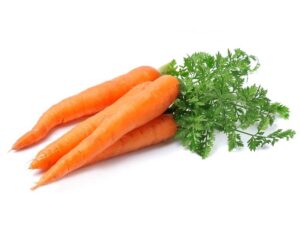

Baby Amsterdam
Baby Amsterdam produces slender, fine-rooted carrots suited to early harvesting, small gardens and fresh bunching.









Carrot seed buying and growing guide
Carrots are root vegetables grown for their crisp, sweet taproots and fine edible foliage. Varieties differ in root length, shape, colour, maturity, heat tolerance and suitability for garden beds, containers, bunching, baby carrots or commercial production.
Seedmart supplies carrot seeds for home gardeners, market gardeners and commercial vegetable growers throughout Australia. Choose from short round carrots, slender baby varieties, smooth Nantes types, warm-climate Kuroda carrots and colourful mixed roots.
The best carrot seed will depend on your soil depth, climate, planting season, intended harvest size and preferred root shape.
Carrots can provide dependable harvests when grown in loose soil with consistent moisture and correct thinning.
Choose long cylindrical, short tapered, round or baby carrots to suit your soil and available growing depth.
Short and round-rooted carrots can grow successfully in pots, troughs and raised planters.
Grow traditional orange carrots or mixed roots in purple, yellow, white and other colours.
Small sowings made every few weeks can provide a more continuous harvest.
Choose smaller packs for household gardens or larger quantities for repeated and commercial planting.
Some carrots are selected for short roots and containers, while others are grown for smooth cylindrical shape, warm-climate performance, colour or early harvesting.
| Growing Goal | Recommended Varieties | Why Choose Them? |
|---|---|---|
| Baby carrots | Baby Amsterdam | Produces slender roots suited to early harvesting, bunching and smaller household plantings. |
| Smooth cylindrical roots | Early Nantes | Develops relatively uniform roots with rounded shoulders and a fine texture. |
| Warm-climate production | Kuroda | A robust carrot type commonly selected for warmer conditions and substantial tapered roots. |
| Shallow soil and pots | Paris Market | Forms compact round roots that require less soil depth than long carrot varieties. |
| Broad seasonal use | All Seasons | A general-purpose variety suited to a range of planting periods where local conditions are favourable. |
| Colourful roots | Rainbow Carrot | Produces a mixture of root colours for specialty gardens, vegetable boxes and market displays. |
| Fresh bunching | Baby Amsterdam and Early Nantes | Suitable for harvesting with fresh tops while roots are young, smooth and attractive. |
| Market garden production | Early Nantes, Kuroda and Baby Amsterdam | Recognisable carrot types suited to scheduled sowing and fresh vegetable sales. |
Baby Amsterdam produces slender, fine-rooted carrots suited to early harvesting, small gardens and fresh bunching.
Early Nantes forms smooth, relatively cylindrical roots with rounded shoulders and blunt tips.
Kuroda produces broader, tapered roots with strong top growth and useful adaptation to warmer growing conditions.
Paris Market develops short, round roots suitable for containers, shallow beds and compact garden spaces.
All Seasons is a versatile orange carrot suitable for general household use across locally appropriate sowing periods.
Rainbow mixtures provide contrasting root colours and are useful for specialty gardens, fresh bunches and colourful dishes.
Root shape should be matched to soil depth, soil texture and intended harvest presentation.
| Carrot Type | General Characteristics | Best Growing Situation |
|---|---|---|
| Baby carrots | Slender roots harvested while young and tender. | Successive sowings, fresh bunches and early harvests. |
| Nantes carrots | Smooth cylindrical roots with relatively blunt ends. | Deep, loose garden soil and uniform market production. |
| Kuroda carrots | Broad-shouldered, tapered roots with strong warm-climate performance. | Subtropical gardens and warmer planting periods. |
| Round carrots | Compact roots requiring less soil depth than long varieties. | Pots, troughs, shallow raised beds and heavier soils. |
| Mixed-colour carrots | Roots in several colours and potentially different shapes. | Specialty gardens, colourful bunches and mixed vegetable displays. |
Carrots grow best in loose, stone-free soil with consistent moisture and direct sunlight. They are generally direct-sown because transplanting can disturb the developing taproot and cause forked or misshapen carrots.
Remove stones, roots and hard clods so developing carrots can grow without obstruction.
Plant carrot seeds where the crop will mature to avoid disturbing the young taproots.
Carrot seed is fine and shallowly planted, so the soil surface must remain moist during germination.
Correct spacing allows individual roots to expand and reduces twisted, undersized or crowded carrots.
Carrots generally perform best in cool to mild conditions. Suitable sowing periods vary with climate, and Kuroda-type carrots may tolerate warmer conditions better than some cool-season varieties.
| Climate Zone | General Sowing Period | Growing Notes |
|---|---|---|
| Cool | September to February | Sow after severe frost risk has eased and allow roots to mature before prolonged winter cold. |
| Temperate | August to May | Spring and autumn are generally reliable, with summer planting possible where soil moisture can be maintained. |
| Subtropical | February to October | Concentrate standard carrot production through the cooler months and use warm-tolerant varieties as conditions heat up. |
| Tropical | April to August | Grow during the cooler dry season and select varieties suited to warm climates. |
| Arid | March to May and August to October | Avoid extreme heat and maintain reliable moisture during germination and root development. |
These sowing periods are general guides. Local frost dates, elevation, rainfall, seasonal temperatures and extreme weather should also be considered.
Regional planting times should be adjusted according to local temperatures, frost risk, rainfall and soil conditions.
| Location | General Planting Guide | Key Considerations |
|---|---|---|
| Brisbane and South East Queensland | February to October | Plant through autumn, winter and early spring. Kuroda types can extend production into warmer conditions. |
| Sydney and coastal New South Wales | February to November | Autumn and spring are generally reliable, with winter sowing possible in mild coastal districts. |
| Inland New South Wales | March to May and August to October | Avoid severe frost and prolonged midsummer heat. |
| Melbourne and Victoria | August to May | Spring and autumn provide favourable conditions, with summer sowing possible where moisture is maintained. |
| Canberra and inland cool districts | September to February | Sow after hard frost risk has reduced and allow roots to develop before winter. |
| Adelaide and South Australia | February to November | Avoid the hottest part of summer and irrigate consistently during dry weather. |
| Perth and south-west Western Australia | March to November | Autumn through spring generally provides the most reliable germination and root quality. |
| Tasmania | September to February | Use the milder growing months and allow for slow growth during cold conditions. |
| Darwin and tropical northern Australia | April to July | Grow during the cooler dry season and select warm-adapted varieties. |
Carrots are best sown directly into the garden bed, raised planter or container where the roots will mature. The fine seeds require shallow planting and consistent surface moisture.
Plant carrot seeds approximately 5–10 mm deep. Cover them lightly with fine soil rather than burying them deeply.
Deep planting can delay or prevent emergence because carrot seeds are small and have limited stored energy. Seed left exposed may dry out or move during watering.
Keep the sowing depth shallow and improve the soil structure before planting.
Slightly deeper sowing can help reduce rapid surface drying.
Carrot seeds commonly take approximately 10–21 days to germinate. Emergence can be slower in cold soil and irregular where the seedbed dries out.
Cool to mild soil supports reliable germination, although emergence may be slower at lower temperatures.
The upper soil layer must remain consistently moist because carrot seed is planted very shallowly.
Loose, finely prepared soil allows delicate seedlings to reach the surface more easily.
Seed planted approximately 5–10 mm deep is protected from drying while remaining shallow enough to emerge.
Carrot seeds do not require direct light to germinate and should be covered lightly with soil. Germination depends primarily on moisture, suitable temperature and oxygen within the seedbed.
Once seedlings emerge, provide full sun or strong light to support healthy foliage and root development.
Soaking carrot seed is generally unnecessary. The seed can be sown dry into a finely prepared, consistently moist seedbed.
Because carrot seeds are very small, soaked seeds can become difficult to handle and distribute evenly. Reliable surface moisture after sowing is generally more important than presoaking.
Carrots are best direct-sown rather than transplanted. The young taproot begins developing soon after germination, and transplanting can bend or damage it.
Damage to the taproot may result in forked, twisted or misshapen carrots. Seedlings sold in punnets may produce edible roots, but they are less likely to form uniformly than direct-sown plants.
Carrots must usually be thinned because the fine seed is difficult to sow at exact final spacing. Crowded seedlings compete for light, moisture and root space.
Thin when the seedlings are large enough to handle and have developed several true leaves. Remove the weakest or most crowded seedlings without disturbing the roots of the plants being retained.
| Harvest Goal | Approximate Final Spacing | General Result |
|---|---|---|
| Baby carrots | Approximately 2–3 cm | Produces slender roots for early harvesting. |
| Medium carrots | Approximately 3–5 cm | Provides room for general household and bunching roots. |
| Large carrots | Approximately 5–8 cm | Allows larger roots to expand without heavy competition. |
| Round carrots | Approximately 4–6 cm | Provides space for compact roots to broaden evenly. |
| Row spacing | Approximately 20–30 cm | Allows access for weeding, watering and harvesting. |
Most carrots take approximately 60–100 days from sowing to harvest. Baby carrots may be harvested earlier, while larger or slower varieties require more time.
| Carrot Group | Typical Period | General Characteristics |
|---|---|---|
| Baby carrots | Approximately 45–65 days | Harvested while roots are narrow, tender and relatively young. |
| Early Nantes types | Approximately 60–80 days | Smooth cylindrical roots suited to fresh eating and bunching. |
| Kuroda carrots | Approximately 70–90 days | Substantial tapered roots suited to warmer growing conditions. |
| Round carrots | Approximately 55–75 days | Compact roots that can mature relatively quickly in shallow soil. |
| Large mature carrots | Approximately 80–110 days | Require greater spacing, deep soil and a longer growing period. |
Growing time varies with variety, temperature, soil depth, spacing, sunlight, fertility, moisture and preferred harvest size.
Carrots can be grown successfully in pots and containers, provided the container is deep enough for the selected root type.
Short and round carrots such as Paris Market are particularly suitable for containers. Nantes, Amsterdam and Kuroda types require deeper soil.
| Carrot Type | Suggested Minimum Soil Depth | Container Notes |
|---|---|---|
| Round carrots | Approximately 15–20 cm | Well suited to shallow troughs, window boxes and compact planters. |
| Baby carrots | Approximately 20–25 cm | Suitable for medium-depth pots and closely managed plantings. |
| Nantes carrots | Approximately 25–30 cm | Require loose soil deep enough for cylindrical root development. |
| Kuroda and longer carrots | Approximately 30–40 cm | Use deep containers that allow roots to grow without obstruction. |
Use a stable pot or trough with unrestricted drainage.
Potted carrots require regular moisture because containers dry faster than garden soil.
Carrots perform best in full sun but may tolerate light partial shade. Plants grown in deep shade may develop healthy-looking tops without producing substantial roots.
In hot climates, brief afternoon shade can reduce heat stress and surface drying. However, carrots should still receive several hours of strong light each day.
Carrots can be harvested whenever the roots have reached a useful size. Baby carrots are lifted early, while larger roots remain in the soil longer.
The upper shoulders of the roots often become visible at soil level. Use the exposed diameter to estimate root size before harvesting.
Harvest slender roots early while they remain tender and before neighbouring plants become crowded.
Lift uniform roots with clean, healthy tops attached for fresh bunch presentation.
Harvest when the shoulders reach the expected diameter and the roots have developed suitable colour.
Check the diameter at soil level because compact roots do not extend as deeply as conventional carrots.
Carrots are generally ready when the exposed shoulder has reached the expected diameter for the variety. Colour should be well developed and the root should feel firm.
Signs of harvest readiness include:
Water dry soil lightly before harvesting to reduce resistance. Loosen the soil beside the row with a garden fork, taking care not to pierce the roots.
Hold the foliage close to the crown and pull steadily upward. Do not twist sharply, as long roots can snap in compacted soil.
For deep or heavy soil, loosen the complete root zone before attempting to lift the crop.
A cut carrot top can produce new leaves when placed in water or moist growing medium, but it will not regrow a complete edible carrot root.
The original taproot has already been harvested. The regrowing top may produce foliage and, if eventually allowed to flower, could potentially produce seed, but it does not recreate the original carrot.
To grow new carrots for harvesting, sow carrot seeds.
Yes. Clean, healthy carrot leaves are edible and have a fresh herbal flavour. They may be used in small quantities in pesto, sauces, salads, soups and herb mixtures.
Only use foliage from plants that has not been treated with a product that prohibits consumption. Wash the leaves thoroughly and discard damaged or diseased material.
Carrots can share beds with crops that have compatible seasonal, spacing and watering requirements.
Potential neighbouring crops include:
Companion planting should not replace correct spacing, crop rotation, irrigation or pest management. Avoid planting carrots too close to vigorous crops that create dense shade or compete heavily for soil moisture.
Surface drying, deep sowing, soil crusting, cold conditions or old seed can reduce emergence.
Stones, compaction, fresh manure, transplant damage and root obstruction can cause branching.
Overcrowding, insufficient light, shallow soil, low fertility or early harvesting can restrict root size.
Excessive nitrogen, irregular moisture or delayed harvesting can contribute to excessive side-root development.
Roots may crack when dry soil is followed by heavy rain or sudden overwatering.
Exposed root shoulders can turn green when affected by light. Cover them lightly with soil as they develop.
Smaller seed quantities are suitable for household gardens, raised beds, containers and growers comparing several root types.
Bulk carrot seed can be more economical for growers making repeated sowings for bunching, loose roots and fresh-market production.
Commercial carrot production requires varieties suited to the soil type, harvest specification, market demand and available planting window.
Consistent length, shape and diameter simplify bunching, grading, packing and market presentation.
Deep cylindrical carrots require loose soil, while short and round types can perform better in shallower or heavier conditions.
Sowing density and thinning affect final root diameter, uniformity and total yield.
Determine whether the crop will be sold as baby carrots, fresh bunches, loose roots or coloured specialty produce.
Soil compaction, root length and foliage strength influence how efficiently carrots can be lifted and handled.
Select standard orange carrots for broad demand and round, baby or coloured types for specialty markets.
Carrots are straightforward when direct-sown into loose soil and kept consistently moist during germination. Soil preparation and thinning are the most important management steps.
Direct sow carrot seed approximately 5–10 mm deep into finely prepared soil. Keep the surface consistently moist, thin the seedlings after emergence and maintain steady watering as the roots develop.
Carrots generally perform best during cool to mild conditions. Temperate growers can sow through much of the year, while tropical and subtropical growers should concentrate on the cooler months.
Carrots can generally be planted in Brisbane from late summer through spring. Kuroda types are particularly useful where conditions are warmer.
Carrots can generally be planted around Melbourne from late winter through autumn, provided soil moisture is maintained during summer.
Autumn through spring generally provides the most favourable carrot-growing conditions in Perth and south-west Western Australia.
Plant carrot seeds approximately 5–10 mm deep. Cover them lightly with fine soil and avoid burying them deeply.
Carrot seeds commonly germinate within approximately 10–21 days. Cold soil, surface drying and crusted soil can delay emergence.
No. Cover the seed lightly with soil. Once the seedlings emerge, provide full sun or strong light.
Soaking is generally unnecessary. The fine seed is easier to sow dry, and consistent soil moisture after planting is more important.
Carrots can sometimes survive transplanting, but root disturbance commonly causes forked or misshapen roots. Direct sowing is strongly preferred.
Thin carrots once the seedlings have developed several true leaves and are large enough to handle. Avoid waiting until the roots are heavily intertwined.
Space baby carrots approximately 2–3 cm apart, medium carrots around 3–5 cm apart and larger roots approximately 5–8 cm apart.
Crowded carrots compete for root space and commonly remain small, twisted or poorly shaped.
Most carrots take approximately 60–100 days from sowing to harvest. Baby and round carrots may be ready earlier, while large roots can take longer.
Yes. Choose a container deep enough for the variety. Round carrots may need only 15–20 cm of soil, while long types can require 30–40 cm.
Carrots tolerate light partial shade but develop the best roots in full sun. Deep shade can produce large tops and undersized roots.
Carrots are generally ready when the shoulders have reached the expected diameter and the crop has reached its approximate maturity period. Lift one test root before harvesting the full row.
Loosen the soil beside the row with a fork and pull the roots steadily from close to the crown. Water very dry soil lightly before harvesting.
Carrot tops can regrow leaves, but they will not produce a new full carrot root. New harvestable carrots must be grown from seed.
Yes. Clean, healthy carrot foliage is edible and may be used in small quantities in pesto, sauces, soups and herb mixtures.
Common causes include surface drying, sowing too deeply, cold soil, compacted soil, old seed or washing the fine seed out of place during watering.
Forking can result from stones, compacted soil, fresh manure, transplanting, root damage or other obstructions in the soil.
Small roots may result from overcrowding, shallow or compacted soil, insufficient sunlight, nutrient imbalance, moisture stress or early harvesting.
The exposed tops of carrot roots can turn green when affected by light. Cover the shoulders lightly with soil as the roots develop.
Carrots can share beds with onions, leeks, lettuce, peas, beans, radish, beetroot and other vegetables where adequate light, moisture and spacing are maintained.
Yes. Carrots and onions can share a bed where both crops receive sufficient spacing, sunlight and moisture.
They can be grown in the same general garden, but mature tomatoes may heavily shade carrots. Maintain adequate separation and avoid root competition.
Seed may be saved from suitable open-pollinated varieties. Carrots are generally biennial and can cross-pollinate with other carrot varieties and wild carrot, so isolation is required.
Product specifications can vary between varieties and seed lots. Review the individual product page for information about variety type, seed treatment and germination before ordering.
Carrot seeds for Australian growers
Seedmart supplies carrot seed for household vegetable gardens, raised beds, containers, market gardens and commercial production. Choose from baby carrots, smooth Nantes types, warm-climate Kuroda carrots, compact round roots and colourful mixed varieties.
Review the individual product pages for available pack sizes, root characteristics, planting guidance and variety-specific growing information before ordering.