
Edible Calyces
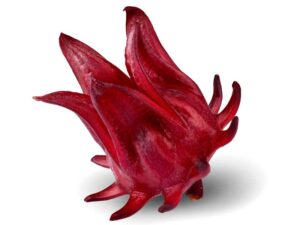
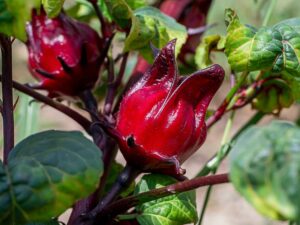
The fleshy red structures surrounding the seed capsules are the principal harvest for jams, tea and preserves.
Rosella seed buying and growing guide
Rosella is a vigorous warm-season hibiscus grown for its ornamental flowers, edible young leaves and fleshy red calyces. The calyx develops around the seed capsule after flowering and is the part most commonly harvested for jams, teas, cordials, syrups, sauces and preserves.
Seedmart supplies rosella seeds for home gardens, raised beds, substantial containers, market gardens and specialty culinary production. The plant is botanically identified as Hibiscus sabdariffa and is also known internationally as roselle, Jamaican sorrel, red sorrel and karkadé.
Rosella needs a long, warm and frost-free growing period. It performs particularly well in tropical and subtropical Australia but can also be grown as a warm-season annual in selected temperate districts where plants are started early and protected from cold.
Harvest the mature red calyces for jams, teas, cordials, syrups, sauces and other preserved products.
Plants produce attractive cream to pale-yellow hibiscus-style flowers with darker centres.
Rosella grows actively through warm spring and summer conditions when frost-sensitive crops perform best.
Tender leaves and shoots have a tart flavour and can be used as cooked leafy vegetables.
Grow rosella in fertile garden beds, production rows or substantial free-draining pots.
Choose smaller quantities for household growing or larger packs for repeated and market-garden sowings.
Rosella is a warm-climate flowering plant in the mallow family, Malvaceae. It develops upright branching growth, lobed green leaves, hibiscus-like flowers and distinctive red calyces around its maturing seed capsules.
The plant is grown for several purposes:
The fleshy red structures surrounding the seed capsules are the principal harvest for jams, tea and preserves.
Tender foliage has a sour, tangy flavour and is used as a cooked green in several cuisines.
The cream to pale-yellow flowers and contrasting red stems and calyces provide ornamental value.
Plants retained beyond the culinary calyx harvest can develop mature seeds for future propagation.
Rosella is a plant, not an Australian rosella parrot. Search results frequently mix the edible plant with rosella bird species, so use the botanical name Hibiscus sabdariffa when identifying or purchasing seed.
Rosella seeds are the mature seeds formed inside the capsules enclosed by the red calyces. Planting seed is supplied for raising rosella plants and should be used according to the current product specifications.
| Rosella Material | Primary Use | Important Distinction |
|---|---|---|
| Rosella planting seed | Growing Hibiscus sabdariffa plants | Supplied for sowing rather than as packaged culinary seed. |
| Fresh red calyces | Jams, sauces, cordials, syrups and preserves | The fleshy calyx is removed from around the central seed capsule. |
| Dried calyces | Herbal infusions and dried culinary products | Must be dried thoroughly and stored away from moisture. |
| Saved mature seed | Future propagation | Seed must be allowed to mature fully before collection. |
Do not consume planting seed merely because the mature crop is edible. Check the product specifications and use planting seed only for its stated purpose.
Rosella is a species within the broader hibiscus group. Its botanical name is Hibiscus sabdariffa, but not every ornamental hibiscus produces the same edible calyces or has the same culinary uses.
| Rosella | Ornamental Hibiscus |
|---|---|
| Botanically identified as Hibiscus sabdariffa. | May belong to several other hibiscus species and hybrids. |
| Selected primarily for fleshy red calyces, leaves and culinary use. | Usually selected for flower size, colour and ornamental performance. |
| Commonly grown as a warm-season annual or short-lived perennial. | Many ornamental types are maintained as longer-lived shrubs. |
| Produces distinctive swollen calyces around maturing seed capsules. | Does not necessarily produce calyces suitable for rosella recipes. |
| Flowers are generally smaller and less showy than many ornamental hybrids. | Flowers may be very large, highly coloured or double. |
Do not substitute an unidentified ornamental hibiscus. Use correctly identified Hibiscus sabdariffa when growing rosella for culinary calyces.
Rosella is grown across tropical and subtropical regions and appears under several regional names.
Common names can overlap with other plants. Use Hibiscus sabdariffa alongside the common name when botanical identity is important.
No. Rosella is an introduced warm-climate crop rather than an Australian native plant. It has nevertheless become strongly associated with northern Australian gardens, homemade rosella jam and tropical food production.
Do not position rosella as an Australian native or bushfood species. It may be grown in Australian food gardens, but that does not make it native to Australia.
The principal culinary harvest is the fleshy red calyx surrounding the central seed capsule. The calyx is not the same structure as the flower petals.
| Plant Part | Description | Typical Use |
|---|---|---|
| Flower petals | Cream to pale-yellow petals that open briefly before falling. | Mainly ornamental; not the principal jam ingredient. |
| Red calyx | Fleshy red structure that enlarges around the seed capsule after flowering. | Jams, jellies, teas, cordials, syrups, sauces and preserves. |
| Seed capsule | Firm central pod enclosed by the calyx. | Removed during processing or retained until seed matures. |
| Young leaves | Tender tart foliage harvested before it becomes coarse. | Cooked greens, soups, curries and sour leafy dishes. |
| Mature seed | Dry seed collected from fully developed capsules. | Future propagation where seed is correctly matured and stored. |
The red calyx is commonly mistaken for the rosella flower. The true flower opens first; the calyx enlarges afterwards around the developing seed capsule.
Rosella calyces have a pronounced tart, fruity flavour often compared with cranberry, sour cherry or rhubarb. Their natural acidity makes them particularly suitable for sweet preserves and drinks.
Fresh calyces have a firm texture and sharp fruity acidity before cooking.
Sugar balances the natural acidity while retaining the distinctive rosella flavour and red colour.
Dried or fresh calyces produce a deeply coloured tart infusion.
Young leaves provide a tangy green flavour suited to cooked dishes.
Cooked calyces can produce a strongly coloured sweet-tart syrup.
Rosella can be combined with spices, vinegar, sugar and other produce in savoury preserves.
Rosella is a frost-sensitive warm-season crop that grows best in full sun, fertile free-draining soil and a long period of warm weather.
Sow after frost risk has passed and both daytime and night-time conditions have become reliably warm.
Strong light supports sturdy branching growth, flowering and calyx production.
Plants need several warm months to grow, flower and develop harvestable calyces.
Consistent watering supports active growth while adequate drainage prevents root stress.
Rosella is not a quick cool-season vegetable. Plant early enough to provide a long frost-free period before autumn temperatures decline.
Sow rosella once frost risk has passed and the soil has warmed. Protected propagation can provide a useful head start in temperate districts with shorter summers.
| Climate Zone | General Sowing Period | Growing Notes |
|---|---|---|
| Tropical | Extended warm-season window | Time crops around excessive wet-season rainfall, waterlogging and local production conditions. |
| Subtropical | September to November | Early spring sowing provides a long warm season before flowering and harvest. |
| Warm temperate | October to November | Start under protection where spring nights remain cold. |
| Cool temperate | Late spring under protection | Use the warmest available site and expect a shorter production window. |
| Arid and inland | August to October after frost risk | Provide dependable irrigation and protection from severe drying winds. |
These sowing periods are general guides. Local frost dates, elevation, rainfall, humidity, extreme heat and irrigation availability should also be considered.
| Location | General Planting Guide | Key Considerations |
|---|---|---|
| Brisbane and South East Queensland | September to November | Plant early enough for strong growth before shortening autumn days; maintain drainage during summer storms. |
| North Queensland | During a suitable warm production window | Manage intense rainfall, humidity, wind and local wet-season disease pressure. |
| Sydney and coastal New South Wales | October to November | Use a warm sheltered site and protect seedlings from cool spring nights. |
| Inland New South Wales | After the final frost | Start early under protection and irrigate consistently during dry heat. |
| Melbourne and Victoria | Late spring under protection | The growing season may be marginal; use the warmest site and start plants early. |
| Adelaide and South Australia | October to November | Provide mulch, irrigation and shelter from severe drying conditions. |
| Perth and south-west Western Australia | September to November | Spring establishment allows plants to develop before peak summer dryness. |
| Darwin and tropical northern Australia | Extended warm-season window | Choose timing according to rainfall, drainage, humidity and local harvest requirements. |
| Tasmania | Protected warm-season trial only | Outdoor seasons are generally short, and reliable calyx production may require greenhouse conditions. |
Warm soil supports faster and more even emergence than cool spring ground.
Sow the relatively large seed approximately 10 mm deep in free-draining mix or prepared soil.
Keep the seedbed moist without leaving it cold and saturated.
Provide strong light immediately after emergence to produce sturdy growth.
How long do rosella seeds take to germinate? Rosella commonly begins germinating within approximately 7–14 days under suitably warm conditions. Cooler soil can extend the emergence period.
Rosella seed can be soaked in clean lukewarm water before sowing. Soaking is optional but may help hydrate the seed coat and encourage more even emergence.
Avoid starting rosella too early without adequate heat and light. Cold, weak seedlings can become stretched, root-stressed and slow to establish outdoors.
Rosella can be direct-sown into warm prepared soil or raised in pots before transplanting. Direct sowing suits reliably warm climates, while protected propagation provides a longer start in temperate districts.
| Direct Sowing | Raising Seedlings |
|---|---|
| Seed is planted where the rosella will mature. | Seed is started in pots or large cells under protection. |
| Avoids transplant disturbance. | Provides greater control over warmth, moisture and pests. |
| Requires reliably warm soil. | Useful where outdoor soil remains cool in spring. |
| Young seedlings need protection from snails and drying. | Plants can be hardened before outdoor planting. |
| Extra seedlings may require thinning. | Seedlings must be transplanted before becoming root-bound. |
Rosella develops into a substantial branching plant. Crowding restricts airflow, access and calyx harvesting.
| Growing Goal | Approximate Spacing | General Result |
|---|---|---|
| Compact household planting | Approximately 60–80 cm apart | Suitable where plants will be pruned or closely managed. |
| Full-sized garden plants | Approximately 80–120 cm apart | Provides room for branching, airflow and harvesting access. |
| Commercial rows | Based on machinery and harvest system | Allow access for cultivation, crop inspection and repeated picking. |
| Container plants | One plant per substantial pot | Reduces competition for water, nutrients and root space. |
Spacing should be adjusted for soil fertility, plant vigour, pruning method, irrigation system and required harvesting access.
Rosella commonly develops into a tall, branching warm-season plant. Under favourable conditions, plants may reach approximately 1.5–2 metres, although mature size varies with climate, spacing, soil, water and pruning. Seedmart’s current product information gives a general height of approximately 1.5–2 metres.
Plants in exposed positions may require shelter or support once branches carry numerous wet calyces.
Rosella can grow in containers, but each plant requires substantial root volume, full sun, regular watering and enough time to reach flowering maturity.
Can rosella grow in a pot? Yes, but small pots restrict growth and can delay flowering. Use a substantial container and provide consistent water and nutrition.
Rosella generally performs best in full sun. Strong light supports sturdy stems, branching, flowering and calyx development.
Light afternoon protection may reduce stress in extremely hot inland conditions, but heavy shade can cause:
Rosella benefits from regular water during rapid growth, flowering and calyx development. The soil should remain moist enough to support growth but must not stay permanently waterlogged.
| Growth Stage | Watering Approach | What to Avoid |
|---|---|---|
| Germinating seed | Maintain evenly moist growing medium. | Complete drying or cold saturated soil. |
| Young plants | Water deeply enough to encourage expanding roots. | Repeated wilting and shallow surface watering. |
| Rapid vegetative growth | Maintain steady root-zone moisture. | Severe drought followed by excessive irrigation. |
| Flowering and calyx development | Continue regular deep watering according to soil conditions. | Waterlogging and prolonged moisture stress. |
| Container plants | Check frequently because pots dry rapidly. | Leaving containers permanently standing in water. |
Use balanced nutrition rather than excessive nitrogen. Heavy nitrogen feeding can produce large leafy plants without proportionate flowering and calyx development.
Rosella requires a longer production period than quick annual vegetables. Harvest timing depends on sowing date, temperature, day length, plant vigour and the stage at which leaves or calyces are collected.
| Growth or Harvest Stage | Indicative Period | General Characteristics |
|---|---|---|
| Seed germination | Approximately 7–14 days | Emergence from warm, evenly moist soil. |
| Young leafy growth | Several weeks after establishment | Tender leaves and shoot tips can be harvested selectively. |
| Large vegetative plant | Approximately 2–4 months | Plants develop substantial branching before peak flowering. |
| First calyx harvest | Often approximately 120–140 days | Seedmart currently gives a general calyx harvest period of around four to five months. |
| Mature dry seed | Longer than the fresh calyx harvest | Capsules must remain until seed has completed development and drying. |
These periods are broad guides rather than guaranteed maturity dates. Cool weather, late planting and insufficient light can delay flowering and reduce harvest.
Rosella is commonly grown as a warm-season annual. It completes vegetative growth, flowering, calyx production and seed development within one main growing cycle.
In frost-free tropical conditions, plants may persist longer, but older plants can become woody and less practical than newly established seasonal crops.
Plan rosella as a seasonal production crop. Even where plants survive beyond one year, replacing them from seed can provide more manageable and productive growth.
Rosella generally flowers after producing substantial vegetative growth. Flowering is influenced by plant maturity, temperature, day length, sowing date and local climate.
Late-sown plants may not develop enough growth before the flowering and cool-season transition.
Rosella flowering can respond to shortening days, making early establishment important.
Plants require warm conditions for vigorous growth before flowering begins.
Drought, root restriction, waterlogging and nutrient imbalance can reduce flower production.
The plant may not have enough warm growing time to reach productive maturity.
Heavy shade can cause leafy, elongated growth with limited flowering.
Heavy nitrogen feeding may encourage foliage rather than reproductive growth.
Low temperatures slow growth and can prevent the plant reaching useful flowering size.
A small or root-bound container can limit plant development.
Repeated wilting or waterlogging can interrupt flowering and calyx development.
Harvest rosella after the flower has fallen and the red calyx has enlarged around the central seed capsule. The calyx should be fleshy, brightly coloured and still tender rather than dry or fibrous.
| Calyx Condition | Likely Stage | Recommended Action |
|---|---|---|
| Small and recently formed | Immature | Allow additional development. |
| Bright red, fleshy and enlarged | Prime culinary stage | Harvest with clean secateurs and process promptly. |
| Large but beginning to toughen | Late culinary stage | Harvest immediately before quality declines further. |
| Drying around a mature capsule | Seed-production stage | Retain only where mature seed is required. |
| Split, mouldy or insect-damaged | Unsuitable or reduced quality | Remove and separate from sound harvests. |
Harvest before the calyx dries around the capsule. Tender fleshy calyces provide better culinary yield and require less trimming than overmature material.
The firm central capsule must usually be separated from the fleshy calyx before most culinary preparation.
Rosella calyces can be dried for later infusions and culinary use. Drying must remove sufficient moisture to prevent mould during storage.
Do not store partly dried calyces in sealed containers. Residual moisture can cause condensation, mould and product loss.
Cook the prepared calyces with sugar according to a tested preserving method.
Infuse prepared calyces in hot water for a tart, deeply coloured herbal drink.
Cook and strain the calyces to produce a concentrated syrup for dilution.
Use concentrated rosella syrup in sparkling water, desserts and sauces.
Combine rosella with spices, vinegar, sugar, onion and other produce.
Use young leaves in curries, soups, stews and other cooked dishes.
Rosella tea is prepared by infusing fresh or dried calyces in hot water. The strength and acidity depend on the amount of rosella, water volume and infusion time.
Yes. Young rosella leaves and tender shoots are edible and have a tangy, sour flavour. They are generally better suited to cooking than older, coarser leaves.
Young foliage may be:
Do not remove excessive foliage where calyces are the main crop. Healthy leaves are needed to support plant growth, flowering and fruit development.
Rosella can be grown partly for young leaves, but its production system differs from a dense baby-leaf crop such as amaranth or spinach.
| Leaf Production | Calyx Production |
|---|---|
| Young shoots and leaves are harvested during vegetative growth. | Plants are retained through flowering and calyx development. |
| Frequent cutting may encourage branching. | Excessive cutting can delay flowering and reduce reproductive growth. |
| Leaf tenderness and regrowth are important. | Calyx size, colour, fleshiness and harvest labour are important. |
| Plants can be harvested earlier. | Requires a much longer warm-season production period. |
Seed saving requires selected capsules to remain on healthy plants beyond the fresh culinary stage until the seed develops fully.
Rosella is open-pollinated. Seed may be saved from mature plants, but crossing and natural variation can occur where other compatible rosella plants are flowering nearby.
Rosella can produce voluntary seedlings where mature capsules release viable seed into warm suitable soil.
To limit unwanted seedlings:
Cold soil, deep planting, drying mix and excessive water can reduce emergence.
Insufficient light and early sowing under cool conditions can produce stretched plants.
Cold weather, restricted roots, low fertility, shade and moisture stress can limit growth.
Late planting, insufficient sun, excess nitrogen and cool conditions can delay flowering.
Waterlogging, drought, nutrient imbalance, root damage and natural ageing can cause yellowing.
Caterpillars, beetles, grasshoppers, snails and slugs can damage leaves and young shoots.
Insects, wet weather, mould and delayed harvest can reduce calyx quality.
Wind, excessive soft growth and heavy branches can cause stems to lean or split.
Rosella can share warm-season gardens with crops requiring similar sunlight, warmth and irrigation.
Allow enough room so mature rosella plants do not heavily shade smaller neighbouring crops.
Smaller seed quantities suit household gardens, raised beds, substantial pots and growers trialling rosella for the first time.
Larger quantities can support planned calyx, leafy-vegetable and specialty culinary production.
Compare value by saleable calyx production. Germination, plant population, flowering time, calyx size, coring labour, harvest frequency and usable processed yield all influence the true production cost.
Commercial rosella production requires an adequately long warm season, defined calyx specifications and a practical harvesting and processing system.
Early establishment is critical where flowering and calyx production depend on a limited frost-free season.
Define the required colour, size, tenderness and maturity for fresh or processed markets.
Calyces mature progressively and may require repeated hand harvesting.
Removing capsules, washing and cooling can require substantial labour beyond field harvest.
Fresh calyces should be protected from crushing, heat, excess moisture and delayed processing.
Identify the product clearly as rosella or roselle calyces rather than generic hibiscus flowers.
Conduct local production trials before large sowings. Germination, plant height, flowering date, calyx yield, harvest duration and processing recovery vary with climate, planting date, irrigation, soil and plant density.
Rosella is a warm-season hibiscus, botanically identified as Hibiscus sabdariffa, grown for its red edible calyces, young leaves and ornamental flowers.
Rosella is a particular hibiscus species. Not every ornamental hibiscus produces the same edible calyces or has the same culinary uses.
No. Rosella is an introduced tropical crop that has become strongly associated with northern Australian gardens and preserves.
The fleshy red calyx surrounding the central seed capsule is used for rosella jam. It develops after the flower petals fall.
No. The flower opens first. The red calyx remains and enlarges around the developing seed capsule after flowering.
Rosella calyces have a strong tart, fruity flavour often compared with cranberry, sour cherry or rhubarb.
Sow rosella seed approximately 10 mm deep in warm, moist and free-draining soil or seed-raising mix. Provide full sun, consistent moisture and a long frost-free growing period.
Rosella seeds commonly germinate within approximately 7–14 days under suitably warm conditions.
Plant rosella seed approximately 10 mm deep and cover it with fine soil or seed-raising mix.
Soaking in clean lukewarm water overnight is optional and may help hydrate the seed before sowing.
Yes. Direct-sow once the soil is reliably warm. In cooler districts, starting seed under protection provides a longer growing period.
Plant after frost risk has passed and the soil has warmed. Subtropical growers commonly sow from September to November, while temperate growers generally sow during late spring.
Rosella can be grown as a warm-season annual in selected temperate districts, but cool climates may not provide enough frost-free time for reliable calyx production.
Yes. Rosella generally performs best with at least six to eight hours of direct sunlight.
Yes. Use a substantial free-draining container and grow one mature plant per pot. Small containers can restrict growth and flowering.
Allow approximately 80–120 cm between full-sized plants. Closer spacing may be used where plants are carefully managed.
Rosella commonly reaches approximately 1.5–2 metres under favourable conditions, although height varies with climate, spacing, fertility and water.
Rosella commonly requires approximately four to five warm months to produce harvestable calyces.
Rosella is usually grown as a warm-season annual. Plants may persist longer in frost-free tropical conditions.
Rosella generally flowers after developing substantial vegetative growth. Timing is influenced by sowing date, plant maturity, warmth and day length.
Late planting, cool conditions, insufficient sunlight, excessive nitrogen, restricted roots and moisture stress can delay flowering.
Harvest after the flower falls and the red calyx becomes enlarged, fleshy and brightly coloured but before it dries around the seed capsule.
Cut mature calyces from the branches using clean secateurs, remove the central seed capsules and process or cool the calyces promptly.
Cut around the base or use a suitable coring tool to push the central capsule from the fleshy red calyx.
Remove the seed capsules, wash and drain the calyces, then dry them in a single layer using a hygienic food-dehydration method until no internal moisture remains.
Yes. Clean fresh calyces can be infused in hot water. Dried calyces provide a convenient stored product.
Yes. Young leaves and tender shoots have a sour flavour and can be cooked in soups, curries, stews and other savoury dishes.
Yes. Allow selected capsules to mature and dry fully, collect the seed before excessive shedding and store it in cool, dry conditions.
Rosella can self-seed where mature capsules release viable seed into warm suitable soil.
The current product specifications identify the seed as having no chemical treatment. Check the individual product page before ordering because seed lots and specifications can change.
The current product specifications identify the rosella seed as open-pollinated and non-hybrid.
The current product specifications identify the seed as non-GMO.
Rosella seeds for Australian growers
Seedmart supplies rosella seed for home gardens, raised beds, substantial containers, market gardens and specialty culinary production. Grow this warm-season Hibiscus sabdariffa crop for tart red calyces, ornamental flowers, edible young leaves and traditional rosella jams, teas, cordials and preserves.
Review the product page for current pack sizes, seed treatment, specifications, quarantine restrictions and ordering information before purchasing.