
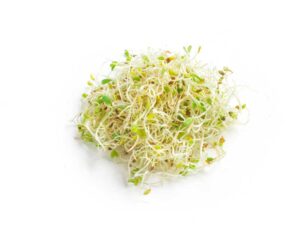
Fenugreek Sprouting Seeds
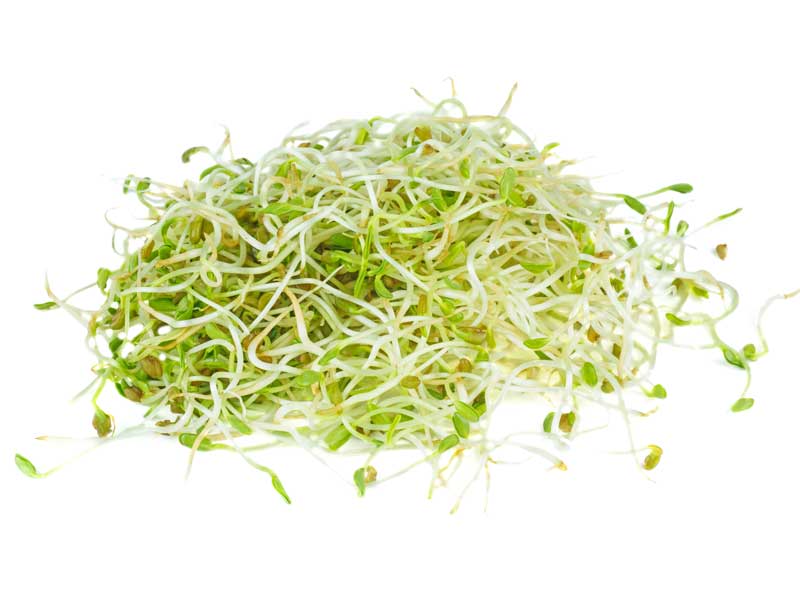
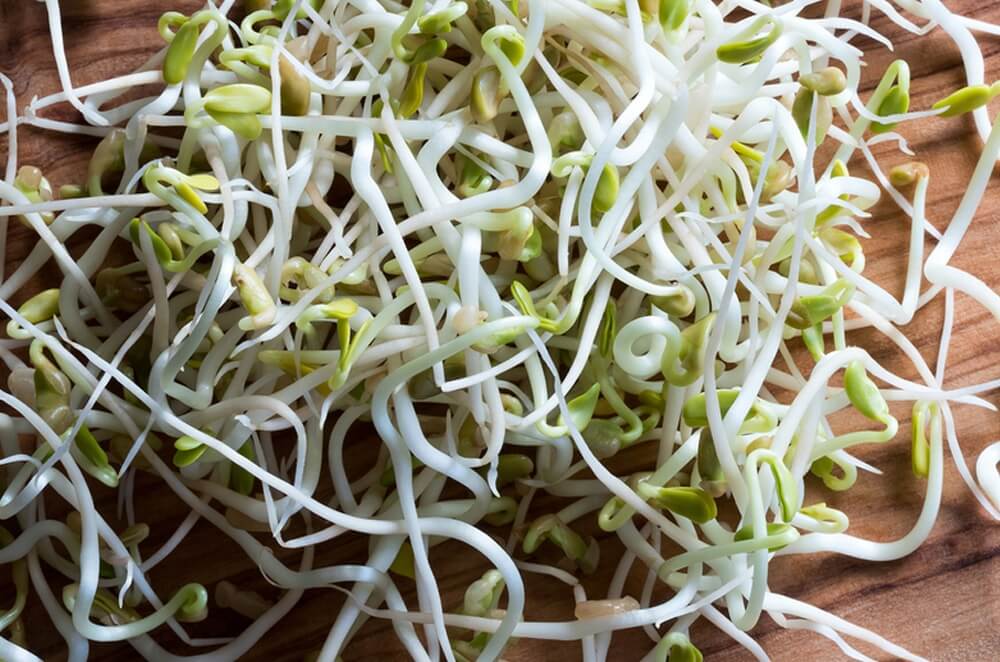
Grow fresh fenugreek sprouts at home with Australian-grown fenugreek sprouting seeds. Fenugreek (Trigonella foenum-graecum), also known as methi, produces crisp green sprouts with a distinctive savoury, slightly bitter flavour.
Fenugreek is widely used in Indian, Middle Eastern and North African cuisines. While the dried seeds are commonly used as a spice, sprouting produces fresh, crunchy shoots that can be added to salads, sandwiches, wraps, curries, rice bowls and homemade sprout mixes.
Fenugreek has a stronger and more distinctive flavour than mild sprouts such as alfalfa or clover. It can be grown on its own or combined with milder varieties to create a balanced sprouting mix.
These Australian-grown fenugreek seeds are suitable for indoor sprouting throughout the year using a glass sprouting jar, sprouting bag or other suitable sprouting system. No soil or outdoor garden is required.
Fenugreek Sprouting Seed Details
Why Grow Fenugreek Sprouts?
- Australian-grown fenugreek sprouting seeds.
- Produces crisp green sprouts with a distinctive savoury flavour.
- Easy to grow indoors using a jar or sprouting bag.
- Suitable for sprouting throughout the year.
- No soil or outdoor garden required.
- Useful for salads, wraps, sandwiches, curries and savoury dishes.
- Can be mixed with milder sprouts such as alfalfa and clover.
- Also known as methi, a familiar ingredient in Indian cuisine.
What Do Fenugreek Sprouts Taste Like?
Fenugreek sprouts have a distinctive savoury flavour with mild bitterness and the characteristic flavour associated with fenugreek or methi. They are stronger tasting than mild leafy sprouts such as alfalfa and clover.
The flavour changes as the sprouts develop, so harvest time can be adjusted according to personal preference. Younger sprouts generally have a fresher, milder character, while more developed sprouts can have a stronger fenugreek flavour.
Because of their distinctive taste, fenugreek sprouts are particularly useful for adding flavour to mixed sprout combinations. Try combining a smaller amount of fenugreek with milder varieties such as alfalfa, clover, broccoli or lentils.
How to Grow Fenugreek Sprouts
Fenugreek is easy to grow indoors using the soak, rinse and drain method. A glass sprouting jar or hemp sprouting bag works well for small home-grown batches.
- Add the seeds.
Place approximately 1–2 tablespoons of fenugreek sprouting seeds into a clean sprouting jar or sprouting bag. - Soak for approximately 6–8 hours.
Cover the seeds generously with cool, clean water and leave them to soak. - Drain thoroughly.
Pour away the soaking water and rinse the seeds thoroughly with fresh, cool water. - Position for drainage.
If using a jar, position it upside down at an angle so excess water can drain away while air continues to circulate. If using a sprouting bag, hang it where it can drain freely. - Rinse every 8–12 hours.
Rinse the developing fenugreek sprouts with fresh, cool water and drain thoroughly after each rinse. - Allow the sprouts to develop.
Continue the rinse-and-drain cycle as the roots and shoots develop. Fenugreek sprouts are commonly ready in approximately 3–5 days. - Harvest.
Harvest when the sprouts have reached your preferred size and flavour. Give them a final rinse, drain thoroughly and refrigerate.
How Much Do Fenugreek Sprouting Seeds Produce?
Approximately 1–2 tablespoons of fenugreek seed can produce around 1–2 cups of fresh sprouts. Final yield will vary according to seed quantity, germination, growing conditions and the stage at which the sprouts are harvested.
Fenugreek seeds expand as they absorb water and germinate, so leave sufficient room in your sprouting container for the developing sprouts.
Tips for Growing Fenugreek Sprouts Successfully
- Use clean equipment: Clean your jar, sprouting lid or bag thoroughly before starting each batch.
- Soak before sprouting: An initial soak of approximately 6–8 hours helps prepare the seeds for germination.
- Rinse consistently: Rinse approximately every 8–12 hours with fresh, cool water.
- Drain thoroughly: Avoid leaving the seeds or developing sprouts sitting in pooled water.
- Maintain airflow: Position the sprouting container so excess moisture can drain and air can circulate.
- Avoid excessive heat: Fenugreek generally performs best under moderate indoor conditions rather than excessive heat.
- Taste as they grow: The flavour becomes more pronounced as the sprouts develop, so harvest according to your preferred flavour.
- Refrigerate after harvesting: Drain the finished sprouts thoroughly before refrigeration.
How to Use Fenugreek Sprouts
Fenugreek sprouts have considerably more flavour than many common leafy sprouts, so a relatively small amount can add a distinctive savoury character to a meal.
Try adding fresh fenugreek sprouts to:
- Salads and salad bowls.
- Sandwiches and wraps.
- Rice and grain bowls.
- Curries and Indian-inspired dishes.
- Noodle dishes.
- Omelettes and savoury egg dishes.
- Stir-fries.
- Homemade sprout mixes.
- Fresh garnishes for savoury meals.
Fenugreek sprouts can be particularly useful in mixed sprout blends, where their stronger flavour provides contrast to milder varieties.
Fenugreek Sprouts vs Fenugreek Seeds
Fenugreek seeds and fenugreek sprouts come from the same plant but are used differently in the kitchen.
For a more detailed comparison, read our guide: Fenugreek Sprouts vs Fenugreek Seeds.
Frequently Asked Questions
How long do fenugreek seeds take to sprout?
Fenugreek sprouts are commonly ready in approximately 3–5 days. Growing time varies with temperature, seed quantity, airflow and the stage at which you prefer to harvest them.
How long should fenugreek seeds be soaked before sprouting?
Soak fenugreek sprouting seeds for approximately 6–8 hours before draining and beginning the regular rinse cycle.
How often should fenugreek sprouts be rinsed?
Rinse and drain the developing sprouts approximately every 8–12 hours. Drain thoroughly after each rinse so excess water does not remain around the seeds.
Can fenugreek be sprouted in a glass jar?
Yes. A glass sprouting jar is a convenient method for growing fenugreek sprouts at home. Fenugreek can also be grown in a suitable sprouting bag.
Do fenugreek sprouts need soil?
No. Fenugreek sprouts can be grown without soil using a jar, sprouting bag or another suitable sprouting system.
What do fenugreek sprouts taste like?
Fenugreek sprouts have a distinctive savoury, slightly bitter flavour characteristic of fenugreek. Their flavour is stronger than mild sprouts such as alfalfa or clover.
Is fenugreek the same as methi?
Yes. Methi is a common name for fenugreek, particularly in Indian cuisine. Both names refer to Trigonella foenum-graecum.
Can fenugreek sprouts be mixed with other sprouts?
Yes. Fenugreek works particularly well in mixed sprout blends. Because it has a relatively distinctive flavour, combining it with milder sprouts such as alfalfa, clover or broccoli can create a more balanced flavour.
Are these fenugreek sprouting seeds Australian grown?
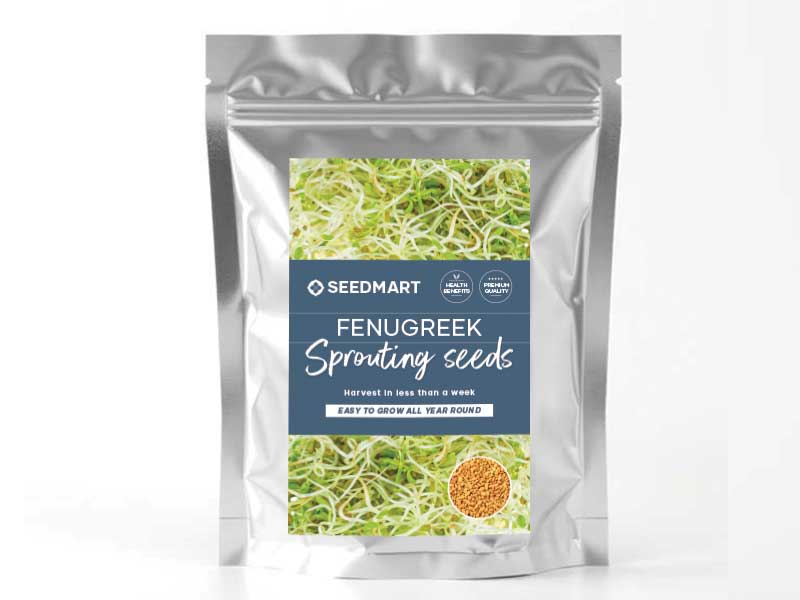
Yes. These Seedmart fenugreek seeds are Australian grown and are suitable for home sprouting.
Free Sprouting Guide
Download your FREE Sprouting Guide for more information about growing sprouts at home.
lynn martin –
At first trying them buy themselves they seemed a little bitter but when added to food they tasted very nice, not at all bitter.