
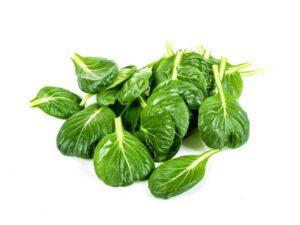
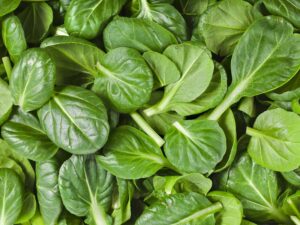
Glossy Dark-Green Leaves
Smooth rounded foliage develops around the central growing point in an attractive rosette.
Tatsoi seed buying and growing guide
Tatsoi is a compact Asian leafy vegetable grown for its glossy dark-green leaves, tender pale stems and mild spinach-like flavour. Mature plants form low, attractive rosettes, while densely sown crops can be harvested earlier as microgreens or baby leaf.
Seedmart supplies tatsoi seeds for home gardens, raised beds, containers, market gardens, restaurants and commercial leafy-green production throughout Australia. Tatsoi belongs to the species Brassica rapa and is closely related to pak choi, bok choy, mizuna, Chinese cabbage and turnip.
Grow tatsoi through cool to mild conditions for the best leaf texture and compact rosette formation. Harvest baby leaves from approximately three weeks, remove outside leaves progressively or cut mature plants whole for salads, stir-fries, soups, steaming and Asian-style meals.
Baby leaves can be harvested from approximately 21 days, with mature rosettes following several weeks later.
Tatsoi produces neat dark-green foliage with pale stems and an attractive compact growth habit.
Established plants tolerate cold conditions and light frost better than many tender salad vegetables.
Pick mature outside leaves while leaving the central crown to continue producing new growth.
Compact plants grow well in pots, troughs, raised planters and small urban gardens.
Use the same untreated seed for microgreens, baby leaf or full-sized rosette production.
Tatsoi is a non-heading Asian brassica that forms a low rosette of smooth, rounded or spoon-shaped leaves. The leaves are deep green and glossy, while the stems are pale green to white and remain tender when harvested young.
It is sometimes described as rosette pak choi because of its close relationship to pak choi and its flattened circular growth habit.
Tatsoi plants generally produce:
Smooth rounded foliage develops around the central growing point in an attractive rosette.
The leaf stalks remain fine and succulent compared with the broad stems of many pak choi varieties.
Mature plants spread close to the ground rather than forming an upright cabbage head.
Plants allowed to bolt produce elongated stems carrying small yellow flowers and later seed pods.
Tatsoi is grown across East and Southeast Asia and may be sold under several common names.
These include:
Common names vary between regions and suppliers. The botanical crop name is *Brassica rapa*, commonly classified as var. *narinosa*.
Yes. Tatsoi belongs to the brassica or cabbage family, Brassicaceae.
It is related to:
Because it is a brassica, tatsoi can attract similar pests, including cabbage white butterfly caterpillars, cabbage moth larvae, flea beetles and aphids.
Mature tatsoi develops a low, circular rosette approximately 15–20 cm high and often wider than it is tall.
Its identifying features include:
The leaf blade is rounded towards the tip and narrows into a tender stem.
Healthy mature foliage is generally dark green with a smooth reflective surface.
Fine green-white stems radiate from the centre of the plant.
Cool-grown mature plants frequently sit close to the soil in a neat rosette.
Baby-leaf crops are harvested before this full rosette develops, while microgreens are cut at the seedling stage.
Tatsoi has a mild leafy flavour combining characteristics of spinach, pak choi and gentle mustard greens.
Young shoots have crisp stems and a light brassica flavour suited to salads and garnishes.
Small true leaves are mild enough for raw salads and mixed-leaf packs.
Larger leaves develop a fuller green flavour while remaining milder than strong mustard greens.
The fine leaf stalks add texture to stir-fries, soups and steamed dishes.
Steady cool-season growth generally produces the best balance of tenderness and sweetness.
Warm weather and bolting can increase flavour strength and reduce tenderness.
Tatsoi and pak choi are closely related Asian brassicas but differ in plant shape and stem size.
| Tatsoi | Pak Choi |
|---|---|
| Forms a low, spreading rosette. | Generally develops a more upright vase-shaped plant. |
| Produces small spoon-shaped leaves. | Produces larger oval or rounded leaves. |
| Has fine, tender pale-green stems. | Often develops broad white or green leaf stalks. |
| Particularly useful for baby leaf and salad mixes. | Commonly harvested as whole plants for stir-frying and steaming. |
| Generally remains relatively compact. | Plant size varies from miniature to large full-sized varieties. |
| Has a mild spinach and mustard flavour. | Has a mild cabbage-like flavour with succulent stems. |
Pak choi and bok choy are commonly used as interchangeable names, although naming conventions vary between suppliers and regions.
Tatsoi differs primarily through its flattened rosette, smaller rounded leaves and finer stems.
Tatsoi and English spinach can serve similar culinary purposes, but they belong to different plant families.
| Tatsoi | English Spinach |
|---|---|
| Botanical group: Brassica rapa. | Botanical name: Spinacia oleracea. |
| Belongs to the cabbage and mustard family. | Belongs to the Amaranthaceae family. |
| Produces spoon-shaped glossy leaves and fine pale stems. | Produces broader leaves in smooth or savoy forms. |
| Has mild mustard and pak choi notes. | Has an earthy spinach flavour without mustard character. |
| Can tolerate light frost once established. | Also performs well through cool conditions. |
| Useful raw, stir-fried, steamed or added to soups. | Used raw when young and cooked when mature. |
Tatsoi and mizuna are both fast-growing Japanese-style Asian greens, but their foliage and flavour differ.
| Tatsoi | Mizuna |
|---|---|
| Rounded, spoon-shaped leaves. | Long, narrow and deeply divided leaves. |
| Forms a compact flattened rosette. | Forms a loose upright cluster. |
| Mild spinach and mustard flavour. | Peppery but relatively mild mustard flavour. |
| Provides broad leaf texture in salad mixes. | Adds feathery texture and volume to salad mixes. |
| Fine pale stems remain succulent. | Slender stems and divided leaves provide a lighter texture. |
Yes. Tatsoi can be eaten raw, particularly as microgreens, baby leaf or small tender mature leaves.
Raw tatsoi can be used in:
Mature leaves and stems remain edible raw but may be firmer and more strongly flavoured than baby foliage.
Tatsoi is a fast-growing cool-season crop requiring fertile free-draining soil, consistent moisture and full sun to partial shade.
Plant through autumn, winter or mild spring weather for compact growth and tender leaves.
Tatsoi establishes readily from direct sowing but can also be raised in cells for controlled planting.
Regular watering supports succulent stems and reduces stress-related bolting.
Grow dense crops for baby leaf or allow wider-spaced plants to form complete rosettes.
Tatsoi is generally sown through cool to mild conditions. The ideal planting window differs between tropical northern Australia and cool southern districts.
| Climate Zone | General Sowing Period | Growing Notes |
|---|---|---|
| Cool | September to March | Sow from spring through early autumn and use protection during severe frost. |
| Temperate | September to March | Autumn and spring generally provide the best balance of rapid growth and mild flavour. |
| Subtropical | April to August | Grow through autumn and winter to avoid heat-related bolting. |
| Tropical | May to July | Use the coolest dry-season period and provide afternoon shade where required. |
| Arid | March to May and August to October | Avoid extreme heat and maintain consistent moisture with mulch and irrigation. |
These sowing periods are general guides. Local frost, elevation, heat, humidity and irrigation availability should also be considered.
| Location | General Planting Guide | Key Considerations |
|---|---|---|
| Brisbane and South East Queensland | April to August | Autumn and winter generally provide the best conditions for compact rosettes and tender foliage. |
| Sydney and coastal New South Wales | February to October | Plant through autumn, winter and spring while avoiding the hottest summer period. |
| Inland New South Wales | February to May and August to October | Protect young plants during severe frost and maintain irrigation in dry weather. |
| Melbourne and Victoria | September to April | Cool conditions support a long planting window, with autumn and spring particularly suitable. |
| Canberra and cool inland districts | September to April | Tatsoi tolerates cold once established, but very small seedlings may need frost protection. |
| Adelaide and South Australia | March to September | Maintain consistent moisture through dry autumn and spring weather. |
| Perth and south-west Western Australia | March to September | Autumn and winter generally provide mild temperatures and seasonal rainfall. |
| Tasmania | September to April | The cool climate suits tatsoi, but current Seedmart product restrictions prevent shipment to Tasmania. |
| Darwin and tropical northern Australia | May to July | Grow during the coolest dry-season window with irrigation and light afternoon shade. |
Tatsoi can be direct-sown into garden beds and containers or raised in seedling cells before transplanting.
Plant tatsoi seeds approximately 5 mm deep and cover them lightly with fine soil or seed-raising mix.
Sow into the final garden bed, raised planter or container.
Raise individual plants where controlled spacing is required.
Tatsoi commonly germinates within approximately 5–7 days under suitable conditions.
A broad soil-temperature range of approximately 7–25°C can support germination, with mild conditions generally providing the most uniform emergence.
Keep the shallow seedbed evenly moist without continually saturating it.
Deeply planted seed may emerge slowly or fail to reach the surface.
Provide bright light immediately after emergence for compact growth.
Yes. Tatsoi seedlings transplant readily while young.
When transplanting:
Direct sowing is often simpler for dense baby-leaf crops, while transplanting is useful for evenly spaced mature rosettes.
Spacing depends on the intended harvest stage.
| Harvest Goal | Approximate Spacing | General Result |
|---|---|---|
| Microgreens | Dense tray sowing | Seedlings harvested shortly after the cotyledons and first true leaves develop. |
| Baby leaf | Approximately 2–5 cm or densely sown rows | High plant population for early cutting and mixed-leaf production. |
| Small whole plants | Approximately 10–15 cm | Compact young rosettes suited to salad packs and quick cooking. |
| Mature rosettes | Approximately 15–20 cm | Allows leaves to spread into a complete circular plant. |
| Row spacing | Approximately 20–30 cm | Provides access for weeding, pest inspection and harvest. |
Mature tatsoi generally grows approximately 15–20 cm high, although the rosette can spread considerably wider.
Plant size is affected by:
Once tatsoi begins flowering, its central stems extend above the low rosette.
Yes. Tatsoi grows particularly well in containers because of its compact size and relatively shallow root system.
Choose a broad pot, trough or window box.
Containers may dry rapidly during warm or windy weather.
Tatsoi grows in full sun to partial shade.
Full sun encourages compact growth during cool weather. Partial shade can help extend production as temperatures rise.
Heavy shade can result in:
Morning sun with light afternoon shade is useful in subtropical and warm temperate regions.
Tatsoi requires consistent moisture for tender leaves and succulent stems.
Water deeply enough to keep the shallow root zone moist without creating stagnant conditions.
Tatsoi generally benefits from:
Harvest timing depends on whether tatsoi is grown as microgreens, baby leaf or mature rosettes.
| Harvest Stage | Typical Period | General Characteristics |
|---|---|---|
| Microgreens | Approximately 8–12 days | Fine green shoots with mild brassica flavour. |
| Baby leaf | Approximately 21–30 days | Tender developed leaves for salads and mixed-leaf packs. |
| Small whole plants | Approximately 30–40 days | Compact young rosettes suitable for complete harvest. |
| Mature rosettes | Approximately 45–50 days | Full-sized plants with glossy leaves and tender stems. |
| Flowers and seed | Longer than the vegetable harvest period | Plants elongate, flower and form mature seed pods. |
Growing time varies with temperature, sunlight, plant density, moisture and preferred harvest size.
Tatsoi can be harvested whenever the leaves reach the desired size.
Harvest baby leaves while they remain tender, or allow widely spaced plants to form complete mature rosettes.
Signs of harvest readiness include:
Tatsoi can be harvested in several ways.
| Harvest Method | How It Works | Best Suited To |
|---|---|---|
| Microgreen cutting | Cut young seedlings immediately above the growing medium. | Garnishes, salad blends and commercial microgreen production. |
| Baby-leaf cutting | Cut developed young leaves above the central crown. | Mixed-leaf salads and dense plantings. |
| Outer-leaf picking | Remove the largest outside leaves while retaining the growing centre. | Extended household and market-garden harvesting. |
| Complete rosette harvest | Cut the whole plant at or immediately above soil level. | Fresh-market packs, stir-fries and whole-plant presentation. |
Harvest during the cooler part of the day where practical and cool the foliage promptly.
Yes. Tatsoi can regrow when leaves are harvested without damaging the central growing point.
For repeated harvesting:
Complete rosette harvesting generally removes the plant and does not provide substantial regrowth.
Yes. Tatsoi is particularly well suited to baby-leaf production.
Baby-leaf crops are sown more densely and harvested before full rosettes form.
For baby leaf:
Yes. Seedmart’s current Tatsoi Vegetable Seed is untreated and suitable for microgreen production.
Tatsoi microgreens generally require:
Tatsoi can collect soil around its low rosette, particularly where mature plants spread close to the ground.
Tatsoi cooks quickly and should generally be added near the end of a recipe.
Cook leaves and stems briefly with garlic, ginger, chilli, sesame or soy-based sauces.
Steam young plants or mature leaves lightly until the stems soften.
Add tatsoi during the final minutes of cooking to retain colour and texture.
Use small leaves fresh with light dressings, herbs, noodles or other Asian greens.
Fold the leaves through hot noodles, broth or rice immediately before serving.
Use sound young plants in suitable vegetable fermentation or quick-pickle recipes.
Cooking time depends on leaf maturity and the chosen method.
| Cooking Method | General Cooking Period | Suitable Material |
|---|---|---|
| Stir-frying | Approximately 2–5 minutes | Baby leaves, mature leaves and fine stems. |
| Steaming | Approximately 3–6 minutes | Young plants or mature rosettes. |
| Soup or broth | Add during the final 2–5 minutes | Leaves and tender stems. |
| Brief blanching | Approximately 30–90 seconds | Leaves intended for salads, sauces or further cooking. |
| Braising | Approximately 5–10 minutes | Larger mature leaves and stems. |
Cooking periods are general guides. Tatsoi wilts quickly and generally requires less cooking than thick-stemmed pak choi.
Tatsoi can be used wherever a recipe calls for tender Asian greens, baby spinach or mild mustard leaves.
Potential uses include:
Yes. Tatsoi can be frozen for later cooked use, although thawed leaves will not retain their fresh salad texture.
For freezing:
Frozen tatsoi is best used in soups, stir-fries, curries, sauces and cooked fillings.
Fresh tatsoi should be cooled promptly and protected from dehydration.
For household storage:
Complete rosettes may store better than heavily cut or bruised foliage.
Yes. Tatsoi can produce elongated flowering stems when temperatures rise, plants mature or growth becomes stressed.
Bolting can be encouraged by:
High temperatures can quickly shorten the harvest period.
Older rosettes naturally progress towards flowering and seed production.
Repeated drying can accelerate flowering and strengthen flavour.
Crowded seedlings and small containers can interrupt vegetative growth.
Leaves and young flower stems remain edible during early bolting, but marketable rosette quality declines.
Yes. The small yellow flowers and tender young flowering stems of untreated edible tatsoi plants can be eaten.
They have a mild brassica or mustard flavour and may be used in:
Only use flowers from plants that have not been treated with unsuitable garden chemicals.
Tatsoi can self-seed where flower stems are allowed to produce and release mature seed.
To prevent unwanted seedlings:
To encourage natural reseeding, allow selected healthy plants to flower and dry. Seedlings may not remain completely true to type where compatible brassicas cross-pollinate.
Tatsoi is generally grown as a cool-season annual or short-lived biennial brassica.
It produces edible leaves, then flowers and sets seed when triggered by maturity and seasonal conditions.
Continued supply is best maintained through successive sowing rather than relying on old plants to remain permanently productive.
Deep sowing, dry seedbeds, waterlogging and unsuitable temperatures can reduce emergence.
Flea beetles commonly damage young brassica seedlings.
Cabbage moth and cabbage white butterfly caterpillars can remove substantial foliage.
Heat, drought, crowding and plant maturity can trigger flowering.
Old foliage, waterlogging, drought, root stress or poor nutrition can cause yellowing.
Warm conditions, low light and close spacing can prevent compact growth.
Tatsoi can attract the same chewing pests as other brassicas.
Management options include:
Install insect netting before adult pests lay eggs and secure the edges carefully.
Tatsoi can share cool-season gardens with crops that have compatible water and light requirements.
Potential neighbouring crops include:
Allow sufficient space so larger neighbouring crops do not completely shade mature tatsoi rosettes.
Yes. Seedmart’s current tatsoi is open pollinated and can produce seed where plants are allowed to flower and mature.
To save seed:
Yes. Tatsoi can cross with compatible forms of Brassica rapa, including pak choi, mizuna, Chinese cabbage, turnip and some mustard vegetables when they flower together.
Crossing does not affect the leaves being harvested from the current crop. It changes the genetic characteristics of seed produced by those plants.
Growers saving tatsoi true to type should isolate flowering plants from compatible Brassica rapa crops or use controlled pollination.
Smaller quantities suit household gardens, raised beds, pots and growers trialling tatsoi for the first time.
Larger quantities can support scheduled microgreen, baby-leaf and whole-rosette production.
Commercial tatsoi production requires a defined harvest stage, consistent crop density and effective brassica-pest management.
Microgreens, baby leaf, small rosettes and mature whole plants require different sowing densities and schedules.
Even spacing and cool conditions support consistent shape, colour and market presentation.
Warm weather can rapidly reduce the harvest window and mature-plant quality.
Caterpillar and flea-beetle damage can substantially reduce marketable leaf yield.
Low-growing rosettes can collect soil around their bases and require careful washing.
Leaves and rosettes should be cooled promptly and protected from wilting and crushing.
Tatsoi is a compact Asian brassica producing glossy dark-green spoon-shaped leaves in a low rosette.
Tatsoi greens are the edible leaves and tender stems of the tatsoi plant, used raw or lightly cooked.
Yes. Tatsoi belongs to the cabbage and mustard family and is closely related to pak choi, mizuna and Chinese cabbage.
Mature tatsoi forms a compact flattened rosette of glossy spoon-shaped green leaves with fine pale stems.
Tatsoi has a mild flavour combining spinach, pak choi and gentle mustard notes.
No. They are closely related, but tatsoi forms a low rosette with smaller leaves and finer stems.
No. Tatsoi is a brassica, while true spinach is Spinacia oleracea. They can be used similarly in many dishes.
Yes. Microgreens, baby leaves and tender mature leaves can be used raw in salads, sandwiches, wraps and garnishes.
Eat young leaves raw or cook tatsoi briefly by stir-frying, steaming, blanching or adding it to soups and noodle dishes.
Sow approximately 5 mm deep in fertile moist soil, thin or transplant the seedlings and grow them through cool to mild conditions.
Tatsoi is generally planted through autumn, winter and mild spring. Cool-climate growers can also sow through much of spring and early autumn.
Around Brisbane, tatsoi is generally best sown from April to August.
Around Melbourne, tatsoi can generally be sown from September through April.
Plant tatsoi seeds approximately 5 mm deep and cover them lightly.
Tatsoi commonly germinates within approximately 5–7 days under suitable conditions.
Yes. Transplant young seedlings after several true leaves develop and keep the root ball intact.
Mature rosettes are generally spaced approximately 15–20 cm apart. Baby-leaf crops can be grown much more densely.
Mature tatsoi generally grows approximately 15–20 cm high and spreads into a broad rosette.
Yes. Tatsoi grows well in pots, troughs, window boxes and raised planters.
Tatsoi grows in full sun to partial shade. Afternoon shade is useful during warmer weather.
Baby leaf can be ready from approximately 21 days, while mature rosettes generally require around 45–50 days.
Harvest whenever leaves reach the preferred size and before plants begin elongating to flower.
Pick outside leaves, cut baby leaf above the crown or harvest the complete mature rosette near soil level.
Yes. Tatsoi can regrow where the central crown remains intact after harvesting.
Yes. Sow densely and harvest the developed young leaves from approximately 21 days.
Yes. Untreated tatsoi seed can produce microgreens ready in approximately 8–12 days.
Remove damaged leaves, separate mature rosettes and rinse thoroughly to remove soil around the stems and base.
Stir-fry, steam, blanch or add tatsoi to soups and noodle dishes during the final few minutes of cooking.
Use tatsoi in salads, stir-fries, soups, noodle bowls, rice dishes, wraps, kimchi-style preparations and garnishes.
Yes. Blanch and freeze tatsoi for later cooked use, although thawed leaves will not retain their fresh texture.
Refrigerate tatsoi promptly in a suitable produce bag or container and protect the leaves from crushing and excess moisture.
Established tatsoi tolerates light frost, although severe frost can damage small seedlings and exposed leaves.
Yes. Warm weather, maturity, drought and root stress can cause tatsoi to produce flowering stems.
Yes. Tender yellow flowers and young flowering stems from untreated plants have a mild brassica flavour.
Yes. Plants allowed to produce mature seed pods can generate volunteer seedlings during later suitable conditions.
Tatsoi is generally grown as a cool-season annual or short-lived biennial brassica.
Warm temperatures, plant maturity, moisture stress and root restriction can trigger bolting.
Flea beetles, cabbage moth caterpillars, cabbage white butterfly larvae, slugs and snails can damage tatsoi foliage.
Possible causes include old foliage, waterlogging, drought, nutrient stress, root damage or disease.
Tatsoi can share beds with mizuna, pak choi, lettuce, spinach, rocket, radish, spring onions, carrots and beetroot.
Yes. Allow healthy open-pollinated plants to flower and produce fully mature dry seed pods.
Yes. Compatible Brassica rapa crops can cross when flowering together, affecting the characteristics of saved seed.
The current Tatsoi Vegetable Seed product is identified as having no chemical treatment. Check the product specifications before each order because seed lots can change.
Yes. The current product is identified as open pollinated and non-GMO.
The current product specification lists approximately 400 seeds per gram.
The current product page states that this seed is not shipped to Tasmania because of quarantine restrictions.
Tatsoi seeds for Australian growers
Seedmart supplies tatsoi seed for household gardens, raised beds, containers, market gardens, restaurants and commercial leafy-green production. Grow this compact Asian Brassica rapa crop for fast microgreens, tender baby leaves and glossy mature rosettes suited to fresh salads, stir-fries, soups and Asian-style dishes.
Review the product page for current pack sizes, seed treatment, specifications, quarantine restrictions and ordering information before purchasing.