
Dwarf Long Pod Okra
Dwarf Long Pod produces elongated green pods on productive upright plants. Harvest the pods while young for the best texture.

Okra seed buying and growing guide
Okra is a productive warm-season vegetable grown for its tender edible pods, upright growth and attractive hibiscus-like flowers. Varieties differ in pod colour, plant height, maturity, pod length and suitability for household gardens, containers, fresh markets and commercial production.
Seedmart supplies okra seeds for home gardeners, market gardeners and commercial vegetable growers throughout Australia. Choose Dwarf Long Pod for productive green pods and a comparatively manageable plant habit, or Red Burgundy for ornamental burgundy-red stems and colourful pods.
The best okra seed will depend on your climate, available space, preferred pod colour, harvest size and intended culinary or commercial use.
Okra grows vigorously through warm and hot conditions when many cool-season vegetables become less productive.
Healthy plants continue flowering and producing pods when tender okra is picked regularly.
Choose traditional green okra or burgundy-red varieties for contrasting garden and market presentation.
Okra develops tall, relatively upright growth that uses less ground area than many sprawling summer vegetables.
Use young pods in curries, gumbo, stews, stir-fries, soups, roasting, grilling and pickling.
Choose smaller packs for household gardens or larger quantities for repeated and commercial planting.
Green and red okra have similar warm-season requirements but provide different plant height, pod colour and market presentation.
| Growing Goal | Recommended Variety | Why Choose It? |
|---|---|---|
| Traditional green pods | Dwarf Long Pod | Produces familiar green okra pods suited to curries, gumbo, stews, frying and pickling. |
| Colourful specialty crop | Red Burgundy | Develops burgundy-red stems and pods that provide strong visual contrast in gardens and market displays. |
| Smaller garden spaces | Dwarf Long Pod | Its comparatively compact habit can be easier to manage than very tall full-sized okra varieties. |
| Ornamental edible planting | Red Burgundy | Combines edible pods with attractive stems, leaves and pale hibiscus-like flowers. |
| Frequent fresh harvests | Either variety | Plants can produce repeatedly when pods are picked young and the weather remains warm. |
| Container growing | Dwarf Long Pod | A comparatively manageable variety for large containers with sufficient depth and soil volume. |
| Fresh-market production | Dwarf Long Pod and Red Burgundy | Green pods suit established demand, while red pods can support specialty or mixed-colour presentation. |
| Tropical and subtropical gardens | Either variety | Okra is naturally suited to long periods of warmth and strong sunlight. |
Dwarf Long Pod produces elongated green pods on productive upright plants. Harvest the pods while young for the best texture.
Red Burgundy develops dark red stems and attractive burgundy pods that provide colour in gardens and fresh-market displays.
Small, recently formed pods are generally tender and suitable for fresh cooking, grilling, frying and pickling.
Pods left on the plant become fibrous and hard as the seeds mature. These are unsuitable for ordinary vegetable use.
Dwarf varieties remain more manageable than very tall okra and can suit smaller beds or large containers.
Contrasting pod colours can add visual interest to specialty vegetable boxes and fresh-market displays.
Green and red okra belong to the same crop and have broadly similar growing and culinary requirements.
| Green Okra | Red Okra |
|---|---|
| Produces traditional green edible pods. | Produces burgundy, red or reddish-purple pods. |
| Familiar appearance for household and commercial vegetable markets. | Provides distinctive colour for specialty gardens and market displays. |
| Pod colour generally remains green during cooking. | Red colouring commonly becomes duller or greenish when cooked. |
| Suitable for curries, gumbo, stews, frying and pickling. | Suitable for the same culinary uses as green okra. |
| May be available in dwarf or tall-growing varieties. | Plant stems and leaf veins may also carry burgundy colour. |
| Best harvested while young and tender. | Also requires frequent young-pod harvesting. |
Okra is a warm-season flowering vegetable in the mallow family. Its botanical name is Abelmoschus esculentus, and it is related to hibiscus and rosella.
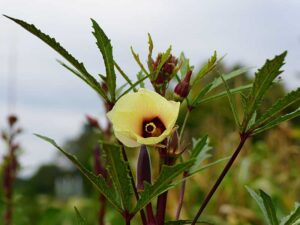
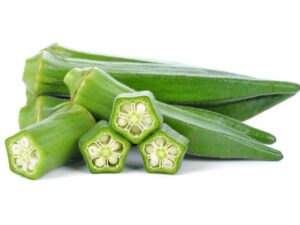
The plant develops upright stems, broad divided leaves and pale yellow or cream flowers with darker centres. After successful pollination, the flowers produce elongated ridged pods containing rows of round seeds.
Okra is grown primarily for its immature pods. These are harvested before the outer walls become hard and the internal fibres and seeds fully develop.
Okra requires warm soil, strong sunlight and a sufficiently long frost-free growing period.
The young ridged pods are cooked whole or sliced before they become tough and fibrous.
Okra produces attractive flowers that reveal its relationship to hibiscus and rosella.
New flowers and pods continue forming when plants remain healthy and mature pods are removed promptly.
Okra is the most common name used in Australia. It may also be sold or described as:
These names may reflect different regional cuisines and languages, but they generally refer to edible varieties of Abelmoschus esculentus.
Botanically, an okra pod is a fruit because it develops from a flower and contains seeds. In cooking and vegetable production, okra is treated as a vegetable because the immature pods are used primarily in savoury dishes.
The same botanical and culinary distinction applies to tomatoes, cucumbers, capsicums and eggplants.
Okra has a mild green flavour with fresh, slightly grassy and subtly sweet notes. Its taste is often compared with green beans, asparagus or eggplant, although its texture is distinctive.
The flavour and texture depend strongly on pod age and preparation.
Freshly harvested pods have soft walls, undeveloped seeds and a gentle vegetable flavour.
Pods become woody and difficult to eat when left on the plant too long.
Dry heat develops browned edges and reduces the wet texture associated with stewed okra.
Sliced okra releases natural mucilage that can thicken soups, gumbo and sauces.
Young whole pods can retain useful texture when prepared with an appropriate pickling method.
High-temperature cooking can produce a browned or crisp surface while keeping the interior tender.
Okra is a heat-loving crop that performs best in full sun, fertile free-draining soil and consistently warm conditions. It is particularly well suited to tropical, subtropical and warm temperate regions.
Do not plant until frost risk has passed and the soil is warm enough for rapid germination.
Choose an open position receiving at least six to eight hours of direct sunlight each day.
Established plants tolerate heat, but consistent water supports flowering and tender pod development.
Check plants every one to two days during peak production because pods become tough rapidly.
Okra should be planted during warm, frost-free conditions. The available sowing window varies considerably between tropical northern Australia and cool southern districts.
| Climate Zone | General Sowing Period | Growing Notes |
|---|---|---|
| Cool | October to December | Plant after frost risk has passed and use the warmest available part of the year. |
| Temperate | October to January | Sow once both soil and night temperatures have warmed sufficiently. |
| Subtropical | September to February | Plant from spring through summer, with a longer season in frost-free districts. |
| Tropical | August to April | Okra can grow through an extended warm season, although drainage and disease pressure should be considered during very wet periods. |
| Arid | September to January | Provide reliable irrigation and protect young plants from severe drying winds. |
These planting periods are general guides. Local frost dates, rainfall, night temperatures, soil warmth and the length of the summer season should also be considered.
Regional planting times should be adjusted according to local frost risk, heat and the length of the warm growing period.
| Location | General Planting Guide | Key Considerations |
|---|---|---|
| Brisbane and South East Queensland | September to February | Spring and early summer provide reliable establishment, with extended production in warm frost-free locations. |
| Sydney and coastal New South Wales | October to January | Wait until the soil and nights have warmed and choose a sunny protected position. |
| Inland New South Wales | October to December | Plant after frost risk and allow enough hot weather for flowering and repeated harvests. |
| Melbourne and Victoria | November to December | Use a warm sheltered position and consider raising seedlings under protection before planting out. |
| Adelaide and South Australia | October to January | Maintain irrigation through dry summer weather and mulch established plants. |
| Perth and south-west Western Australia | October to January | Plant once the soil is warm and provide consistent summer moisture. |
| Tasmania | November to December | Okra can be challenging because of the short season; use the warmest sheltered position available. |
| Darwin and tropical northern Australia | August to April | Plant during warm conditions while avoiding severely waterlogged sites during the wettest periods. |
Okra can be direct-sown into warm garden soil or raised in individual pots before transplanting. Direct sowing avoids root disturbance, while protected sowing can provide an earlier start in cooler districts.
Plant okra seeds approximately 1–2 cm deep. Cover them with fine soil and water the planting area gently.
Use the shallower end of the sowing range and wait for suitable warmth.
Slightly deeper planting can help maintain moisture around the seed.
Okra seeds commonly germinate within approximately 7–14 days in suitably warm conditions. Emergence can take longer when the soil is cool.
Warm soil supports faster water uptake, germination and early growth.
Okra has a relatively firm seed coat that may absorb moisture more slowly than some summer vegetables.
Cold, saturated or poorly aerated soil can cause seed to rot before emergence.
Correct planting depth protects seed from drying while allowing the shoot to emerge readily.
Soaking okra seed is optional rather than essential. Seeds can germinate successfully when sown dry into warm, evenly moist soil.
A short soak may help water penetrate the firm seed coat and can accelerate germination under suitable conditions.
To soak okra seed:
Yes. Okra can be transplanted while seedlings are young, but the roots should be disturbed as little as possible.
Raise one seedling per individual cell or pot. Transplant after several true leaves develop but before the taproot becomes restricted.
Harden seedlings gradually before planting outdoors. Move them during warm, mild conditions and water immediately after transplanting.
Spacing depends on variety height, branching habit, airflow and whether the crop is grown in a household bed or commercial row.
| Growing Situation | Approximate Plant Spacing | Approximate Row Spacing |
|---|---|---|
| Dwarf okra | Approximately 30–45 cm | Approximately 60–75 cm |
| Medium okra plants | Approximately 40–60 cm | Approximately 75–90 cm |
| Tall or branching varieties | Approximately 60–90 cm | Approximately 90–120 cm |
| Large containers | Usually one plant per container | Allow space between pots for sunlight and airflow |
| Commercial rows | Adjusted to target population and harvest system | Allow access for picking, irrigation and crop inspection |
Okra height varies considerably with variety, temperature, season, soil fertility and water.
| Plant Type | Typical Height | General Characteristics |
|---|---|---|
| Dwarf okra | Approximately 90–150 cm | Comparatively compact plants suited to household gardens and large containers. |
| Medium varieties | Approximately 150–200 cm | Strong upright plants producing repeated pods along the central stem and branches. |
| Tall okra | Approximately 200–300 cm or more | Vigorous plants requiring substantial vertical space and easy harvest access. |
Plant height may exceed these ranges during a long tropical or subtropical growing season.
Yes. Okra can grow in pots, although each plant requires a large container, full sun and consistent moisture.
Dwarf varieties are generally easier to manage than very tall okra.
Choose one deep, stable container for each plant.
Potted okra can dry rapidly during hot weather.
Yes. Okra performs best in full sun and sustained warm conditions.
Provide at least six to eight hours of direct sunlight each day. Plants grown in heavy shade may become weak, flower late and produce fewer pods.
In extremely hot arid conditions, protecting young plants from severe drying winds may be more useful than shading mature foliage.
Established okra tolerates heat, but regular moisture supports continuous flowering and tender pod development.
Water deeply enough to moisten the active root zone. Allow the surface to begin drying between waterings rather than keeping the soil continually saturated.
Okra generally benefits from:
Okra produces large pale flowers with darker centres. Individual flowers are generally short-lived and often open for only part of the day.
Okra flowers are usually capable of self-pollination, although bees and other insects can assist pollen movement.
After successful pollination, a small pod begins developing behind the flower. The pod enlarges rapidly during warm weather and may reach harvest size within several days.
Poor fruit set can result from:
Okra commonly begins producing harvestable pods approximately 50–75 days after sowing under warm conditions.
| Growth Stage | Typical Period | General Characteristics |
|---|---|---|
| Germination | Approximately 7–14 days | Fastest in warm, evenly moist soil. |
| Vegetative growth | Approximately 30–50 days | Plants develop upright stems, broad leaves and flower buds. |
| First flowers | Approximately 45–65 days | Timing varies with temperature, variety and plant vigour. |
| First pod harvest | Approximately 50–75 days | Young pods can develop rapidly after flowers open. |
| Continued production | Throughout sustained warm weather | Regular picking encourages continued flowering and pod formation. |
Growing time varies with variety, soil temperature, air temperature, sunlight, fertility, water and transplanting conditions.
Okra should be harvested while the pods are young, tender and before the outer walls become hard.
Most varieties are picked when the pods are approximately 5–10 cm long, although the ideal size depends on variety. Pod age and tenderness are more important than length alone.
Signs of harvest readiness include:
Tender okra should feel firm but not hard. A young pod can generally be cut easily with a knife or pierced with a fingernail.
Where a pod is difficult to cut, strongly fibrous or cannot be bent near the tip, it has probably passed the ideal fresh-eating stage.
Harvest one test pod and slice it. The interior should contain soft pale seeds rather than hard mature seed.
Use clean secateurs, scissors or a sharp knife to cut the pod stem. Avoid pulling pods forcefully because this can damage flowers, branches and the main plant.
Okra leaves and stems can feel coarse and may irritate sensitive skin. Wear gloves and long sleeves where necessary.
During peak production:
Okra pods become tough as they mature because the pod walls and internal fibres strengthen to protect developing seed.
Heat does not necessarily make properly harvested young okra tough. The most common cause is leaving pods on the plant too long.
Other factors can include:
Pods become fibrous quickly after reaching their ideal young stage.
Different okra varieties remain tender to different lengths and ages.
Severe stress can restrict pod quality and plant vigour.
Infrequent harvesting allows hidden pods to become oversized.
Over-mature pods can be left to dry for seed rather than used as fresh vegetables.
Okra contains natural mucilage, a soluble gel-like material released when the pods are cut and exposed to moisture.
This characteristic is useful in gumbo, soups and stews because it naturally thickens the cooking liquid.
The amount of visible mucilage is influenced by:
Mucilage is a normal feature of okra rather than evidence that fresh pods are spoiled.
Dry-heat and high-temperature methods generally produce a firmer result with less visible mucilage than prolonged wet cooking.
Wash okra in advance and dry it thoroughly before slicing or cooking.
Leaving pods whole reduces the number of cut surfaces releasing mucilage.
Roasting, grilling, frying and quick sautéing can produce a drier texture.
Give pieces enough space to brown rather than steam.
Tomato, lemon, vinegar or other acidic ingredients may moderate the texture in some dishes.
Avoid prolonged stirring where a firm, separate texture is required.
Select young, firm pods without severe bruising, mould or hardened tips.
Okra is used in cuisines throughout Africa, South Asia, the Middle East, the Caribbean and the southern United States.
Cook sliced or whole pods with onions, tomatoes, spices and other vegetables.
Use sliced okra to add body and natural thickening to slow-cooked dishes.
Roast at high heat with oil and seasoning until browned and tender.
Grill whole young pods to produce light charring and a firmer texture.
Pan-fry, shallow-fry or deep-fry sliced pods using an appropriate recipe.
Use tender pods in tested refrigerator or preserved-pickle recipes.
Young fresh okra can be eaten raw, although its crisp texture and natural mucilage differ from cooked okra.
Choose small tender pods, wash them thoroughly and trim the stems. Slice them into salads or serve whole young pods with dips.
Pods that are tough, damaged, mouldy or unusually bitter should not be eaten.
Okra is best used soon after harvest because the pods can lose moisture, darken or develop surface damage during storage.
For household storage:
Discard pods that become slimy on the outside, mouldy, strongly discoloured or unpleasant smelling.
Yes. Okra can be frozen whole or sliced for later use in cooked dishes.
Use young tender pods. Wash, trim and blanch them according to an appropriate recognised vegetable-freezing method, then cool, drain and pack into freezer-safe containers.
Frozen okra is suitable for curries, gumbo, soups, stews and other cooked dishes, although its texture will differ from freshly harvested pods.
Yes. Small tender pods are well suited to pickling because they fit readily into jars and can retain a useful texture.
Use an appropriate tested pickling or preserving recipe with the correct vinegar concentration, processing time and jar preparation.
Do not reduce the acid level or alter a shelf-stable preservation recipe without reliable food-safety guidance.
Cold soil, deep sowing, waterlogging and a firm seed coat can delay emergence.
Excess nitrogen, insufficient sunlight, cool weather or water stress can reduce flowering.
Temperature extremes, moisture stress and weak plants can cause flower or young-pod drop.
Pods generally become fibrous because they were left on the plant too long.
Old foliage, nutrient imbalance, root stress, waterlogging or pests can cause yellowing.
Chewing insects and sap-feeding pests may mark pods or reduce their market quality.
Smaller seed quantities are suitable for household gardens, large containers and growers comparing green and red okra.
Bulk okra seed can be more economical for growers making repeated plantings for grocers, restaurants and fresh markets.
Commercial okra production requires varieties and planting dates suited to the expected pod specification, market demand and available harvest labour.
Consistent colour, length, ribbing and tenderness simplify grading, packing and market presentation.
Productive crops may require picking every one to two days during warm weather.
Plant habit affects row spacing, worker access and the ease of harvesting upper pods.
Varieties differ in the length at which pods remain tender and commercially acceptable.
Pods require careful handling and prompt cooling to reduce moisture loss and surface damage.
Confirm demand for green, red, small, long or specialty okra before committing to large sowings.
Okra is a warm-season flowering vegetable grown for its tender edible seed pods. Its botanical name is Abelmoschus esculentus.
Okra is the usual Australian name. It may also be called lady’s fingers, bhindi, gumbo, ochro or bamya.
Okra pods are botanical fruits because they develop from flowers and contain seeds. They are treated as vegetables in cooking.
Okra has a mild green flavour with slightly grassy and subtly sweet notes. Young pods are tender, while older pods become fibrous.
The main difference is pod and plant colour. Red okra develops burgundy pods and stems, but its culinary uses are broadly similar to green okra.
Usually not. The burgundy colour commonly fades or becomes greenish during cooking.
Sow okra approximately 1–2 cm deep into warm, free-draining soil. Provide full sun, consistent moisture and enough spacing for the mature plants.
Plant okra after frost risk has passed and both soil and night temperatures are warm. This generally means spring to early summer in temperate regions.
Okra can generally be planted around Brisbane from spring through summer, with an extended season in warm frost-free locations.
Plant around Melbourne during late spring or early summer once the soil and nights are reliably warm.
Plant okra seeds approximately 1–2 cm deep. Use shallower sowing in heavy soil and avoid planting into cold, saturated ground.
Okra commonly germinates within approximately 7–14 days in warm soil. Cool conditions can delay emergence substantially.
Soaking is optional. A short soak of approximately 8–12 hours may help hydrate the firm seed coat, but warm soil remains essential.
Yes. Raise seedlings individually and transplant while young, keeping the root ball intact and avoiding damage to the taproot.
Dwarf plants may be spaced approximately 30–45 cm apart. Larger varieties may require approximately 45–90 cm, depending on their mature habit.
Dwarf varieties commonly reach around 90–150 cm, while vigorous full-sized okra can grow 2–3 metres or more during a long warm season.
Yes. Use one plant per large container with at least approximately 35–45 cm of soil depth and 30–50 litres of growing medium.
Yes. Okra generally requires at least six to eight hours of direct sunlight for strong growth, flowering and pod production.
Okra commonly begins producing pods approximately 50–75 days after sowing under warm conditions.
Pod number varies with variety, season, plant size, water, fertility and harvest frequency. Healthy plants can produce repeatedly throughout sustained warm weather.
Harvest when pods are young, brightly coloured and easy to cut. Many varieties are picked at approximately 5–10 cm long.
Check productive plants every one to two days during hot weather. Pods can become tough very quickly.
Cut the short pod stem with clean scissors, secateurs or a knife. Wear gloves if the coarse foliage irritates your skin.
The most common cause is harvesting too late. Pods become hard and fibrous as the seeds mature.
Okra contains natural mucilage that is released when pods are cut and cooked with moisture. It helps thicken soups, stews and gumbo.
Dry the pods thoroughly and use high-heat methods such as roasting, grilling, frying or quick sautéing. Cooking whole pods also reduces cut surfaces.
Wash and dry the pods, trim the hard stem caps and leave them whole or slice them according to the recipe.
Yes. Young tender pods can be sliced into salads or served whole after washing and trimming.
Yes. Roast whole or sliced pods at high heat with oil and seasoning until tender and lightly browned.
Yes. Whole young pods can be grilled or barbecued until lightly charred and tender.
Yes. Small tender pods are suitable for tested refrigerator or shelf-stable pickling recipes.
Yes. Use young pods and follow an appropriate blanching, cooling and freezing method.
Keep unwashed pods dry and refrigerated in a breathable or loosely closed produce bag. Use them while they remain firm and brightly coloured.
Possible causes include cool weather, extreme heat, water stress, excessive nitrogen, weak plants or flower damage.
Older leaves naturally decline, but widespread yellowing may indicate waterlogging, drought, nutrient imbalance, root stress or pests.
Yes, from suitable open-pollinated varieties. Leave healthy pods on selected plants until they become fully dry and the seeds mature.
Different okra varieties can cross where flowers receive pollen from nearby plants. Isolation is required when saving seed true to type.
Specifications can vary by variety and seed lot. Review each individual product page for open-pollinated status, treatment information and available pack sizes before ordering.
Okra seeds for Australian growers
Seedmart supplies okra seed for household gardens, large containers, market gardens and commercial production. Choose productive green Dwarf Long Pod or colourful Red Burgundy okra for repeated warm-season harvests.
Review the individual product pages for available pack sizes, plant height, pod colour, seed treatment and variety-specific growing information before ordering.