
Green Beans
Traditional green-podded varieties harvested while the pods are young, crisp and tender.

Bush bean seed buying guide
Bush beans, also known as dwarf beans, French beans, green beans or snap beans, are compact forms of Phaseolus vulgaris that generally grow without a trellis. They are productive warm-season vegetables suited to home gardens, raised beds, market gardens and commercial production.
Seedmart supplies bush bean seeds in packet and bulk quantities, including green, yellow, purple and specialty varieties selected for different pod characteristics, harvest requirements and growing conditions.
The best variety will depend on your climate, planting season, preferred pod type, harvest requirements and whether you are growing for household use or commercial production.
Bush beans form relatively short, self-supporting plants and generally require no trellis.
Healthy plants can produce substantial crops of tender beans from a relatively small growing area.
Many dwarf bean varieties mature relatively quickly and are well suited to successive sowings.
Suitable for vegetable beds, raised gardens, larger containers and commercial field production.
Choose from green, yellow, purple, round, flat and other specialty pod types.
Choose smaller quantities for household gardens or bulk seed for repeated and commercial plantings.
Bush bean varieties differ in pod colour, shape, tenderness, fibre and culinary use. Choosing the right type can be particularly important for market gardeners supplying a specific customer or fresh-market segment.
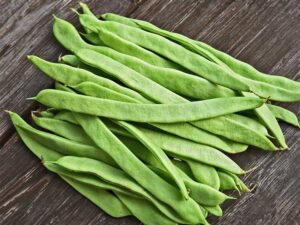
Traditional green-podded varieties harvested while the pods are young, crisp and tender.
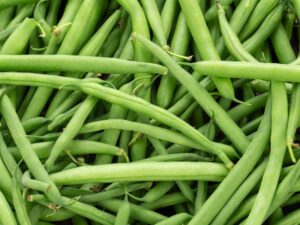
Fine-podded beans selected for tenderness, flavour and fresh vegetable production.
Distinctive yellow-podded dwarf beans that provide excellent colour in gardens and fresh-market displays.
Attractive purple-podded varieties, many of which change to green when cooked.
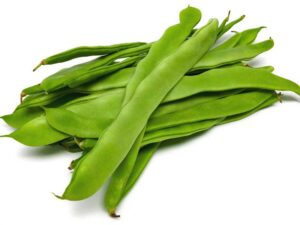
Broader pods with distinctive texture and eating characteristics, depending on the variety.
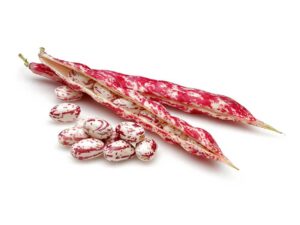
Selected bush varieties are grown for their developed fresh or mature dry seeds rather than tender whole pods.
Bush and climbing beans can be grown under similar conditions, but their growth habit and harvest pattern differ considerably.
| Bush / Dwarf Beans | Climbing Beans |
|---|---|
| Develop compact, bushy plants. | Produce long climbing vines. |
| Generally do not require trellising. | Require a trellis, fence or other sturdy support. |
| Often provide a concentrated harvest. | Can remain productive over a longer picking period. |
| Useful for field rows, garden beds and raised planters. | Make efficient use of vertical growing space. |
| Successive sowings can extend production. | Established plants can continue producing when regularly harvested. |
| Growing Goal | What to Look For | Why It Matters |
|---|---|---|
| Early harvest | Fast-maturing dwarf varieties | Useful for quick crop rotations and successive plantings. |
| Fresh green beans | Tender, stringless green pods | Suitable for household use and traditional fresh vegetable markets. |
| Market presentation | Yellow, purple or specialty pods | Provides colour and differentiation for farm gates, markets and specialty retail. |
| Commercial production | Uniform growth and concentrated harvest | Can simplify crop scheduling and harvesting. |
| Container growing | Compact dwarf varieties | Suitable for larger pots and raised planters where space is limited. |
| Continuous supply | Varieties suited to successive sowing | Allows several smaller crops to mature at different times. |
Bush beans are warm-season vegetables and are generally planted once frost risk has passed and the soil has warmed.
Warm regions can provide an extended growing season, although ordinary French beans may perform poorly during periods of extreme heat and humidity.
Smaller seed quantities are suitable for household vegetable gardens, raised beds and growers wanting to trial several bush bean varieties.
Bulk bush bean seed is suited to larger plantings, repeated sowings and growers producing beans for fresh vegetable markets.
Consistent emergence, flowering and maturity can simplify commercial crop scheduling and harvesting.
Dwarf varieties often provide a relatively concentrated crop, making variety selection important when planning harvest labour.
Pod straightness, colour, fibre, tenderness, length and shelf life can influence market acceptance and saleable yield.
Select green, yellow, purple, flat or specialty beans according to your intended market and customer requirements.
Yes. Bush bean and dwarf bean are commonly used for compact Phaseolus vulgaris varieties that generally grow without a trellis.
Generally, no. Bush beans form compact, self-supporting plants. This is one of their main differences from climbing or pole beans.
Bush beans are warm-season crops. In temperate and cooler regions, sow after frost risk has passed and the soil has warmed. In subtropical and tropical regions, plant during locally suitable mild-to-warm growing periods.
Soaking is generally unnecessary. Bean seed can be susceptible to damage and rotting when exposed to excessive moisture, particularly in cool soil. Sow dry seed into suitably warm, moderately moist soil unless the individual product instructions specify otherwise.
Yes. Compact dwarf beans can be grown in larger containers provided there is adequate soil depth, drainage, sunlight and moisture.
Because many dwarf beans produce a relatively concentrated crop, sowing smaller batches at intervals can provide successive harvests throughout the suitable growing season.
Common causes include cold soil, excessive moisture, poor drainage, overly deep sowing, damaged seed or soil pests. Beans are particularly susceptible to rotting before emergence in cold and saturated conditions.
Bush beans form compact plants that generally support themselves and often produce a concentrated harvest. Climbing beans develop long vines that require support and may remain productive over a longer picking period.
Bush bean seeds for Australian growers
Seedmart supplies bush and dwarf bean seeds for household vegetable gardens, raised beds, market gardens and commercial vegetable production. Choose from traditional green beans, French beans, yellow wax beans, purple beans and specialty varieties for different growing and market requirements.
Review the individual product pages for available pack sizes, pod characteristics, planting season, days to maturity and variety-specific sowing information before ordering.