
Crisp Leaf Stalks
The thick upright petioles are harvested for fresh eating, cooking, juicing and bunching.
Celery seed buying and growing guide
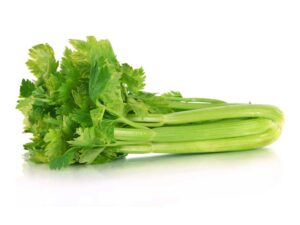
Tall Utah is a classic stalk-celery variety grown for its tall, upright stems, crisp texture and fresh celery flavour. The plant develops a compact central bunch surrounded by edible green leaves and can be harvested progressively or cut as a complete mature plant.
Seedmart supplies Tall Utah celery seeds for home gardens, raised beds, containers, market gardens and commercial vegetable production throughout Australia. This open-pollinated heirloom is botanically classified as Apium graveolens var. dulce and is selected primarily for crisp edible stalks rather than enlarged roots or herb-like leaf production.
Celery requires more consistent moisture than many common vegetables. For the best stalk quality, maintain steady growth from germination through harvest and avoid allowing the plants to repeatedly dry out.
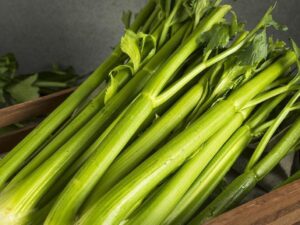
Tall Utah produces an upright bunch of dark-green stems suited to fresh bunching, cutting and commercial presentation.
Freshly harvested stalks provide the familiar celery flavour and crunchy texture used in salads, snacks and cooking.
Use the main stalks fresh or cooked and add the aromatic leaves to stocks, soups, stews and sauces.
Remove mature outside stalks as required while leaving the central growth to continue developing.
Celery can be grown in deep tubs, large pots and raised planters where moisture and fertility are carefully maintained.
Choose smaller quantities for household gardens or larger packs for repeated and market-garden sowings.
Celery is a leafy vegetable in the Apiaceae family, which also includes carrot, parsley, parsnip, coriander and fennel. Stalk celery is grown for the crisp leaf stems that form around the centre of the plant.
The edible celery “stalk” is technically an enlarged leaf stalk or petiole rather than a botanical stem. Each stalk supports a group of aromatic leaves at its upper end.
Celery plants generally produce:
The thick upright petioles are harvested for fresh eating, cooking, juicing and bunching.
Celery leaves have a stronger flavour than the stalks and can be used like a culinary herb.
New leaves and stalks continue developing from the centre of a healthy plant.
Plants allowed to flower produce very small aromatic seeds, although vegetable planting seed should not automatically be treated as culinary spice.
Tall Utah is a traditional open-pollinated stalk-celery variety valued for its upright habit, dark-green colour, crisp texture and dependable celery flavour.
The variety is primarily grown for:
Tall Utah is not a celeriac or specialist cutting-celery variety. Although its leaves are edible and aromatic, the variety is selected principally for its substantial stalks.
Celery crops can be divided according to the plant part selected for harvest.
| Celery Type | Primary Harvest | General Characteristics |
|---|---|---|
| Stalk celery | Thick leaf stalks | Produces substantial upright petioles for fresh eating, bunching and cooking. Tall Utah belongs to this group. |
| Leaf or cutting celery | Leaves and fine stems | Produces strongly flavoured foliage harvested repeatedly and used more like parsley or another culinary herb. |
| Chinese celery | Thin aromatic stalks and leaves | Generally has finer stems and stronger flavour than conventional Western stalk celery. |
| Celeriac | Enlarged swollen base | Selected for a round root-like swollen stem base rather than long crisp stalks. |
| Celery microgreens | Young seedling shoots | Harvested at a very early growth stage using untreated seed suitable for edible microgreen production. |
Celery and celeriac belong to the same species but are different horticultural crop types.
| Stalk Celery | Celeriac |
|---|---|
| Botanically classified as Apium graveolens var. dulce. | Commonly classified as Apium graveolens var. rapaceum. |
| Selected for long, crisp leaf stalks. | Selected for a swollen, rounded stem base. |
| Harvested as individual stalks or a complete bunch. | Harvested by lifting the complete swollen base. |
| Commonly eaten raw or cooked. | Commonly roasted, mashed, grated, pureed or added to soups. |
| Tall Utah is a stalk-celery variety. | Celeriac requires a specifically selected celeriac variety. |
Yes. Celery leaves are edible and have a concentrated celery flavour.
The pale inner leaves are generally more tender, while the darker outside leaves have a stronger, more herbaceous flavour.
Celery leaves can be:
Wash the leaves thoroughly and remove yellow, damaged or heavily soiled foliage before use.
The leaves and stalks come from the same plant but provide different textures and flavour intensity.
| Celery Leaves | Celery Stalks |
|---|---|
| Have a concentrated, herb-like celery flavour. | Have a milder flavour and crisp, juicy texture. |
| Used in smaller quantities as seasoning or garnish. | Used as vegetable sticks, salad ingredients and cooked vegetables. |
| Dark outside leaves can taste stronger or slightly bitter. | Outer stalks can be firmer and more fibrous than the inner stalks. |
| Can be dried or chopped for later cooking. | Can be refrigerated, frozen for cooking or incorporated into stocks. |
| Best harvested while fresh and green. | Best harvested when full-sized, crisp and before severe flowering. |
Celery has a fresh, savoury and slightly herbal flavour with mild peppery, grassy and sometimes bitter notes.
Pale central stalks are generally softer, sweeter and less fibrous than mature outside stalks.
Large outside stalks have a fuller celery flavour and substantial crunchy texture.
Tender inner leaves can be chopped into salads, sauces and cooked dishes.
Dark leaves provide stronger flavour and are particularly useful in stocks and soups.
Cooking reduces the crisp texture and develops a mild aromatic sweetness.
Drought, heat and interrupted growth can produce stronger flavour and more fibrous stalks.
Celery is a long-season vegetable requiring fertile soil, cool to mild conditions and consistently available moisture.
Celery germinates and develops more slowly than many common vegetables, so begin the crop well before the intended harvest period.
Rich, moisture-retentive but free-draining soil supports tall, crisp stalk development.
Avoid repeated drying because water stress can produce short, hollow, tough or stringy stalks.
Celery performs best without severe heat, prolonged frost or sudden environmental stress.
Celery planting periods vary substantially by climate. In warm regions it is generally grown through autumn and winter, while cool-climate growers can raise crops through spring and summer.
| Climate Zone | General Sowing Period | Growing Notes |
|---|---|---|
| Cool | August to February | Raise seedlings from late winter through summer and protect young plants from severe frost. |
| Temperate | August to March | Spring and autumn crops can avoid the most severe summer heat. |
| Subtropical | February to August | Grow through autumn, winter and early spring for steady cool-season development. |
| Tropical | April to July | Use the coolest part of the dry season and provide reliable irrigation. |
| Arid | February to August | Protect plants from drying winds and maintain dependable root-zone moisture. |
These sowing periods are general guides. Local frost, elevation, summer heat, humidity and irrigation availability should also be considered.
| Location | General Planting Guide | Key Considerations |
|---|---|---|
| Brisbane and South East Queensland | February to August | Autumn and winter generally provide the most reliable conditions for crisp stalk production. |
| Sydney and coastal New South Wales | August to April | Avoid maturing the crop during severe summer heat and maintain airflow in humid weather. |
| Inland New South Wales | August to March | Protect young seedlings from severe frost and established crops from drying heat. |
| Melbourne and Victoria | August to March | Celery can be grown through spring, summer and autumn where moisture remains consistent. |
| Canberra and cool inland districts | August to February | Raise seedlings under protection and transplant after the most severe frost. |
| Adelaide and South Australia | February to September | Autumn and spring crops require dependable irrigation through dry weather. |
| Perth and south-west Western Australia | February to August | Autumn and winter provide mild conditions, although local seed-movement restrictions must be observed. |
| Tasmania | August to February | Allow additional time for germination and growth during cold conditions. |
| Darwin and tropical northern Australia | April to July | Grow during the coolest dry-season period with consistent irrigation and light afternoon protection. |
Celery is generally raised in trays or small cells before transplanting because the seed is extremely fine and the seedlings develop slowly.
Celery seed should be surface-sown or covered with only a very fine layer of seed-raising mix.
Use a fine, level and pre-moistened seed-raising medium.
The shallow seed can dry rapidly before germination.
Celery commonly germinates within approximately 14–21 days, although emergence can take longer where temperatures, moisture or seed placement are unsuitable.
Shallow sowing allows light to reach the seed and supports germination.
The fine seed and developing root must remain continuously moist without becoming waterlogged.
Mild, stable conditions generally support more reliable emergence than extremes of heat or cold.
Deep burial and crusted soil can prevent the small seedlings from reaching the surface.
Celery seed benefits from light during germination and should be sown on the surface or covered extremely lightly.
After seedlings emerge, provide bright, even light to prevent weak, elongated growth.
Insufficient light can result in:
Soaking is optional. Some growers soak celery seed briefly to begin hydration before sowing, but it is not a substitute for correct surface sowing and moisture management.
Where soaking is used:
The small seed can be difficult to distribute evenly after soaking. Dry surface sowing is often simpler for home growers.
Yes. Transplanting is the standard growing method for stalk celery.
Move seedlings once they are strong enough to handle and have developed several true leaves. Avoid allowing the plants to become severely root-bound.
When transplanting:
Spacing affects stalk size, airflow, blanching and total plant population.
| Production Goal | Approximate Spacing | General Result |
|---|---|---|
| Closely spaced bunches | Approximately 15–20 cm | Plants compete slightly and may produce narrower stalks with some natural blanching. |
| Standard mature celery | Approximately 20–30 cm | Provides room for substantial upright bunches and harvest access. |
| Large individual plants | Approximately 30–40 cm | Encourages broader plants and improved airflow. |
| Row spacing | Approximately 40–60 cm | Allows access for watering, feeding, weed control and harvesting. |
| Commercial production | Adjusted to the target bunch and equipment | Plant population should match the required stalk size and harvest system. |
Yes. Tall Utah celery can be grown in large containers where soil volume, moisture and nutrition are adequate.
Choose a deep, wide container that will not dry rapidly.
Potted celery generally requires more frequent attention than garden-grown plants.
Celery performs well in full sun during cool weather but can benefit from light afternoon shade as temperatures rise.
Provide approximately six hours of direct or strong filtered light for healthy growth.
Heavy shade can cause:
In hot Australian regions, protecting celery from intense afternoon sun can help maintain moisture and reduce heat stress.
Celery prefers fertile, moisture-retentive soil that still drains freely.
Suitable soil preparation may include:
The soil should hold enough moisture to prevent wilting but should not remain stagnant around the roots.
Celery has a relatively shallow root system and requires regular moisture throughout its growth.
Water deeply and frequently enough to keep the active root zone consistently moist.
Insufficient or irregular watering can contribute to:
Celery is a substantial leafy feeder and generally benefits from fertile soil and continued nutrition.
Important considerations include:
Excessive feeding should not replace suitable soil, water and root space. Follow the directions of the fertiliser being used.
Blanching is the practice of excluding light from the lower stalks so they become paler, milder and sometimes more tender.
Tall Utah can be grown and eaten without blanching. Green unblanched stalks generally have stronger flavour and colour.
Blanching methods include:
Plants shade one another and reduce the light reaching inner stalks.
Paper, cardboard or another suitable material is placed around the stalks while the leaves remain exposed.
Soil is drawn gradually around the lower stalks, taking care not to bury the crown.
Purpose-made barriers can exclude light while keeping soil away from the stalks.
Celery is a relatively slow vegetable. Tall Utah commonly requires approximately 100–140 days from sowing to mature harvest, depending on season and growing conditions.
| Growth Stage | Typical Period | General Characteristics |
|---|---|---|
| Germination | Approximately 14–21 days or longer | Fine seed emerges slowly and requires light and constant surface moisture. |
| Early seedling growth | Approximately 6–10 weeks | Small plants develop gradually before reaching transplant size. |
| Young outside stalks | Approximately 80–100 days from sowing | Selected outer stems may be harvested once they reach useful size. |
| Mature celery bunch | Approximately 100–140 days from sowing | Full upright bunch suitable for complete harvest. |
| Flower and seed production | Longer than the vegetable harvest period | Plants must pass through reproductive development and mature dry seed. |
Maturity varies with temperature, seedling age, soil fertility, plant spacing, water supply and target bunch size.
Celery can be harvested once the stalks reach the size and texture required.
Signs of harvest readiness include:
Young celery can be harvested earlier for finer, more tender stems, while mature plants provide greater bunch weight.
Celery can be harvested progressively or as a complete plant.
| Harvest Method | How It Works | Best Suited To |
|---|---|---|
| Outside-stalk harvest | Remove the largest outer stalks close to the plant base while leaving the centre intact. | Extended household harvesting and small regular requirements. |
| Complete bunch harvest | Cut the plant across the base immediately above or slightly below soil level. | Fresh bunching, market sales and a single substantial harvest. |
| Young celery harvest | Cut the plant before full maturity when stalks remain fine and tender. | Cooking, specialty bunches and compact plantings. |
| Leaf harvest | Remove selected outer leaves without stripping the entire plant. | Stocks, soups, seasoning and herb-like use. |
A celery crown may produce new leaves and small stalks after the outer plant is cut, provided the growing centre and roots remain alive.
Regrowth is generally smaller and less uniform than the original bunch. It should not be expected to produce an identical second commercial crop.
For the best chance of garden regrowth:
A purchased celery base can produce new leaves when placed in shallow water or moist growing medium.
This process uses the living crown remaining at the base rather than growing a genetically new plant from an individual cut stalk.
To regrow a celery base:
Poor stalk quality can result from environmental stress or inadequate growing conditions.
Repeated drying and rewatering can interrupt stalk development.
Underfed plants may remain short, thin and pale.
Small pots and crowded plants limit moisture and nutrient uptake.
High temperatures can produce strong flavour, tough stalks and premature flowering.
Old stalks generally become more fibrous and less tender.
Stalk width and bunch shape vary with genetics and spacing.
Bolting occurs when celery produces a flower stem rather than continuing stalk and leaf growth.
It can be encouraged by:
Once a strong flower stem develops, stalk quality generally declines. Harvest usable celery before flowering progresses.
Celery should be washed thoroughly because soil can collect between the stalks and around the basal crown.
Use crisp stalks raw with dips, in chopped salads or as a fresh snack.
Combine celery with onion, carrot, herbs and other vegetables to build savoury flavour.
Add sliced stalks to casseroles, braises and stews where they soften and absorb flavour.
Slice celery diagonally and cook briefly to retain some crunch.
Chop the leaves into soups, sauces, salads, dressings and egg dishes.
Use sound washed stalks alone or combined with other fruits and vegetables.
Celery leaves can replace or complement parsley in many savoury recipes.
Potential uses include:
Use dark outside leaves more sparingly because their flavour is stronger.
Freshly harvested celery should be cooled promptly to preserve crispness.
For household storage:
Wilted but sound celery may regain some crispness when placed briefly in cold water.
Yes. Celery can be frozen for later cooked use, but it loses its crisp raw texture after thawing.
For freezing:
Frozen celery is best used in:
Yes. Wash and dry the leaves, then freeze them whole, chopped or in measured portions.
Frozen leaves lose their fresh garnish texture but remain useful in stocks, soups, stews and sauces.
They may also be frozen with water or stock in ice-cube trays for convenient cooking portions.
Celery can be grown as a microgreen, although it germinates more slowly than many common microgreen crops.
Use only untreated seed suitable for edible microgreen production.
Celery microgreens generally require:
Deep sowing, dry seedbeds, temperature extremes and inadequate light can reduce emergence.
Low light, overcrowding and excessive water can produce pale, elongated plants.
Heat, drought, plant age and interrupted growth can reduce tenderness.
Rapid growth, environmental stress or nutrient imbalance can contribute to hollow development.
Old foliage, waterlogging, drought, nutrient stress or root disease may cause yellowing.
Cold exposure followed by warm weather, plant age and other stresses can trigger bolting.
Celery can be affected by aphids, leaf miners, caterpillars, slugs, snails and other foliage pests.
Management options include:
Celery can share beds with vegetables that prefer fertile soil and regular moisture.
Potential neighbouring crops include:
Avoid placing celery beside vigorous crops that will heavily shade it or compete strongly for water.
Yes. Tall Utah is open pollinated and can produce seed where selected plants are allowed to complete their reproductive cycle.
Celery is generally biennial. It produces stalks and leaves during its first growing stage, then flowers after suitable cold exposure and changing seasonal conditions.
To save celery seed:
Compatible celery, celeriac and leaf-celery varieties can cross-pollinate when flowering together.
Crossing does not affect the stalks being harvested from the current plants. It affects the characteristics of seed produced by those plants.
Growers saving Tall Utah true to type should isolate flowering plants from other compatible Apium graveolens crops or use a controlled seed-production method.
Smaller quantities suit household gardens, raised beds and container growers learning to grow celery from seed.
Larger seed quantities can support scheduled bunching and fresh-market production.
Commercial celery production requires controlled seedling establishment, consistent irrigation and a defined bunch specification.
Even germination and transplant size support consistent establishment and harvest timing.
Customer requirements influence spacing, fertility, blanching and harvest maturity.
Moisture interruptions can reduce crispness, bunch weight and saleable stalk quality.
Seedling cold exposure and seasonal temperature changes can cause premature flowering.
Leaf condition, basal cleanliness and bunch uniformity affect labour and presentation.
Celery should be cooled promptly and protected from dehydration after harvest.
Celery is a leafy vegetable in the Apiaceae family grown primarily for its crisp enlarged leaf stalks.
The familiar celery stalk is an enlarged leaf stalk or petiole. The leaves are also edible.
Tall Utah is a traditional open-pollinated stalk-celery variety producing tall, upright, dark-green stalks with a crisp texture.
No. Stalk celery is selected for long leaf stalks, while celeriac is selected for an enlarged swollen base.
Chinese celery belongs to the same crop species but generally produces finer stalks and more strongly flavoured leaves than conventional stalk celery.
Yes. Celery leaves are edible and can be used in stocks, soups, salads, sauces, pesto and cooked dishes.
Use them as a fresh herb, add them to stocks and soups, blend them into sauces or dry them for seasoning.
Celery has a fresh, savoury and slightly herbal flavour. Leaves and mature outside stalks generally taste stronger than the inner stalks.
Surface-sow the fine seed in moist seed-raising mix, provide light and constant moisture, then transplant the seedlings into fertile soil.
Warm-climate growers generally plant through autumn and winter. Cool-climate growers can sow from late winter through summer.
Around Brisbane, celery is generally best sown from February to August for autumn, winter and early spring production.
Around Melbourne, celery can generally be sown from late winter through summer, provided moisture remains consistent.
Celery seed should be surface-sown or covered only very lightly because it benefits from light during germination.
Celery commonly germinates within approximately 14–21 days, although emergence may take longer under unsuitable conditions.
Yes. Sow it on the surface or cover it extremely lightly so that light can reach the seed.
Soaking is optional. Correct surface sowing, mild temperatures and constant moisture are more important.
Yes. Celery is commonly raised in trays and transplanted once several true leaves have developed.
Tall Utah plants are generally spaced approximately 20–30 cm apart, depending on the required bunch size and production system.
Yes. Use a large container with fertile potting mix, good drainage and consistently available moisture.
Celery performs well in full sun during mild weather but can benefit from light afternoon shade during hot conditions.
Water often enough to keep the root zone consistently moist. Frequency depends on soil, weather, plant size and container volume.
Drought, heat, plant age, irregular growth and variety characteristics can contribute to stringy stalks.
Hollow stalks can be associated with rapid growth, environmental stress, moisture variation or nutrient imbalance.
No. Tall Utah can be grown and eaten green. Blanching is optional and produces paler, milder lower stalks.
Exclude light from the lower stalks using close spacing, wrapping, collars or gradual earthing up while leaving the leaves exposed.
Tall Utah commonly requires approximately 100–140 days from sowing to mature harvest, depending on conditions.
Harvest when the stalks are full-sized, crisp and firm and before the plant develops a flower stem.
Remove individual outside stalks close to the base or cut the complete mature bunch across the crown.
The crown may produce new leaves and small stalks where the roots and central growing point remain alive.
The intact basal crown can produce new leaves and roots. An individual cut stalk without the crown will not regrow into a complete plant.
No. Regrowth from a cut base is generally smaller and less uniform. Seed-grown plants develop complete root systems and predictable variety characteristics.
Cold exposure, plant age, heat, drought, root restriction and interrupted growth can cause celery to bolt.
Yes. Crisp celery stalks are commonly eaten raw as vegetable sticks or added to salads.
Wash the stalks thoroughly, trim the ends, remove coarse strings if required and slice according to the intended recipe.
Yes. Frozen celery loses its raw crunch but remains useful in soups, stocks, stews and sauces.
Yes. Freeze washed, dry leaves whole or chopped for later use in cooked dishes.
Refrigerate celery promptly and protect it from dehydration using a suitable container, bag or wrapping method.
Yes, using untreated seed suitable for edible microgreen production. Celery germinates more slowly than many common microgreen crops.
Possible causes include natural leaf age, drought, waterlogging, nutrient stress, root damage or disease.
Celery can share beds with leeks, onions, lettuce, spinach, silverbeet, brassicas and selected herbs where adequate water and space are available.
Yes. Tall Utah is open pollinated. Allow selected plants to flower and produce fully mature dry seed.
Yes. Compatible stalk celery, leaf celery and celeriac varieties can cross when flowering together.
The current Tall Utah product is identified as having no chemical treatment. Check the product specifications before each order because seed lots can change.
Yes. The current product is identified as an open-pollinated heirloom variety.
The current product specification lists approximately 2,500 seeds per gram.
The current product page states that this seed is not shipped to Western Australia because of quarantine restrictions.
Tall Utah celery seeds for Australian growers
Seedmart supplies Tall Utah celery seed for household gardens, raised beds, large containers, market gardens and commercial vegetable production. Grow this traditional Apium graveolens heirloom for tall, crisp stalks, aromatic edible leaves and fresh bunches suitable for salads, snacks, stocks and cooked dishes.
Review the product page for current pack sizes, seed treatment, specifications, quarantine restrictions and ordering information before purchasing.