
Underground Crown
The crown is the central perennial structure from which roots and new shoots develop.
Asparagus seed buying and growing guide
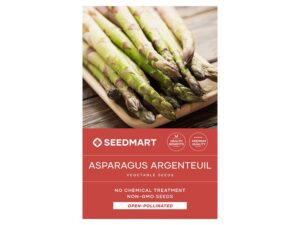
Argenteuil asparagus is a traditional perennial vegetable grown for its tender emerging spears. The plants develop permanent underground crowns and fern-like summer foliage, returning from the established root system over successive growing seasons.
Seedmart supplies Asparagus Argenteuil seeds for home gardens, dedicated asparagus beds, market gardens and specialty perennial-vegetable production. The crop is botanically classified as Asparagus officinalis and requires greater patience than annual vegetables because seedlings must first develop strong crowns before regular spear harvesting begins.
Growing asparagus from seed provides an economical way to establish a substantial planting, particularly where many plants are required. Sow more seedlings than the final number needed, select the strongest plants and prepare the permanent bed carefully because established asparagus may remain in the same location for many years.
Established crowns can return with new shoots over many growing seasons when the bed is managed appropriately.
Seed allows growers to raise many plants without purchasing an individual dormant crown for every planting position.
Raise a larger population and retain vigorous plants with healthy roots for the permanent asparagus bed.
Argenteuil is a recognised French asparagus variety associated with tender spears and green to purple colouring.
Mature crowns produce new spears as soil conditions warm after winter dormancy or seasonal slowdown.
The current 25-gram pack suits substantial home sowings, nurseries and planned market-garden establishment.
Asparagus is a herbaceous perennial vegetable grown for its young emerging shoots, commonly called spears. The edible spear is harvested before its tip opens and the shoot expands into tall fern-like foliage.
An established asparagus plant consists of:
The crown is the central perennial structure from which roots and new shoots develop.
The root system stores energy produced by mature foliage and supports future spear growth.
Young shoots are harvested while tender and before they expand into mature fern growth.
Unharvested shoots develop into tall foliage that replenishes the crown through photosynthesis.
Asparagus spears and asparagus ferns are different stages of the same shoot. A spear left unharvested elongates, branches and develops into the foliage needed to strengthen the crown.
Asparagus seeds are mature seeds produced by female asparagus plants after pollinated flowers develop into berries. Planting seed is used to raise young plants that gradually form permanent crowns.
| Planting Material | What It Is | Establishment Considerations |
|---|---|---|
| Asparagus seed | Mature botanical seed used to raise seedlings. | Economical for larger numbers but requires additional time before the first harvest. |
| Asparagus seedling | A young actively growing plant raised from seed. | Can be transplanted once the root system is sufficiently developed. |
| Asparagus crown | A dormant or actively growing perennial root and crown system. | Generally establishes a harvestable bed sooner than freshly sown seed. |
| Harvested asparagus spear | An edible shoot cut from a mature crown. | Ordinary culinary spears are not equivalent to established planting crowns. |
Planting seed should not be consumed as food. Use the seed according to its current product specifications and retain mature crop seed separately where seed saving is intended.
Asparagus can be established from seed or purchased crowns. The most suitable option depends on budget, planting scale, available propagation space and how quickly the grower wants the bed established.
| Growing from Seed | Growing from Crowns |
|---|---|
| Usually costs less per potential plant. | Usually costs more per planting position. |
| Suitable for raising a larger number of plants. | Convenient for establishing a smaller prepared bed. |
| Allows selection of the strongest seedlings. | Plants have already completed an earlier establishment stage. |
| Requires nursery time before permanent transplanting. | Can normally be planted directly into the permanent bed. |
| Generally delays harvest by an additional season. | May produce a limited harvest sooner, depending on crown age and establishment. |
| Seedlings can include both male and female plants. | Sex depends on the crown or cultivar supplied. |
Seed is particularly practical for a substantial new bed. The longer establishment period can be justified where the cost of purchasing a large number of crowns would otherwise be prohibitive.
Argenteuil is a traditional French asparagus variety of Asparagus officinalis. It is associated with green spears that may show purple colouring around the tips and upper portions.
The Seedmart category currently contains Argenteuil rather than a broad collection of modern all-male hybrid asparagus varieties. The page should therefore focus accurately on this variety rather than making universal claims about every type of asparagus.
Argenteuil has a long history of cultivation as a European asparagus variety.
Young shoots can develop green colouring with purple tones around the tips.
Plants raised from ordinary seed can vary naturally in sex, vigour and individual performance.
The variety requires permanent-bed preparation and several seasons of crown establishment.
Yes. Asparagus is a perennial vegetable. The foliage normally declines or is cut back seasonally, but the underground crown and roots remain alive and produce new shoots during the next favourable growing period.
Unlike annual vegetables, asparagus should not be replanted into a different position every season. Permanent-bed preparation, weed control and soil drainage are therefore especially important.
The spear harvest is seasonal, but the crown is perennial. After harvest finishes, healthy shoots must be allowed to develop into foliage and replenish the underground plant.
Traditional seed-grown asparagus populations generally contain separate male and female plants. This means individual plants usually produce either pollen-bearing flowers or berry-producing flowers rather than both.
| Male Asparagus Plants | Female Asparagus Plants |
|---|---|
| Produce pollen-bearing flowers. | Produce flowers capable of developing berries after pollination. |
| Do not generally invest energy in berry and seed production. | Use part of their energy to develop berries and mature seed. |
| May devote comparatively more growth to shoots under similar conditions. | Can still produce useful edible spears. |
| Do not produce berry seedlings around the bed. | May produce self-sown seedlings if berries fall and germinate. |
| Sex cannot always be confirmed while seedlings are very young. | Female plants become easier to identify once berries develop. |
Female plants are not automatically defective. They can produce good spears, although growers may remove them where maximum spear production or prevention of volunteer seedlings is the priority.
No. The red berries produced by female asparagus plants should not be treated as edible fruit. They contain the mature seeds used for propagation but are not the harvested vegetable portion of the crop.
Only harvest correctly identified asparagus spears for food. Keep berries away from children and animals and use appropriate care when collecting seed.
Asparagus growth follows a repeating seasonal cycle. Understanding this cycle helps prevent overharvesting and premature cutting of healthy foliage.
| Growth Stage | What Happens | Grower Management |
|---|---|---|
| Dormant or resting crown | Top growth is absent or declining while the perennial crown remains below ground. | Prepare for weed control, mulching and the next spear emergence period. |
| Spear emergence | New shoots rise from buds on the crown. | Harvest only from sufficiently mature, vigorous plants. |
| Fern development | Unharvested shoots elongate and branch into mature foliage. | Allow healthy foliage to grow and photosynthesise. |
| Flowering and berry development | Mature plants may flower, and female plants may form berries. | Remove berries where volunteer seedlings are not wanted. |
| Foliage decline | Fern growth yellows and dies back after seasonal ageing or cold. | Cut down only after the foliage has finished transferring energy to the crown. |
Asparagus seed is generally sown from late winter through spring as temperatures become suitable for germination. In warmer climates, sowing may also be undertaken during a mild autumn period, provided seedlings can establish without severe heat or prolonged waterlogging.
| Climate Zone | General Sowing Period | Growing Notes |
|---|---|---|
| Cool | Late winter to spring under protection | Provide warmth for germination and transplant after severe frost risk declines. |
| Temperate | Late winter through spring | Raise seedlings in trays or a nursery bed before permanent planting. |
| Subtropical | Late winter to early spring, with autumn trials possible | Avoid establishing small seedlings during peak summer heat and humidity. |
| Tropical | During the coolest practical growing period | Asparagus may perform poorly where winter chilling and seasonal dormancy are insufficient. |
| Arid and inland | Late winter to spring after severe frost | Provide dependable irrigation and protect young plants from drying winds. |
These sowing periods are general guides. Local frost dates, soil temperature, summer heat, elevation and the availability of protected propagation should also be considered.
| Location | General Seed-Sowing Guide | Key Considerations |
|---|---|---|
| Brisbane and South East Queensland | August to October | Establish seedlings before severe summer heat and maintain drainage during humid weather. |
| Sydney and coastal New South Wales | August to October | Spring sowing provides warming conditions while allowing a full first growing season. |
| Inland New South Wales | Late winter to spring | Protect young seedlings from late frost and provide irrigation during dry heat. |
| Melbourne and Victoria | August to October under suitable protection | Use warmth for germination and plant out after severe frost risk declines. |
| Adelaide and South Australia | August to October | Prepare soil deeply and maintain moisture through dry spring and summer weather. |
| Perth and south-west Western Australia | August to October | Spring establishment provides time for crown growth before the driest summer conditions. |
| Tasmania | Late winter to spring under protection | Cool winters suit dormancy, but seed germination benefits from controlled warmth. |
| Darwin and tropical northern Australia | Cooler dry-season trial | Persistent warmth, humidity and limited winter dormancy can reduce long-term crop performance. |
Asparagus seed germinates more reliably in warm growing media than in cold outdoor soil.
Keep the propagation mix consistently moist without leaving the seed permanently saturated.
Plant the seed approximately 5–10 mm deep in fine free-draining seed-raising mix.
Asparagus generally germinates more slowly and less uniformly than many annual vegetables.
How long do asparagus seeds take to germinate? Emergence commonly begins within approximately two to four weeks under suitable warm conditions, although individual seeds may germinate at different times.
Asparagus seed can be soaked in clean lukewarm water before sowing. Soaking is optional but may help hydrate the seed coat and support more even emergence.
Do not allow young asparagus roots to become tightly congested. Transplant or pot seedlings on while they can still be moved with minimal root damage.
Asparagus can be direct-sown into a prepared nursery bed or permanent row, but container propagation provides greater control over weeds, germination temperature and seedling selection.
| Direct or Nursery-Bed Sowing | Container Propagation |
|---|---|
| Seed is sown outdoors into prepared soil. | Seed is started in cells, tubes or small pots. |
| Requires reliable weed control around slow seedlings. | Seedlings can be identified and monitored more easily. |
| Roots develop without being confined by pots. | Warmth and moisture can be controlled more precisely. |
| Seedlings may require lifting and transplanting later. | Individual root balls can be moved into the permanent bed. |
| Suitable for larger nursery-style sowings. | Suitable for home growers and carefully selected plants. |
An asparagus bed should be treated as a long-term garden feature. Select a position where tall summer foliage will not shade smaller vegetables or interfere with annual crop rotations.
Asparagus prefers deep, fertile and well-drained soil. The crop can remain in one bed for many years, so correcting drainage and soil structure before planting is more practical than trying to repair the root zone later.
Loose soil allows the fleshy roots to spread and supports a substantial perennial crown.
Persistently saturated soil can weaken crowns and increase the risk of root and crown decline.
Mature compost can improve structure and moisture retention when incorporated appropriately.
Asparagus generally performs best in slightly acidic to neutral soil rather than strongly acidic ground.
Test rather than guessing soil pH. Apply lime only where a soil test indicates that the bed is too acidic and follow an appropriate application rate.
Spacing should allow room for crown expansion, tall fern growth, airflow and access during harvesting.
| Planting System | Approximate Plant Spacing | General Considerations |
|---|---|---|
| Home garden row | Approximately 30–45 cm apart | Provides room for individual crowns and repeated spear emergence. |
| Wider vigorous planting | Approximately 45–60 cm apart | Allows substantial fern growth and easier access around plants. |
| Rows | Approximately 1–1.5 metres apart | Provides access for weeding, harvesting and mature foliage. |
| Nursery seedlings | Closer temporary spacing | Plants are raised for later selection and transplanting rather than permanent production. |
| Commercial plantings | Based on machinery and production system | Row configuration should suit cultivation, harvest and fern management. |
Final spacing should reflect soil fertility, intended bed life, machinery access and the mature habit of the variety.
Seed is sown shallowly, but established crowns and transplants require a properly prepared root zone. These are different planting operations and should not be confused.
| Planting Material | General Depth | Important Considerations |
|---|---|---|
| Asparagus seed | Approximately 5–10 mm | Cover lightly in seed-raising mix or a prepared nursery bed. |
| Young seedling | Approximately its existing growing depth | Do not bury the stem and fern growth deeply. |
| Dormant crown | Placed within a prepared trench and covered progressively | Spread roots carefully and follow the crown supplier’s planting instructions. |
| Established bed | Crown remains below the finished soil surface | Avoid repeatedly adding excessive soil that buries the bed too deeply. |
Raised beds can suit asparagus where they provide deep soil, reliable drainage and enough width for permanent crown development.
Choose a long-lasting raised-bed structure. Rebuilding a collapsing bed around mature asparagus crowns can damage the permanent root system.
Asparagus can be grown in a substantial container, but permanent pot culture is more restrictive than open-ground production. The plant develops a large, long-lived root system and needs considerable soil volume.
Can asparagus grow in pots? Yes, but a permanent garden or deep raised bed generally provides better long-term root space and crop longevity.
Asparagus generally produces the strongest crowns and most vigorous spears in full sun. A position receiving at least six hours of direct sunlight is preferable.
Light shade may be tolerated, but heavy shade can result in:
Asparagus requires patience. The crop must build a sufficiently strong crown before spears can be harvested without weakening the plant.
| Growth Stage | Indicative Period | General Characteristics |
|---|---|---|
| Seed germination | Approximately 2–4 weeks | Emergence can be staggered even under warm conditions. |
| First seedling season | Several months | Fine fern growth and an expanding young crown develop. |
| Permanent-bed establishment | First and second years | Spears should generally be allowed to become ferns and strengthen the crown. |
| First limited harvest | Often around the third growing season from seed | Harvest only briefly where plants are vigorous and well established. |
| Established harvest | Later seasons | Mature crowns can support a longer but still limited seasonal harvest period. |
Do not promise a substantial crop in the first year. Early harvesting removes foliage before the young crown has stored enough energy for long-term production.
Seed-grown asparagus is generally allowed to establish without harvest during its first seasons. A small trial harvest may begin once the crowns are strong, but weak plants should continue growing into ferns.
| Bed Age | General Harvest Approach | Reason |
|---|---|---|
| First season | Do not harvest | Every healthy spear should develop into foliage and build the young crown. |
| Second season | Usually avoid harvesting or take only an exceptional test spear | The crown is still developing its long-term root and bud system. |
| Third season | Use a short limited harvest on strong plants | Stop early enough for substantial fern growth. |
| Mature established bed | Harvest for a defined seasonal period | End the harvest before spear quality weakens and allow all later shoots to fern. |
Harvest spears while the tips remain tight and before the shoots begin branching. Use a clean knife at or just below the soil surface, or snap tender spears where they break naturally.
Harvesting more spears does not automatically increase usable yield. Removing too much growth can weaken crowns and reduce future production.
Stop harvesting when the planned harvest period ends, spear diameter declines or plants begin producing weak shoots. All later spears should be allowed to develop into healthy foliage.
Seedlings and recently established crowns naturally produce fine shoots before reaching mature strength.
Removing too many spears reduces the foliage available to replenish the crown.
Weak fern growth in shade limits the energy stored for the next spear season.
Perennial weeds compete with crowns for water, nutrients and root space.
Severe drought or waterlogged roots can restrict crown growth and spear strength.
Congested crowns, declining soil structure and accumulated disease pressure can reduce production.
Fern development is the natural mature stage of an asparagus shoot. Once the spear tip opens, the stem branches and develops fine green foliage.
This is essential after the harvest period because the fern:
Fern growth is not a crop failure. It is the mechanism that allows asparagus to return and produce spears in future seasons.
Leave healthy green asparagus foliage in place while it remains actively photosynthesising. Cut it back only after it has yellowed, browned and completed its seasonal decline.
| Fern Condition | Recommended Action | Reason |
|---|---|---|
| Green and healthy | Leave it growing | The foliage is replenishing the crown. |
| Partly yellowing | Wait for further natural decline | Some remaining green tissue may still be active. |
| Fully brown and dry | Cut near ground level and remove | The foliage has completed its useful seasonal function. |
| Severely diseased | Remove affected material according to appropriate disease management | Diseased debris may contribute to continuing infection. |
Do not cut healthy green ferns immediately after harvesting finishes. The crown requires that foliage to rebuild the energy removed with the spears.
Young asparagus requires consistent moisture while roots and crowns establish. Mature plants develop deep roots but still benefit from water during dry spear production and fern growth.
| Growth Stage | Watering Approach | What to Avoid |
|---|---|---|
| Germinating seed | Maintain evenly moist growing medium. | Complete drying or cold saturation. |
| Young seedlings | Water gently and regularly as roots expand. | Repeated wilting and stagnant water. |
| Recently transplanted crowns | Water deeply through the surrounding root zone. | Shallow watering that encourages surface roots. |
| Spear production | Maintain relatively consistent moisture. | Severe drought that reduces spear size and quality. |
| Fern growth | Continue watering during prolonged dry conditions. | Allowing foliage to collapse repeatedly from drought. |
Apply nutrients according to soil condition, plant growth and an appropriate soil or fertiliser program. Avoid excessive nitrogen that produces weak, excessively soft foliage.
Mulch can suppress weeds, conserve moisture and moderate soil temperature. Apply it after the soil has warmed where appropriate and keep heavy wet material from accumulating directly against young crowns.
Cold growing media, deep sowing, drying and waterlogging can reduce emergence.
Insufficient light, crowded roots and excessive moisture can produce fragile growth.
Young crowns, overharvesting, shade, weeds and moisture stress can reduce spear diameter.
The bed may be young, shaded, nutrient-stressed, waterlogged or weakened by earlier harvesting.
Drought, root damage, waterlogging, nutrient imbalance and disease can cause premature yellowing.
Tall growth, wind exposure and excessively soft foliage can cause lodging.
Berries dropped by female plants can produce crowded seedlings within the permanent bed.
Established weeds can be difficult to remove without damaging shallow crowns and emerging spears.
Asparagus occupies a permanent bed and develops tall seasonal foliage. Neighbouring plants should therefore be selected according to root competition, shade and access rather than unsupported claims that one crop will automatically repel pests.
| Planting Option | Potential Role | Important Considerations |
|---|---|---|
| Low annual flowers | Can provide garden colour and support insect activity | Avoid dense root competition around young crowns. |
| Shallow-rooted herbs | May occupy bed edges | Keep the central spear-emergence zone clear. |
| Spring radish or lettuce | Can use open space before ferns expand | Harvest promptly and avoid disturbing asparagus roots. |
| Tomatoes | Can share broad seasonal conditions in some gardens | Large tomato roots and foliage may crowd a narrow asparagus bed. |
| Perennial weeds or vigorous groundcovers | Not recommended within the bed | They compete strongly and are difficult to remove around crowns. |
Young asparagus seedlings can be transplanted relatively easily, but moving a mature established crown is difficult because the root system becomes large and extensive.
Where relocation is unavoidable:
Choose the original planting site carefully. Establishing a new bed from seed is often more practical than relocating an old, deeply rooted asparagus planting.
A well-sited and well-managed asparagus bed can remain productive for many years. Actual longevity depends on drainage, soil health, weeds, disease pressure, climate, harvest intensity and the continuing strength of the crowns.
Long-term productivity is supported by:
Argenteuil seed suits gardeners establishing a permanent bed, raising spare plants or sharing seedlings.
The 25-gram quantity can support substantial propagation and trial plantings where many crowns are required.
Compare value across the complete establishment period. Seed cost, germination, nursery space, transplant labour, bed preparation and the years before full harvest all influence the real production cost.
Commercial asparagus established from seed requires long-term planning. The bed occupies land for many years, while meaningful harvest begins much later than it does for annual vegetables.
Germination timing, sex, vigour and crown development can vary within an ordinary seed-grown population.
Seedlings require space, weed control, irrigation and careful handling before permanent planting.
The production block must remain suitable and accessible throughout the long life of the crop.
The establishment years produce limited or no saleable spear harvest while crowns build strength.
Spears can require frequent inspection and hand harvesting during peak emergence.
Spear diameter, straightness, colour, tip quality, length and post-harvest handling affect saleable yield.
Conduct a local production trial before establishing a large commercial bed. Crown survival, sex ratio, spear quality, seasonal timing and marketable yield vary with climate, soil, irrigation, density and harvest management.
Asparagus is a perennial vegetable, botanically classified as Asparagus officinalis, grown for its tender young shoots or spears.
Yes. The underground crown and roots survive between seasons and produce new shoots during favourable growing conditions.
Argenteuil is a traditional French asparagus variety associated with tender green to purple-tinged spears.
Sow the seed approximately 5–10 mm deep in warm, moist and free-draining seed-raising mix. Raise seedlings in deep cells or a nursery bed, transplant them carefully and allow the crowns several seasons to establish before regular harvesting.
Asparagus seed commonly begins germinating within approximately two to four weeks under suitable warm conditions. Emergence may be uneven.
Sow asparagus seed approximately 5–10 mm deep and cover it lightly with fine seed-raising mix or prepared soil.
Soaking in clean lukewarm water for approximately 12–24 hours is optional and may help hydrate the seed before sowing.
Yes. Seed can be sown into a prepared nursery bed or permanent row, although container propagation provides greater control over weeds, temperature and seedling selection.
Late winter through spring suits many Australian regions. Sow as temperatures warm and provide protection where frost or cold soil would delay germination.
Asparagus can be trialled in tropical districts, but persistent heat, humidity and limited winter dormancy may reduce long-term performance compared with cooler climates.
Asparagus generally performs best with at least six hours of direct sunlight. Heavy shade can weaken fern growth and reduce future spear production.
Use deep, fertile and free-draining soil in a permanent weed-free position. Avoid sites that remain waterlogged after rain.
Individual plants are commonly spaced approximately 30–45 cm apart, with wider spacing where vigorous growth or easier access is required.
Yes. Use a deep, durable raised bed with sufficient width, fertile soil and reliable drainage because the crowns may remain there for many years.
Yes, but each crown requires a very large, deep container. Open ground or a permanent raised bed generally provides better long-term root space.
Seedlings require several growing seasons to form strong crowns. A limited harvest may begin around the third season from seed, while fuller production takes longer.
No substantial harvest should be taken. Allow all healthy spears to become foliage and strengthen the young crown.
A short limited harvest may begin once plants are approximately three growing seasons old and clearly vigorous. Weak plants should be left to develop further.
Harvest spears while they remain firm and the tips are tightly closed, before the shoots begin branching into ferns.
Cut spears cleanly at or just below the soil surface or snap them where the tender portion breaks naturally, taking care not to damage neighbouring shoots.
Inspect mature beds frequently during active spear emergence. Warm conditions can cause spears to elongate rapidly.
Stop after the planned seasonal harvest period or once spear thickness declines. Allow all later shoots to develop into healthy ferns.
Thin spears may result from young crowns, overharvesting, shade, weed competition, drought, waterlogging or a declining crowded bed.
A spear naturally develops into fern-like foliage when it is not harvested. This foliage replenishes the crown and supports future spear production.
Cut the foliage after it has yellowed, browned and completed its seasonal decline. Leave healthy green ferns in place while they remain active.
Male plants do not invest energy in berry production and may devote more growth to shoots. Female plants can still produce useful spears but may create volunteer seedlings.
The distinction becomes clearest after flowering. Female plants can develop red berries after pollination, while male plants do not produce berries.
No. The berries should not be eaten. They contain the seeds used for propagation.
Young seedlings transplant readily when handled carefully. Moving a mature established crown is difficult because its root system becomes large and extensive.
A well-managed bed can remain productive for many years. Longevity depends on drainage, soil health, harvesting, weeds, disease and crown strength.
Yes. Allow berries on healthy female plants to mature, extract the seed carefully and store fully dried seed under cool, dry conditions.
Argenteuil is an open-pollinated variety, but individual seed-grown plants can still vary in sex, vigour, spear characteristics and performance.
Argenteuil asparagus seeds for Australian growers
Seedmart supplies Argenteuil asparagus seed for home gardens, raised beds, market gardens and larger perennial-vegetable plantings. Grow this traditional Asparagus officinalis variety for tender green to purple-tinged spears and a productive crop that can return over many seasons once its crowns are fully established.
Review the product page for current availability, pack size, seed treatment, specifications, quarantine restrictions and ordering information before purchasing.