
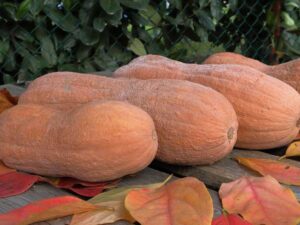
Kent or Jap Pumpkin
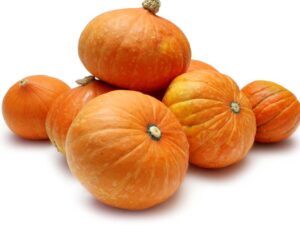
Kent pumpkins develop rounded, ribbed fruit with green and tan mottled skin. Their sweet orange flesh is suited to roasting, soups, curries and baking.
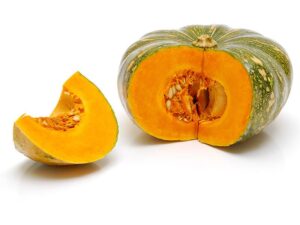
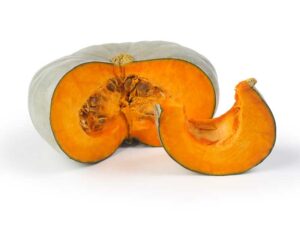
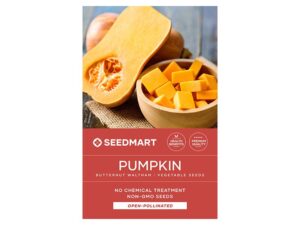
Pumpkin seed buying and growing guide
Pumpkins are productive warm-season vegetables grown for their sweet flesh, mature seeds, ornamental appearance and long storage life. Varieties differ in fruit size, skin colour, flavour, vine habit, maturity, storage potential and suitability for household gardens, containers, fresh markets or commercial production.
Seedmart supplies pumpkin seeds for home gardeners, market gardeners and commercial vegetable growers throughout Australia. Choose Kent or Jap for a popular everyday cooking pumpkin, Queensland Blue or Jarrahdale for traditional blue-grey fruit, Waltham Butternut for smooth sweet flesh or Golden Nugget for compact bush growth and smaller fruit.
The best pumpkin seed will depend on your climate, available space, preferred fruit size, cooking requirements, storage needs and intended market.
Pumpkins grow vigorously during warm weather and can produce substantial yields from healthy vines.
Use pumpkin for roasting, soups, curries, baking, purees, salads and preserved foods.
Bush pumpkins such as Golden Nugget suit raised beds, large containers and smaller gardens.
Properly matured and cured pumpkins can remain usable for weeks or months, depending on variety and conditions.
Choose tan butternuts, blue-grey pumpkins, orange bush fruit or mottled Kent types.
Select smaller packs for household gardens or larger quantities for repeated and commercial planting.
Some pumpkins are selected for compact growth, while others are grown for traditional flavour, long storage, manageable fruit size or specialty seed production.
| Growing Goal | Recommended Varieties | Why Choose Them? |
|---|---|---|
| Popular everyday cooking pumpkin | Kent or Jap | Produces versatile mottled fruit with sweet orange flesh suited to roasting, soups, curries and baking. |
| Traditional Australian pumpkin | Queensland Blue and Jarrahdale | Develop distinctive blue-grey fruit with dense orange flesh and useful storage potential. |
| Smooth sweet flesh | Waltham Butternut | Produces tan pear-shaped fruit with a relatively small seed cavity and smooth, nutty flesh. |
| Small gardens and containers | Golden Nugget | Compact bush growth and smaller fruit make it easier to manage than vigorous trailing varieties. |
| Longer storage | Queensland Blue, Jarrahdale and Waltham Butternut | Firm mature skins and dense flesh support storage when fruit is correctly harvested and cured. |
| Smaller household portions | Golden Nugget and Waltham Butternut | More manageable fruit sizes can reduce waste after cutting. |
| Specialty pepita production | Styrian Hulless | Selected primarily for hull-less green seeds rather than premium culinary flesh. |
| Market garden production | Variety selected for customer demand | Kent, butternut and traditional blue-grey pumpkins serve different retail and wholesale markets. |
Kent pumpkins develop rounded, ribbed fruit with green and tan mottled skin. Their sweet orange flesh is suited to roasting, soups, curries and baking.
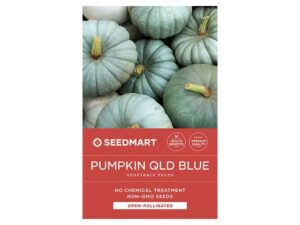
Queensland Blue produces substantial, deeply ribbed fruit with blue-grey skin and rich orange flesh.
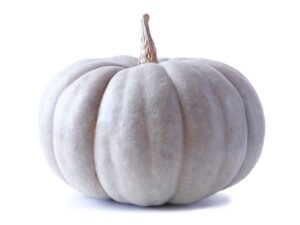
Jarrahdale develops flattened, ribbed blue-grey fruit with dense sweet flesh and a relatively small seed cavity.
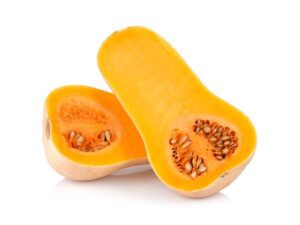
Waltham Butternut produces tan pear-shaped fruit with smooth orange flesh, nutty flavour and good storage quality.
Golden Nugget forms compact plants producing small round orange pumpkins suited to small gardens and large containers.
Styrian Hulless is grown primarily for its dark green hull-less seeds, which can be dried and roasted.
These varieties differ in fruit size, skin, flesh texture and garden space requirements.
| Pumpkin Type | General Characteristics | Suitable Uses |
|---|---|---|
| Kent or Jap | Rounded mottled fruit with sweet, versatile orange flesh. | Roasting, curries, soups, salads, baking and general cooking. |
| Queensland Blue | Large, deeply ribbed blue-grey fruit with dense orange flesh. | Roasting, soups, mash, baking and longer storage. |
| Jarrahdale | Flattened blue-grey fruit with pronounced ribs and rich flesh. | Roasting, soups, pies, market sales and storage. |
| Waltham Butternut | Pear-shaped tan fruit with a long solid neck and small seed cavity. | Roasting, purees, soups, curries and baking. |
| Golden Nugget | Small round orange fruit produced on compact bush plants. | Small households, individual portions, roasting and stuffed pumpkin. |
| Styrian Hulless | Striped mature fruit containing hull-less green seeds. | Pepita production and roasted pumpkin seeds. |
Pumpkin growth habit is an important consideration where garden space is limited.
| Bush Pumpkins | Trailing Pumpkins |
|---|---|
| Develop comparatively compact growth around the main plant. | Produce long vines that may extend several metres. |
| Better suited to raised beds, small gardens and large containers. | Require open ground, fences, wide rows or substantial trellises. |
| Generally produce smaller fruit or a concentrated crop. | May produce larger fruit and spread flowering over a longer vine. |
| Golden Nugget is a recognised compact bush variety. | Kent, Queensland Blue, Jarrahdale and Butternut are trailing types. |
| Easier to keep within a defined growing area. | Vines can be redirected but still require considerable space. |
Butternut is a type of winter squash commonly grouped with pumpkins in Australia. Both are warm-season cucurbits harvested at full maturity and used in similar dishes.
Waltham Butternut belongs to Cucurbita moschata. It produces elongated pear-shaped fruit with tan skin, a solid neck and a seed cavity concentrated in the rounded base.
Traditional pumpkins such as Queensland Blue and Jarrahdale generally produce rounded or flattened fruit with a larger central seed cavity.
| Traditional Pumpkin | Butternut |
|---|---|
| Usually round, flattened or ribbed. | Usually pear-shaped with a long neck. |
| Seed cavity is generally positioned centrally. | Seed cavity is concentrated in the rounded lower section. |
| Skin may be green, blue-grey, orange or mottled. | Mature skin is generally smooth and tan. |
| Flesh varies from moist to dense depending on variety. | Flesh is generally smooth, sweet and relatively fine textured. |
| May produce very large fruit. | Fruit is generally more manageable for household use. |
Pepitas are the edible green kernels found inside pumpkin seeds. Most ordinary pumpkin seeds have a firm pale outer hull surrounding the green kernel.
Styrian Hulless pumpkins produce seeds with little or no hard outer hull. This makes the mature seeds easier to clean, roast and eat.
Pepita pumpkins are grown primarily for their seeds rather than for premium sweet flesh. They should not be selected as a direct substitute for Kent, Butternut or Queensland Blue where the main objective is cooking pumpkin.
Pumpkins are warm-season plants requiring full sun, fertile soil, reliable moisture and enough space for their vines and fruit.
Plant after frost risk has passed and the soil is warm enough for rapid germination.
Allow trailing vines to extend across open ground, fences or strong supports.
Steady water is especially important during flowering and fruit expansion.
Male and female flowers rely mainly on bees or hand pollination for fruit development.
Pumpkins should be planted after frost risk has passed and both the soil and air are consistently warm.
| Climate Zone | General Sowing Period | Growing Notes |
|---|---|---|
| Cool | October to December | Plant after frost and choose varieties capable of maturing within the available summer. |
| Temperate | September to December | Spring and early summer planting generally provides enough time for fruit to mature before autumn. |
| Subtropical | August to February | Plant through the warm season while allowing for humidity, heavy rain and fruit disease pressure. |
| Tropical | February to September | Dry-season production may provide easier pollination, disease management and fruit curing. |
| Arid | August to January | Provide reliable irrigation and protect vines from severe drying winds. |
These sowing periods are general guides. Local frost dates, soil temperature, rainfall, humidity, irrigation and the maturity period of the selected variety should also be considered.
Regional planting dates should be adjusted according to frost risk and the length of the warm growing season.
| Location | General Planting Guide | Key Considerations |
|---|---|---|
| Brisbane and South East Queensland | August to February | Spring planting supports vigorous growth, while later crops require good airflow and drainage during humid weather. |
| Sydney and coastal New South Wales | September to December | Plant after the soil warms and allow fruit to mature before cool autumn weather. |
| Inland New South Wales | October to December | Wait until frost risk has passed and provide irrigation through hot dry periods. |
| Melbourne and Victoria | October to December | Plant as soon as conditions are reliably warm enough to maximise the available summer. |
| Canberra and cool inland districts | October to November | Use an early planting and protect young plants from late frost. |
| Adelaide and South Australia | September to December | Maintain deep watering and mulch during dry summer weather. |
| Perth and south-west Western Australia | September to December | Spring planting allows vines to establish before the hottest part of summer. |
| Tasmania | November to December | Select faster-maturing varieties and use a warm, sheltered planting position. |
| Darwin and tropical northern Australia | February to August | Dry-season crops can reduce waterlogging and excessive leaf disease. |
Pumpkins may be direct-sown into warm soil or raised individually before transplanting. Direct sowing avoids root disturbance, while protected sowing can provide an earlier start in cool climates.
Plant pumpkin seeds approximately 2–3 cm deep. Cover them with fine soil and water gently after sowing.
Use shallower planting and wait for adequate soil warmth.
Slightly deeper planting can help maintain moisture.
Pumpkin seeds commonly germinate within approximately 5–12 days under warm conditions.
Warm soil supports fast emergence and vigorous seedling growth.
Cold, waterlogged soil can cause seeds to decay before germination.
Maintain moderate, even moisture without repeated heavy watering.
Seed planted approximately 2–3 cm deep remains protected while emerging readily.
Soaking is generally unnecessary. Pumpkin seeds germinate readily when planted into warm, evenly moist soil.
Where a seed coat is particularly firm, a short soak of several hours may help hydrate the seed. Drain and plant it immediately.
Do not soak seed for an extended period or plant soaked seed into cold, saturated soil.
Yes. Pumpkin seedlings can be transplanted while young, although their roots should be disturbed as little as possible.
Raise one plant per individual pot or deep cell. Transplant after several true leaves develop but before roots become densely pot-bound.
Harden seedlings gradually and plant them at approximately the same depth they occupied in the container. Water immediately after transplanting.
Spacing depends on growth habit, fruit size and whether vines will trail, climb or be directed between rows.
| Pumpkin Type | Approximate Plant Spacing | General Guidance |
|---|---|---|
| Compact bush pumpkins | Approximately 60–100 cm | Suitable for Golden Nugget and other compact varieties. |
| Medium trailing pumpkins | Approximately 100–150 cm | Allow vines to extend into open ground or between wide rows. |
| Large vigorous pumpkins | Approximately 150–250 cm | Provide generous space for large leaves, long vines and heavy fruit. |
| Commercial rows | Adjusted to variety and machinery | Row spacing should allow irrigation, vine management and harvest access. |
Trailing pumpkin vines commonly extend approximately 2–6 metres. Vigorous varieties can grow farther under warm, fertile conditions.
Compact Golden Nugget plants remain considerably smaller, although their leaves still require useful garden space.
Vine length is influenced by:
Pumpkins can grow in containers, but compact varieties are substantially easier to manage than large trailing types.
Golden Nugget is the most suitable current Seedmart pumpkin for large-container production.
Use one large, stable container per plant.
Container-grown pumpkins require close moisture and fertility management.
Small and medium pumpkins can be trained onto a strong trellis, fence or overhead frame. Large Queensland Blue or Jarrahdale fruit can place substantial weight on the structure and vines.
A pumpkin trellis should:
Large fruit is generally easier to manage on the ground. Trellising is most practical for smaller pumpkins and where horizontal space is limited.
Pumpkin plants produce separate male and female flowers on the same vine.
Male flowers usually appear first. They grow on narrow stems and produce pollen but no fruit.
Female flowers have a small immature pumpkin directly behind the petals. They require pollen from a male flower for the fruit to continue developing.
| Male Pumpkin Flower | Female Pumpkin Flower |
|---|---|
| Grows on a narrow upright stem. | Has a miniature pumpkin behind the flower. |
| Produces pollen. | Receives pollen. |
| Usually appears earlier and in larger numbers. | Appears after the plant has established sufficient growth. |
| Falls after flowering without producing fruit. | Develops into a pumpkin after successful pollination. |
Hand pollination can improve fruit set where bee activity is low or female flowers are falling without developing.
A small clean brush may also be used to transfer pollen.
A small pumpkin that yellows and falls shortly after flowering has commonly failed to receive adequate pollen.
Other causes can include:
Insufficient pollen transfer is the most common cause of young fruit abortion.
Extreme temperatures can reduce pollen viability and flower retention.
Dry or waterlogged roots can cause flowers and young fruit to abort.
Young vines may not yet have enough leaf area to support fruit.
Heavy leafy growth can occur at the expense of female flowering.
Plants may abort later fruit when several pumpkins are already developing.
Most pumpkins require approximately 80–130 days from sowing to harvest.
| Pumpkin Group | Typical Period | General Characteristics |
|---|---|---|
| Compact or early pumpkins | Approximately 75–95 days | Smaller fruit and bush growth can support earlier maturity. |
| Kent or Jap pumpkins | Approximately 90–110 days | Productive trailing vines producing medium-sized cooking fruit. |
| Butternut pumpkins | Approximately 90–120 days | Fruit requires time to develop mature tan skin and sweet flesh. |
| Queensland Blue and Jarrahdale | Approximately 100–130 days | Larger fruit generally requires a longer warm growing period. |
| Pepita pumpkins | Approximately 100–130 days | Fruit and seeds must mature fully before seed harvest. |
Growing time varies with variety, soil temperature, air temperature, sunlight, pollination, irrigation, fertility and fruit load.
A successfully pollinated pumpkin commonly requires approximately 45–70 days to reach full maturity.
Small varieties may mature more quickly, while large Queensland Blue and Jarrahdale fruit can require longer.
Fruit should not be harvested solely according to time after flowering. Mature skin, stem condition and variety colour provide more reliable indicators.
Pumpkins develop broad leaves, extensive vines and large fruit, so they require dependable moisture and fertile soil.
Water deeply rather than applying frequent shallow moisture. Direct water towards the soil and root zone rather than repeatedly wetting the foliage.
Important watering periods include:
Reduce excessive watering as mature fruit approaches harvest, particularly where wet conditions may encourage splitting or storage problems.
Pruning is optional for most home gardens. Healthy pumpkin vines can produce successfully without regular pruning where adequate space is available.
Light pruning may be useful where vines:
Do not remove excessive healthy leaf area. Leaves produce the energy required for fruit growth and help protect pumpkins from sunburn.
Pumpkins should be harvested once the fruit is fully mature, the skin has hardened and the stem begins drying.
Signs of maturity include:
A mature pumpkin should have firm skin that is difficult to mark with a fingernail. Its colour should match the mature appearance expected for the variety.
The stalk should be firm rather than soft and green. On many varieties it becomes dry, corky or brown.
Check several indicators together. Skin hardness is generally more useful than relying only on vine colour or calendar days.
Use clean secateurs, loppers or a sharp knife to cut the stem.
Leave approximately 5–10 cm of stem attached where the variety allows. The remaining stalk helps protect the fruit from damage and decay.
Do not carry pumpkins by the stem. If the stalk breaks away, the exposed area becomes more vulnerable during storage.
Move fruit carefully to avoid cuts, bruising and punctures.
Curing allows the outer skin to harden and small surface injuries to dry before storage.
Place mature pumpkins in a warm, dry and well-ventilated location for approximately one to two weeks, depending on weather and variety.
During curing:
Butternut, Queensland Blue, Jarrahdale and other storage pumpkins generally benefit from proper curing.
Store mature, undamaged pumpkins in a cool, dry, well-ventilated location.
Place them in a single layer on shelves, timber, cardboard or another clean dry surface. Avoid direct contact with damp soil or concrete.
For better storage:
Storage life varies with variety, maturity, curing and environmental conditions.
Cover exposed flesh or place cut pumpkin in a sealed food-safe container and refrigerate promptly.
Remove seeds and loose fibres where appropriate. Use the cut pumpkin before the flesh becomes soft, slimy, mouldy or unpleasant smelling.
Cut pumpkin may also be cooked, pureed or frozen using a suitable food-storage method.
Yes. Pumpkin can be frozen after cooking or after appropriate preparation.
Common methods include:
Peel and cut pumpkin into pieces for later soups, curries and roasting.
Freeze cooked puree in measured portions for soups, baking and sauces.
Freeze cooled roasted pumpkin for later cooked meals.
Cool and freeze soup in suitable containers, allowing space for expansion.
Frozen pumpkin is generally best used in cooked dishes because freezing softens its texture.
Pumpkin is suitable for a broad range of savoury and sweet dishes.
Roast with oil, herbs and spices until browned and tender.
Cook pumpkin with stock, onions, herbs, spices or other vegetables before blending.
Add cubed pumpkin to coconut, tomato, lentil or spice-based curries.
Use cooked puree in sweet or savoury baked recipes.
Combine cooled roasted pumpkin with leafy greens, grains, cheese, herbs or nuts.
Steam or roast the flesh and mash it alone or with potato and other vegetables.
Pumpkin flowers are edible when they come from an identified edible pumpkin crop and have not been exposed to unsuitable chemical treatments.
Male flowers can be harvested without directly removing a potential fruit, although enough should be left for pollination.
Pumpkin flowers may be:
Harvest fresh flowers early in the day and use them promptly.
Mature seeds from edible pumpkins can be cleaned and roasted. Ordinary pumpkin seeds have a pale outer hull, while Styrian Hulless produces green seeds without the same hard shell.
Do not eat seed sold specifically for planting where it is chemically treated or where the product specifications do not identify it as suitable for food use.
Seed can be saved from suitable open-pollinated pumpkins, but varieties within compatible pumpkin species can cross-pollinate.
To save seed:
Seed saved from F1 hybrids will not reliably reproduce the original variety.
Cold soil, waterlogging, deep sowing and seed rot can reduce emergence.
The plant may be producing only male flowers or female flowers may not be adequately pollinated.
Poor pollination, water stress, heat and root problems can cause young pumpkins to abort.
Powdery mildew commonly develops as vines age or when conditions favour infection.
Pumpkins resting on wet soil or damaged skin may develop soft decay.
Rapid water uptake after dry conditions can contribute to fruit cracking.
Place a dry barrier beneath developing pumpkins to reduce prolonged contact with wet soil.
Suitable materials may include:
Keep the fruit stable and avoid twisting or damaging the stem when repositioning it.
Pumpkins can share a garden with crops that tolerate their vigorous growth and broad leaves.
Potential neighbouring crops include:
Avoid placing small sun-loving vegetables where mature pumpkin leaves will heavily shade them. The extensive pumpkin root system can also compete for water and nutrients.
Smaller seed quantities are suitable for household gardens and growers comparing several fruit types.
Bulk pumpkin seed can be more economical for scheduled fresh-market, wholesale and processing production.
Commercial pumpkin production requires varieties suited to the target fruit size, market specification, harvest schedule and storage system.
Consistent size, shape, skin colour and maturity simplify grading, packing and retail presentation.
Large pumpkins maximise weight, while smaller fruit may better suit modern households and individual retail sales.
Bush and trailing varieties require different plant populations, row widths and weed-management systems.
Skin strength, maturity, curing and handling affect post-harvest losses.
Fruit should reach full maturity before harvest without remaining in the field until severe weather or decay occurs.
Confirm demand for Kent, Butternut, blue-grey, small bush and specialty pepita pumpkins before large sowings.
Kent or Jap, Queensland Blue, Jarrahdale, Waltham Butternut and Golden Nugget are established choices. The best variety depends on climate, available space, fruit size and intended use.
Kent and Jap are commonly used as names for the same broad mottled pumpkin type in Australia. Product characteristics can still vary between seed strains.
Both produce blue-grey pumpkins. Queensland Blue is generally larger and more deeply ribbed, while Jarrahdale commonly produces flatter drum-shaped fruit.
Golden Nugget is the most compact variety in the current Seedmart range and is better suited to small beds and large containers than vigorous trailing pumpkins.
A pepita pumpkin such as Styrian Hulless is selected primarily for mature green seeds that do not have the same hard outer hull as ordinary pumpkin seeds.
Sow pumpkin seeds approximately 2–3 cm deep into warm, free-draining soil. Provide full sun, fertile ground, reliable moisture and enough space for mature vines.
Plant after frost risk has passed and the soil has warmed. This generally means spring to early summer in temperate regions.
Pumpkins are generally planted in Victoria from October to December once frost risk has passed and the soil is warm.
In South East Queensland, pumpkins can generally be planted from late winter through summer. Tropical areas often favour dry-season production.
Coastal New South Wales growers generally plant from September to December. Inland growers should wait until frost risk has passed.
Plant pumpkin seeds approximately 2–3 cm deep and avoid sowing into cold or saturated soil.
Pumpkin seeds commonly germinate within approximately 5–12 days under warm conditions.
Soaking is generally unnecessary. Warm soil, suitable sowing depth and consistent moisture are more important.
Yes. Transplant while seedlings are young, maintain the root ball and avoid allowing plants to become severely pot-bound.
Compact bush pumpkins may be spaced approximately 60–100 cm apart, while vigorous trailing varieties can require 1.5–2.5 metres or more.
Trailing pumpkin vines commonly extend approximately 2–6 metres and may grow farther under favourable conditions.
Yes, but compact Golden Nugget is considerably easier to manage than large trailing varieties. Use a very large container with reliable drainage.
Small and medium pumpkins can be trellised on a strong structure. Heavy fruit should be supported individually with slings.
The plant may initially be producing only male flowers, or female flowers may not be receiving enough pollen.
Transfer pollen from a newly opened male flower to the centre of an open female flower during the morning.
Poor pollination is the most common cause. Heat, drought, waterlogging and excessive fruit load can also cause young fruit to abort.
Most pumpkins require approximately 80–130 days from sowing to harvest. Large blue-grey pumpkins generally require longer than compact varieties.
A pollinated pumpkin commonly requires approximately 45–70 days to mature, depending on variety and conditions.
Harvest once the skin is hard, the fruit has developed mature colour and the stem becomes corky, brown or dry.
The skin should resist fingernail pressure, the fruit should have mature colour and the stalk should be firm and drying.
Cut the stalk with clean secateurs or a knife and leave approximately 5–10 cm attached. Do not carry the fruit by its stem.
Keep mature fruit in a warm, dry and ventilated location for approximately one to two weeks so the skin hardens before storage.
Store fully mature, undamaged pumpkins in a cool, dry and well-ventilated location. Leave space between fruit and inspect them regularly.
Cover the exposed flesh or place it in a sealed food-safe container and refrigerate promptly.
Yes. Pumpkin may be frozen as prepared pieces, cooked puree, roasted flesh or finished soup.
Yes, flowers from identified edible pumpkin plants may be eaten where they have not been exposed to unsuitable chemical treatments.
Mature seeds from edible pumpkins may be cleaned and roasted. Do not eat chemically treated planting seed.
Yes, from suitable open-pollinated varieties. Compatible pumpkin varieties can cross-pollinate, so isolation is required to maintain seed purity.
Varieties belonging to the same compatible Cucurbita species can cross-pollinate. This affects saved seed rather than the flavour of the current fruit.
Some pumpkin leaves have natural pale markings, but a spreading powdery coating can indicate powdery mildew.
Prolonged contact with wet soil, damaged skin, poor airflow or incomplete fruit development can contribute to rot.
Splitting can occur when dry conditions are followed by heavy rain or sudden excessive watering.
Specifications can vary between products and seed lots. Review each product page for treatment status, organic certification, variety type and available pack sizes.
Pumpkin seeds for Australian growers
Seedmart supplies pumpkin seed for household gardens, raised beds, large containers, market gardens and commercial production. Choose Kent, Queensland Blue, Jarrahdale, Waltham Butternut, compact Golden Nugget and specialty pepita varieties according to your available space, preferred fruit size and intended use.
Review the individual product pages for available pack sizes, growth habit, fruit characteristics, seed treatment and variety-specific planting information before ordering.