
Edible Young Leaves
Tender foliage can be harvested for stir-fries, soups, curries and other cooked leafy dishes.
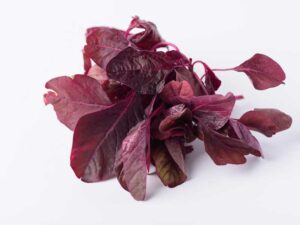
Amaranth seed buying and growing guide
Red Garnet amaranth is a fast-growing warm-season leafy vegetable cultivated for its vivid red foliage, edible young leaves and ornamental garden value. It can be harvested as tender baby leaf, picked progressively for mature cooked greens or allowed to develop into a tall flowering plant.
Seedmart supplies Amaranth Red Garnet seeds for home gardens, raised beds, containers, market gardens and specialty leafy-green production. This variety is botanically classified as Amaranthus tricolor and is also associated with common names such as leaf amaranth, Chinese spinach, tampala and bayam.
Red Garnet is particularly useful when hot weather becomes unsuitable for cool-season crops such as English spinach. For the best eating quality, harvest young foliage regularly before the leaves and stems become coarse.
Vegetable amaranth grows actively through spring and summer when many cool-season leafy greens begin flowering or declining.
Red Garnet produces richly coloured leaves that add contrast to edible gardens, mixed plantings and market displays.
Tender baby leaves can be harvested considerably earlier than fully mature plants.
Young leaves and shoots can be picked progressively while plants remain vigorous and vegetative.
Amaranth can be grown in large pots, troughs, raised planters and compact urban gardens.
Choose smaller quantities for household growing or larger packs for repeated and market-garden sowings.
Amaranth is the common name for a diverse group of plants in the genus Amaranthus. Different species and varieties may be grown for edible leaves, mature grain-like seeds, ornamental flowers, livestock forage or garden colour.
The Seedmart product in this category is Red Garnet vegetable amaranth, classified as Amaranthus tricolor. It is grown primarily for its colourful edible foliage rather than as a specialist grain crop.
Amaranth plants generally produce:
Tender foliage can be harvested for stir-fries, soups, curries and other cooked leafy dishes.
Red Garnet develops red to burgundy colouring that gives productive gardens an ornamental appearance.
Plants allowed to flower can produce numerous small seeds, although leaf varieties are not necessarily the best choice for commercial grain production.
Vegetable amaranth prefers warm soil and active summer growing conditions.
Amaranth seeds are the small seeds produced by mature Amaranthus flowers. Depending on the variety, they may be used for planting, grain production or food processing.
The seeds offered on this category page are supplied as planting seed for Red Garnet vegetable amaranth. They are intended to produce leafy plants with red edible foliage.
Planting seed should be used according to the product specifications. It should not automatically be treated as culinary grain simply because some amaranth species produce edible grain.
| Amaranth Seed Type | Primary Purpose | Important Distinction |
|---|---|---|
| Vegetable amaranth seed | Growing plants for edible leaves and shoots | Selected primarily for foliage quality, colour and leaf production. |
| Grain amaranth seed | Producing mature grain-like seed | Selected for seed yield, seed colour and grain harvest. |
| Ornamental amaranth seed | Flowers, foliage colour and landscape display | Not every ornamental variety is selected for vegetable quality. |
| Culinary amaranth grain | Cooking, milling or food production | Food grain is not necessarily tested, labelled or suitable for sowing. |
Vegetable and grain amaranths belong to the same broad plant genus but are cultivated and harvested differently.
| Vegetable Amaranth | Grain Amaranth |
|---|---|
| Grown primarily for tender leaves and shoots. | Grown primarily for mature dry seed. |
| Harvest begins while plants are young and actively growing. | Plants are allowed to flower and complete seed development. |
| Leaf tenderness, colour and regrowth are important traits. | Seed yield, seed size and maturity are important traits. |
| Commonly used as a cooked leafy vegetable. | Seed may be cooked as a grain, popped or milled into flour. |
| Red Garnet Amaranthus tricolor is a vegetable-leaf type. | Commercial grain production commonly uses varieties selected specifically for seed harvest. |
Amaranth is not true spinach. The name Chinese spinach refers to its culinary use as a leafy green rather than a botanical relationship with English spinach.
True spinach is Spinacia oleracea and prefers cool to mild conditions. Red Garnet amaranth is Amaranthus tricolor and performs best during warm weather.
| Red Garnet Amaranth | English Spinach |
|---|---|
| Botanical name: Amaranthus tricolor. | Botanical name: Spinacia oleracea. |
| Prefers warm soil and summer growing conditions. | Prefers cool to mild growing conditions. |
| Develops upright growth and can become a tall plant. | Forms a relatively low leafy rosette. |
| Red Garnet produces red to burgundy foliage. | Most spinach varieties produce green foliage. |
| Young leaves are commonly cooked like other Asian greens. | Baby leaves are commonly eaten raw or cooked. |
| Useful as a warm-season leafy crop. | Commonly grown through autumn, winter and spring. |
Amaranth is grown across many countries and cuisines, so the same or related leafy crops may appear under several names.
Common names associated with vegetable amaranth include:
Common names are not always botanically precise. When identifying or purchasing a crop, use the botanical name and variety alongside the common name.
Yes. The leaves of recognised vegetable-amaranth varieties such as Red Garnet are edible.
Young leaves and tender shoots provide the best texture. Older foliage and stems can become tougher and develop a stronger flavour as the plant matures.
Vegetable amaranth is commonly:
The leaves are generally best treated as a cooked green. As with many leafy vegetables, preparation and serving practices may vary according to the cuisine and individual dietary requirements.
Young Red Garnet leaves have a mild green flavour with lightly earthy, sweet and tangy notes. Flavour becomes stronger as plants age or experience stress.
Young foliage has the softest texture and is suited to mixed leafy dishes and quick cooking.
Tender shoot tips can be harvested before stems become coarse.
Larger foliage generally benefits from cooking and may require removal of firm stems.
Plants left too long before harvesting can lose tenderness and develop coarse stems.
Brief cooking softens the leaves while retaining colour and useful texture.
Leaves wilt into broths, sauces and spice-based dishes similarly to other tender greens.
Red Garnet amaranth is a warm-season annual that grows best in full sun, warm soil and fertile free-draining ground.
Amaranth establishes most reliably once the soil is warm and frost risk has passed.
Full sun encourages strong colour and growth, while light afternoon shade can be useful in extreme heat.
Regular watering supports tender leaves and reduces stress-related toughness.
Early and repeated picking provides better eating quality than allowing every plant to become fully mature.
Sow Red Garnet amaranth after frost risk has passed and the soil has warmed. A soil temperature of approximately 20°C or higher supports reliable establishment.
| Climate Zone | General Sowing Period | Growing Notes |
|---|---|---|
| Cool | October to January | Plant after frost and use the warmest part of the year. |
| Temperate | September to February | Sow through spring and summer once the soil has warmed. |
| Subtropical | September to March | A long warm season supports repeated sowings and harvests. |
| Tropical | Most of the year | Grow during warm conditions while managing heavy rain and dry-season irrigation. |
| Arid | September to February | Provide reliable water, mulch and protection from severe drying winds. |
These sowing periods are general guides. Local frost dates, elevation, rainfall, extreme heat and irrigation availability should also be considered.
| Location | General Planting Guide | Key Considerations |
|---|---|---|
| Brisbane and South East Queensland | September to March | Warm spring and summer conditions support rapid growth; maintain airflow during humid weather. |
| Sydney and coastal New South Wales | September to February | Plant after the soil warms and provide moisture during hot dry periods. |
| Inland New South Wales | October to January | Wait until frost risk has passed and irrigate during extreme heat. |
| Melbourne and Victoria | October to January | Use the warmest frost-free part of the year for active leaf production. |
| Adelaide and South Australia | September to February | Mulch and water consistently through dry summer conditions. |
| Perth and south-west Western Australia | September to February | Spring planting allows establishment before the most severe summer heat. |
| Tasmania | November to January | Use a warm sheltered position and expect a shorter growing season. |
| Darwin and tropical northern Australia | Extended warm-season window | Manage rainfall, irrigation and fungal pressure according to the season. |
Amaranth can be direct-sown into garden beds and containers or raised in trays before transplanting.
Plant Red Garnet amaranth seeds approximately 5–10 mm deep. The seed is small and should only be covered lightly.
Sow into a fine, weed-free bed once the soil has warmed.
Use a clean, free-draining seed-raising medium.
Red Garnet amaranth commonly germinates within approximately 7–14 days under warm conditions.
Warm soil supports faster and more uniform emergence.
Seed planted too deeply may struggle to reach the surface.
The seedbed should remain evenly moist without becoming saturated.
Provide bright light after emergence to produce sturdy growth and strong foliage colour.
Amaranth seed does not need to remain fully exposed on the soil surface, but it should be planted shallowly.
Cover the seed with only a thin layer of soil or seed-raising mix. After germination, provide strong light immediately.
Insufficient light can cause seedlings to:
Spacing depends on the intended harvest stage.
| Harvest Goal | Approximate Spacing | General Result |
|---|---|---|
| Baby leaf | Approximately 2–5 cm or densely sown rows | High plant population for tender young-leaf cutting. |
| Small whole plants | Approximately 10–20 cm | Compact plants harvested before stems become coarse. |
| Mature leafy plants | Approximately 30–45 cm | Provides room for branching, repeated leaf picking and ornamental growth. |
| Plants retained for flowers or seed | Approximately 45 cm or more | Allows tall plants to develop broader canopies and flower heads. |
| Row spacing | Approximately 45–60 cm | Allows access for weeding, watering and repeated harvests. |
Red Garnet amaranth can reach approximately 90–150 cm under favourable conditions when allowed to mature.
Plants harvested continually for young shoots may remain shorter. Mature height is influenced by:
Tall plants grown in exposed positions may benefit from wind protection or light support.
Yes. Red Garnet amaranth can be grown in containers for baby leaf, young plants or ornamental mature foliage.
Choose the container according to the intended plant size.
Potted amaranth can dry rapidly during warm weather.
Red Garnet amaranth grows best in full sun but can tolerate partial shade.
Strong light generally supports the most vivid red foliage and sturdy growth. In very hot climates, light afternoon shade may help maintain tenderness and reduce moisture stress.
Heavy shade can produce:
Established amaranth can tolerate short dry periods, but consistent moisture produces better leafy-vegetable quality.
Water deeply enough to moisten the root zone. Avoid leaving the soil continually saturated.
Vegetable amaranth generally benefits from:
Harvest time depends on whether the crop is grown for baby leaves, young whole plants or mature foliage.
| Harvest Stage | Typical Period | General Characteristics |
|---|---|---|
| Baby leaf | Approximately 25–35 days | Tender young foliage for quick cooking and mixed-leaf production. |
| Young whole plants | Approximately 35–50 days | Soft stems and leaves harvested before coarse mature growth develops. |
| Mature leaf harvest | Approximately 50–60 days | Larger plants providing repeated leaves and shoot tips. |
| Flowers and mature seed | Longer than the vegetable harvest period | Plants must remain in the ground to flower and complete seed development. |
Growing time varies with temperature, soil fertility, water, plant spacing and the preferred harvest size.
Harvesting method depends on plant age and the desired product.
| Harvest Method | How It Works | Best Suited To |
|---|---|---|
| Baby leaf cutting | Cut young leaves above the growing point using clean equipment. | Mixed leaves, quick cooking and dense plantings. |
| Whole young plants | Harvest the complete plant while the stems remain tender. | Traditional vegetable bunches and rapid crop turnover. |
| Shoot-tip harvesting | Remove tender upper stems and leaves to encourage branching. | Repeated household and market-garden harvests. |
| Individual leaf picking | Remove selected young leaves while leaving enough foliage for growth. | Small household harvests and ornamental plantings. |
Harvest during the cooler part of the day where practical. Cool the foliage promptly and remove coarse, damaged or heavily soiled leaves.
Yes. Red Garnet can provide repeated shoot and leaf harvests when the plant remains healthy and sufficient growing points are retained.
For regrowth:
Whole-plant harvesting provides faster crop turnover, while selective shoot harvesting can extend production from established plants.
Yes. Red Garnet is suitable for colourful baby-leaf production.
Baby-leaf crops are sown more densely than mature plants and harvested while the foliage is small and tender.
For baby leaf:
Red Garnet amaranth can be used for microgreen production where the seed is untreated and suitable for edible crop use.
Amaranth microgreens are small and delicate and generally require:
Always check the current product specifications before using any planting seed for microgreens. Chemically treated seed must never be used for edible sprouts, shoots or microgreens.
Use young leaves and tender shoot tips for the best texture.
Cook young leaves briefly with garlic, ginger, chilli, sesame or other vegetables.
Add chopped leaves and tender stems during the final stage of cooking.
Use the leaves in coconut, lentil, tomato or spice-based curries.
Steam young foliage lightly and season according to the preferred cuisine.
Wilt the leaves before combining them with eggs, herbs or cheese.
Combine young amaranth with other cooked Asian greens and leafy vegetables.
Very young leaves may be used raw in small amounts, but vegetable amaranth is generally better positioned as a cooked leafy green.
Cooking softens the foliage, reduces bulk and provides a more familiar preparation method across many Asian, African and Caribbean cuisines.
People with specific dietary or medical concerns should follow advice appropriate to their circumstances rather than relying on a seed-category page for individual nutrition guidance.
Recognised edible amaranth plants can produce edible flowers and mature seeds. However, crop purpose and seed handling matter.
Red Garnet is principally sold here as a vegetable-leaf variety. A planting retained for seed can produce mature seed, but:
Amaranth foliage is best used soon after harvesting.
For household storage:
Amaranth can self-seed where mature flower heads are allowed to release viable seed.
To limit unwanted seedlings:
To encourage voluntary seedlings, allow selected healthy plants to flower and mature. Seedlings may not remain completely true to the original variety where crossing has occurred.
Red Garnet Amaranthus tricolor is generally grown as an annual.
The plant completes its growth, flowering and seed cycle within one season. It does not normally regrow indefinitely from the same crown like a long-lived perennial vegetable.
In warm frost-free climates, the growing period can be extended, and self-sown seedlings may create the appearance of continuing plants.
Cold soil, deep sowing, drying seedbeds and excessive water can reduce emergence.
Insufficient light, crowding and excessive moisture can produce stretched plants.
Plant age, drought and delayed harvesting can reduce tenderness.
Caterpillars, beetles, slugs, snails and other pests may damage young leaves.
Old foliage, waterlogging, drought, root stress or nutrient imbalance can cause yellowing.
Plant maturity, stress and seasonal conditions can shorten the leafy harvest period.
Amaranth can share warm-season gardens with crops that have similar sunlight and watering requirements.
Potential neighbouring crops include:
Allow adequate space so mature amaranth plants do not heavily shade smaller crops.
Smaller seed quantities suit household gardens, raised beds, pots and growers trialling amaranth for the first time.
Larger quantities can support repeated leafy-green, baby-leaf and specialty vegetable plantings.
Commercial vegetable-amaranth production requires a defined harvest stage, customer specification and warm-season crop schedule.
Consistent red foliage improves bunch, baby-leaf and specialty market presentation.
Baby leaf, whole young plants and repeated shoot harvests require different sowing densities.
Delayed harvesting increases trimming requirements and reduces the proportion of saleable product.
Even germination and plant density support consistent harvest timing and bunch size.
Cool foliage promptly and protect delicate leaves from crushing and excess moisture.
Identify the crop clearly as Red Garnet vegetable amaranth, Chinese spinach or leaf amaranth according to the target market.
Amaranth is a group of plants in the genus Amaranthus. Different varieties are grown for edible leaves, grain-like seeds, flowers, forage or ornamental foliage.
Amaranth seeds are the small seeds formed by mature amaranth flowers. Planting seed can be used to grow leaf, grain or ornamental varieties according to the product type.
Red Garnet is a vegetable or leaf amaranth botanically classified as Amaranthus tricolor.
Yes. Red Garnet is grown for its edible young leaves and tender stems, which are generally used as cooked greens.
No. Red Garnet amaranth is Amaranthus tricolor, while true spinach is Spinacia oleracea. Amaranth prefers warmer growing conditions.
The name describes its use as a cooked leafy vegetable. It is not botanically the same crop as English spinach.
No. Vegetable amaranth is selected and harvested primarily for leaves, while grain amaranth is grown through maturity for dry seed production.
Yes. Leaves from identified vegetable-amaranth varieties such as Red Garnet are edible and are commonly cooked in stir-fries, soups and curries.
Very young leaves may be used raw in small amounts, but Red Garnet amaranth is generally better suited to cooking.
Young leaves have a mild green flavour with lightly earthy, sweet and tangy notes. Older leaves and stems become stronger and tougher.
Wash the leaves, remove coarse stems and cook them briefly by steaming, sautéing, stir-frying or adding them to soups and curries.
Some grain-amaranth seeds are used as food. Red Garnet is primarily a leafy vegetable variety, and planting seed should not automatically be treated as culinary grain.
Sow the seed approximately 5–10 mm deep in warm, free-draining soil. Maintain moisture, provide strong light and thin the seedlings according to the intended harvest.
Plant after frost risk has passed and the soil has warmed, generally from spring through summer in temperate regions.
Plant Red Garnet amaranth seeds approximately 5–10 mm deep and cover them lightly with fine soil.
Amaranth commonly germinates within approximately 7–14 days under warm conditions.
The seed can be lightly covered, but it should not be planted deeply. Seedlings require bright light immediately after emergence.
Yes. Transplant seedlings while young and before they become densely root-bound.
Baby-leaf crops can be grown densely. Mature Red Garnet plants are generally spaced approximately 30–45 cm apart.
Mature plants can reach approximately 90–150 cm, depending on spacing, fertility, water and harvest management.
Baby leaves may be ready in approximately 25–35 days, while mature leafy plants commonly require around 50–60 days.
Yes. Use troughs for baby leaf or larger individual pots for mature plants, with at least approximately 20–30 cm of soil depth.
Yes, although full sun generally produces stronger plants and more vivid red foliage.
Established plants can tolerate short dry periods, but consistent moisture produces more tender and productive leafy growth.
Yes. Tender shoot tips and leaves can be harvested repeatedly when sufficient healthy foliage and growing points remain.
Harvest baby leaves, cut whole young plants or remove tender shoot tips before stems and foliage become coarse.
Yes. Sow densely and harvest the developed young leaves before stems become tough.
Yes, where the seed is untreated and suitable for edible crop production. Always check the current product specifications first.
Yes. Plants allowed to produce mature seed can shed it and produce voluntary seedlings during later warm conditions.
Red Garnet Amaranthus tricolor is generally grown as an annual.
Seed is the standard and most reliable propagation method. Tender shoots may occasionally form roots under suitable conditions, but this is not the normal production system.
Flowering amaranth can attract insects and provide pollen, although plants harvested continuously for leaves may not reach full flowering.
Yes, from mature open-pollinated plants. Allow flower heads to dry, collect the seed before excessive shedding and store it in cool, dry conditions.
Compatible amaranth varieties can cross. Isolation is advisable when saving seed true to type.
The current Red Garnet product is identified as having no chemical treatment. Check the individual product specifications before each order because seed lots can change.
The current product specifications identify the variety as non-GMO.
Red Garnet amaranth seeds for Australian growers
Seedmart supplies Red Garnet amaranth seed for household gardens, raised beds, containers, market gardens and specialty leafy-green production. Grow this warm-season Amaranthus tricolor variety for vivid red baby leaves, tender cooked greens, ornamental foliage and repeated summer harvests.
Review the product page for current pack sizes, seed treatment, specifications, quarantine restrictions and ordering information before purchasing.