
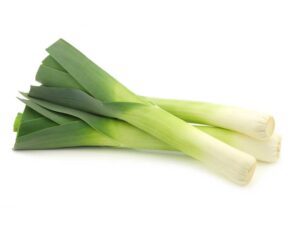
White Blanched Bases
The tender lower portion develops where light is excluded by soil, close spacing or another blanching method.
Leek seed buying and growing guide
Large American Flag is a traditional leek variety grown for its substantial white stems, upright blue-green foliage and mild onion-like flavour. It develops slowly through cool conditions and can remain in the garden until required, providing a useful extended harvest period.
Seedmart supplies Large American Flag leek seeds for home gardens, raised beds, containers, market gardens and commercial vegetable production throughout Australia. The variety is open pollinated, untreated and suited to growers seeking dependable winter and cool-season leek production.
For the longest white stems, transplant seedlings into shallow trenches or gradually draw soil around the lower plant as it grows. Harvest young leeks for fine tender stems or allow plants to mature for thick stalks suited to soups, roasts, pies, sauces and slow-cooked dishes.
Large American Flag tolerates cold conditions and is well suited to autumn, winter and spring vegetable production.
The variety produces substantial elongated bases that can reach approximately 5 cm in diameter under favourable conditions.
Leeks provide a softer, sweeter allium flavour than many mature bulb onions.
Mature plants can remain in suitable garden soil and be harvested progressively as required.
Leeks can be grown in tubs, raised planters and deep pots where soil, moisture and spacing are adequate.
Choose smaller packs for household planting or larger quantities for repeated and market-garden sowings.
A leek is a member of the allium family grown for its long white and pale-green leaf bases. It is closely related to onion, garlic, shallot, spring onion and chives.
Unlike a bulb onion, a leek does not normally form a distinct rounded bulb. Its overlapping leaf sheaths create an elongated cylindrical stem-like base.
Leek plants generally produce:
The tender lower portion develops where light is excluded by soil, close spacing or another blanching method.
The central green section is tender enough for slicing, sautéing and general cooking.
The upper leaves are firmer and strongly flavoured but remain useful in stocks and long-cooked dishes.
Plants retained through their reproductive cycle produce tall stems with rounded allium flower heads and mature seed.
Large American Flag is a traditional open-pollinated leek known for thick white stems, upright foliage, cold tolerance and dependable winter production.
It is suitable for:
Under suitable conditions, plants commonly grow approximately 30–50 cm high and can develop substantial stems.
Leeks and onions are related alliums but produce different harvest structures and culinary results.
| Leeks | Bulb Onions |
|---|---|
| Produce elongated overlapping leaf bases. | Produce a rounded underground or partly exposed bulb. |
| Have a mild, sweet and gently onion-like flavour. | Flavour ranges from sweet and mild to strong and pungent. |
| Require hilling or trenching for a long white section. | Bulbs generally need room to expand near the soil surface. |
| Commonly used in soups, pies, braises and sauces. | Used raw, fried, roasted, pickled and cooked across many dishes. |
| Can remain in cool garden soil until required. | Mature storage onions are commonly cured after harvest. |
| Do not normally form a substantial round bulb. | Bulb formation is a principal production objective. |
Leeks and spring onions can look similar while young, but they differ in size, texture and maturity.
| Leeks | Spring Onions |
|---|---|
| Develop broad, flat or folded leaves. | Generally develop narrow, hollow or tubular leaves. |
| Produce thick cylindrical white bases. | Produce slender white stems or small immature bulbs. |
| Require a long growing period. | Are commonly harvested much earlier. |
| Usually cooked, especially when mature. | Frequently eaten raw or lightly cooked. |
| Have a mild, substantial onion flavour. | Have a fresh, sharper onion flavour. |
| Need wider mature spacing. | Can be grown relatively close together. |
Leeks and shallots belong to the allium group but are grown for different plant parts.
| Leeks | Shallots |
|---|---|
| Harvested for elongated white leaf bases. | Harvested for small clustered or individual bulbs. |
| Have a soft, mild onion flavour. | Have a concentrated flavour combining onion and garlic-like qualities. |
| Usually used fresh after lifting. | Bulbs may be cured and stored. |
| Can be harvested young or mature. | Generally harvested once bulbs mature. |
| Require blanching for the longest white section. | Do not require stem blanching. |
The white base and pale-green inner section are the most tender and commonly used parts of a leek.
The darker green leaves are firmer and more fibrous but are still useful for flavouring stocks, broths, soups and long-cooked dishes.
| Leek Part | Texture and Flavour | Suitable Uses |
|---|---|---|
| White base | Tender, mild and slightly sweet | Sautéing, roasting, soups, pies, sauces and gratins. |
| Pale-green section | Moderately tender with a fuller leek flavour | General cooking, frying, stews and braised dishes. |
| Dark-green leaves | Firm, fibrous and strongly flavoured | Stocks, broths, bouquet garni and long cooking. |
| Young whole leek | Fine, tender and mild | Roasting, grilling, steaming and whole-vegetable presentation. |
| Flower stalk | Becomes firm as flowering progresses | Young tender portions may be cooked, but mature stems reduce market quality. |
Leeks have a mild allium flavour that is generally sweeter, softer and less pungent than mature bulb onion.
The blanched lower section has the softest flavour and most tender texture.
The middle section provides greater flavour while remaining suitable for most recipes.
Upper foliage has a fuller allium flavour and requires longer cooking.
Baby leeks can be cooked whole or sliced with minimal trimming.
Dry heat concentrates the natural sweetness of the white and pale-green sections.
Leeks break down into a silky base for soups, sauces and braised dishes.
Yes. Young or finely sliced leek can be eaten raw, although its texture is firmer than spring onion and its flavour can remain relatively strong.
Raw leek is best taken from the white or pale-green section and sliced thinly.
Potential raw uses include:
Mature dark-green leaves are generally better suited to cooking.
Leeks are long-season alliums requiring fertile free-draining soil, consistent moisture and cool to mild growing conditions.
Raise leeks in trays or nursery rows before transplanting them into their final spacing.
Loose soil allows roots to develop and makes trenching, hilling and harvest easier.
Regular watering supports continuous stem thickening and reduces tough, interrupted growth.
Exclude light gradually to increase the length of the tender white portion.
Leek sowing periods vary by climate. In subtropical regions, they are generally grown through the cooler months, while cool and temperate regions have a broader planting window.
| Climate Zone | General Sowing Period | Growing Notes |
|---|---|---|
| Cool | September to March | Raise crops from spring through early autumn and allow mature plants to develop during cool conditions. |
| Temperate | September to February | Spring, summer and early autumn sowing can provide autumn through spring harvests. |
| Subtropical | April to July | Use the cooler part of the year for the most reliable stem growth. |
| Tropical | Generally not recommended | Persistent warmth and humidity can make high-quality mature leek production difficult. |
| Arid | March to May | Provide reliable irrigation and protection from hot drying winds. |
These planting periods are general guides. Local frost, elevation, heat, humidity, soil conditions and irrigation availability should also be considered.
| Location | General Planting Guide | Key Considerations |
|---|---|---|
| Brisbane and South East Queensland | April to July | Grow through autumn, winter and early spring before severe heat returns. |
| Sydney and coastal New South Wales | February to September | Autumn and winter crops are reliable where drainage and airflow remain adequate. |
| Inland New South Wales | February to August | Protect small seedlings from severe frost and maintain irrigation during dry weather. |
| Melbourne and Victoria | September to March | A broad cool-season window supports autumn, winter and spring harvests. |
| Canberra and cool inland districts | September to February | Raise seedlings through mild conditions and allow mature plants to stand through winter. |
| Adelaide and South Australia | March to August | Maintain moisture during dry autumn and spring weather. |
| Perth and south-west Western Australia | March to August | The climate can suit cool-season leek production, although this product is currently restricted from shipment to Western Australia. |
| Tasmania | September to March | The cool climate is suitable for leeks, although this product is currently restricted from shipment to Tasmania. |
| Darwin and tropical northern Australia | Generally not recommended | Persistent tropical warmth can reduce stem quality and make long-season production difficult. |
Large American Flag leeks can be direct-sown, but they are commonly raised in trays or nursery beds before transplanting.
Plant Large American Flag leek seeds approximately 5–10 mm deep.
Use a fine, free-draining seed-raising medium.
Sow into fine, weed-free soil where plants can establish without heavy competition.
Large American Flag leek seeds commonly germinate within approximately 14–21 days under suitable conditions.
An approximate soil-temperature range of 18–23°C supports reliable germination.
Keep the seedbed evenly moist without leaving it waterlogged.
Deeply buried seed can emerge slowly or fail to reach the surface.
Bright light after emergence helps produce sturdy, upright plants.
Yes. Transplanting is a standard leek-production method and makes it easier to create long blanched stems.
Seedlings are commonly transplanted after approximately eight to ten weeks.
When transplanting:
Leek seedlings can be placed into holes or shallow trenches approximately 10–15 cm deep to encourage a longer pale section.
The plant should remain upright, with the youngest central leaves above the soil.
A common planting method is to:
Spacing influences stem diameter, plant population and airflow.
| Production Goal | Approximate Plant Spacing | General Result |
|---|---|---|
| Baby leeks | Approximately 5–10 cm | Produces finer stems for early whole-plant harvest. |
| Standard mature leeks | Approximately 15–20 cm | Provides room for substantial stem development. |
| Large individual plants | Approximately 20–25 cm | Encourages thicker stems and easier harvest access. |
| Row spacing | Approximately 30–45 cm | Allows room for weeding, hilling and harvesting. |
| Commercial production | Adjusted to target grade | Plant density should match required stem diameter and bunch specification. |
Yes. Leeks can be grown in deep containers where soil volume, spacing and moisture are adequate.
Choose a deep pot, tub or raised planter.
Potted leeks can dry more rapidly than garden-grown plants.
Leeks generally perform best in full sun but tolerate light partial shade.
Provide at least approximately six hours of direct sunlight for strong stem growth.
Heavy shade may result in:
Light afternoon shade can be useful where young plants are exposed to severe heat.
Leeks prefer fertile, loose and free-draining soil with a pH of approximately 6–7.
Suitable preparation may include:
Avoid placing fresh concentrated manure directly around young roots.
Leeks require consistent moisture throughout their long growing period.
Water deeply enough to maintain active root growth without leaving the soil continually saturated.
Large American Flag generally benefits from:
Blanching excludes light from the lower stem, preventing chlorophyll development and creating a longer white section.
Plant seedlings in a shallow trench and gradually fill it as the plants grow.
Place seedlings into narrow holes that fill naturally through watering and cultivation.
Draw loose soil around the stems several times during the growing season.
Use suitable barriers around the lower stems to exclude light without adding soil between the leaves.
When hilling:
Blanching is not essential for plant survival, but it improves the culinary quality and market appearance of the lower stem.
Blanched sections are generally:
Unblanched green portions remain edible but have a firmer texture and stronger flavour.
Large American Flag leeks commonly require approximately 120–150 days from sowing to mature harvest.
| Growth Stage | Typical Period | General Characteristics |
|---|---|---|
| Germination | Approximately 14–21 days | Seedlings emerge as fine upright green shoots. |
| Transplant stage | Approximately 8–10 weeks | Seedlings are moved into trenches, rows or final containers. |
| Baby leek harvest | Approximately 70–100 days | Fine young stems harvested before full diameter develops. |
| Mature Large American Flag | Approximately 120–150 days | Substantial white and pale-green stems suitable for full harvest. |
| Flower and seed production | Longer than the vegetable harvest period | Selected plants complete a biennial reproductive cycle. |
Maturity varies with temperature, transplant age, spacing, soil fertility, moisture and target stem diameter.
Leeks can be harvested at several stages.
Young leeks are tender and mild, while mature Large American Flag plants provide thicker stems and greater harvest weight.
Signs of maturity include:
Loosen the soil before lifting mature leeks. Pulling directly from compacted ground can snap the stem or leave roots behind.
Yes. Mature leeks can remain in cool, well-drained soil and be harvested as required.
Leaving them in the ground can provide convenient garden storage, but quality may decline where plants experience:
Harvest before conditions cause significant deterioration.
A leek base can produce new green growth where the basal plate and roots remain alive.
Regrowth is generally smaller than the original plant and should not be expected to produce an identical second commercial stem.
For experimental regrowth:
Seed-grown plants provide stronger roots, predictable variety identity and full-sized production.
Soil can collect between leek leaves as the stems are blanched. Thorough cleaning is therefore essential.
The best cutting method depends on the intended dish.
| Cutting Method | How to Prepare It | Suitable Uses |
|---|---|---|
| Thin rings | Slice the cleaned white and pale-green stem across its width. | Soups, sautés, omelettes and sauces. |
| Half-moons | Split the leek lengthwise, then slice across each half. | Pies, stews, frying and braising. |
| Long strips | Cut cleaned sections lengthwise into narrow pieces. | Stir-fries, garnishes and vegetable mixtures. |
| Large sections | Cut young or mature leeks into substantial lengths. | Roasting, grilling and braising. |
| Dark-green leaf pieces | Wash thoroughly and cut into manageable sections. | Stocks, broths and long-cooked dishes. |
Leeks can be cooked quickly for texture or slowly until soft and sweet.
Cook rings or half-moons gently in oil or butter until tender without excessive browning.
Roast larger sections until soft, browned and concentrated in flavour.
Use leeks in potato soup, vegetable soup, broth and creamy pureed dishes.
Cook slowly with stock, herbs, wine or sauce until the layers soften.
Combine cooked leeks with potato, chicken, fish, cheese, mushrooms or other vegetables.
Cook narrow slices briefly with other vegetables, noodles, meat or tofu.
Cooking time depends on the cut size, maturity and required texture.
| Cooking Method | General Cooking Period | Desired Result |
|---|---|---|
| Sautéing | Approximately 8–15 minutes | Soft slices with mild sweetness. |
| Steaming | Approximately 8–15 minutes | Tender young or medium-sized sections. |
| Boiling | Approximately 10–20 minutes | Soft leeks for purees, soups or further cooking. |
| Roasting | Approximately 25–40 minutes | Browned edges and soft interiors. |
| Braising | Approximately 25–45 minutes | Very tender whole or halved leeks. |
| Stock | According to the stock recipe | Flavour extracted from firm green leaves and trimmings. |
Cooking periods are general guides. The age, thickness and size of the leek pieces will affect the time required.
Freshly harvested leeks should be cooled and protected from dehydration.
For household storage:
Uncut leeks generally store better than heavily trimmed or sliced stems.
Yes. Leeks can be frozen for later cooked use.
For freezing:
Frozen leeks are best used in:
Leeks can be grown as microgreens using untreated seed suitable for edible seedling production.
Leek microgreens generally have fine green leaves and a mild allium flavour.
They require:
Leeks are botanically biennial and can produce a flower stem after sufficient maturity and cold exposure.
Bolting may be encouraged by:
Older plants naturally progress towards reproduction.
A prolonged cold period can prepare mature plants to flower.
Warmer conditions and increasing day length support flower-stem development.
Drought, root restriction and interrupted growth can reduce vegetable quality.
Once a firm flower stem develops, the leek becomes less suitable for standard fresh-market sale.
Dry seedbeds, deep sowing, waterlogging and unsuitable temperatures can reduce emergence.
Crowding, insufficient fertility, drought and inadequate growing time can limit diameter.
Shallow planting and inadequate hilling reduce blanching length.
Allium rust can produce orange or brown pustules on foliage.
Thrips can scar leaves and reduce plant vigour.
Plant maturity, cold exposure and environmental stress can trigger bolting.
Leeks can be affected by allium rust and thrips, particularly where crops remain dense or stressed.
Management practices include:
Leeks can share beds with cool-season vegetables that have compatible moisture and spacing requirements.
Potential neighbouring crops include:
Avoid placing leeks beside crops that will heavily shade them or interfere with hilling and harvest.
Yes. Large American Flag is open pollinated and can produce seed where selected plants complete their biennial cycle.
To save leek seed:
Leeks generally do not cross with ordinary bulb onions because they belong to different allium species.
Different leek varieties can cross with one another when flowering at the same time. Leeks may also cross with compatible forms of Allium ampeloprasum.
Crossing does not change the edible stems of the current crop. It affects the characteristics of saved seed.
Growers saving Large American Flag true to type should isolate flowering plants from compatible leek varieties.
Smaller quantities suit household gardens, raised beds and container growers trialling leeks for the first time.
Larger quantities support scheduled fresh-market and bunching production.
Commercial leek production requires uniform seedlings, consistent blanching and a defined stem specification.
Even emergence and transplant size support consistent maturity and grading.
Plant spacing and harvest timing influence whether leeks grade as baby, standard or large stems.
Trenching, planting depth and hilling determine the length of the white marketable section.
A 120–150-day crop requires long-term weed, water and fertility management.
Soil trapped between leaves can increase washing and trimming requirements.
Fresh leeks should be cooled promptly and protected from dehydration after lifting.
A leek is a cool-season allium grown for its elongated white and pale-green leaf bases.
Large American Flag is an open-pollinated heirloom leek producing thick white stems, upright foliage and mild onion-like flavour.
Leeks and onions are related alliums, but leeks produce elongated leaf bases rather than a rounded bulb.
No. Spring onions are slender and fast-growing, while leeks develop much thicker stems over a longer growing period.
The white and pale-green sections are the most tender. Clean dark-green leaves can also be used in stocks and long-cooked dishes.
Yes. The dark-green leaves are edible but firmer and more strongly flavoured than the white stem.
Leeks have a mild, slightly sweet onion-like flavour that becomes softer and sweeter after cooking.
Yes. Finely sliced young white and pale-green leek can be used raw in salads, slaws and garnishes.
Sow approximately 5–10 mm deep, raise strong seedlings and transplant them into trenches or deep planting holes.
Cool and temperate growers can sow from spring through early autumn. Subtropical growers generally sow from April to July.
Around Brisbane, Large American Flag leeks are generally best sown from April to July.
Around Melbourne, leeks can generally be sown from September through March.
Plant Large American Flag leek seeds approximately 5–10 mm deep.
Large American Flag leek seeds commonly germinate within approximately 14–21 days.
An approximate soil-temperature range of 18–23°C supports reliable germination.
Yes. Leeks are commonly transplanted after approximately eight to ten weeks.
Seedlings can be placed in holes or trenches approximately 10–15 cm deep while keeping the central leaves above the soil.
Large American Flag leeks are generally spaced approximately 15–20 cm apart, with closer spacing used for baby leeks.
Yes. Use a deep container with fertile potting mix, good drainage and consistent moisture.
Leeks generally perform best in full sun but tolerate light partial shade.
Water often enough to maintain consistent root-zone moisture. Frequency depends on soil, weather and plant size.
Crowding, drought, poor fertility, weeds and insufficient growing time can limit stem diameter.
Blanching excludes light from the lower stem, creating a longer pale section with milder flavour and softer texture.
Plant in trenches or deep holes and gradually hill soil around the lower stems while leaving the central leaves exposed.
Large American Flag commonly requires approximately 120–150 days from sowing to mature harvest.
Harvest once the stems reach the preferred diameter and blanch length, before mature flower stems develop.
Loosen the soil with a garden fork and lift the plant gently from the base.
Yes. They can remain in cool, well-drained soil and be harvested progressively while quality remains acceptable.
The basal plate can produce new green growth, although the regrown plant is generally smaller than the original leek.
Split the leek lengthwise, separate the layers and rinse thoroughly to remove soil trapped between the leaves.
Remove the roots and damaged leaves, clean the stem and slice it into rings, half-moons, strips or larger sections.
Leeks can be sautéed, roasted, steamed, boiled, braised or added to soups, pies and sauces.
Thin slices may soften within 8–15 minutes, while large roasted or braised sections can require 25–45 minutes.
Yes. Clean, slice and freeze leeks for later use in soups, stews, pies and sauces.
Refrigerate uncut leeks in a suitable produce bag or container and protect them from dehydration.
Yes, using untreated seed suitable for edible microgreen production.
Yes. Mature leeks can produce tall allium flower stems after cold exposure and seasonal change.
Orange or brown pustules can indicate allium rust, particularly where foliage remains damp or crops are densely planted.
Leeks can share beds with carrots, beetroot, celery, lettuce, spinach, brassicas, radish and selected herbs.
Yes. Large American Flag is open pollinated. Allow selected plants to flower and produce fully mature dry seed.
Leeks generally do not cross with common bulb onions, but different compatible leek varieties can cross with one another.
The current product is identified as having no chemical treatment. Check the product specifications before each order because seed lots can change.
Yes. The current product is identified as an open-pollinated, non-hybrid heirloom.
The current product specification lists approximately 375 seeds per gram.
The current Large American Flag product is available in 10 g, 100 g and 250 g quantities.
The current product page states that this seed is not shipped to Western Australia or Tasmania because of quarantine restrictions.
Large American Flag leek seeds for Australian growers
Seedmart supplies Large American Flag leek seed for household gardens, raised beds, deep containers, market gardens and commercial vegetable production. Grow this traditional Allium ampeloprasum heirloom for thick white stems, mild onion-like flavour and dependable cool-season harvests.
Review the product page for current pack sizes, seed treatment, specifications, quarantine restrictions and ordering information before purchasing.