
Microgreens
Young shoots harvested shortly after germination when the seed leaves and early true leaves have developed.
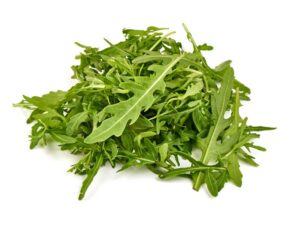

Rocket seed buying and growing guide
Rocket is a fast-growing leafy brassica cultivated for its tender green leaves and distinctive peppery flavour. It may be harvested as a microgreen, baby leaf, mature salad green or repeatedly picked from established plants.
Seedmart supplies rocket seeds for home gardeners, market gardeners and commercial leafy vegetable growers throughout Australia. Choose cultivated salad rocket for rapid growth, broad tender leaves and quick crop turnover, or Wild Rocket Sylvetta for narrow deeply lobed leaves, stronger flavour and longer-lived plants.
The best rocket seed will depend on the flavour intensity, leaf shape, growing time, harvest stage and production system you require.
Cultivated rocket can provide tender baby leaves within several weeks under suitable conditions.
Harvest outer leaves or cut above the crown to encourage further growth.
Rocket adds fresh mustard-like heat to salads, pizzas, sandwiches, pasta and cooked dishes.
Grow rocket in pots, troughs, window boxes, raised planters and compact urban gardens.
Use tender leaves raw or wilt mature foliage into pasta, soups, eggs and stir-fries.
Choose smaller packs for household gardens or larger quantities for repeated and commercial sowing.
Cultivated rocket and wild rocket provide different growing times, leaf shapes, flavours and production habits.
| Growing Goal | Recommended Rocket Type | Why Choose It? |
|---|---|---|
| Fast baby leaf production | Cultivated Rocket Speedy | Establishes rapidly and produces broad tender leaves suited to quick salad crops. |
| Strong peppery flavour | Wild Rocket Sylvetta | Produces narrow deeply lobed leaves with a more concentrated, spicy and nutty flavour. |
| Mesclun and salad mixes | Cultivated Rocket | Fast growth and soft young leaves suit regular mixed-leaf production. |
| Gourmet garnish production | Wild Rocket Sylvetta | Fine leaf shape and intense flavour suit restaurant garnishes and premium salad mixes. |
| Cut-and-come-again harvests | Either type | Leaves can regrow when the central crown remains intact and plants are kept healthy. |
| Containers and small gardens | Either type | Rocket has a compact root system and performs well in adequately drained pots. |
| Longer-lived plants | Wild Rocket Sylvetta | Can persist and regrow for a longer period than ordinary cultivated salad rocket. |
| Commercial baby leaf production | Cultivated Rocket | Rapid establishment and relatively uniform leaves support scheduled cutting and crop turnover. |
Cultivated salad rocket and wild rocket are related leafy vegetables, but they are not the same plant.
| Cultivated Salad Rocket | Wild Rocket Sylvetta |
|---|---|
| Botanically classified within Eruca, commonly Eruca vesicaria subsp. sativa. | Botanically classified as Diplotaxis tenuifolia. |
| Produces broader, softer and less deeply divided leaves. | Produces narrow leaves with deep lobes and a finer appearance. |
| Generally grows and reaches harvest more quickly. | Usually establishes more slowly but can remain productive for longer. |
| Has a fresh, moderately peppery flavour. | Develops a stronger, sharper and often nuttier flavour. |
| Usually grown as an annual salad crop. | Can behave as a short-lived perennial in favourable climates. |
| Well suited to baby leaf, mesclun and rapid commercial production. | Well suited to specialty salads, garnishes and repeated mature-leaf harvests. |
Rocket is a leafy vegetable in the brassica family. It is grown for tender green leaves with a characteristic peppery, mustard-like flavour.
Cultivated salad rocket belongs to the genus Eruca. Wild rocket belongs to the related genus Diplotaxis. Both are commonly used in salads, sandwiches, pizzas, pasta dishes and mixed leafy-green products.
Rocket may be harvested at several stages:
Young shoots harvested shortly after germination when the seed leaves and early true leaves have developed.
Tender leaves harvested while small for salads, mesclun and sandwich production.
Larger, more strongly flavoured leaves used fresh or lightly cooked.
Mature plants produce edible flowers followed by seed pods where plants are allowed to complete their lifecycle.
Yes. Arugula and rocket are common names for the same general group of peppery salad greens.
The word rocket is commonly used in Australia, the United Kingdom and other Commonwealth countries. The word arugula is more common in the United States and Canada.
Both names can refer to cultivated salad rocket, while wild rocket may be identified separately as Sylvetta, perennial rocket or wild arugula.
| Australian and British Usage | North American Usage |
|---|---|
| Rocket | Arugula |
| Wild Rocket or Sylvetta | Wild arugula or perennial arugula |
| Rocket leaves | Arugula leaves |
| Rocket salad | Arugula salad |
Rocket is not a true lettuce. Lettuce belongs to the genus Lactuca, while rocket belongs to the brassica family and is related to mustard, radish, broccoli and cabbage.
Rocket is sometimes called rocket lettuce because it is eaten as a salad leaf. This describes how it is used rather than its botanical classification.
| Rocket | Lettuce |
|---|---|
| Belongs to the brassica family. | Belongs to the daisy family. |
| Has a peppery or mustard-like flavour. | Usually has a mild, fresh flavour. |
| Produces lobed or divided leaves. | Produces smooth, frilled, crisp or broad leaves depending on variety. |
| Often used to add flavour to a mixed salad. | Often provides the main volume and structure of a salad. |
| Can become strongly flavoured during heat or flowering. | Can become bitter or tough when plants bolt. |
Rocket has a fresh peppery flavour with mustard-like, nutty and slightly bitter notes. Flavour intensity varies according to variety, leaf age and growing conditions.
Young cultivated rocket leaves generally provide a gentle peppery flavour and soft texture.
Older leaves develop more pronounced mustard flavour and a firmer texture.
Sylvetta has a stronger, more concentrated flavour than ordinary cultivated rocket.
Steady growth during mild conditions generally produces tender leaves with moderate heat.
Heat, drought and flowering can intensify pepperiness and bitterness.
Brief cooking reduces some of the sharp flavour and softens the foliage.
Rocket is a fast-growing cool-season vegetable that performs best in fertile, free-draining soil with consistent moisture. It can be grown in full sun during mild weather or in partial shade as temperatures rise.
Plan crops so most leaf development occurs before prolonged heat causes flowering.
Loose soil with suitable organic matter supports rapid, tender leaf growth.
Consistent watering helps reduce stress, toughness and excessive pepperiness.
Frequent picking encourages fresh leaf production and prevents foliage becoming over-mature.
Rocket can be grown through much of the year in many Australian climates, although autumn, winter and spring generally provide the best leaf quality.
| Climate Zone | General Sowing Period | Growing Notes |
|---|---|---|
| Cool | August to May | Sow from late winter through autumn, with summer production possible where moisture and mild conditions are maintained. |
| Temperate | February to November | Autumn and spring are particularly reliable, with winter planting possible in many districts. |
| Subtropical | March to September | Grow through the cooler and less humid part of the year. |
| Tropical | April to July | Plant during the coolest part of the dry season and provide reliable irrigation. |
| Arid | March to May and August to October | Avoid severe heat and protect plants from drying winds. |
These planting periods are general guides. Local frost, elevation, rainfall, seasonal heat and irrigation availability should also be considered.
Regional sowing periods should be adjusted according to local heat, frost and seasonal rainfall.
| Location | General Planting Guide | Key Considerations |
|---|---|---|
| Brisbane and South East Queensland | March to September | Grow through autumn, winter and early spring before prolonged heat and humidity return. |
| Sydney and coastal New South Wales | February to November | Autumn and spring are reliable, with winter crops possible in mild coastal districts. |
| Inland New South Wales | March to May and August to October | Avoid extreme summer heat and protect young crops during severe frost. |
| Melbourne and Victoria | February to November | Cool conditions support tender leaves and a longer harvest period. |
| Adelaide and South Australia | March to October | Maintain moisture during dry autumn and spring weather. |
| Perth and south-west Western Australia | March to October | Autumn through spring generally provides favourable leafy-green conditions. |
| Tasmania | August to May | Use the extended cool season while accounting for slow growth during severe winter conditions. |
| Darwin and tropical northern Australia | April to July | Grow during the coolest part of the dry season with consistent irrigation. |
Rocket is generally direct-sown into beds, containers or production trays. It can also be raised in seedling cells and transplanted for wider-spaced mature plants.
Plant rocket seeds approximately 3–5 mm deep. Cover them lightly with fine soil or seed-raising mix.
Sow into a finely prepared, weed-free garden bed or container.
Use a clean, free-draining seed-raising medium.
Rocket seeds commonly germinate within approximately 4–10 days under suitable conditions.
Cool to mild temperatures generally support reliable emergence and compact growth.
Keep the seedbed evenly moist without leaving it continually saturated.
Shallow planting allows the small seedlings to reach the surface readily.
Provide bright light once seedlings appear to prevent weak, elongated growth.
Yes. Rocket seedlings can be transplanted while young, although direct sowing is usually quicker and more efficient for baby leaf crops.
Raise individual seedlings in cells where mature plants or specific spacing are required. Transplant after several true leaves develop but before the roots become densely bound.
Water immediately after planting and protect the seedlings from severe heat while they establish.
Spacing depends on whether rocket will be harvested as microgreens, baby leaf, small plants or mature rosettes.
| Harvest Goal | Approximate Plant Spacing | General Result |
|---|---|---|
| Microgreens | Dense tray sowing | Young shoots harvested above the growing medium. |
| Baby leaf | Approximately 2–5 cm or densely sown rows | High plant population for tender young-leaf cutting. |
| Small whole plants | Approximately 8–12 cm | Compact plants for early harvest and small bunches. |
| Mature cultivated rocket | Approximately 15–20 cm | Provides room for broad leaves and repeated picking. |
| Wild Rocket Sylvetta | Approximately 15–25 cm | Allows established perennial-type plants to branch and regrow. |
| Row spacing | Approximately 20–30 cm | Allows access for weeding, watering and harvesting. |
Rocket is one of the faster leafy vegetables. Cultivated rocket commonly reaches baby-leaf harvest within approximately 20–30 days, while mature leaves may require around 30–45 days.
| Harvest Stage | Typical Period | General Characteristics |
|---|---|---|
| Microgreens | Approximately 7–12 days | Young shoots harvested soon after germination. |
| Cultivated rocket baby leaf | Approximately 20–30 days | Tender broad leaves for salads and mixed-leaf products. |
| Mature cultivated rocket | Approximately 30–45 days | Larger leaves with stronger flavour and greater harvest weight. |
| Wild Rocket Sylvetta | Approximately 35–55 days | Slower establishment with narrower leaves and stronger flavour. |
| Repeat harvests | Continue while plants remain vegetative | Leaves regrow when the central crown remains healthy. |
Growing time varies with variety, temperature, light, fertility, water, plant density and preferred harvest size.
Yes. Both cultivated and wild rocket can provide repeated harvests.
Remove individual outer leaves or cut the foliage several centimetres above the central crown. Leave the growing point and sufficient leaf area to support regrowth.
Repeated harvest performance depends on:
Harvest the largest outer leaves first and leave the small central leaves intact.
For a larger baby-leaf crop, cut across the row approximately 3–5 cm above the soil. The exact cutting height should leave the central growing points undamaged.
Use clean scissors or a sharp knife. Ragged cutting and torn crowns can slow regrowth and increase crop losses.
After harvesting:
Rocket grows well in pots, window boxes, troughs and raised planters.
Choose a container wide enough for the intended plant population.
Potted rocket can dry rapidly during warm or windy weather.
Rocket can be grown indoors where it receives strong light, adequate airflow and suitable temperatures.
A bright window may support small crops, although insufficient light can cause long, pale and weak leaves. Supplemental horticultural lighting may be required where natural light is limited.
Indoor containers should have drainage and must not remain continually waterlogged.
For indoor growing:
Rocket can tolerate partial shade and may benefit from afternoon protection as temperatures rise.
Full sun generally produces the strongest growth during cool weather. Light shade can delay flowering and help preserve tender leaves during warm conditions.
Deep shade may produce stretched plants, pale foliage and slower growth. Provide several hours of direct or strong filtered light each day.
Yes. Rocket is well suited to winter production in many Australian regions.
Growth slows during cold weather, but leaf quality can remain high. In areas with severe frost, protect young plants with suitable crop covers or grow them in sheltered containers.
Winter rocket requires:
Rocket requires consistent moisture to maintain tender leaves and balanced flavour.
Allowing plants to wilt repeatedly can result in smaller leaves, premature flowering and stronger pepperiness.
Water deeply enough to moisten the active root zone, while avoiding permanently saturated soil.
Rocket generally benefits from:
Bolting occurs when the plant begins producing a flower stem rather than continuing leafy growth.
Common causes include:
Increasing temperatures commonly accelerate flowering.
Seasonal day length can encourage reproductive growth.
Dry soil can cause plants to flower prematurely.
Older plants naturally progress towards flowering.
Crowded or pot-bound plants can flower earlier.
Stressed plants may lose vigour and progress quickly towards flowering.
To maintain tender leaves, sow new crops regularly rather than relying indefinitely on old plants.
Rocket leaves remain edible after the plant begins flowering, but they generally become smaller, tougher and more strongly flavoured.
The flowers are also edible and provide a mild peppery or mustard-like taste.
Where the leaves become excessively bitter or coarse, allow the plants to flower for pollinators or mature for seed rather than continuing salad production.
Rocket can be harvested once the leaves reach a useful size.
Baby leaves are commonly picked when approximately 5–10 cm long. Mature leaves can be harvested individually before they become tough or the plant begins heavy flowering.
Signs of harvest readiness include:
There are three common harvesting methods.
| Harvest Method | How It Works | Best Suited To |
|---|---|---|
| Baby leaf cutting | Cut young foliage above the growing point using clean equipment. | Mesclun, salad mixes and rapid crop turnover. |
| Outer-leaf picking | Remove the largest outside leaves while leaving central growth intact. | Extended household and market harvests. |
| Whole-plant harvest | Cut the entire plant near soil level. | Final crop harvest or complete bunching. |
Harvest during the cooler part of the day where practical. Cool the leaves promptly after picking.
Yes. Rocket is most commonly eaten raw when the leaves are young and tender.
Raw uses include:
Combine rocket with lettuce, spinach, herbs, tomatoes, cucumber, fruit, cheese or nuts.
Add rocket after cooking so the leaves remain fresh and lightly wilted.
Use tender leaves in sandwiches, rolls, burgers and wraps.
Fine leaves add shape, colour and fresh flavour to finished dishes.
Wash harvested foliage thoroughly and remove damaged, yellow or heavily soiled leaves.
Yes. Rocket can be cooked, although it wilts quickly and is generally added near the end of preparation.
Mature leaves are particularly suitable for cooking where their stronger flavour can complement other ingredients.
Fold fresh leaves through hot pasta shortly before serving.
Cook briefly with garlic, oil, vegetables, meat or tofu.
Add chopped rocket near the end of cooking.
Wilt rocket into scrambled eggs, omelettes and baked egg dishes.
Blend leaves with oil, nuts or seeds, cheese and seasoning.
Cook briefly until just wilted to retain colour and flavour.
Rocket can be used alone or combined with milder leaves.
Potential uses include:
Wild rocket has a stronger flavour and is often used in smaller quantities than cultivated salad rocket.
Rocket is a delicate leafy vegetable and should be cooled soon after harvest.
Remove damaged leaves and excess surface moisture before storage.
For household storage:
Rocket is best used while the leaves remain crisp and fresh.
Rocket can be frozen for cooked uses, but freezing destroys the crisp salad texture.
For longer storage, rocket may be processed into pesto or briefly blanched before freezing using a suitable method.
Frozen rocket is best used in:
Rocket can be grown as both a microgreen and a baby-leaf crop, but the production systems differ.
| Rocket Microgreens | Rocket Baby Leaf |
|---|---|
| Harvested shortly after germination. | Grown longer until developed true leaves form. |
| Usually produced densely in shallow trays. | Grown in beds, troughs, containers or deeper production trays. |
| Cut above the growing medium with roots left behind. | Cut as young leaves or allowed to regrow from the crown. |
| Generally ready within approximately 7–12 days. | Generally ready within approximately 20–30 days. |
| Small shoots with delicate seed leaves and early true leaves. | Larger foliage with developed lobed rocket leaves. |
Dry seedbeds, deep sowing, waterlogging and old seed can reduce emergence.
Heat, long days, plant age and drought stress can cause rocket to bolt.
Hot conditions, water stress and mature foliage can intensify flavour.
Flea beetles and other chewing insects may produce numerous small holes.
Old foliage, root stress, nutrient imbalance or poor drainage can cause yellowing.
Crowding, prolonged wet foliage and poor airflow can cause deterioration.
Rocket can attract flea beetles, cabbage white butterfly caterpillars, cabbage moth larvae, aphids, slugs and snails.
Management options include:
Rocket can share beds with crops that prefer similar cool-season conditions and regular moisture.
Potential neighbouring crops include:
Rocket can be planted between slower-growing vegetables and harvested before neighbouring crops require the full space.
Seed may be saved from suitable open-pollinated rocket varieties.
Allow healthy plants to flower and develop elongated seed pods. Leave the pods until they become dry and pale but collect them before they split and scatter seed.
Cultivated rocket and wild rocket belong to different genera, but nearby varieties of the same compatible type may cross where seed purity is required.
Smaller seed quantities are suitable for household gardens, containers and customers comparing cultivated and wild rocket.
Bulk rocket seed can be more economical for repeated baby-leaf, bunching and mixed-salad production.
Commercial rocket production requires seed and planting systems suited to the intended leaf size, flavour, harvest method and customer specification.
Consistent colour, shape and size improve baby-leaf mixes, bunches and retail presentation.
Cultivated and wild rocket serve different customers and culinary requirements.
Microgreens, baby leaves, whole plants and repeated cuts require different sowing densities and schedules.
Planting date and variety influence how long the crop remains suitable for leaf production.
Cool leaves promptly and protect them from crushing, excess moisture and dehydration.
Treated seed must be managed according to its product directions and cannot be used for microgreens or direct consumption.
Yes. Arugula is the common North American name, while rocket is the name generally used in Australia and the United Kingdom.
Rocket is generally called arugula in the United States and Canada.
No. Rocket is a brassica related to mustard and radish. It is sometimes called rocket lettuce because it is commonly used as a salad leaf.
Cultivated rocket grows more quickly and has broader, milder leaves. Wild Rocket Sylvetta has narrower leaves, stronger flavour and a longer-lived growth habit.
Rocket has a peppery, mustard-like flavour with nutty and slightly bitter notes. Wild rocket is generally stronger than cultivated rocket.
Sow rocket approximately 3–5 mm deep into fertile, free-draining soil. Maintain moisture, thin according to the intended harvest and grow it through cool to mild conditions.
Rocket is generally planted through autumn, winter and spring. Cool-climate growers may also grow it during suitable summer periods.
Plant rocket seeds approximately 3–5 mm deep and cover them lightly with fine soil.
Rocket seeds commonly germinate within approximately 4–10 days under suitable conditions.
Yes. Transplant seedlings while young and before they become root-bound. Direct sowing is usually more efficient for baby-leaf production.
Space mature rocket approximately 15–25 cm apart. Baby-leaf crops can be sown much more densely.
Cultivated rocket baby leaves may be ready in approximately 20–30 days. Wild rocket generally requires longer.
Yes. Harvest outer foliage or cut above the crown while leaving the central growing point intact.
Remove the largest outer leaves or cut the foliage several centimetres above the soil without damaging the central crown.
Several cuts may be possible while plants remain healthy and vegetative. Regrowth declines as plants age, experience heat or begin flowering.
Yes. Use a container with approximately 15–25 cm of soil depth, good drainage and enough width for the intended number of plants.
Yes. Rocket can grow indoors with strong light, adequate airflow and a free-draining container.
Rocket tolerates partial shade and may benefit from afternoon protection during warmer weather. Deep shade can cause weak growth.
Yes. Rocket is a cool-season crop and grows through winter in many Australian regions, although growth slows during very cold weather.
Heat, long days, drought stress and plant maturity commonly cause rocket to bolt and produce flowers.
Yes, but the leaves generally become smaller, tougher and more strongly flavoured.
Yes. Flowers from an identified edible rocket crop can be used as peppery garnishes where plants have not received unsuitable chemical treatments.
Harvest baby leaves once they reach a useful size or pick mature outer foliage before the plant begins heavy flowering.
Cut baby leaves above the crown, remove mature outer leaves individually or cut the complete plant for a final harvest.
Yes. Rocket is commonly eaten raw in salads, sandwiches, wraps, pizzas and garnishes.
Yes. Rocket can be lightly wilted into pasta, soups, eggs, sauces and stir-fries.
Yes. Cook it briefly over high heat because the leaves wilt rapidly.
Blend clean rocket leaves with oil, nuts or seeds, cheese and seasoning according to the preferred recipe.
Refrigerate promptly in a suitable produce bag or container and protect the leaves from excess moisture, crushing and dehydration.
Yes, for cooked uses. Frozen rocket loses its fresh salad texture and is better used in soups, sauces, pasta or pesto.
Yes, but only use untreated seed specifically suitable for edible microgreen production. Chemically treated seed must not be used.
Microgreens are harvested shortly after germination, while baby leaf rocket is grown longer until developed lobed leaves form.
Heat, drought, flowering and over-mature leaves can intensify bitterness and pepperiness.
Numerous small holes are commonly caused by flea beetles. Caterpillars, slugs and snails can also damage foliage.
Rocket can share beds with lettuce, onions, radish, beetroot, carrots, peas, herbs and young tomato plants where adequate spacing and light are maintained.
Yes, from suitable open-pollinated plants. Allow seed pods to mature and dry, then collect them before they split and scatter their seed.
The current Rocket Speedy product is identified as treated with Thiram. Review the product page and treatment instructions before ordering or planting.
The current Wild Rocket Sylvetta product is identified as untreated. Product specifications should still be checked before each order because seed lots can change.
No. Chemically treated seed must not be eaten, fed to animals, sprouted or used for edible microgreen production. It is intended only for growing mature plants according to the product directions.
Rocket seeds for Australian growers
Seedmart supplies rocket seed for household gardens, raised beds, containers, market gardens and commercial leafy vegetable production. Choose fast-growing cultivated salad rocket or strongly flavoured Wild Rocket Sylvetta for baby leaves, mature foliage and repeated harvests.
Review the individual product pages for available pack sizes, botanical type, seed treatment, growing time and variety-specific planting information before ordering.