
Wax Gourd and Winter Melon
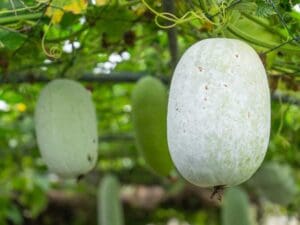
Wax gourd produces large green fruit that develops a pale waxy coating at maturity. It is widely used in soups, braised dishes, beverages and preserved products.



Gourd seed buying and growing guide
Gourds are vigorous warm-season vines grown for edible immature fruit, mature storage fruit, dried fibre or practical and decorative uses. The word gourd covers several related cucurbit crops with different fruit shapes, textures, harvest stages and culinary uses.
Seedmart supplies gourd seeds for home gardeners, market gardeners and commercial vegetable growers throughout Australia. Choose wax gourd or winter melon for large storage fruit, hairy gourd for tender young cooking fruit, or angled sponge gourd and luffa for edible immature fruit and mature natural fibre.
The best gourd seed will depend on your climate, available growing space, trellis strength, preferred fruit type and whether the crop will be harvested young for cooking or allowed to mature fully.
Gourds grow rapidly during warm weather and can cover strong trellises, fences and overhead frames.
Wax gourd, hairy gourd and sponge gourd are used in soups, curries, stir-fries and braised dishes.
Healthy vines can continue flowering and setting fruit when young gourds are harvested regularly.
Choose large waxed fruit, fuzzy young gourds or long ribbed luffa according to the intended use.
Trellising allows vigorous vines to use overhead space while keeping fruit visible and accessible.
Select smaller packs for household gardens or larger quantities for repeated and commercial plantings.
Some gourds are grown for tender young fruit, while others are valued for long storage, mature fibre or dual-purpose production.
| Growing Goal | Recommended Gourd Type | Why Choose It? |
|---|---|---|
| Large storage fruit | Wax Gourd or Winter Melon | Produces substantial mature fruit with a protective waxy surface and useful storage potential. |
| Tender Asian cooking gourd | Hairy Gourd | Young fruit has a mild flavour and soft texture suited to soups, stir-fries and braised dishes. |
| Long ribbed cooking fruit | Angled Sponge Gourd | Immature fruit is harvested while tender for curries, soups and vegetable dishes. |
| Natural dried fibre | Angled Luffa or Sponge Gourd | Mature fruit develops a fibrous interior that can be cleaned and dried. |
| Hot and humid conditions | Wax Gourd, Hairy Gourd and Luffa | Warm-season vines suited to long periods of heat where moisture and drainage are adequate. |
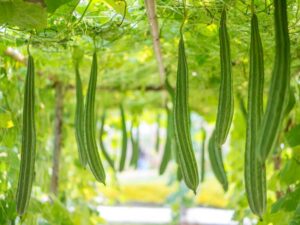
| Vertical garden production | Hairy Gourd and Angled Luffa | Strong climbing vines can be trained over trellises, fences and overhead supports. |
| Repeated fresh harvests | Hairy Gourd and Sponge Gourd | Fruit may be picked regularly while young to encourage continued production. |
| Market garden production | Variety selected for established demand | Asian grocers, restaurants and specialist customers may require specific fruit size, shape and harvest maturity. |
Wax gourd produces large green fruit that develops a pale waxy coating at maturity. It is widely used in soups, braised dishes, beverages and preserved products.
Hairy gourd develops green fruit with fine surface hairs when young. It is generally harvested before the flesh and seeds become coarse.
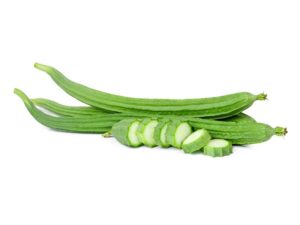
Angled sponge gourd produces elongated fruit with prominent longitudinal ridges. Young fruit is cooked as a vegetable.
Luffa fruit may be harvested young for cooking or allowed to mature until the interior forms a strong natural fibre.
Many gourds are tender only at the immature stage and should be picked before the skin, seeds and inner fibres harden.
Wax, hairy and sponge gourds are productive warm-season vegetables commonly grown in tropical, subtropical and warm temperate gardens.
A gourd is a fruit produced by a climbing or trailing plant in the cucurbit family. This broad plant family also includes cucumbers, pumpkins, squash, melons and zucchini.
In vegetable growing, the term gourd commonly refers to crops such as bottle gourd, wax gourd, bitter gourd, snake gourd, sponge gourd and hairy gourd. These are not all the same species and may differ considerably in flavour, fruit texture, harvest stage and growth habit.
Harvested while young or mature according to the crop and culinary use.
Harvested young for cooking or matured fully to produce natural fibre.
Allowed to develop a firm rind or protective surface for longer keeping.
Selected primarily for decorative shape, colour or dried craft use rather than culinary quality.
Botanically, gourds are fruits because they develop from flowers and contain seeds. In cooking, edible gourds are usually treated as vegetables because they are commonly prepared in savoury dishes.
The same distinction applies to cucumbers, pumpkins, squash and zucchini. They are botanical fruits but culinary vegetables.
No. Some gourds are grown primarily for decoration, containers, musical instruments, craftwork or dried fibre rather than for eating.
Edible gourd varieties must also be harvested at the correct stage. Sponge gourds and hairy gourds can become tough, fibrous and unpalatable when over-mature.
Never assume that an unidentified ornamental gourd is edible. Use seed and fruit from a clearly identified food variety and follow variety-specific preparation guidance.
These warm-season crops are related but produce distinctly different fruit.
| Gourd Type | General Characteristics | Common Harvest Use |
|---|---|---|
| Wax gourd | Large green fruit developing a pale waxy surface at maturity. | Soups, braised dishes, drinks, sweets and longer storage. |
| Hairy gourd | Elongated green fruit covered with fine hairs while young. | Fresh young fruit for soups, steaming, stir-fries and braising. |
| Angled sponge gourd | Long fruit with prominent longitudinal ridges. | Young fruit for cooking or mature fruit for natural fibre. |
| Smooth sponge gourd | Longer fruit with a smoother outer shape than angled types. | Young vegetable fruit and mature dried sponge. |
| Bottle gourd | Fruit may be bottle-shaped, round, long or club-shaped depending on variety. | Young fruit for cooking or mature shells for craft and practical uses. |
| Bitter gourd | Distinctly ridged or warty fruit with a pronounced bitter flavour. | Cooked young fruit used in Asian cuisines. |
Luffa and sponge gourd generally refer to closely related crops in the genus Luffa. The two principal cultivated forms are commonly described as angled or ridged luffa and smooth luffa.
Young luffa fruit is cooked as a vegetable before the interior becomes fibrous. Mature fruit is allowed to dry so the network of inner fibres can be removed and cleaned for use as a natural sponge.
The common bathroom “loofah” is therefore a dried plant fibre rather than a marine sponge.
Most gourds require a long, warm growing season, full sun, fertile soil, consistent moisture and ample space for vigorous vines.
Plant after frost risk has passed and the soil is warm enough for rapid germination.
Install a substantial trellis before the vines begin vigorous growth.
Even watering supports vine growth, flowering and fruit expansion.
Male and female flowers require insect activity or hand pollination for reliable fruit set.
Gourds should be planted during warm, frost-free conditions. Tropical and subtropical regions generally provide the longest production period, while cool-climate growers require a protected start and a suitably long summer.
| Climate Zone | General Sowing Period | Growing Notes |
|---|---|---|
| Cool | October to December | Start after frost risk and choose a warm, sheltered position. Long-maturing types may struggle in short summers. |
| Temperate | September to January | Plant through spring and early summer once soil temperatures are reliably warm. |
| Subtropical | August to February | Plant through the warm season, with spring and early summer often providing vigorous establishment. |
| Tropical | March to September | Dry-season production may provide easier disease management, pollination and fruit handling. |
| Arid | August to January | Provide reliable irrigation and protect vines from severe heat and drying winds. |
These sowing periods are general guides. Local frost dates, humidity, rainfall, soil temperature, daylight and the maturity of the selected variety should also be considered.
Planting periods should be adjusted according to local frost, summer heat, rainfall and the length of the warm growing season.
| Location | General Planting Guide | Key Considerations |
|---|---|---|
| Brisbane and South East Queensland | August to February | Spring and early summer support rapid growth. Maintain airflow during prolonged humid weather. |
| Sydney and coastal New South Wales | September to December | Plant after the soil warms and allow sufficient time for large fruit to develop. |
| Inland New South Wales | October to December | Wait until frost risk has passed and provide dependable irrigation. |
| Melbourne and Victoria | October to December | Use the warmest available growing period and consider raising seedlings under protection. |
| Adelaide and South Australia | September to December | Provide mulch and regular deep watering during dry summer conditions. |
| Perth and south-west Western Australia | September to December | Spring planting allows vines to establish before the hottest part of summer. |
| Tasmania | November to December | Use a protected position and select faster-maturing varieties for the short warm season. |
| Darwin and tropical northern Australia | March to August | Dry-season plantings can reduce waterlogging and excessive fungal disease pressure. |
Gourd seeds may be direct-sown into warm soil or raised individually before transplanting. Starting plants in separate cells can provide an earlier crop in cooler areas, but the roots should not be disturbed excessively.
Plant most gourd seeds approximately 2–3 cm deep. Use the shallower end of this range in cool or heavy soil and slightly deeper planting where the soil surface dries rapidly.
Wait for adequate warmth and avoid planting deeply.
Slightly deeper sowing can help maintain even moisture.
Gourd seeds commonly germinate within approximately 7–14 days under warm conditions. Some hard-coated seed may take longer, particularly where soil temperatures are low.
Warm soil supports faster emergence and reduces the time seed remains vulnerable to decay.
Maintain moderate moisture without continually saturating the seed.
Some gourd seeds have firm coats that absorb water more slowly than cucumber or zucchini seed.
Poorly aerated soil can cause seed to deteriorate before germination.
Soaking is optional. Many gourd seeds germinate without treatment when planted into warm, consistently moist soil.
A short soak can help hydrate hard-coated seeds before sowing. Soak the seed for several hours or overnight, drain it and plant immediately.
Do not leave seed submerged for an extended period. Prolonged soaking can deprive it of oxygen and increase deterioration.
Where seed has a particularly firm coat, growers sometimes lightly scarify the edge before soaking. This involves carefully abrading a small section of the outer coat without damaging the embryo inside.
Scarification is not essential for every seed lot and can reduce germination if performed too aggressively.
A safer general method is:
Yes. Gourds can be transplanted while young, although their roots should be disturbed as little as possible.
Raise one or two seeds in individual pots or deep cells. Transplant after the seedlings develop several true leaves but before their roots become tangled.
Harden the plants gradually before moving them outdoors. Place the root ball at approximately the same depth it occupied in the container and water immediately.
Spacing varies with species, trellis system, vine vigour and whether plants are grown commercially or in a household garden.
| Growing Situation | Approximate Plant Spacing | General Guidance |
|---|---|---|
| Trellised household vines | Approximately 60–100 cm | Train each plant vertically and manage side growth as required. |
| Large wax gourd vines | Approximately 100–150 cm | Provide substantial space and support for vigorous foliage and heavy fruit. |
| Ground-grown vines | Approximately 150–250 cm | Allow enough room for vines and fruit to spread without severe crowding. |
| Commercial rows | Adjusted to variety and training system | Row width must allow irrigation, airflow, harvest and equipment access. |
Gourds can trail along the ground, but many varieties benefit substantially from strong vertical support.
| Trellised Gourds | Ground-Grown Gourds |
|---|---|
| Use less ground space. | Require a wide open growing area. |
| Fruit remains visible and easier to harvest. | Fruit may become hidden beneath dense foliage. |
| Long fruit can hang straighter. | Fruit may curve or develop on the soil surface. |
| Airflow can improve around the foliage. | Leaves may remain damp close to the ground. |
| Heavy fruit may require individual support. | The soil supports the weight of large fruit. |
Gourd trellises must support vigorous vines, large leaves and potentially heavy fruit. Lightweight garden netting may be inadequate for wax gourds or mature luffa crops.
Suitable structures include:
Allow access underneath or along both sides for pruning, hand pollination and harvesting.
Where fruit becomes heavy, support it with a breathable sling attached directly to the trellis rather than to a tender vine.
Many gourd vines can extend approximately 3–8 metres, and vigorous plants may grow farther under favourable tropical or subtropical conditions.
The trellis does not need to match the vine’s complete potential length. Growth can be directed sideways, over an overhead frame or pruned where necessary.
Final vine length depends on variety, season, temperature, soil fertility, water and harvest management.
Gourds can grow in large containers, but most varieties require substantial soil volume, a strong trellis and close moisture management.
Compact containers restrict roots and dry rapidly, making them unsuitable for large wax gourd or heavily cropping vines.
Choose one large, stable container for each vigorous plant.
Potted vines require frequent observation during hot weather.
Many gourds produce separate male and female flowers on the same plant. Male flowers often appear first and do not form fruit.
Female flowers have a small immature gourd behind the petals. Bees and other insects transfer pollen from male flowers to receptive female flowers.
Poor pollination can cause:
Hand pollination can improve fruit set where insect activity is low or the crop produces only a small number of flowers.
Identify a newly opened male flower without a swollen fruit behind it. Remove the petals and gently touch the pollen-bearing centre against the centre of an open female flower.
A small clean brush may also be used to transfer pollen.
Pollinate early in the morning while flowers are fresh. Use pollen from another plant where possible to support effective fertilisation.
Flower drop can occur for several reasons:
Male flowers naturally fall after releasing pollen and never produce fruit.
Unpollinated female flowers commonly yellow and drop with the small fruit attached.
Extreme temperatures can reduce pollen viability and flower retention.
Very dry or waterlogged roots can cause flowers and young fruit to abort.
Strong leafy growth may occur at the expense of female flowering and fruit set.
Young plants may produce many male flowers before female flowering begins.
Many edible gourds begin producing young harvestable fruit approximately 70–110 days after sowing. Fruit intended for mature fibre, storage or craft use requires additional time.
| Harvest Type | Typical Period | General Characteristics |
|---|---|---|
| Young hairy gourd | Approximately 70–90 days | Harvested while skin, flesh and seeds remain tender. |
| Young sponge gourd | Approximately 70–100 days | Picked before the fibrous network develops. |
| Wax gourd | Approximately 90–130 days | Large fruit may be harvested at different maturity stages according to use. |
| Mature luffa sponge | Approximately 120–180 days | Fruit remains on the vine until the skin dries and the internal fibre hardens. |
| Mature craft gourd | Usually 120 days or longer | Requires complete ripening followed by additional curing and drying. |
Growing time varies with species, variety, climate, soil warmth, daylight, pollination, water, fertility and the intended harvest stage.
Most culinary gourds are harvested while the fruit is young, firm and before the seeds and internal fibres become hard.
Signs of suitable young harvest include:
Wax gourd may be harvested young for tender flesh or allowed to mature for larger fruit and improved storage.
A mature wax gourd generally develops:
Use clean cutters and leave a short stem attached. Avoid damaging the rind if the fruit will be stored.
Hairy gourd is generally harvested while the fruit remains young, green and tender.
Pick before the seeds become large and the flesh develops a spongy or fibrous texture. Fruit size varies by variety, so texture and maturity are more useful than length alone.
Check vines frequently because fruit can enlarge rapidly during warm weather.
Harvest sponge gourd while the fruit remains immature and the interior is tender.
Young fruit should:
Once the inner fibre develops, the fruit is no longer suitable for the same tender vegetable uses.
Leave luffa fruit on the vine until it is fully mature. The skin typically changes colour, becomes dry and begins separating from the fibrous interior.
Harvest before prolonged wet weather causes mould or decay.
After harvesting:
Yes. Edible gourd vines commonly produce multiple fruit over the growing season.
Frequent harvesting of young fruit can encourage continued flowering and reduce the energy directed into over-mature gourds.
Inspect vines every few days during peak production. Fruit hidden behind large leaves can quickly exceed the preferred culinary size.
Young gourds have mild flavours that readily absorb sauces, stocks, herbs and spices.
Add cubed fruit to clear broths, meat soups and slow-cooked dishes.
Cook tender slices quickly with garlic, ginger, egg, meat or other vegetables.
Slow cooking allows the flesh to absorb savoury sauces and seasonings.
Steam tender fruit alone or with seasoned fillings.
Use young fruit in coconut, lentil, tomato or spice-based curries.
Mature wax gourd may be processed into preserved foods, sweets and beverages using appropriate methods.
Cold soil, excess moisture, hard seed coats and deep sowing can delay or prevent emergence.
Early male flowering or inadequate pollination can result in abundant flowers without developing gourds.
Poor pollination, heat, root stress and irregular watering may cause fruit abortion.
High nitrogen and limited sunlight can encourage foliage at the expense of female flowers.
Powdery mildew and related leaf diseases may develop as vines age or humidity increases.
Edible gourds become coarse and fibrous when harvested after the preferred young stage.
Smaller seed quantities are suitable for household gardens and growers trialling unfamiliar Asian gourd varieties.
Larger seed quantities can be more economical for growers supplying Asian grocers, restaurants, fresh markets and specialist retailers.
Commercial gourd production requires a clear target market, variety specification and harvest stage.
Confirm the names customers use, as hairy gourd, winter melon, luffa and other crops may have several regional names.
Length, diameter, skin texture, colour and maturity affect market acceptance.
Strong support structures require additional establishment cost but can improve access and fruit quality.
Young culinary gourds may require picking several times each week during peak production.
Fruit set depends on healthy flowering, insect activity and suitable environmental conditions.
Confirm reliable demand before planting large areas of unfamiliar or highly specialised gourds.
A gourd is a fruit produced by a plant in the cucurbit family. The term includes several crops grown for edible fruit, mature fibre, storage or decorative uses.
Gourds are botanical fruits because they develop from flowers and contain seeds. Edible varieties are usually treated as vegetables in cooking.
No. Some gourds are grown primarily for ornamental or craft use. Only eat clearly identified edible varieties harvested and prepared at the appropriate stage.
Pumpkins and gourds are related cucurbit crops, but the term gourd usually refers to different species or varieties grown for edible young fruit, mature shells, fibre or decoration.
Cucumbers and gourds belong to the same broad plant family but are different crops with distinct fruit and culinary uses.
Wax gourd, also called winter melon, is a vigorous vine producing large green fruit that develops a pale waxy surface at maturity.
Hairy gourd is an Asian vegetable producing elongated green fruit with fine hairs when young. It is harvested before the flesh and seeds become coarse.
Sponge gourd is a luffa crop. Young fruit is cooked as a vegetable, while mature fruit develops a fibrous interior that can be cleaned and dried.
Yes. Luffa refers to the plant and fruit, while loofah is a common spelling used for the dried natural sponge.
Yes. Winter melon and wax gourd commonly refer to Benincasa hispida, although variety characteristics can differ.
Sow gourd seeds approximately 2–3 cm deep into warm, free-draining soil. Provide full sun, fertile ground, reliable moisture and a strong trellis.
Plant gourds during warm, frost-free conditions. Temperate growers generally sow in spring, while tropical and subtropical regions have a longer planting period.
Plant most gourd seeds approximately 2–3 cm deep. Avoid planting into cold or saturated soil.
Gourd seeds commonly germinate in approximately 7–14 days under warm conditions. Hard-coated seed or cool soil may delay emergence.
Soaking is optional. A short soak can hydrate firm-coated seed, but warm soil and correct moisture are more important for reliable germination.
Use warm conditions, free-draining medium and consistent moisture. A short soak may help firm-coated seed absorb water. Avoid deep sowing and waterlogging.
Yes. Transplant while seedlings are young, keep the root ball intact and avoid allowing the plants to become severely pot-bound.
Trellised gourds may be spaced approximately 60–150 cm apart, depending on vine vigour. Ground-grown vines require substantially more room.
Gourds can grow along the ground, but vigorous and long-fruited varieties generally benefit from a strong trellis.
A trellis approximately 1.8–2.5 metres high can suit many household plantings. Overhead frames provide additional room for long vines and hanging fruit.
Many vines extend approximately 3–8 metres and may grow farther under favourable tropical or subtropical conditions.
Yes, but use a very large container, fertile growing medium and an independently supported trellis. Large-fruited varieties can be difficult to manage in pots.
Young edible gourds may be ready approximately 70–110 days after sowing. Mature wax gourds, dried luffa and craft gourds require longer.
Early flowers are often male. Female flowers require successful pollination, and fruit set may also be reduced by heat, water stress or excessive nitrogen.
Transfer pollen from a newly opened male flower to the centre of a female flower using the flower itself or a small clean brush.
The most common cause is incomplete pollination. Heat, drought, waterlogging and root stress can also cause young fruit to abort.
Harvest most edible gourds while the fruit is young, firm and before the seeds, skin and internal fibres harden.
Wax gourd may be harvested young or allowed to mature until the rind is firm and the surface develops its characteristic waxy coating.
Pick hairy gourd while the fruit remains green and tender and before the seeds and flesh become coarse.
Harvest luffa while the fruit is immature, tender and free from developed internal fibre.
Leave the fruit until the skin dries, the interior becomes fibrous and the seeds mature. Harvest before prolonged wet weather causes decay.
Yes. Healthy vines commonly produce multiple fruit. Frequent harvesting of young edible gourds can encourage continued production.
Some species are naturally bitter, but unexpected severe bitterness in a normally mild cucurbit can indicate elevated cucurbitacins. Do not eat severely bitter fruit.
Seed may be saved from suitable open-pollinated varieties. Allow fruit and seed to mature fully and isolate compatible varieties to reduce unwanted cross-pollination.
No. The range may include both open-pollinated and F1 hybrid varieties. Review each product page for variety type, seed treatment and pack specifications.
Gourd seeds for Australian growers
Seedmart supplies gourd seed for household vegetable gardens, trellised growing systems, market gardens and commercial production. Choose wax gourd, hairy gourd and angled sponge or luffa varieties according to the intended fruit type, harvest stage and culinary use.
Review the individual product pages for available pack sizes, hybrid status, fruit characteristics, seed treatment and variety-specific planting information before ordering.