
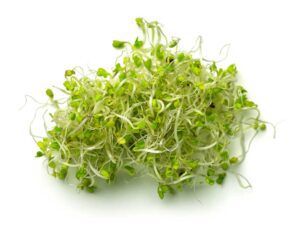
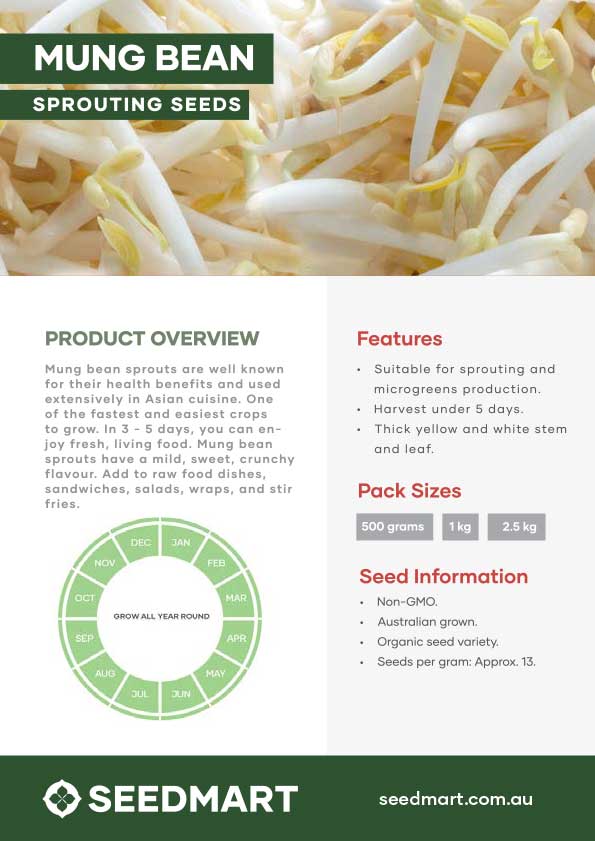
Mung Bean Sprouting Seeds
Grow crisp, fresh mung bean sprouts at home in approximately 3–4 days. Mung bean sprouting seeds (Vigna radiata) produce thick, crunchy sprouts with a mild, slightly sweet flavour. They are suitable for growing in glass jars, sprouting colanders, hemp sprouting bags and other countertop sprouting systems.
Mung beans are one of the most widely used sprouting legumes and are especially popular in Asian and Indian cooking. Their substantial texture makes them ideal for stir-fries, noodle dishes, soups, curries, salads and fresh sprout mixes.
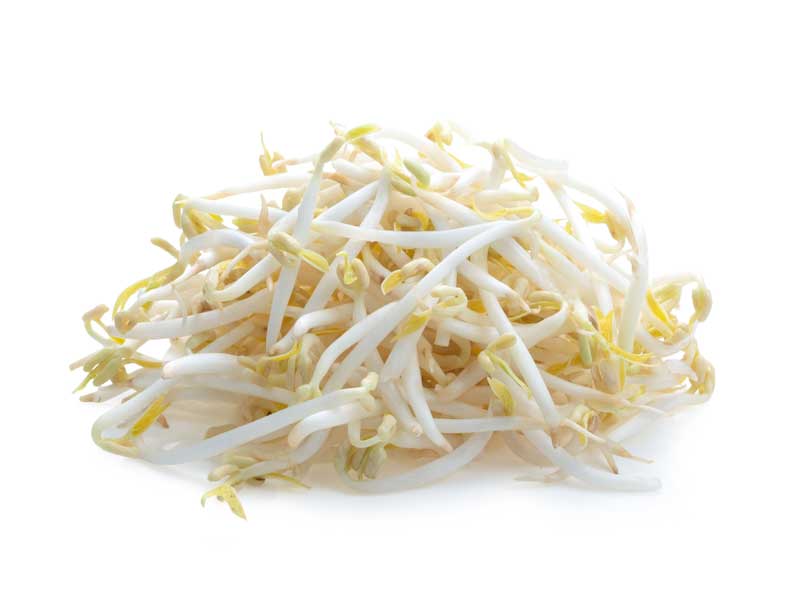
Unlike fine leafy sprouts such as alfalfa or broccoli, mung bean sprouts develop thick white stems and a more substantial bite. They can be harvested young after only a few days or allowed to grow slightly longer for larger bean sprouts.
Seedmart mung bean sprouting seeds are Australian grown and available in practical packet and bulk quantities for home growers and larger-volume sprouting requirements.
Mung Bean Sprouting Seed Details
| Botanical name | Vigna radiata |
|---|---|
| Family | Fabaceae |
| Common names | Mung bean, green gram, moong, munggo, bean sprout |
| Recommended soak | Approximately 6–8 hours |
| Typical sprouting time | Approximately 3–4 days |
| Flavour | Mild, fresh and slightly sweet |
| Growing methods | Sprouting jar, colander, hemp bag or sprouting tray |
| Origin | Australian grown |
Why Choose Mung Bean Sprouting Seeds?
- Produces thick, crunchy sprouts with a mild flavour.
- Fast growing, with a typical harvest in approximately 3–4 days.
- Suitable for indoor sprouting throughout the year.
- Can be grown without soil or an outdoor garden.
- Suitable for jars, colanders, hemp sprouting bags and trays.
- More substantial in texture than fine leafy sprouts such as alfalfa.
- Useful for stir-fries, soups, noodle dishes, salads and fresh meals.
- Available in smaller packets and bulk quantities.
- Australian grown.
What Do Mung Bean Sprouts Taste Like?
Mung bean sprouts have a mild, fresh flavour with a subtle sweetness and a distinctive crunchy texture. Their flavour is much gentler than peppery sprouts such as radish or mustard.
Because the stems become thicker and more substantial than alfalfa, broccoli or clover sprouts, mung bean sprouts work particularly well in cooked dishes as well as fresh meals.
They are widely used in stir-fries, noodle dishes, soups, rice bowls, curries and salads, and are commonly associated with Asian-style bean sprouts.
How to Grow Mung Bean Sprouts in a Jar
Mung beans can be sprouted successfully in a glass jar, sprouting colander, hemp sprouting bag or other container that allows effective rinsing and drainage.
- Add the seeds.
Place approximately 4–6 tablespoons of mung bean sprouting seeds into a clean jar. Allow plenty of empty space because mung beans expand considerably as they germinate. - Soak for approximately 6–8 hours.
Cover the seeds generously with cool, clean water and leave them to soak. - Drain thoroughly.
Pour away the soaking water and rinse the beans thoroughly with fresh, cool water. - Position for drainage.
If using a jar, position it upside down at an angle so excess water can drain while air continues to circulate. - Rinse every 8–12 hours.
Rinse the developing sprouts with fresh water and drain thoroughly. Repeat approximately twice daily, or as conditions require. - Allow the sprouts to develop.
Continue the rinse-and-drain cycle until the sprouts reach your preferred size. Mung bean sprouts are commonly ready in approximately 3–4 days. - Harvest and refrigerate.
Give the sprouts a final rinse, drain thoroughly and refrigerate promptly in a clean container.
How Much Do Mung Bean Sprouting Seeds Produce?
Mung beans increase substantially in volume as they germinate and develop into sprouts. A batch using approximately 4–6 tablespoons of seed may produce around 1–1½ cups of fresh sprouts, depending on jar size, growing conditions and harvest stage.
Do not overfill the sprouting container. Mung bean sprouts need adequate room for rinsing, drainage and expansion as their stems develop.
Tips for Growing Mung Bean Sprouts Successfully
- Use clean equipment: Clean your jar, lid, colander or sprouting bag thoroughly before each batch.
- Allow plenty of room: Mung beans expand considerably as they germinate.
- Drain after every rinse: Do not allow the beans to remain sitting in pooled water.
- Maintain airflow: Good ventilation helps the sprouts remain fresh as they develop.
- Keep conditions moderate: Avoid very hot positions or strong direct sunlight.
- Rinse consistently: Regular rinsing approximately every 8–12 hours helps maintain even moisture.
- Refrigerate promptly: Drain harvested sprouts thoroughly before transferring them to the refrigerator.
How to Use Mung Bean Sprouts
Mung bean sprouts are particularly versatile because their thicker stems hold their texture well in both fresh and lightly cooked dishes.
Try adding mung bean sprouts to:
- Stir-fries.
- Asian noodle dishes.
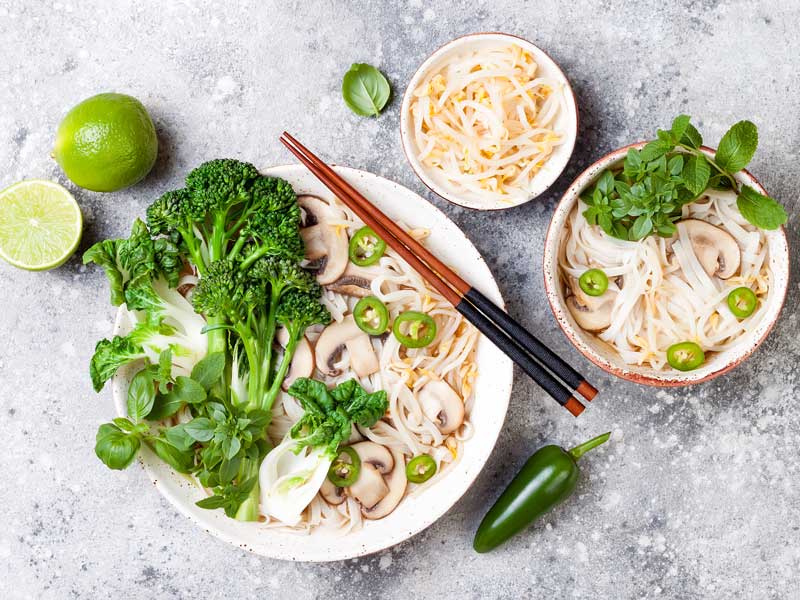
- Pho and other soups.
- Rice and grain bowls.
- Curries.
- Salads.
- Wraps and sandwiches.
- Fresh spring rolls.
For cooked dishes, add the sprouts towards the end of cooking if you want to retain more of their characteristic crunch.
Mung Bean Sprouts vs Alfalfa Sprouts
Mung bean and alfalfa sprouts are both popular choices for home sprouting, but they differ considerably in size, texture and typical culinary use.
| Feature | Mung Bean Sprouts | Alfalfa Sprouts |
|---|---|---|
| Texture | Thick, crisp and crunchy | Fine and delicate |
| Flavour | Mild and slightly sweet | Mild and fresh |
| Typical harvest | Approximately 3–4 days | Approximately 4–6 days |
| Common uses | Stir-fries, soups, noodles, salads | Sandwiches, wraps, salads, fresh dishes |
Mung Bean Sprouts vs Mung Bean Microgreens
Mung beans can be grown as either sprouts or microgreens, but the growing method and harvest stage are different.
| Feature | Mung Bean Sprouts | Mung Bean Microgreens |
|---|---|---|
| Typical harvest | Approximately 3–4 days | Approximately 7–10 days |
| Growing method | Usually grown in a jar, bag or colander | Usually grown in a shallow tray |
| Growing medium | No soil required | Commonly grown on soil, coco coir or another growing medium |
| Harvested portion | The young shoot, root and remaining seed are generally harvested together | The stems and leaves are cut above the growing medium |
Frequently Asked Questions
How long do mung bean sprouts take to grow?
Mung bean sprouts are commonly ready to harvest in approximately 3–4 days. They can be allowed to grow slightly longer if a larger sprout is preferred.
How long should mung beans be soaked before sprouting?
Soak mung bean sprouting seeds for approximately 6–8 hours before draining them and beginning the regular rinse cycle.
How often should mung bean sprouts be rinsed?
Rinse and drain the developing sprouts approximately every 8–12 hours. Thorough drainage is important because mung beans absorb substantial moisture as they germinate.
Can mung beans be sprouted in a glass jar?
Yes. A glass sprouting jar works well for mung beans provided the jar is large enough to allow the beans to expand and excess water can drain freely.
Do mung bean sprouts need soil?
No. Mung bean sprouts are normally grown without soil in a jar, sprouting bag, colander or another suitable sprouting system.
Do mung bean sprouts need sunlight?
Mung beans do not require strong light during sprouting. They can be grown in indirect light and should be kept away from hot, direct sunlight.
What do mung bean sprouts taste like?
Mung bean sprouts have a mild, slightly sweet flavour and a crisp, crunchy texture. Their substantial stems make them particularly suitable for stir-fries, soups and noodle dishes.
Are mung bean sprouts the same as bean sprouts?
Mung bean sprouts are one of the most common types sold and used as bean sprouts. Other beans can also be sprouted, so the general term “bean sprouts” is not exclusive to mung beans.
Can mung beans be grown as microgreens?
Yes. Mung beans can also be grown in shallow trays using a suitable growing medium. Mung bean microgreens are normally grown for longer than sprouts before being cut above the growing medium.
How should harvested mung bean sprouts be stored?
After the final rinse, allow the sprouts to drain thoroughly and refrigerate them promptly in a clean container. Excess surface moisture can reduce storage quality.
Where can I buy mung bean sprouting seeds in Australia?
Seedmart supplies Australian-grown mung bean sprouting seeds to home growers and larger-volume customers throughout Australia. Packet and bulk quantity options are available through this product page.
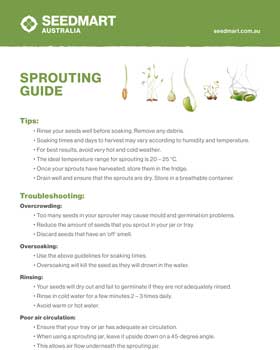
Free Sprouting Guide
New to growing sprouts? Download our FREE Sprouting Guide for more information about growing fresh sprouts at home.
Watch: How to Grow Mung Bean Sprouts
Important Food Safety Information
Sprouts are grown in warm, moist conditions that can also support the growth of harmful bacteria. Good hygiene and careful handling are important when growing sprouts at home.
- Wash your hands before handling seeds or sprouts.
- Use clean sprouting equipment and fresh water.
- Rinse regularly and drain thoroughly.
- Keep sprouting equipment clean between batches.
- Refrigerate harvested sprouts promptly.
- Discard sprouts that develop an unusual odour, appearance or signs of deterioration.
Ross Cotton –
I love this product very reliable strike rate
I grow them as sprouts and as MICROGREENS
Janet Buchanan –
Sprouts package arrived quickly. Nice fresh , clean seeds. It took 4 days for my seeds to sprout and ready to eat.
Sally Brooke –
Very happy with these sprouts, but just can’t seem to get them like the above photo. Any clues?
Sophie Barnett –
These are my go-to sprout! They are ready to eat after soaking overnight, or after a few days of rinsing they swell up more and develop little tails.
They have a great germination rate!
Neil –
Great, first crop all ready used, great service
D E –
Great seeds in a bulk buy.
Fantastic
Diana Vaivode –
Germinates well and tastes great!
Graham Burgess –
I have been very impressed with the germination percentage of these seeds. The delivery was quick and efficient.