

Lebanese Cucumber Seeds
Botanical Name: Cucumis sativus
Important Notice: These seeds have been treated with a fungicide (Thiram). Do not consume the seeds or feed them to animals. Fungicide treatment is a requirement under AQIS regulations for certain seed varieties. This treatment does not affect the growth of your crops or pose a risk to beneficial insects like bees. We make every effort to source untreated seed stock whenever possible; however, availability in Australia is extremely limited.
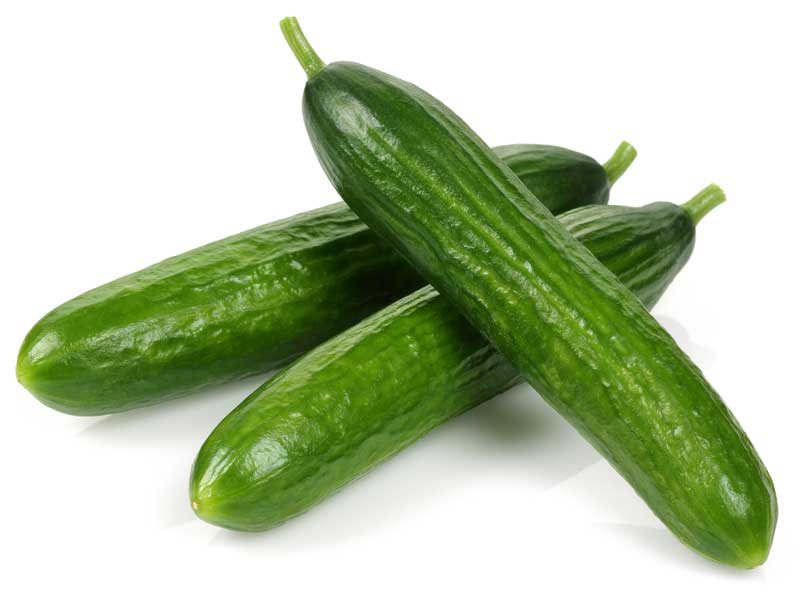
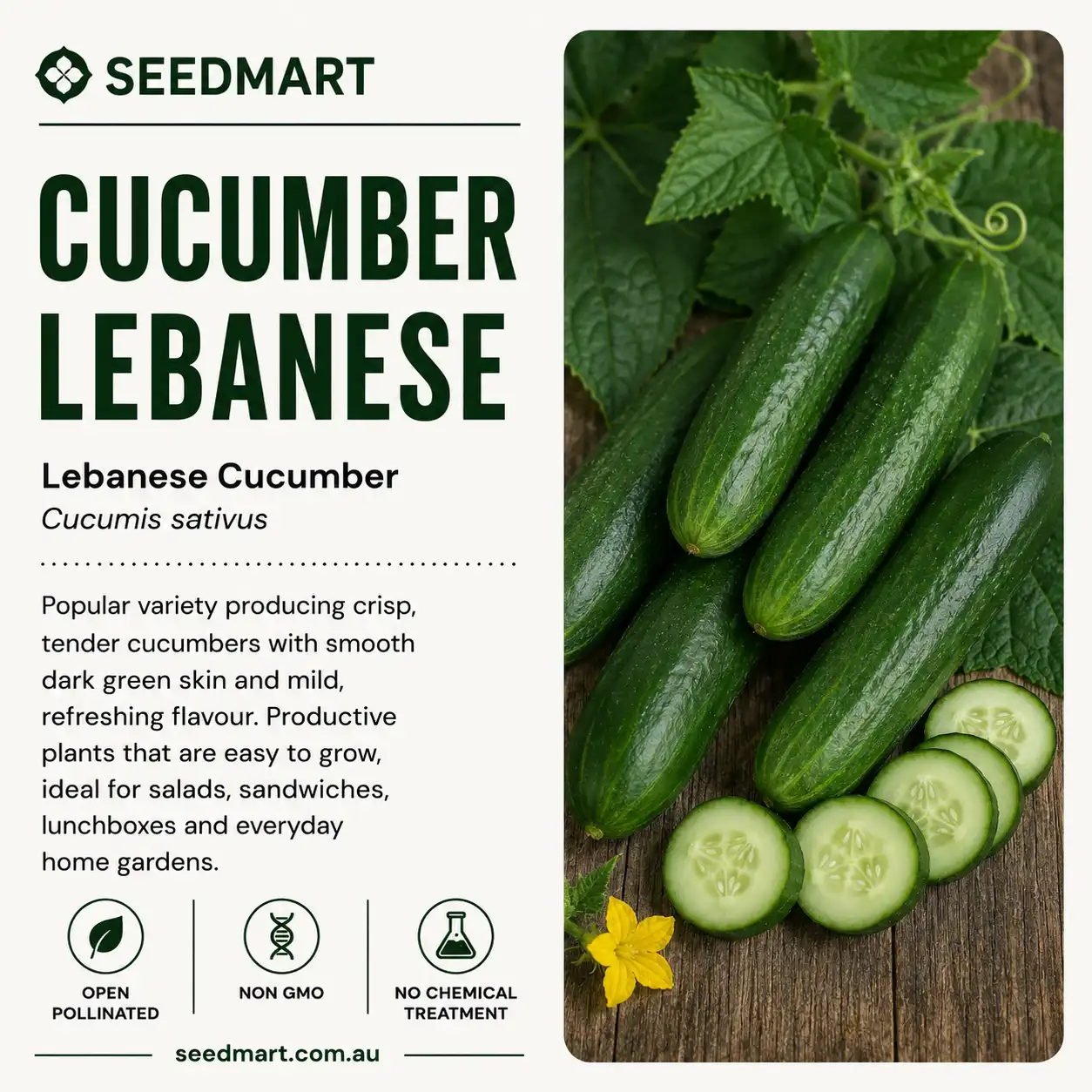
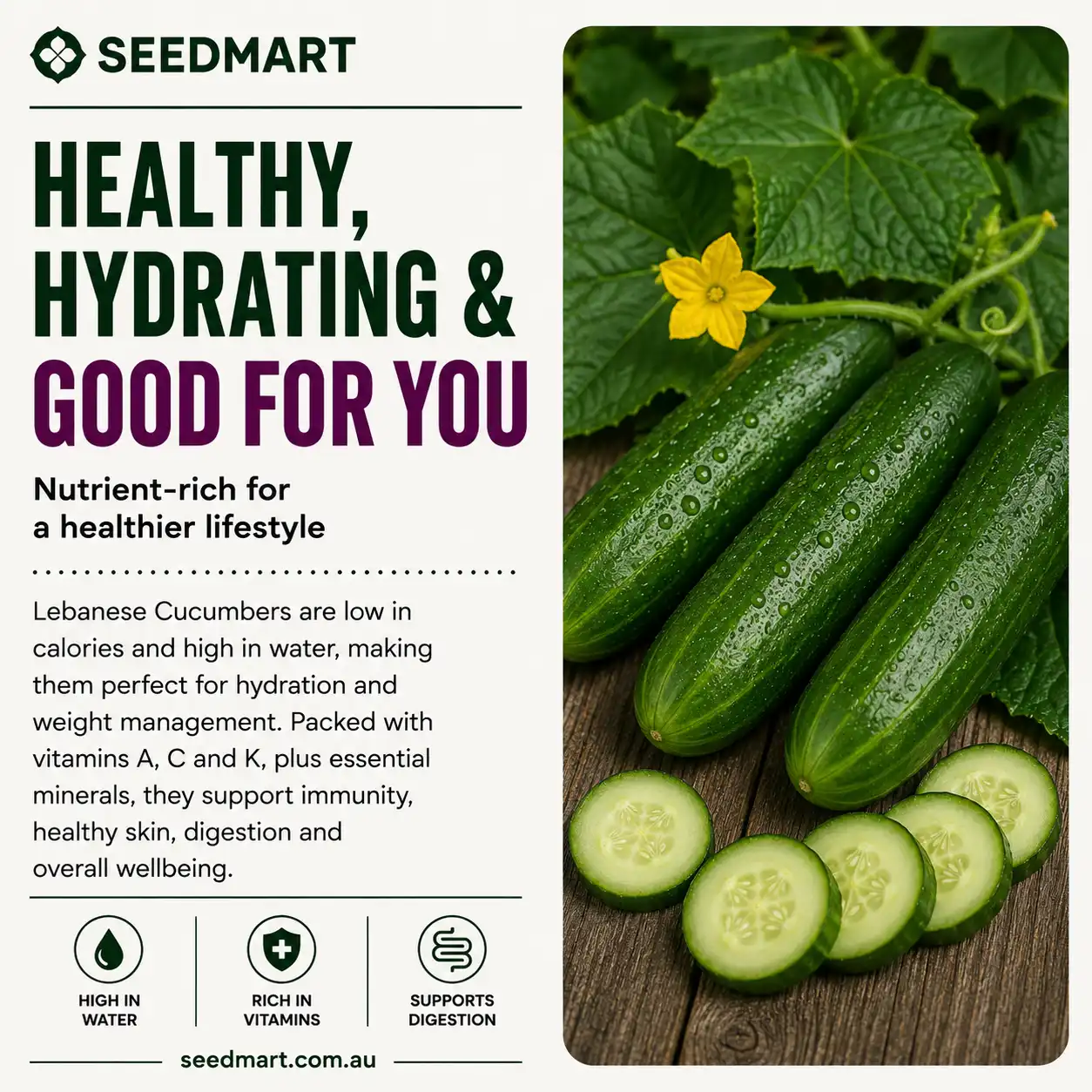
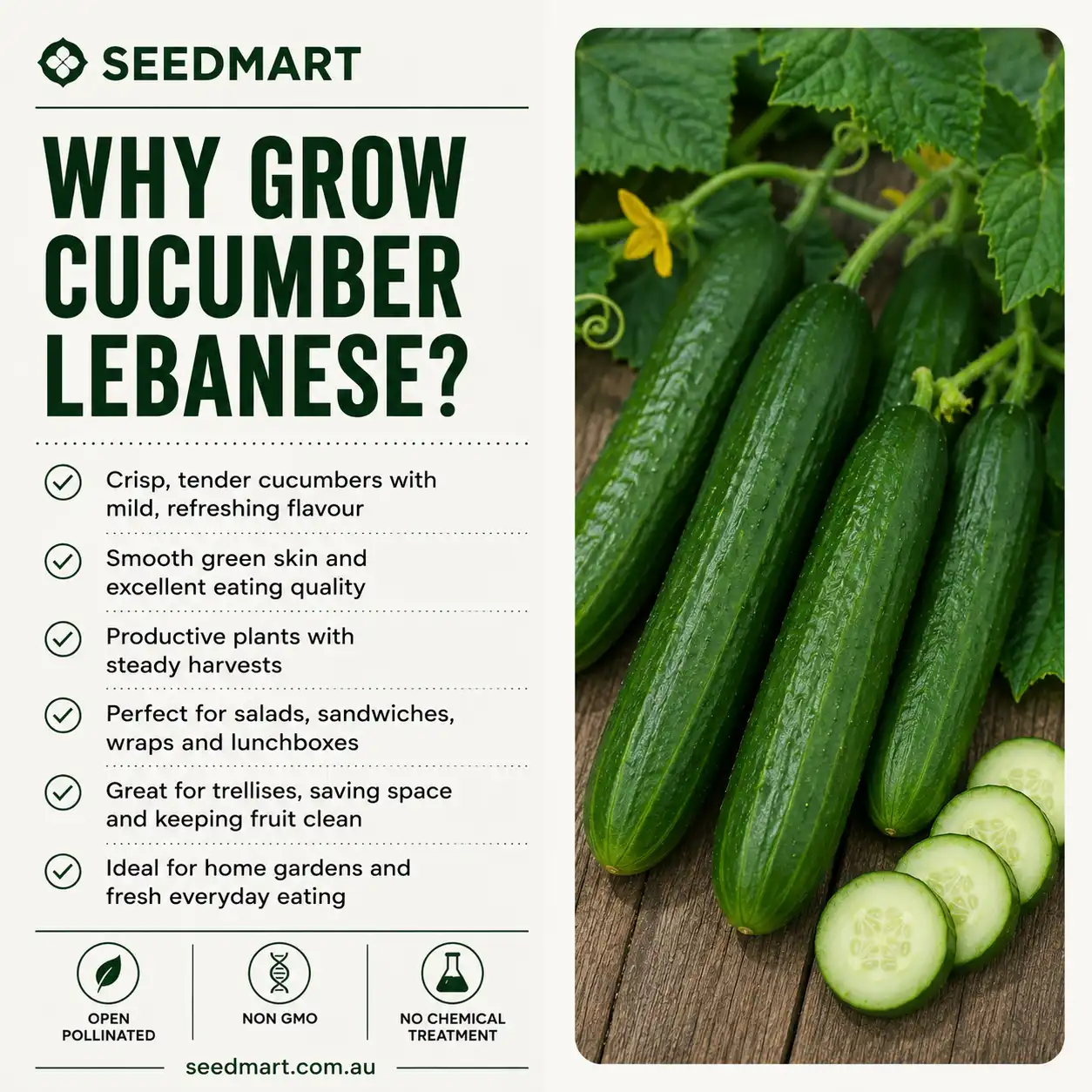
Lebanese Cucumber is one of Australia’s most popular cucumber varieties, producing smooth, dark green fruit with crisp flesh, thin skin and a mild, refreshing flavour. These productive warm-season plants are ideal for home vegetable gardens, raised beds, trellises and fresh kitchen harvesting.
Product Description
Lebanese Cucumber seeds produce vigorous trailing or climbing plants with reliable yields through the warm growing season. The fruit are usually harvested young at around 12–15 cm long, when they are tender, sweet and crisp.
This Lebanese-style slicing cucumber is excellent for salads, sandwiches, wraps, lunchboxes, platters, dips and fresh eating straight from the garden. Plants can be grown along the ground or trained vertically on a trellis, fence or netting to save space, improve airflow and keep fruit cleaner.
Key Features
- Popular Lebanese cucumber variety for Australian home gardens.
- Produces crisp, smooth-skinned cucumbers with mild flavour.
- Ideal fresh eating cucumber for salads, sandwiches and lunchboxes.
- Productive warm-season vine with steady harvests.
- Can be grown on a trellis to save space and improve airflow.
- Suitable for raised beds, backyard vegetable patches and market gardens.
Plant Details
| Plant Type | Warm-season annual vegetable |
| Botanical Name | Cucumis sativus |
| Growth Habit | Trailing or climbing vine |
| Plant Height | 30–50 cm high; vines may spread 1–2 metres |
| Fruit Type | Smooth green Lebanese-style cucumber |
| Days to Harvest | Approximately 50–70 days |
Sowing Information
| Sowing Method | Direct sow or raise seedlings |
| Sowing Depth | 1–2 cm deep |
| Germination | 5–10 days in warm soil |
| Soil Temperature | 20–30°C |
| Plant Spacing | 40–60 cm apart |
| Row Spacing | 100–150 cm apart |
| Position | Full sun |
When to Sow Lebanese Cucumber in Australia
| Climate Zone | Best Planting Time | Growing Notes |
|---|---|---|
| Cool | October – January | Wait until frost danger has passed and soil has warmed. |
| Temperate | September – February | Plant into warm soil and keep moisture consistent. |
| Subtropical | August – March | Succession sow for extended summer harvests. |
| Tropical | April – August | Best grown in the dry season with good airflow and regular watering. |
| Arid | August – February | Mulch well and irrigate consistently during flowering and fruiting. |
How to Grow Lebanese Cucumbers
Sow Lebanese cucumber seeds directly into warm, fertile soil once frost danger has passed, or raise seedlings in small pots for transplanting. Cucumbers prefer rich, well-drained soil with added compost and grow best in full sun.
Keep plants evenly watered, especially during flowering and fruit development. Irregular moisture can lead to bitter or misshapen fruit. Mulch around the base of plants to conserve moisture, reduce weed pressure and protect shallow roots.
Lebanese cucumbers can be grown along the ground, but trellising is recommended where space is limited. Training vines up a trellis, fence or netting improves airflow, keeps fruit cleaner and makes harvesting easier.
Pollination, Pests and Companion Planting
Lebanese cucumber plants produce male and female flowers and benefit from bee activity for reliable fruit set. Avoid spraying during flowering and encourage pollinators with nearby flowers such as alyssum, basil, dill, calendula and nasturtiums.
Common cucumber issues include powdery mildew, aphids, fruit fly and heat stress. Good airflow, regular picking, consistent watering and healthy soil help support vigorous plants and better fruit quality.
Lebanese cucumbers grow well alongside beans, lettuce, radish, corn, dill, basil and nasturtiums. Avoid planting cucumbers in the same position each year to reduce disease pressure.
Harvest
Harvest Lebanese cucumbers when they are young, firm and crisp, usually around 12–15 cm long. Pick every few days during peak production to encourage continued flowering and fruiting. Avoid leaving cucumbers to become large and over-mature, as this can reduce plant productivity and fruit quality.
Lebanese vs Burpless Cucumbers
Lebanese cucumbers are generally shorter, crisp and excellent for everyday fresh eating. Burpless cucumbers tend to grow longer with thinner skin and are often preferred by gardeners wanting a mild, easy-to-digest slicing cucumber. Both types are productive warm-season vegetables, but Lebanese cucumbers are especially popular for salads, lunchboxes, wraps and fresh harvesting from the garden.
Perfect For
- Home vegetable gardens
- Raised beds and backyard food gardens
- Trellises, fences and vertical growing systems
- Fresh salads, sandwiches and wraps
- Lunchboxes, platters and dips
- Warm-season garden production
- Regular fresh harvesting
Frequently Asked Questions
How long do Lebanese cucumbers take to grow?
Lebanese cucumbers usually take around 50–70 days from sowing to harvest, depending on temperature, soil fertility and growing conditions.
How big should Lebanese cucumbers be when harvested?
Harvest when fruits are young and tender, usually around 12–15 cm long, for the best flavour, texture and eating quality.
Can Lebanese cucumbers be grown on a trellis?
Yes. Trellising saves space, improves airflow, keeps fruit cleaner and makes cucumbers easier to harvest.
Do Lebanese cucumbers need full sun?
Yes. Lebanese cucumbers grow best in full sun with warm soil, fertile growing conditions and regular watering.
Do cucumber plants need bees?
Yes. Lebanese cucumber plants benefit from bee activity and other pollinators, as pollination helps female flowers develop into fruit.
Why are my cucumbers bitter?
Bitterness is often caused by heat stress, irregular watering or over-mature fruit. Keep plants evenly watered and harvest regularly while fruit are young and crisp.
Are Lebanese cucumbers good for small gardens?
Yes. Lebanese cucumbers can be trained vertically on a trellis or fence, making them suitable for small gardens, raised beds and compact growing spaces.
Stuart Hickson –
A+++
Ian James –
As usual Seedmart wins in my book