

Nitrogen-Fixing Legumes
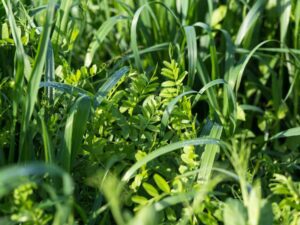
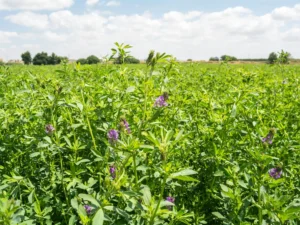
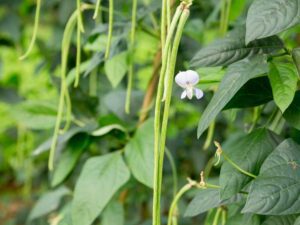
Clovers, vetches, field peas, cowpeas, lupins and medics are commonly grown to improve nitrogen availability.
They are particularly useful before nitrogen-demanding crops such as leafy vegetables, brassicas and sweet corn.



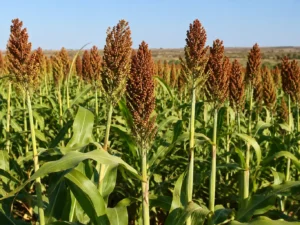
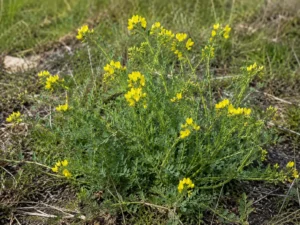


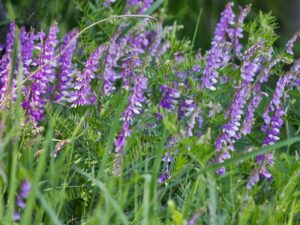

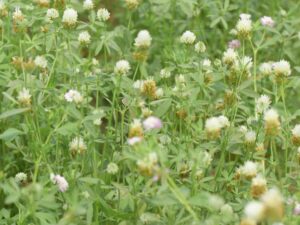






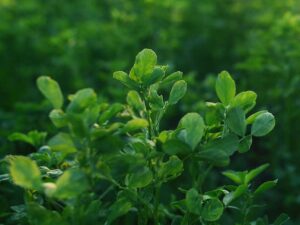
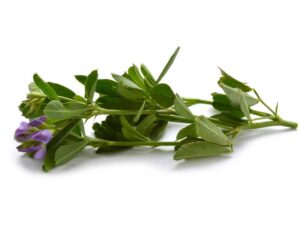




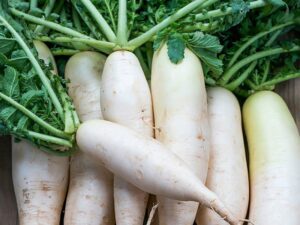
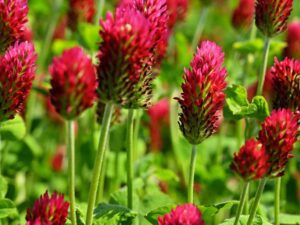
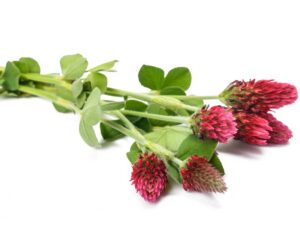
Green manure growing guide
Green manure crops are grown primarily to improve the soil rather than for harvest. They protect bare ground, establish living root systems and produce plant material that can later be cut down, lightly incorporated into the soil or left on the surface as mulch.
Depending on the species selected, green manure and cover crops can increase organic matter, fix nitrogen, suppress weeds, reduce erosion, improve soil structure and support beneficial soil organisms.
They can be used in backyard vegetable gardens, raised beds, market gardens, orchards, vineyards, farms and regenerative landscapes. The best choice will depend on your climate, sowing season, soil condition and intended result.
Roots and leafy growth return carbon-rich plant material to the soil.
Compatible legumes can capture atmospheric nitrogen with the assistance of soil bacteria.
Dense, fast-growing cover reduces the light and space available to unwanted plants.
Roots stabilise soil while foliage softens the impact of wind and heavy rain.
Fibrous roots and taproots create channels and improve soil aggregation.
Living roots provide food and habitat for beneficial soil microorganisms.
Ground cover reduces evaporation, while organic matter improves water-holding capacity.
A green manure phase provides a productive break between vegetable and field crops.
The terms green manure and cover crop are often used interchangeably, although they describe slightly different priorities. Many crops perform both functions.
| Green Manure | Cover Crop |
|---|---|
| Usually grown to improve soil fertility and increase organic matter. | Usually grown to cover and protect the soil surface. |
| Often cut down while young and returned to the soil. | May be mown, grazed, slashed, rolled, crimped or retained for longer. |
| Frequently used between vegetable crops or during a rotational break. | Frequently used to reduce erosion, suppress weeds and maintain living roots. |
| Legumes are often selected where nitrogen fixation is the main priority. | Grasses, legumes, brassicas and multi-species mixtures may all be used. |
In practice: a crop may protect bare soil while it is growing and then function as green manure when its roots and foliage are returned to the soil.
Begin by identifying the main result you want to achieve. A single species may suit a particular soil problem, while a mixture can provide several complementary benefits.
| Your Main Objective | Suitable Crops | How They Help |
|---|---|---|
| Increase nitrogen | Clovers, vetches, field peas, cowpeas, lupins and medics | Legumes can fix atmospheric nitrogen when compatible rhizobia bacteria are present. |
| Build biomass | Oats, cereal rye, millet and other vigorous grasses | Produce substantial root mass and above-ground plant material. |
| Suppress weeds | Buckwheat, cereals and vigorous green manure mixtures | Establish quickly and create dense cover over the soil surface. |
| Improve compacted soil | Forage radish, tillage radish and deep-rooted mixtures | Strong taproots penetrate firm layers and leave channels after decomposition. |
| Protect soil in winter | Oats, cereal rye, vetch, field peas and winter mixtures | Maintain cover during cooler and wetter conditions. |
| Cover soil in summer | Cowpea, millet, buckwheat and other warm-season species | Provide rapid growth in warm soil and suitable summer conditions. |
| Support pollinators | Phacelia, flowering clovers and buckwheat | Produce flowers that provide forage for bees and beneficial insects. |
| Increase plant diversity | Multi-species green manure mixtures | Combine different root depths, growth habits and soil functions. |
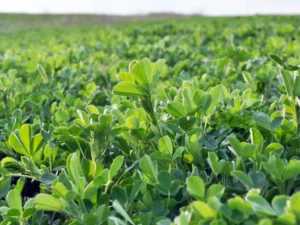
Clovers, vetches, field peas, cowpeas, lupins and medics are commonly grown to improve nitrogen availability.
They are particularly useful before nitrogen-demanding crops such as leafy vegetables, brassicas and sweet corn.
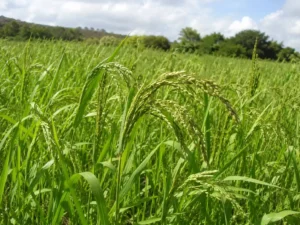
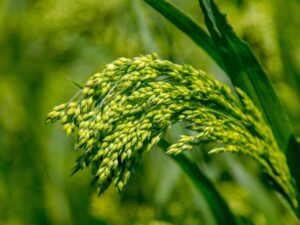
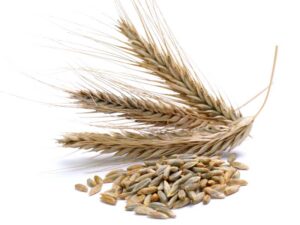
Oats, cereal rye and millet produce fibrous root systems and substantial above-ground biomass.
They can protect soil, capture residual nutrients and contribute carbon-rich material.
Forage and tillage radishes develop strong roots that penetrate firm soil layers.
As the roots break down, they leave channels that improve air and water movement.
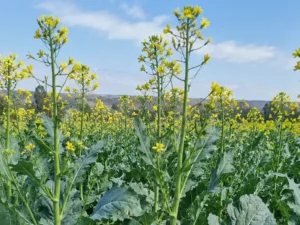
Buckwheat and phacelia can establish quickly under suitable conditions.
Their flowers can provide forage for bees and beneficial insects when allowed to reach flowering.
Important: green manure crops grown primarily for soil improvement should generally be terminated before mature seed forms. This reduces the risk of self-sown plants becoming weeds in the following crop.
A single species is useful when you have one clear objective, a short growing window or want straightforward establishment and termination.
A mixture combines different plant families, root depths and growth habits to provide a broader range of soil benefits.
Green manure can be planted whenever a garden bed, paddock or growing area would otherwise remain bare. The appropriate crop will depend on the season, local climate and available moisture.
| Season | General Crop Options | Typical Use |
|---|---|---|
| Autumn | Cool-season cereals, clovers, vetches, field peas and winter mixtures | Establish cover before cooler and wetter conditions. |
| Winter | Cold-tolerant cereals and legumes suited to the local climate | Protect resting beds and maintain living roots. |
| Spring | Short-duration cool-season crops or warm-season species as the soil heats | Prepare soil for summer or fill a gap between plantings. |
| Summer | Cowpea, millet, buckwheat and other heat-tolerant crops | Provide rapid cover and biomass during warm conditions. |
Australia includes tropical, subtropical, temperate, cool and arid growing regions. Always check the sowing information on the individual product page before selecting a crop.
| Climate | Common Options | Points to Consider |
|---|---|---|
| Tropical | Cowpea, millet and other warm-season species | Time planting around rainfall and avoid crops poorly suited to persistent heat. |
| Subtropical | Cowpea, buckwheat, millet, clovers and seasonal mixtures | Warm- and cool-season crops may both be suitable at different times of year. |
| Temperate | Oats, vetch, field peas, clovers, rye and summer buckwheat | Match the crop to the available autumn, winter or summer growing window. |
| Cool | Cereal rye, oats, vetches, field peas and cold-tolerant clovers | Select species capable of establishing and growing in low temperatures. |
| Arid or Low Rainfall | Drought-tolerant crops selected for the season and available moisture | Avoid using moisture required by the following cash or food crop. |
Sowing rates vary considerably. Fine clover seed, large legumes, cereals and blended crops require different quantities per square metre or hectare. Follow the rate provided on the individual product page.
Green manure is generally terminated before or around early flowering, while the growth is still soft and relatively easy to decompose. At this stage, the crop has produced useful biomass without forming mature seed.
Waiting until the plants become woody may slow decomposition. Allowing mature seed to form can also result in volunteer plants appearing in the following crop.
Avoid deeply burying large quantities of fresh green material. Shallow incorporation generally provides better aeration and more even decomposition.
After cutting or incorporating green manure, allow time for the plant material to begin decomposing before planting the next crop. Approximately two to four weeks is a useful general guide, although the actual period will vary.
Use green manure between seasonal crops to keep beds covered, add organic matter and provide a productive break in the rotation.
Select crops that fit the available space and growing period. Terminate them before they become difficult to manage.
Cover crops can protect inter-row soil, suppress weeds and provide habitat for beneficial insects. Consider water competition and mowing requirements.
Green manure can form part of a crop rotation, fallow-management program or broader soil-restoration strategy.
There is no single best crop for every situation. The right choice depends on the season, climate, soil type and intended benefit. Legumes suit nitrogen fixation, grasses produce biomass and fibrous roots, while deep-rooted brassicas can help condition compacted soil.
Legumes such as clovers, vetches, field peas, cowpeas, lupins and medics can fix atmospheric nitrogen when compatible rhizobia bacteria are present. The correct inoculant may improve nodulation where the required bacteria are absent or limited.
No. Green manure can be lightly incorporated, left on the surface as mulch, rolled, crimped or removed for composting. The best method depends on the crop, available equipment and following planting.
Any crop may self-seed when allowed to produce mature seed. Terminating green manure before seed formation substantially reduces this risk.
Green manure can improve nutrient cycling, nitrogen availability and organic matter, but it does not automatically correct every soil deficiency. Soil testing and balanced crop nutrition may still be required.
The growing period varies by species and season. Fast crops may be ready to terminate within several weeks, while winter cereals and legumes may remain in place for several months.
Green manure can add organic matter and create root channels that improve aggregation, aeration and water movement. Deep-rooted crops and fibrous grasses are useful options, although severely compacted or poorly drained clay may require additional management.
Buckwheat is commonly used as a fast warm-season cover crop. Millet and some other summer species can also establish rapidly under suitable conditions.
Yes. Green manure is widely used in organic and low-input growing systems to increase organic matter, improve nutrient cycling and reduce the time that soil remains bare.
Packet and bulk quantities
Seedmart supplies green manure and cover crop seeds for home gardeners, market gardeners, commercial growers and larger soil-improvement projects.
Available pack sizes vary by variety, with bulk quantities offered across many products in the range. Check each product page for recommended sowing rates, seasonal suitability and growing requirements.