

Basil Microgreen Seeds
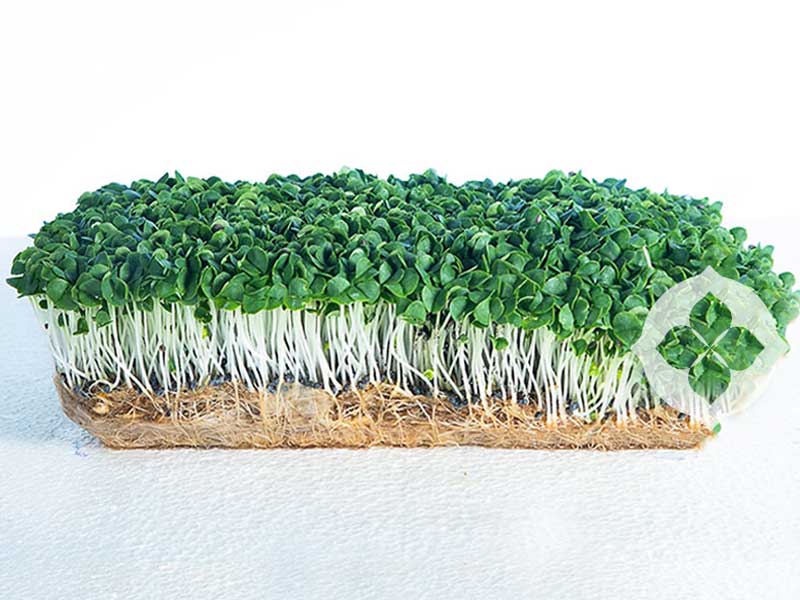
Grow fresh basil microgreens at home in approximately 20–25 days. Basil microgreen seeds produce attractive green seedlings with the distinctive aromatic flavour and fragrance of basil in a tender young leaf. They are well suited to shallow trays and can be grown indoors throughout the year with suitable warmth, light and ventilation.
Basil microgreens are popular with home growers, chefs, restaurants and commercial microgreen producers because of their fresh herbal flavour and attractive appearance. They are particularly useful as a garnish and can be added to salads, pasta, sandwiches, Mediterranean dishes and other fresh foods.
Unlike many faster-growing brassica microgreens, basil develops more slowly and prefers warm growing conditions. The seeds also form a naturally gelatinous coating when wet, so they should not normally be pre-soaked before sowing.
Seedmart basil microgreen seeds are supplied for growing purposes and are available in packet and bulk quantities for home and commercial growers.
Basil Microgreen Seed Details
| Botanical name | Ocimum basilicum |
|---|---|
| Common name | Basil |
| Pre-soak | Not recommended – basil seed becomes mucilaginous when wet |
| Approximate sowing rate | Approximately 10 g per 10 × 20 inch tray |
| Growing medium | Quality soil or suitable microgreen growing medium |
| Germination | Approximately 3–5 days under suitable warm conditions |
| Typical harvest | Approximately 20–25 days |
| Availability | Retail packets and bulk quantities |
Why Grow Basil Microgreens?
- Distinctive fresh basil flavour and aromatic fragrance.
- Tender green leaves make an attractive culinary garnish.
- Excellent for salads, pasta, sandwiches and Mediterranean-style dishes.
- Suitable for growing indoors throughout the year under suitable conditions.
- Compact crop suitable for shallow microgreen trays.
- No seed pre-soaking required.
- Suitable for home growers, chefs and commercial microgreen production.
- Useful as a standalone crop or as part of speciality microgreen mixes.
- Available in smaller packets and economical bulk quantities.
- Supplied by an Australian-owned seed company.
How to Grow Basil Microgreens
Basil microgreens require a little more patience than fast-growing varieties such as broccoli or radish, but their distinctive flavour makes them a worthwhile crop. Basil seed should not normally be soaked before sowing because the seed develops a gelatinous coating when exposed to water.
For a standard 10 × 20 inch microgreen tray, approximately 10 grams of seed provides a useful starting sowing rate. Adjust the quantity according to the particular basil variety, tray dimensions and growing conditions.
- Prepare the growing tray.
Add approximately 3–4 cm of moist quality growing medium to a shallow microgreen tray and gently level the surface. Soil-based microgreen mixes are particularly well suited to basil. - Sow the basil seeds.
Spread the dry seeds evenly over the surface of the growing medium. Aim for consistent coverage without allowing the seeds to form thick piles or clumps. - Mist the seeds carefully.
Use a fine spray mister to wet the seed and growing surface thoroughly but gently. After wetting, basil seeds develop a clear gelatinous coating. This is a normal characteristic of basil seed and should not be mistaken for mould. - Cover for germination.
Cover the tray during the initial germination period to help maintain consistent moisture and humidity. Basil generally benefits from warm growing conditions and may germinate slowly if temperatures are too cool. - Maintain even moisture.
Check the tray regularly and keep the growing medium evenly moist without saturating it. Avoid allowing the newly germinating seeds to dry out. - Introduce the seedlings to light.
Once germination is established and the seedlings begin lifting upward, remove the cover and place the tray under suitable natural or artificial growing light. - Water carefully as the crop develops.
Once the seedlings are established, bottom watering can help keep the foliage drier and reduce excess surface moisture. Maintain good airflow around the crop. - Harvest the microgreens.
Basil microgreens are commonly harvested approximately 20–25 days after sowing, depending on variety and growing conditions. Cut the stems cleanly just above the growing medium when the plants have developed to the size and stage you prefer.
Why Do Basil Seeds Become Gelatinous When Wet?
Basil seeds are naturally mucilaginous. When exposed to water, the outside of the seed develops a clear, gel-like coating known as mucilage.
This is a normal characteristic of basil seed and is one reason basil microgreen seeds are generally sown dry rather than soaked before planting. Once the seeds have been spread across the growing medium, misting them allows the coating to develop while the individual seeds remain distributed across the tray.
The gelatinous coating around wet basil seeds should not be confused with mould. Good airflow, appropriate seed density and careful watering are still important throughout the crop.
What Do Basil Microgreens Taste Like?
Basil microgreens have a fresh, aromatic basil flavour in a tender young plant. The flavour is recognisably similar to mature basil leaves, making these microgreens particularly useful for dishes where basil is already a natural ingredient.
Their delicate texture and aromatic character make basil microgreens especially well suited to salads, pasta dishes, bruschetta, sandwiches, pizza, tomato dishes and fresh garnishes.
Flavour and appearance can vary between basil varieties, but microgreens generally retain the characteristic aromatic qualities associated with the mature herb.
How to Use Basil Microgreens
Basil microgreens are particularly useful as a fresh culinary garnish because they combine the distinctive aroma of basil with the delicate appearance of young seedlings.
- Add to tomato, mozzarella and Mediterranean-style salads.
- Scatter over pasta immediately before serving.
- Use as a fresh garnish for pizza and flatbreads.
- Add to sandwiches, wraps and bruschetta.
- Serve with tomato-based dishes and fresh cheeses.
- Use as an attractive garnish for restaurant and catering dishes.
- Combine with other mild microgreens to create speciality salad blends.
Basil microgreens are generally best used fresh or added at the end of cooking, as prolonged heat can reduce their delicate texture and fresh aromatic character.
Basil Microgreens vs Mature Basil
Basil microgreens and mature basil can be grown from the same type of seed, but they are harvested at very different stages of plant development.
| Feature | Basil Microgreens | Mature Basil |
|---|---|---|
| Growing method | Densely sown in shallow trays | Plants are spaced apart and grown to maturity |
| Harvest stage | Young seedlings, generally around the first true-leaf stage | Established plants with multiple mature leaves |
| Typical crop time | Approximately 20–25 days | Several weeks or longer before substantial harvests |
| Typical use | Fresh garnish, salads and speciality dishes | Cooking, pesto, sauces, salads and fresh herbs |
Both forms provide the characteristic flavour of basil, but microgreens allow growers to harvest the crop at a much earlier stage and are particularly well suited to fresh garnishing and speciality food presentation.
Basil Microgreens vs Broccoli Microgreens
Basil and broccoli are both popular microgreen crops, but their growing characteristics and flavours are quite different.
| Feature | Basil Microgreens | Broccoli Microgreens |
|---|---|---|
| Flavour | Aromatic, fresh basil flavour | Mild, fresh brassica flavour |
| Typical harvest | Approximately 20–25 days | Approximately 8–14 days |
| Pre-soak | No – seed becomes mucilaginous | Not required |
| Growing preference | Prefers warmer conditions and a longer crop cycle | Fast-growing and relatively adaptable |
Basil is particularly useful when strong culinary aroma and presentation are important, while broccoli is an excellent choice for growers wanting a faster and milder microgreen crop.
Frequently Asked Questions
How long do basil microgreens take to grow?
Basil microgreens are commonly ready for harvest approximately 20–25 days after sowing under good growing conditions. They generally grow more slowly than broccoli, radish and many other common microgreen crops.
Do basil microgreen seeds need to be soaked?
No. Basil seeds should not normally be pre-soaked for microgreen production. When wet, basil seeds rapidly develop a gelatinous coating known as mucilage, which can make soaked seeds difficult to distribute evenly across a growing tray.
Why do basil seeds turn slimy or gelatinous when wet?
Basil seed naturally produces a clear mucilaginous coating when exposed to water. This is a normal property of the seed and does not by itself indicate mould or deterioration.
How many basil seeds should I use in a 10 × 20 tray?
Approximately 10 grams of basil microgreen seed per standard 10 × 20 inch tray provides a useful starting sowing rate. The optimum rate can vary according to the basil variety, seed size, tray system and preferred crop density.
How long do basil microgreen seeds take to germinate?
Basil microgreen seeds commonly begin germinating within approximately 3–5 days under suitable warm, moist conditions. Cooler temperatures can substantially slow germination.
Can basil microgreens be grown without soil?
Basil can be grown using suitable soilless microgreen systems, but a quality soil-based or similar moisture-retentive growing medium is often an easy and reliable choice. Whatever medium is used should provide consistent moisture together with adequate drainage and airflow.
Do basil microgreens need light?
Basil seeds do not require light during the initial covered germination period. Once the seedlings have emerged and are established, provide suitable natural or artificial growing light to encourage healthy green growth.
When should I uncover basil microgreens?
Remove the germination cover once the seeds have germinated well and the seedlings are beginning to push upward. Exact timing varies according to temperature, variety, moisture and the growing system being used.
Do basil microgreens like warm temperatures?
Yes. Basil is a warm-season plant and generally performs best in warmer growing conditions than cool-season microgreens such as broccoli. Low temperatures can slow both germination and subsequent growth.
When should basil microgreens be harvested?
Basil microgreens are commonly harvested at approximately 20–25 days, often around the time the first true leaves are developing. Harvest timing can be adjusted according to the size, appearance and flavour preferred by the grower.
How do you harvest basil microgreens?
Use clean scissors or a suitable harvesting knife to cut the stems just above the growing medium. Avoid pulling the plants from the tray if you want to keep growing medium and roots out of the harvested crop.
What do basil microgreens taste like?
Basil microgreens have the distinctive aromatic flavour associated with basil, combined with the tender texture of a young seedling. They are particularly well suited to tomato dishes, pasta, salads, sandwiches and fresh garnishes.
Can basil microgreens be grown indoors?
Yes. Basil microgreens are well suited to indoor production where adequate warmth, light, airflow and moisture can be maintained.
Can basil microgreens be grown commercially?
Yes. Basil microgreens are used by commercial microgreen growers because of their distinctive flavour, culinary versatility and attractive presentation. Their longer growing cycle should be considered when planning production compared with faster crops such as radish and broccoli.
Are basil microgreens the same as basil sprouts?
No. Microgreens are grown on a growing medium and harvested by cutting the stems above that medium after the seedlings have developed. Sprouts are generally germinated without a growing medium and the root, shoot and remaining seed are consumed together. Basil’s mucilaginous seeds also make it much better suited to microgreen-style production than conventional jar sprouting.
Where can I buy basil microgreen seeds in Australia?
Seedmart supplies basil microgreen seeds in packet and bulk quantities for home growers, chefs, market gardeners, commercial microgreen growers and businesses throughout Australia.
Jayson Priest –
I’ve had a lot of success with these microgreens, over a 95% germination rate and they are growing faster than I expected.
Coupled with the full spectrum microgreen plant food they are growing with a very nice deep green colour
Wayne James –
This is my first attempt at growing Basil, and only my second attempt at growing micgrogreens of any type. To make it harder I decided to buy some hemp mats from Seedmart and have sown the basil on these rather than soil/coir mix. Its still early days and the seeds are just out of the blockout stage. I can see I have had great strike rate.. Here’s hoping I will/should be harvesting late next week Our Brisbane climate has been chaotic at time of writing very very low temps mixed in with a few extra hot ones, which I can see is affecting the micros, as well as in ground crops, my hydroponic system and fertigation system. Im too much a newbie to be giving any advice, but can say I was impressed with the germination of theses seeds. Looking forward to a pizza with them soon!
Arthur Cookson –
My favourite.A little slower in germination and growth but developed a compact easily harvestable delicious green.Very obviously basil but more delicate.