


Mizuna Vegetable Seeds
Botanical Name: Brassica rapa var. nipposinica
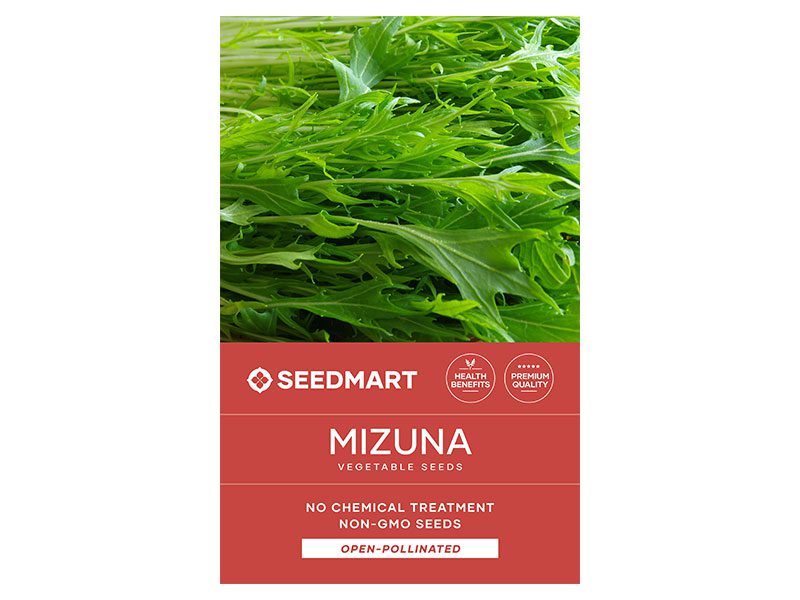
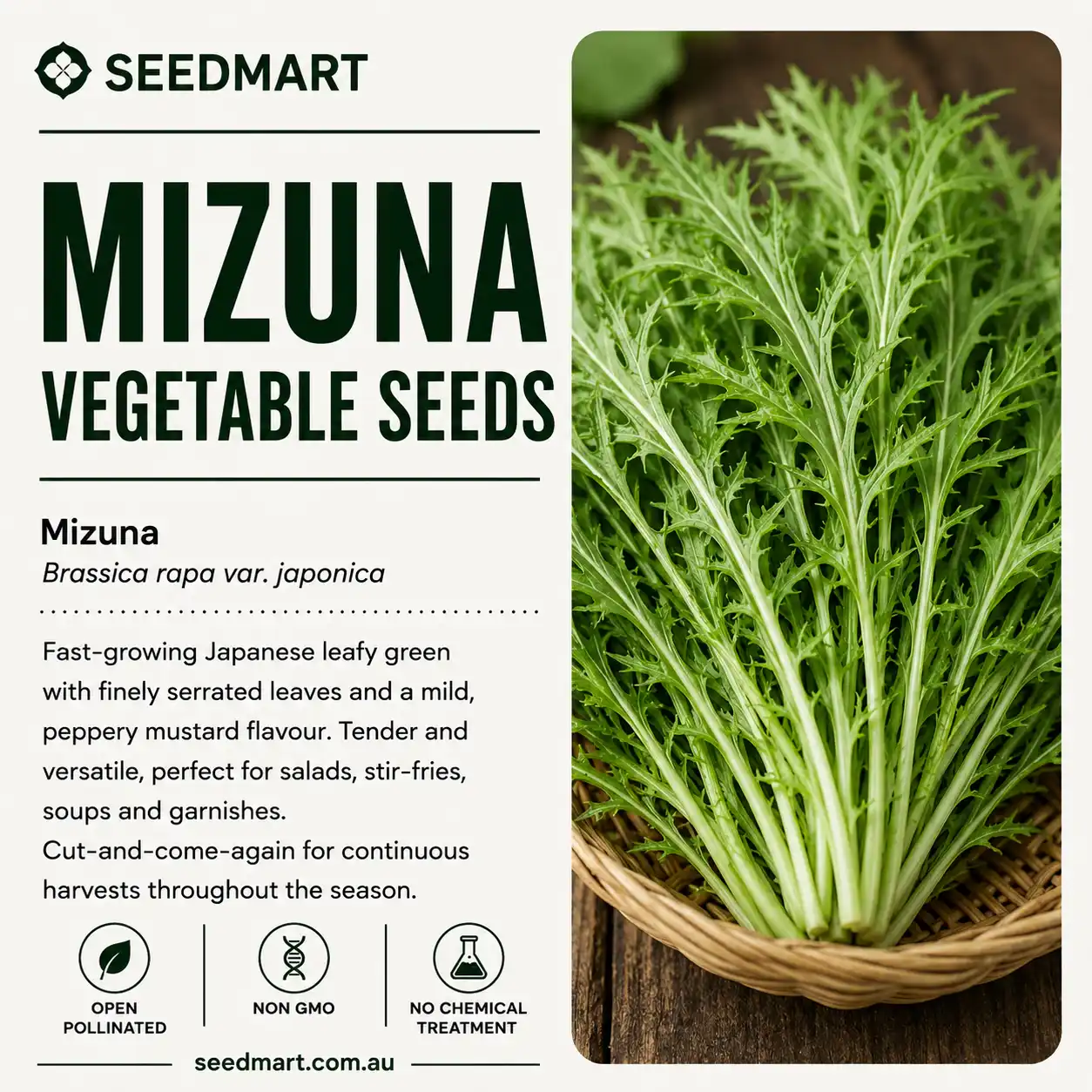
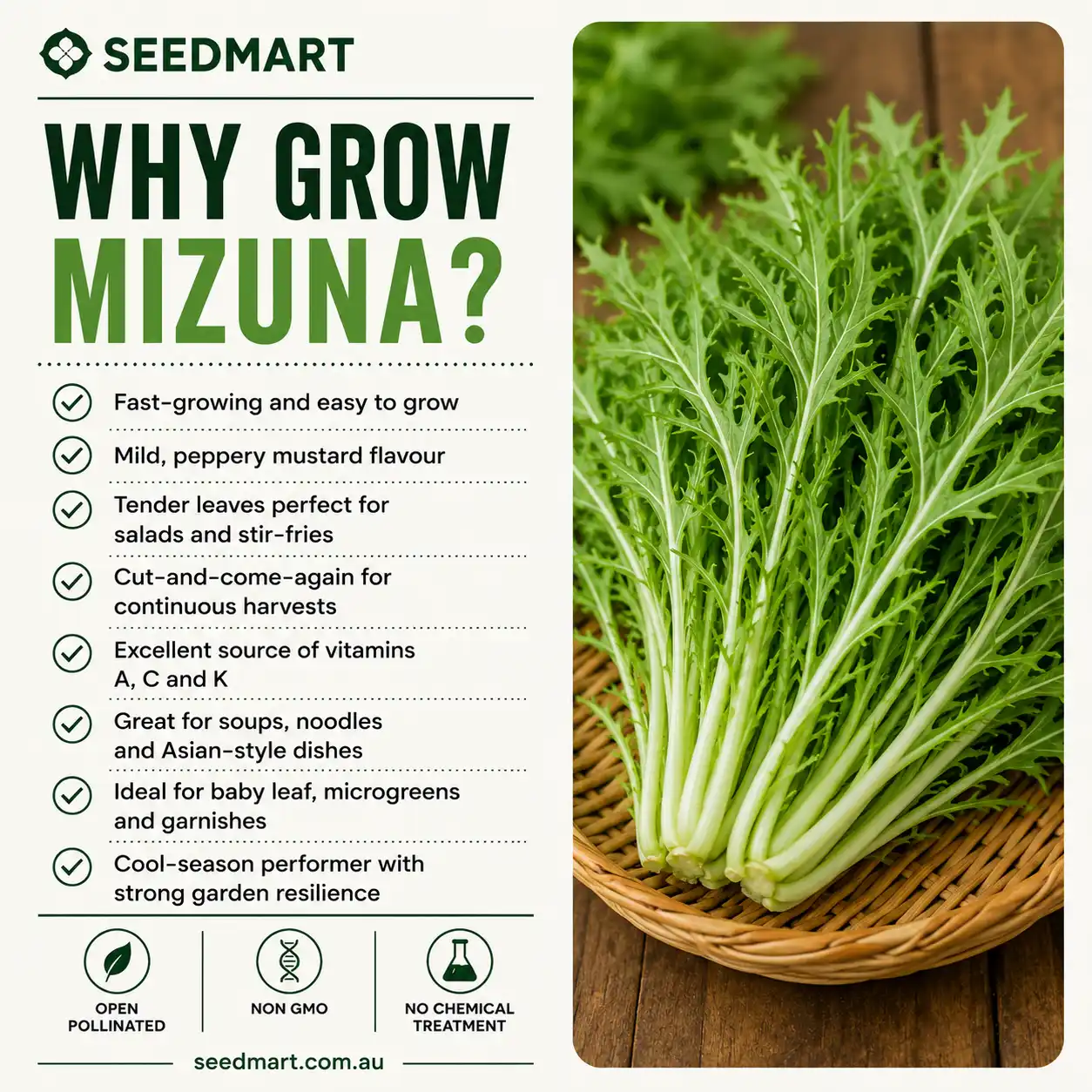
Mizuna is a fast-growing Japanese leafy vegetable producing attractive deeply serrated green leaves with a mild, slightly peppery flavour. Tender enough for fresh salads and versatile enough for stir-fries, soups and other cooked dishes, Mizuna is an excellent cool-season vegetable for Australian home gardens and market growers.
Mizuna can be harvested young for baby-leaf production or allowed to develop into larger leafy plants. Its rapid growth and ability to produce further leaves after careful harvesting make it particularly useful for successive sowings and regular picking throughout the cooler months.
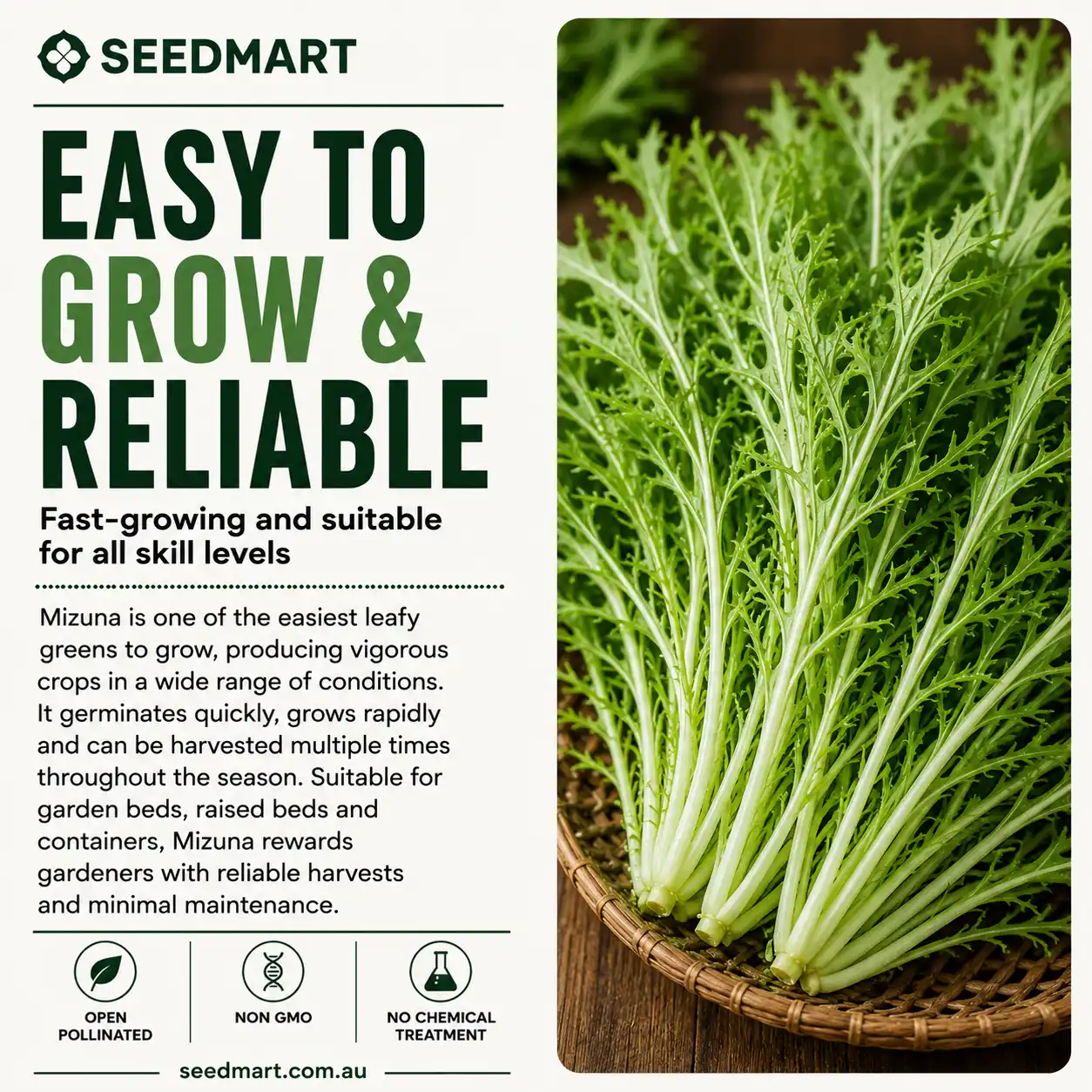
Easy to grow from seed, Mizuna performs well in garden beds, raised beds and containers and can be grown at closer spacing for baby-leaf and salad production.
Key Attributes
- Fast-growing Japanese leafy vegetable.
- Attractive green leaves with finely serrated edges.
- Mild, fresh flavour with gentle peppery notes.
- Excellent for baby-leaf and mature-leaf production.
- Suitable for salads, stir-fries, soups and Asian-inspired dishes.
- Can be harvested progressively for an extended picking period.
- Suitable for garden beds, raised beds and containers.
- Excellent for home gardeners and market growers.
About Mizuna
Mizuna is a traditional Japanese leafy green belonging to the brassica family. It develops clusters of slender stems topped with distinctive deeply cut, feathery green leaves.
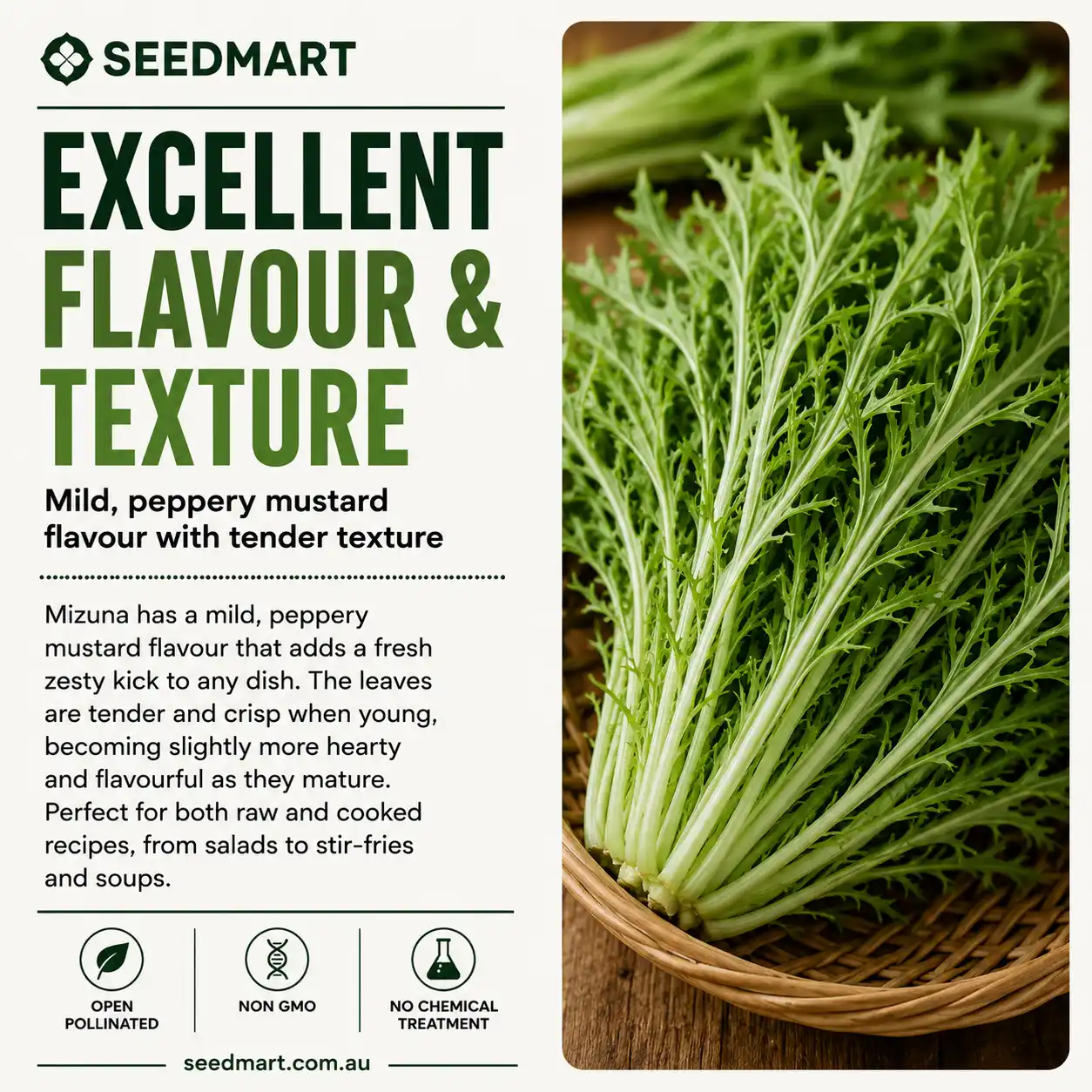
The leaves have a mild brassica flavour with a light peppery character. Compared with stronger mustard greens, Mizuna is relatively mild, making it particularly versatile in the kitchen.
Young leaves can be harvested for fresh salads and baby-leaf mixes, while larger leaves can be stir-fried, steamed, sautéed or added to soups and noodle dishes.
Mizuna is primarily a cool-season vegetable and performs particularly well during autumn, winter and spring in many Australian climates. It grows quickly under suitable conditions and is an excellent choice for gardeners wanting a productive leafy vegetable that can be harvested at several stages.
Mizuna Plant Details
Mizuna Sowing Information
When to Sow Mizuna Seeds in Australia
Mizuna is a cool-season leafy vegetable, although planting times vary according to climate. In warmer parts of Australia, concentrate production through the cooler months.
These planting periods are general guides. Local temperature, frost, rainfall, elevation and seasonal conditions should also be considered.
How to Grow Mizuna from Seed
Mizuna is fast growing and relatively easy to establish directly from seed.
- Prepare the soil.
Choose fertile, well-drained soil and incorporate well-decomposed compost or organic matter where required. - Sow the seeds.
Sow Mizuna seeds approximately 5–10 mm deep and cover lightly with fine soil. - Keep the seedbed moist.
Water gently after sowing and maintain consistent moisture during germination without saturating the soil. - Thin the seedlings.
For mature plants, thin seedlings to approximately 15–25 cm apart. Plants being grown for baby-leaf production can be grown considerably closer together. - Water regularly.
Maintain consistent soil moisture during active growth to encourage tender, productive foliage. - Begin harvesting.
Young leaves can be harvested for baby-leaf use, or allow plants to develop further for larger leaves and repeated picking.
Growing Mizuna for Baby Leaf
Mizuna is particularly well suited to baby-leaf production because it grows rapidly and develops tender, finely cut foliage.
For baby leaves, sow more densely than you would for mature plants. Begin harvesting when the leaves reach your preferred salad size, commonly from approximately 20–30 days after sowing under suitable conditions.
Young Mizuna leaves can be used alone or combined with lettuce, rocket, Tatsoi, mustard greens and other leafy vegetables in salad mixes.
For a continuous crop, make successive sowings every few weeks while growing conditions remain suitable.
Harvesting Mizuna
One of the advantages of growing Mizuna is the flexibility of its harvest.
Baby leaf: Harvest young leaves once they reach the desired size, commonly from approximately 20–30 days.
Individual leaves: Pick larger outer leaves while leaving the central growing point intact so the plant can continue producing.
Whole plants: Plants can also be harvested once they reach the preferred mature size, commonly from approximately 35–50 days depending on conditions.
For repeated harvesting, avoid cutting too deeply into the crown of the plant. Leaving the central growth intact allows further foliage to develop.
Can Mizuna Regrow After Harvesting?
Mizuna can produce additional leaves after harvesting if the central growing point remains intact.
For a cut-and-come-again approach, harvest the larger outer leaves or cut young foliage above the crown rather than removing the entire plant at soil level.
Provide regular water and adequate nutrition after harvesting to encourage further growth.
Repeated harvests will vary according to plant health, temperature and growing conditions.
Watering and Feeding Mizuna
Mizuna grows rapidly and performs best when supplied with consistent moisture and adequate nutrition.
Keep the root zone evenly moist, particularly during seedling establishment and periods of active leaf production. Avoid repeatedly allowing plants to wilt, as moisture stress can reduce leaf quality and encourage premature flowering.
Mizuna prefers fertile soil. Incorporating well-decomposed compost or other suitable organic matter before planting can help support healthy growth.
Where additional feeding is required, use an appropriate vegetable fertiliser according to the product directions.
Growing Mizuna in Pots and Containers
Mizuna grows well in containers and is an excellent choice for courtyards, balconies and smaller gardens.
Choose a pot or trough with good drainage and fill it with quality vegetable potting mix.
Plants being grown to maturity require more space, while baby-leaf crops can be planted relatively densely.
Container-grown Mizuna may dry out more quickly than plants growing in garden beds, so check moisture regularly during warm or windy conditions.
Preventing Mizuna from Bolting
Like many leafy brassicas, Mizuna may begin flowering or bolting when growing conditions become unsuitable.
Common factors that can encourage premature flowering include:
- Hot weather
- Moisture stress
- Irregular watering
- Rapid changes in temperature
- Plants being left beyond their preferred harvest stage
For the best leaf production, grow Mizuna during cool to mild weather and maintain consistent moisture.
Common Mizuna Growing Problems
As a member of the brassica family, Mizuna can be affected by some of the same pests as cabbage, broccoli and other Asian greens.
Potential problems include:
- Cabbage moth and cabbage white butterfly caterpillars
- Aphids
- Flea beetles
- Slugs and snails
- Leaf damage during hot or dry weather
- Premature flowering or bolting
Check young plants regularly. Fine insect netting can be useful for excluding many common brassica pests where appropriate.
Good soil preparation, regular moisture and suitable seasonal planting will help maintain vigorous growth.
How to Use Mizuna
Mizuna’s mild flavour and tender texture make it a particularly versatile leafy vegetable.
Young Mizuna leaves are excellent in:
- Fresh salads
- Baby-leaf mixes
- Sandwiches and wraps
- Rice bowls
- Fresh garnishes
Larger Mizuna leaves can be used in:
- Stir-fries
- Soups
- Noodle dishes
- Steamed vegetables
- Sautéed greens
- Asian-inspired dishes
Mizuna cooks relatively quickly, so add the leaves toward the end of cooking when you want to retain more of their texture.
Successive Sowing for a Continuous Harvest
Rather than sowing a large quantity at once, Mizuna can be planted in smaller successive batches.
Sowing every few weeks during suitable growing conditions can provide a more continuous supply of young leaves and mature plants.
This approach is particularly useful for:
- Home vegetable gardens
- Baby-leaf production
- Market gardens
- Regular salad harvesting
- Restaurants and fresh produce growers
Mizuna Seeds Are Ideal For
- Home vegetable gardens
- Asian vegetable gardens
- Baby-leaf production
- Market gardens
- Cool-season vegetable growing
- Raised garden beds
- Pots and containers
- Salad mixes
- Stir-fries and soups
- Successive sowing
- Cut-and-come-again harvesting
Frequently Asked Questions
What is Mizuna?
Mizuna is a fast-growing Japanese leafy vegetable belonging to the brassica family. It produces deeply serrated green leaves with a mild, slightly peppery flavour.
What is the botanical name of Mizuna?
Mizuna is commonly classified as Brassica rapa var. nipposinica.
What does Mizuna taste like?
Mizuna has a mild, fresh brassica flavour with gentle peppery or mustard-like notes. It is generally milder than stronger mustard greens.
Can you eat Mizuna raw?
Yes. Young Mizuna leaves are particularly suitable for salads, baby-leaf mixes, sandwiches, wraps and fresh garnishes.
Can Mizuna be cooked?
Yes. Mizuna can be stir-fried, sautéed, steamed or added to soups, noodles and other cooked dishes.
When should I sow Mizuna seeds in Australia?
Mizuna generally performs best during cool to mild weather. Autumn, winter and spring are suitable growing periods across many Australian regions, although the ideal planting time varies according to climate.
How long does Mizuna take to grow?
Baby leaves may be ready from approximately 20–30 days after sowing, while larger plants are commonly harvested from approximately 35–50 days depending on temperature and growing conditions.
How long do Mizuna seeds take to germinate?
Mizuna seeds commonly germinate in approximately 4–10 days when moisture and soil temperatures are suitable.
How deep should Mizuna seeds be planted?
Sow Mizuna seeds shallowly at approximately 5–10 mm deep and cover lightly with soil.
How far apart should Mizuna plants be?
For mature plants, approximately 15–25 cm spacing provides room for leafy growth. Plants grown specifically for baby leaves can be spaced considerably closer together.
Can Mizuna be harvested more than once?
Yes. Mizuna can produce further leaves if the central growing point remains intact. Harvest outer leaves progressively or cut young foliage carefully above the crown.
Can Mizuna be grown in pots?
Yes. Mizuna is well suited to pots, troughs and raised containers provided they have good drainage and receive adequate moisture and light.
Does Mizuna grow in full sun?
Yes. Mizuna grows well in full sun during cool weather. Some afternoon shade can be beneficial in warmer conditions.
Why is my Mizuna flowering?
Mizuna may bolt or flower in response to warm weather, plant stress, irregular watering or seasonal temperature changes.
Can Mizuna be succession sown?
Yes. Successive sowings every few weeks during suitable growing conditions can provide a regular supply of fresh leaves.
Is Mizuna suitable for market gardens?
Yes. Its rapid growth, baby-leaf potential, successive harvesting and culinary versatility make Mizuna suitable for market garden and fresh produce production.
Can Mizuna also be grown as a microgreen?
Yes. Mizuna can also be grown densely in shallow trays and harvested at the microgreen stage. For tray-growing information, see our Mizuna Microgreen Seeds growing instructions.
Louise Emmert –
We have a small scale microgreens farm and we have been using Seedmart Mizuna and Radish seeds for over 2 years.. Our crops have been going from strength to strength. Thank you Seedmart for your quality seeds and service.