
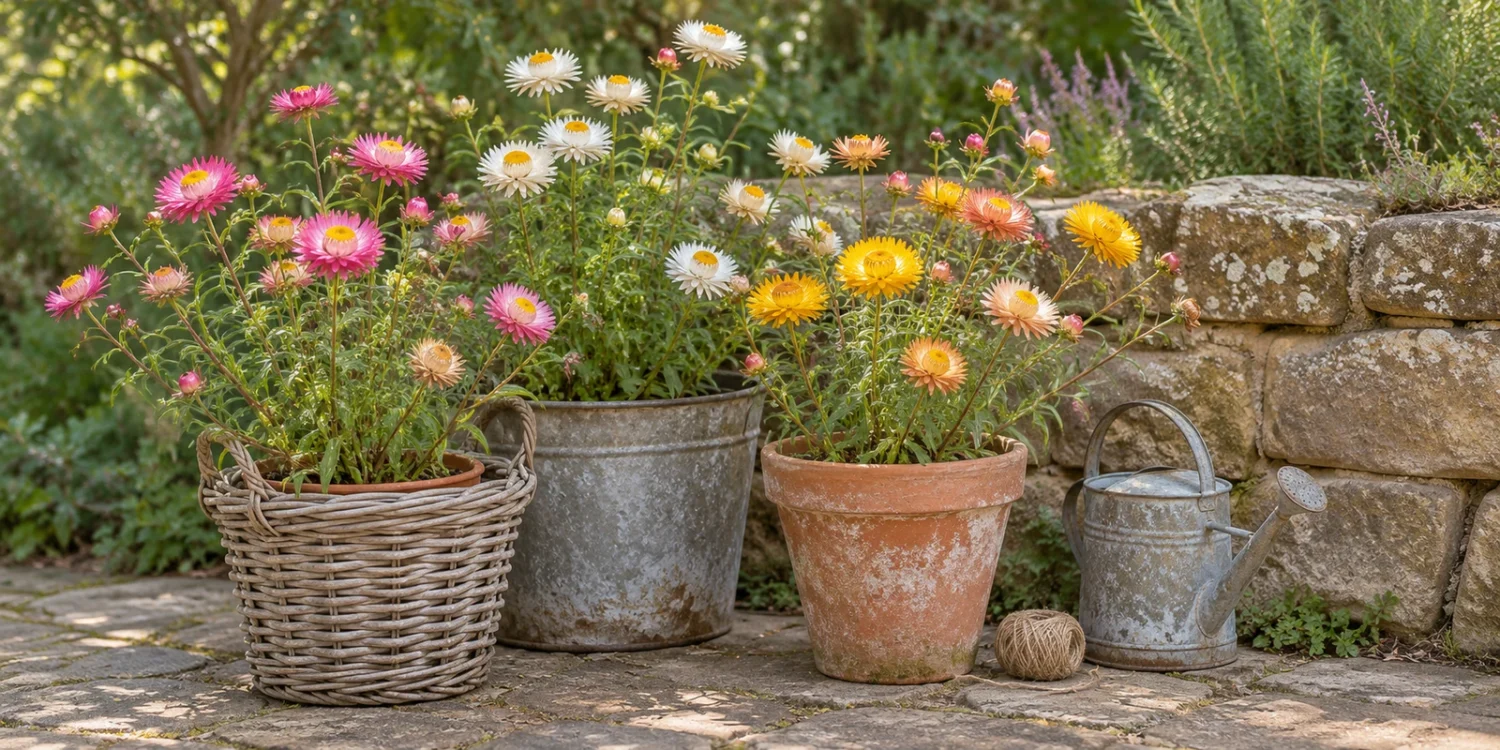
Australian Everlasting Daisy Growing Guide
Everlasting daisies are Australian native flowers grown for their colourful, papery blooms, seasonal garden displays and fresh or dried arrangements. Grow them from seed in a sunny position with good drainage, shallow sowing and consistent moisture during establishment.
The name “everlasting daisy” covers several different plants. Seedmart’s range includes colourful Xerochrysum strawflowers, pink and white Rhodanthe paper daisies, and Pink Cluster Everlasting, Schoenia cassiniana.
This guide explains how to choose between the varieties, when to sow everlasting daisy seeds in Australia, and how to care for plants, harvest flowers and save seed.
Plant FamilyAsteraceae — the daisy family
Main GroupsXerochrysum, Rhodanthe and Schoenia
PositionFull sun preferred
SoilWell-drained garden soil or potting mix
Sowing DepthSurface sow or cover only very lightly, following the packet
Best UsesSeasonal colour, native gardens, pots and flower arrangements
Choose the Right Everlasting DaisyFor larger flowers and cutting stems, explore the strawflowers. For seasonal carpets of smaller flowers, consider Pink and White Everlasting, White Everlastings or Pink Cluster.
What Are Everlasting Daisies?
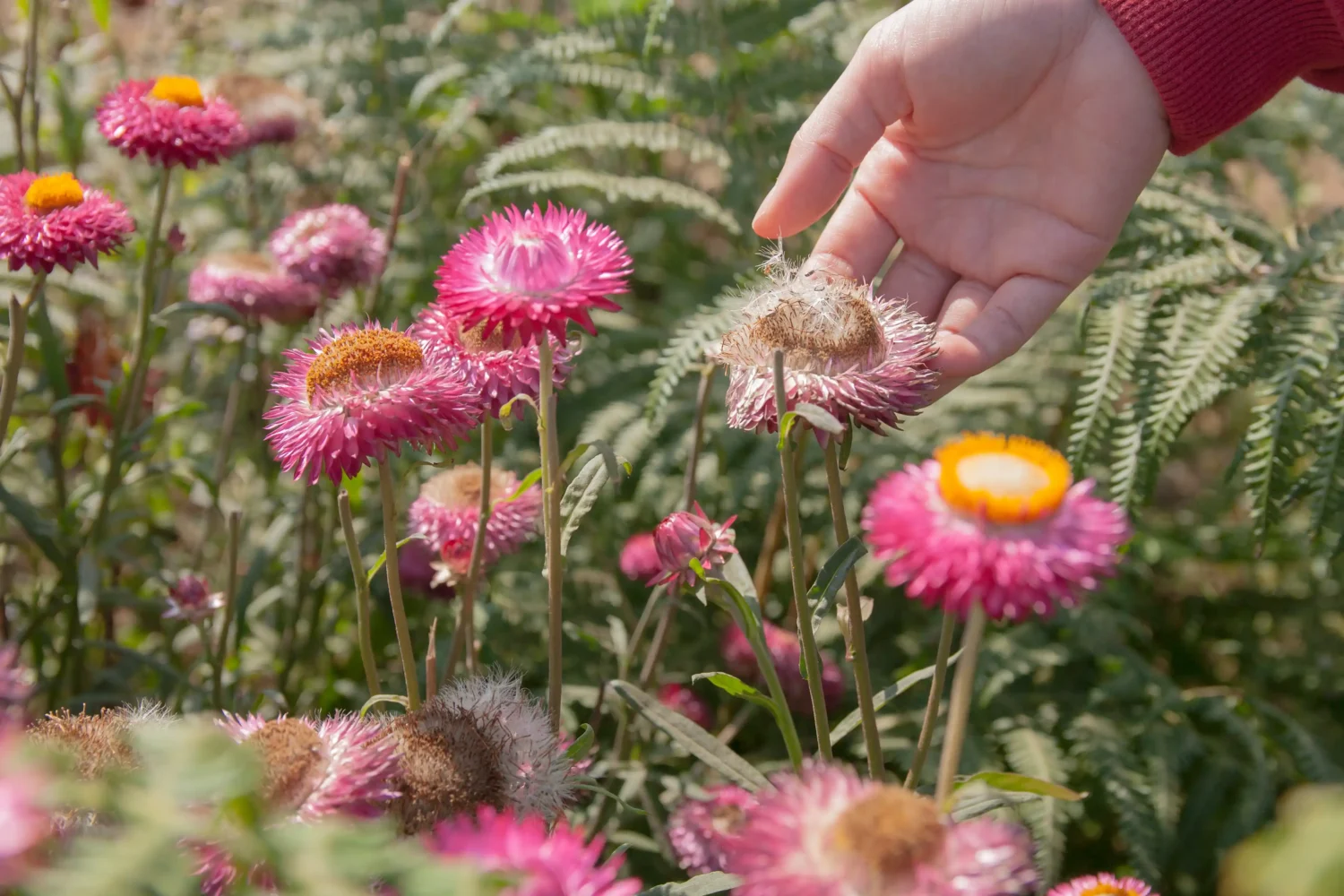
Everlasting daisies are plants with flower heads surrounded by papery bracts. These bracts look like petals but are modified leaves surrounding the small true flowers in the centre.
Their firm texture makes many everlastings useful for drying. However, flower size, colour retention, plant lifespan and growing requirements differ between species.
Strawflowers
Botanical name: Xerochrysum bracteatum
Often called golden everlasting or strawflower. Cultivated forms produce prominent papery flower heads in a wide range of colours.
Older references may use Helichrysum bracteatum or Bracteantha bracteata.
Rhodanthe Paper Daisies
Botanical name: Rhodanthe chlorocephala subsp. rosea
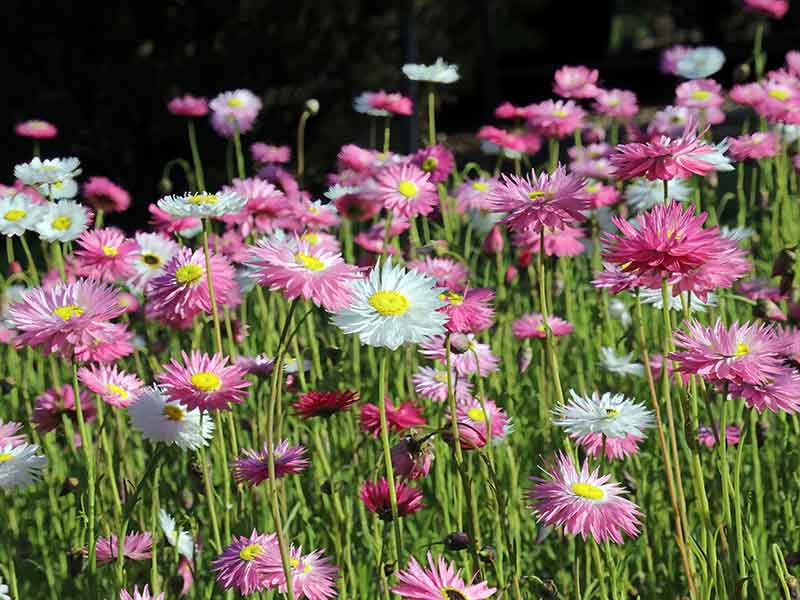
Annual wildflowers associated with seasonal carpets of pink and white flowers. Seedmart offers both Pink and White Everlasting and a white-flowering selection.
Pink Cluster Everlasting
Botanical name: Schoenia cassiniana
An annual with clusters of smaller pink flower heads. It is a different species from both strawflowers and Rhodanthe paper daisies.
Common names can overlap.Check the botanical name on the packet before choosing sowing dates, plant spacing or a harvesting method.
Benefits of Growing Everlasting Daisies
Seasonal ColourCreate colourful borders, cottage gardens and native flower displays.
Fresh FlowersHarvest suitable stems for homegrown bouquets and table arrangements.
Dried ArrangementsStrawflowers are particularly useful for wreaths, dried bouquets and floral crafts.
Flowers for Visiting InsectsOpen flower centres provide feeding opportunities for bees and other flower visitors.
Small-Space OptionsSuitable selections can be grown in pots and tubs with good drainage.
Growing from SeedRaise plants for repeated groups, seasonal beds and larger flowering patches.
For pollinator gardens, leave some flowers to open fully rather than harvesting every stem. Combine everlastings with other suitable flowering plants to extend the availability of flowers across the seasons.
Established plants may cope with dry periods, but germinating seed and young seedlings need reliable moisture. Regular watering also helps maintain growth and flower quality during prolonged dry weather.
Everlasting Daisy Varieties at Seedmart
Seedmart’s individual everlasting varieties fall into three botanical groups. The five strawflower selections share broadly similar growing requirements, while the Rhodanthe and Schoenia varieties need their own seasonal considerations.
| Variety | Botanical name | Flower colour or habit | Useful for |
|---|---|---|---|
| Everlasting Daisy Mixed | Xerochrysum bracteatum | Mixed-colour strawflowers | Colourful beds, cutting gardens and dried arrangements |
| Everlasting Daisy Silvery Rose | Xerochrysum bracteatum | Rose-pink and creamy-white tones | Soft-coloured borders, bouquets and dried flowers |
| Everlasting Daisy Golden Yellow | Xerochrysum bracteatum | Golden-yellow papery flower heads | Bright garden displays and fresh or dried flowers |
| Everlasting Daisy Scarlet | Xerochrysum bracteatum | Scarlet-red strawflowers | Strong colour accents and cutting gardens |
| White Strawflower | Xerochrysum bracteatum | White papery bracts with golden-yellow centres | White gardens, bouquets and dried floral work |
| Pink and White Everlasting | Rhodanthe chlorocephala subsp. rosea | Pink and white annual paper daisies | Seasonal carpets, mass plantings and containers |
| White Everlastings | Rhodanthe chlorocephala subsp. rosea | White-flowering paper daisies | White seasonal displays, borders and mass plantings |
| Everlasting Daisy Pink Cluster | Schoenia cassiniana | Clusters of small pink heads that fade with age | Mass displays, native flower beds and fresh arrangements |
Everlasting Daisy Mixed
Choose Mixed for a varied display without committing to one colour. Plant in repeated groups through a sunny border or dedicate a patch to flowers for cutting.
Everlasting Daisy Silvery Rose
Silvery Rose provides pink and pale creamy-white flower tones for softer planting schemes. The name describes the flower selection; it should not be taken as a guarantee of silver foliage.
Everlasting Daisy Golden Yellow
Golden Yellow offers the familiar golden everlasting appearance. Use it in bright native-style plantings or combine it with white and pink flowers for contrast.
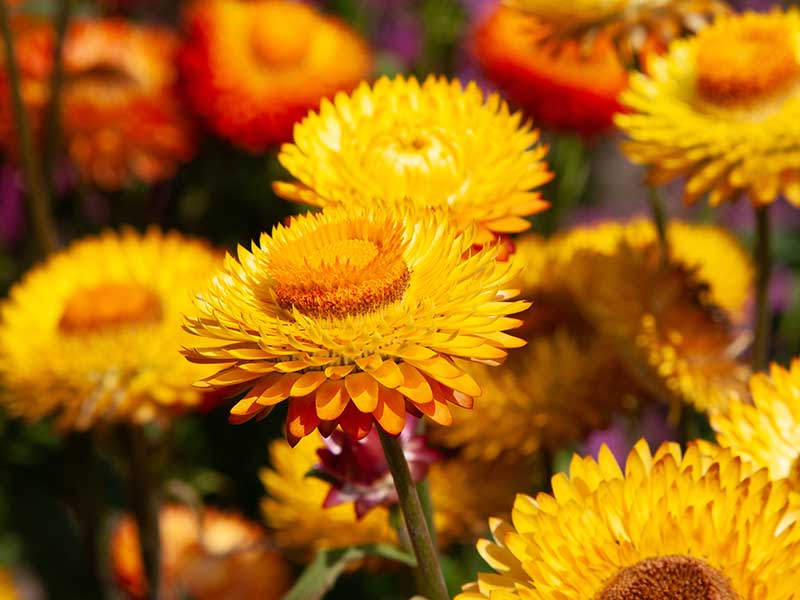
Everlasting Daisy Scarlet
Scarlet adds strong red colour to sunny beds and flower arrangements. As with the other strawflower selections, provide enough light and space for sturdy branching growth.
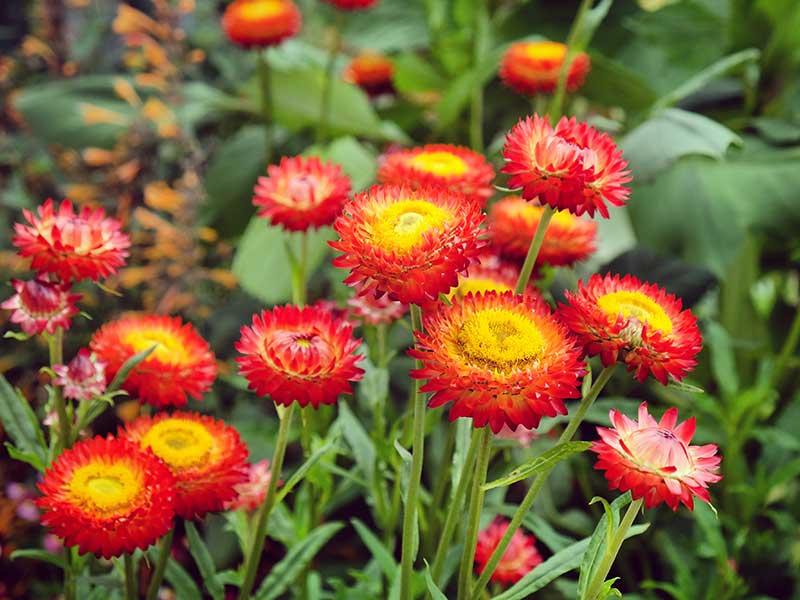
White Strawflower
White Strawflower produces the larger, firm flower heads associated with Xerochrysum. It is particularly useful where white flowers and substantial cutting stems are wanted.
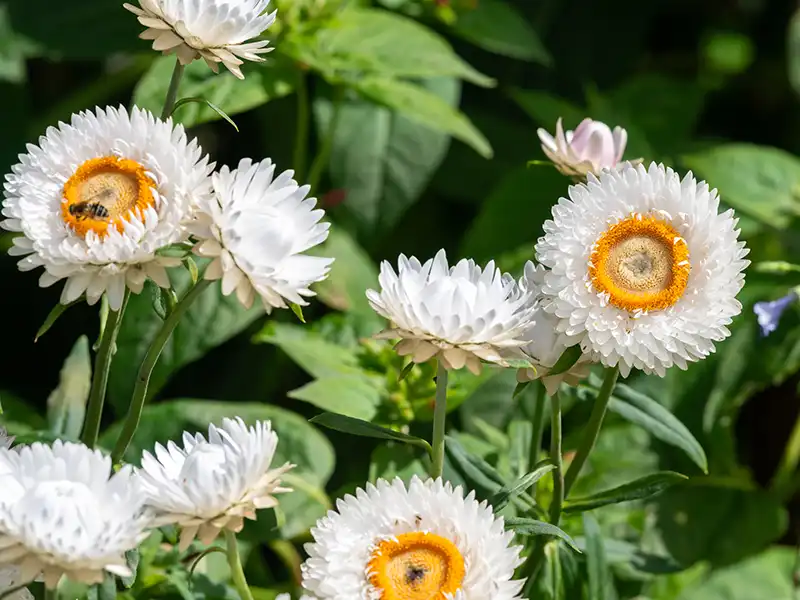
Pink and White Everlasting
This annual Rhodanthe is a good choice for a seasonal wildflower display. Grow in groups to make the most of its naturally varied pink and white flowers.

White Everlastings
The white-flowering Rhodanthe selection suits gardeners seeking a more uniform white display. It shares the seasonal annual habit of Pink and White Everlasting.
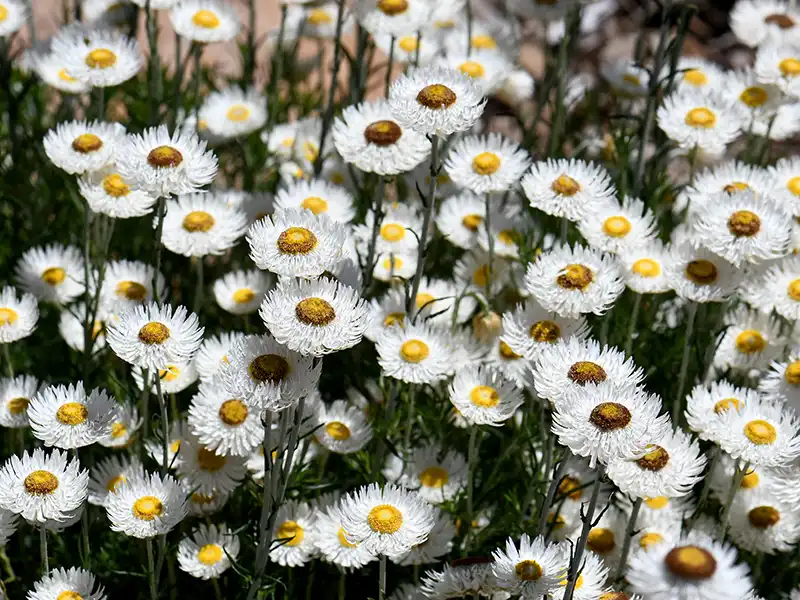
Everlasting Daisy Pink Cluster
Pink Cluster produces branching stems carrying groups of smaller flower heads. Its strongest effect is often in a massed garden display. The pink bracts naturally fade towards white as they age.
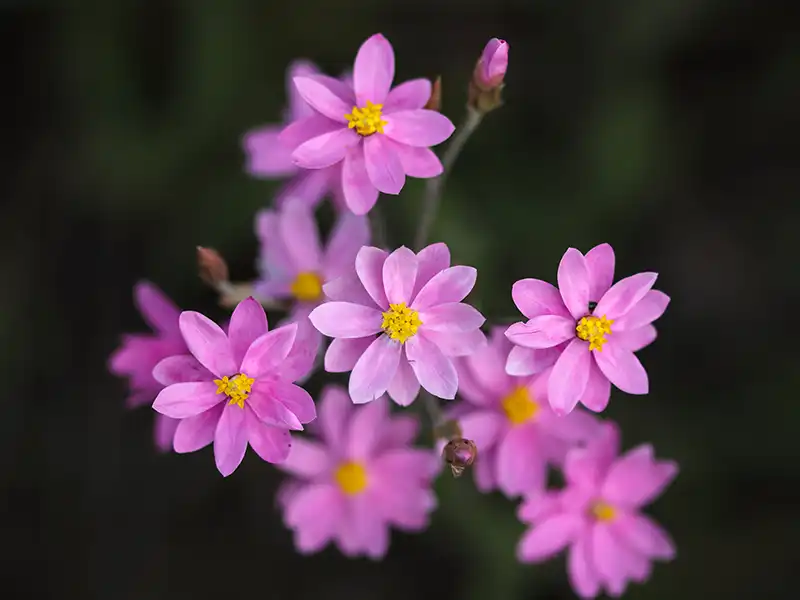
Choosing for dried flowers?Begin with the Xerochrysum strawflowers. Pink Cluster can be used for floral work, but its colour may fade and dried clusters can droop, so it should not be expected to perform exactly like a large strawflower.
White Everlastings vs White Strawflower: What Is the Difference?
White Everlastings
Botanical name: Rhodanthe chlorocephala subsp. rosea
An annual paper daisy suited to seasonal groups and mass displays. Choose this for the Rhodanthe wildflower appearance.
White Strawflower
Botanical name: Xerochrysum bracteatum
A white-flowering strawflower with firm papery heads on upright branching stems. Choose this for classic strawflower bouquets and dried arrangements.
Both have white papery bracts, but they are different plants. Check the botanical name rather than choosing by flower colour alone.
When to Sow Everlasting Daisy Seeds in Australia
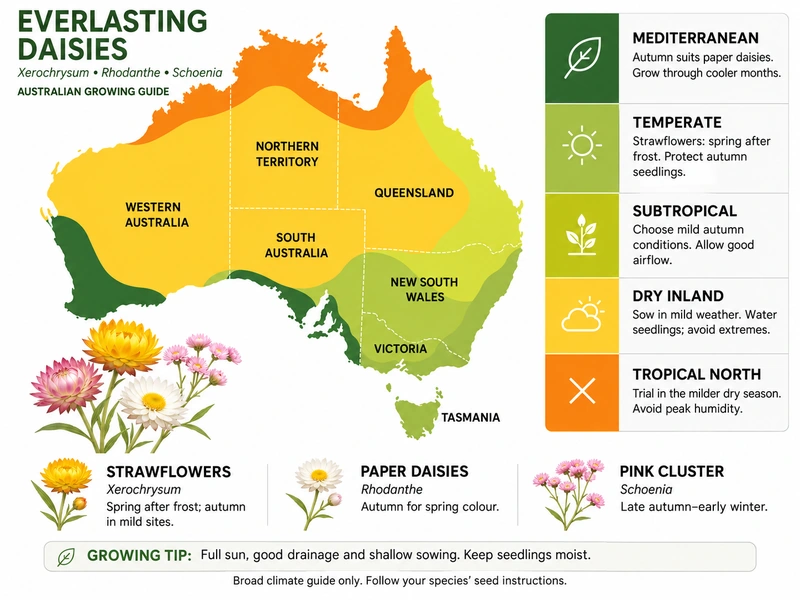
Sowing time depends on the species and your local climate. Autumn sowing is associated with many seasonal paper-daisy displays, while spring is a useful starting point for strawflower crops in cold-winter regions.
| Plant group | General sowing approach | Important consideration |
|---|---|---|
| Xerochrysum strawflowers | Spring after frost in cold districts; autumn can suit mild-winter regions. | Allow enough suitable growing weather for establishment and flowering. |
| Rhodanthe paper daisies | Autumn to early winter is a common approach for a spring display. | Protect establishing plants from severe frost and avoid persistently wet beds. |
| Pink Cluster — Schoenia | Late autumn to early winter for spring flowering in suitable climates. | Germination can vary; protect young seedlings from frost. |
Cool and Frost-Prone Regions
For strawflowers, start in protected trays or sow outside after significant frost risk has passed. Autumn-sown paper daisies need a suitable sheltered position and protection where winters are severe.
Temperate and Mediterranean Regions
Autumn sowing can establish Rhodanthe and Pink Cluster plants for spring flowers. Strawflowers can be spring-sown, with autumn sowing also possible in suitable mild sites.
Subtropical Regions
Milder autumn conditions can be useful for establishment. Avoid exposing newly sown trays to intense summer heat, heavy rain or prolonged humidity without good airflow.
Tropical Regions
The milder dry season is generally the more practical period to trial these flowers. Suitability varies between species and locations; a southern Australian sowing calendar should not be applied unchanged.
When to Plant Everlastings in Perth
Kings Park recommends May sowing for pink paper daisy, Rhodanthe chlorocephala subsp. rosea. This follows a cooler-season growing cycle leading into a spring display.
Use the season as a guide.Local frost, elevation, drainage and rainfall can change the best sowing window. Follow the individual packet and avoid sowing immediately before extreme heat or damaging weather.
How to Grow Everlasting Daisies from Seed
All three groups need careful handling during establishment. Fine seed is easily buried, washed away or dried out.
Choose Your Variety and SeasonRead the botanical name and packet instructions. Decide whether you are growing a strawflower crop or a seasonal Rhodanthe or Schoenia display.
Prepare the Growing MediumUse clean trays with fresh, free-draining seed-raising mix. For direct sowing, remove weeds and rake the bed to a fine, level surface.
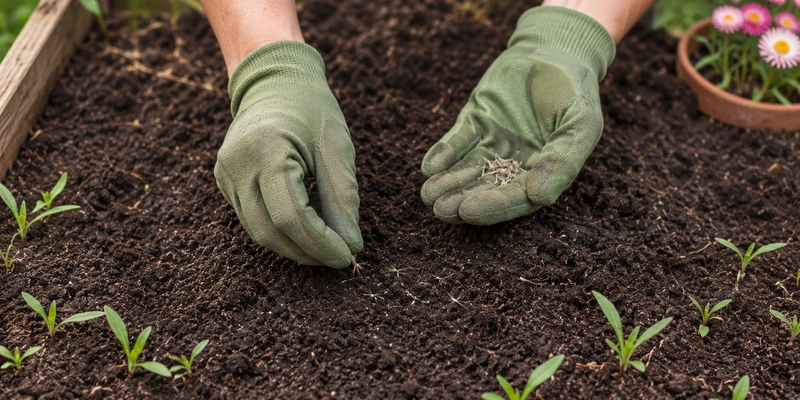
Sow ShallowlyScatter seed thinly onto pre-moistened mix and press gently into contact with the surface. Follow packet directions for leaving exposed or covering very lightly.
Keep Moist Without WaterloggingUse a fine spray or careful bottom watering. Do not allow the seed surface to dry out, and drain away excess water.
Provide Light and ProtectionKeep trays in bright conditions, protected from scorching sun, downpours and drying winds. Provide ventilation if using a propagator cover.
Thin and Transplant CarefullyThin crowded seedlings. Once plants have true leaves and roots that hold the mix together, gradually acclimatise them to outdoor conditions before planting out.
Growing Xerochrysum Strawflowers from Seed
Light helps strawflower germination, so surface sow or use only a fine, light-transmitting covering. Around 21–24°C is a useful growing-medium temperature for starting these seeds. Germination may begin within a week, but allow approximately one to three weeks depending on conditions.
The same basic method applies to Mixed, Silvery Rose, Golden Yellow, Scarlet and White Strawflower.
Growing Rhodanthe Paper Daisies from Seed
Sow Pink and White Everlasting and White Everlastings onto a prepared surface or into trays. Cover only very lightly according to the packet and maintain moisture through emergence.
Autumn sowing suits the natural seasonal pattern of these annuals in many suitable regions. Do not assume they require the same warm propagation temperature used for a strawflower crop.
Growing Pink Cluster Everlasting from Seed
Sow Schoenia cassiniana shallowly during its recommended season. Germination can be less predictable between seed lots, so emergence may be uneven.
If emergence is poor, check seasonal timing, moisture and seed instructions before applying a treatment. Some specialist references report improved germination with dormancy treatments, but these should follow species-specific advice.
Do everlasting daisy seeds need pretreatment?Xerochrysum strawflowers generally need no special pretreatment. Do not apply boiling water, scarification or smoke treatment to every everlasting species as a routine step.
Can You Scatter Everlasting Daisy Seeds?
Yes, if the bed is prepared and moisture can be maintained. Sow on a calm day and use a little clean, dry sand to help distribute fine seed evenly if needed.
Scattering seed onto established lawn, thick mulch or a hard, dry surface usually gives poor establishment. Keep the patch clearly marked and remove competing weeds carefully.
Everlasting Daisy Care
Sunlight
Choose an open, sunny position. Full sun encourages sturdy growth and flowering. Too much shade can lead to weak stems and fewer blooms.
Soil
Good drainage is essential. Use raised beds or containers where garden soil remains waterlogged. Prepare the whole planting area rather than adding a little sand to an isolated planting hole.
Water
Maintain moisture while seeds germinate and seedlings establish. As plants develop, water according to rainfall, soil and weather. Avoid leaving roots persistently saturated.
Feeding
Use moderate feeding appropriate to your soil or potting mix. These plants do not need to be starved because they are native. Follow fertiliser label rates and avoid excessive applications.
Plant Spacing
For many upright Xerochrysum seed strains, approximately 25–30 cm is a practical starting spacing. Broader forms may need more room.
For Rhodanthe and Schoenia, follow the packet’s spacing or coverage guidance. Thin overly dense seedlings so individual plants have room to develop and air can move through the planting.
One spacing or grams-per-square-metre rate should not be applied to every everlasting species. Seed size, purity, germination and planting purpose all affect the amount required.
Can You Grow Everlasting Daisies in Pots?
Yes. Strawflowers, Rhodanthe paper daisies and Pink Cluster can all be grown in suitable containers. Match the pot to the mature plant and provide drainage and sunlight.
- For strawflowers: choose a stable container with enough root space; taller selections may need support.
- For Rhodanthe: a broad pot or tub can create a small seasonal paper-daisy display.
- For Pink Cluster: use a sunny tub or container where its branching flower clusters can develop.
- For all types: check moisture regularly and avoid leaving pots in water-filled saucers.
Container plants often need more frequent watering than plants in garden beds, especially during windy weather. Avoid overcrowding to create an immediate display at the expense of later growth.
When Do Everlasting Daisies Flower?
Flowering depends on the plant group, sowing date and local conditions.
- Xerochrysum strawflowers: spring-sown plants generally flower during the warmer growing season.
- Rhodanthe paper daisies: autumn sowings are commonly grown for a spring display.
- Pink Cluster: flowering is associated mainly with winter and spring; suitable autumn or early-winter sowings can flower in approximately three to four months.
Cool conditions can slow development. Avoid expecting an autumn-sown plant to follow the same schedule as a warm-season sowing.
Pinching and Deadheading
Pinching the growing tip of a healthy young strawflower can encourage branching. Support taller plants where wind may damage stems.
Remove spent flowers or harvest suitable stems to maintain the display. If you want to collect seed, leave selected heads to mature instead.
Rhodanthe and Schoenia are seasonal annuals. Deadheading may tidy the planting, but it will not turn them into permanent flowering shrubs.
How to Cut and Dry Everlasting Daisies
Drying Xerochrysum Strawflowers
Mixed, Silvery Rose, Golden Yellow, Scarlet and White Strawflower are useful choices for classic dried arrangements.
- Choose clean, healthy heads with several outer bract layers open, before the centre is fully exposed.
- Harvest after surface moisture has dried, using clean snips.
- Remove lower foliage and gather stems into small, loose bunches.
- Hang upside down in a dry, shaded, well-ventilated place.
- Allow stems to dry fully before arranging or storing.
Strawflowers continue opening after harvest. Overmature heads may shed or lose quality during drying.
Drying Rhodanthe Paper Daisies
Pink and White Everlasting and White Everlastings can also be used for dried floral work. Cut healthy stems while flowers are in good condition and dry small bunches with plenty of airflow.
Using Pink Cluster in Arrangements
Pink Cluster is useful for fresh arrangements and seasonal garden colour. Its bracts naturally fade, and air-dried clusters can droop. Experiment with a small bunch before planning a dried display that depends on strong pink colour retention.
For longer-lasting dried displays:Keep finished arrangements away from damp, strong sunlight and frequent handling.
How to Collect Everlasting Daisy Seeds
Leave selected healthy flower heads to mature on the plant. Harvesting flowers for drying and harvesting mature seed happen at different stages.
- Choose the plants you want to save seed from and leave some heads uncut.
- Watch for dry, mature heads and seed that releases readily.
- Collect before wind disperses the seed.
- Finish drying the material in a labelled paper bag in a ventilated place.
- Separate seed from loose flower material and store fully dry in cool, dry conditions.
Label each collection with the botanical name, variety and date. Collect the three plant groups separately so they can be sown according to their own requirements.
Do Everlasting Daisies Self-Seed?
They can self-seed when mature seed reaches suitable ground and seasonal conditions allow germination. Thick mulch, weeds, drought or unsuitable weather can prevent a new display.
Self-sown seedlings are new plants. Their appearance does not mean an annual parent survived for another year.
Saved or self-sown seed may vary in flower colour and habit, especially where compatible selections grow together. Save seed separately if you want a supply for a planned sowing.
Common Everlasting Daisy Growing Problems
| Problem | Possible cause | What to check |
|---|---|---|
| Poor germination | Deep sowing, drying out, unsuitable conditions or variable seed dormancy | Confirm the species, sowing season, seed instructions and moisture level. |
| Seedlings disappear | Slugs, snails, disturbance or moisture stress | Inspect after dark and protect trays and emerging plants. |
| Seedlings collapse | Persistently wet mix, crowding or damping-off | Improve drainage, ventilation and hygiene; remove affected seedlings. |
| Long, weak stems | Insufficient light, overcrowding or excessive feeding | Increase light, thin plants and review fertiliser use. |
| Few flowers | Shade, stress, immature plants or unsuitable seasonal timing | Review sunlight, moisture and the expected flowering season. |
| Dried flowers fall apart | Overmature harvest or poor drying conditions | Cut strawflowers earlier and provide dry, ventilated conditions. |
| Pink Cluster flowers fade | Natural ageing of the papery bracts | Expect fading in Schoenia; choose strawflowers where dried colour retention is the priority. |
Frequently Asked Questions
Are everlasting daisies native to Australia?
Yes. The Xerochrysum, Rhodanthe and Schoenia species covered here are Australian natives. A cultivated selection is not necessarily locally indigenous or appropriate for bushland restoration.
Are everlasting daisies annual or perennial?
Rhodanthe paper daisies and Pink Cluster are annuals. Xerochrysum bracteatum includes annual and perennial forms, while cultivated strawflowers are commonly grown as annual flower crops.
Which everlasting daisies are best for dried flowers?
Xerochrysum strawflowers are a strong starting choice. Seedmart’s Mixed, Silvery Rose, Golden Yellow, Scarlet and White Strawflower selections all belong to this group.
Is Pink Cluster the same as Pink and White Everlasting?
No. Pink Cluster is Schoenia cassiniana. Pink and White Everlasting is Rhodanthe chlorocephala subsp. rosea. Their flower arrangement and growing behaviour differ.
Is White Everlasting the same as White Strawflower?
No. White Everlastings are Rhodanthe paper daisies. White Strawflower is Xerochrysum bracteatum, with the larger, firm heads associated with classic strawflowers.
Can I sow all everlasting varieties together?
Compatible seasonal plantings are possible, but separate labelled trays make establishment easier. Check each species’ sowing season and avoid assuming every packet needs identical temperatures or spacing.
Can everlasting daisies grow in shade?
Some tolerate light shade, but full sun is generally preferred for sturdy growth and abundant flowering. Deep shade is unsuitable for a strong flowering display.
Do everlasting daisies need much water?
They need consistent moisture during germination and establishment. Established plants vary in drought tolerance, and flowering plants still benefit from water during prolonged dry periods.
Why do paper daisy flowers close at night?
Some everlasting heads close at night or during dull and wet conditions. Check them again in sunshine before treating closed heads as a sign of poor health.
Can I grow them in heavy clay?
Drainage matters more than the soil label alone. Avoid persistently wet ground. Raised beds or containers are useful where heavy soil does not drain adequately.
Choose Everlasting Daisy Seeds for Your Garden
Grow strawflowers for colourful cutting stems, Rhodanthe for seasonal paper-daisy displays, or Pink Cluster for masses of smaller pink blooms. Match the variety to your climate, sow shallowly and keep seedlings moist while they establish.