
White Strawflower Seeds
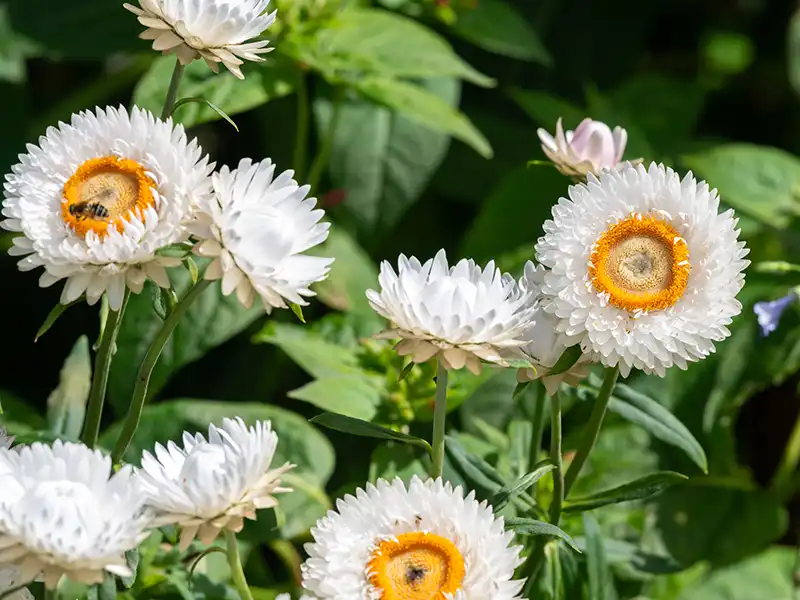
Grow striking white Australian strawflowers with crisp papery bracts and contrasting golden-yellow centres. White Strawflower (Xerochrysum bracteatum) is an Australian native everlasting daisy valued for its long-lasting flowers, upright growth and exceptional suitability for fresh and dried floral arrangements.
The distinctive flower heads are surrounded by firm, papery white bracts that retain their shape after drying. Plants produce flowers on upright branching stems, making them particularly useful for cut-flower gardens, native gardens, cottage-style plantings and mass flowering displays.
Xerochrysum bracteatum is one of Australia’s best-known paper daisies and has been cultivated extensively in Australia and internationally. White-flowering forms provide a clean, neutral colour that combines easily with other strawflowers and flowering annuals.
White Strawflower Seed Details
| Botanical name | Xerochrysum bracteatum |
|---|---|
| Common names | White Strawflower, Everlasting Daisy, Paper Daisy |
| Previous botanical names | Bracteantha bracteata, Helichrysum bracteatum |
| Family | Asteraceae |
| Plant type | Australian native everlasting daisy; commonly grown as an annual |
| Growth habit | Upright and branching |
| Flower colour | White papery bracts surrounding a golden-yellow central disc |
| Position | Full sun preferred; light shade tolerated |
| Soil | Adaptable to a range of soils; best in well-drained soil |
| Sowing depth | Surface sow or cover very lightly |
| Typical germination | Approximately 7–20 days under suitable conditions |
| Uses | Cut flowers, dried flowers, native gardens, cottage gardens, mass plantings, borders and containers |
Why Grow White Strawflowers?
- Australian native everlasting daisy.
- Produces distinctive white papery flower heads with golden-yellow centres.
- Excellent variety for fresh and dried cut flowers.
- Papery bracts retain their shape when properly dried.
- Upright, branching plants can produce numerous flowering stems.
- Suitable for native, cottage and cut-flower gardens.
- Easy to propagate from seed without specialised pretreatment.
- Performs particularly well in sunny positions with good drainage.
How to Grow White Strawflowers from Seed
White Strawflowers are relatively straightforward to grow from seed and do not require scarification, hot-water treatment or other specialised pretreatment before sowing.
- Choose a sunny position.
For strong, compact plants and abundant flowering, select a position receiving plenty of direct sunlight. Light shade can be tolerated, but full sun is generally preferable for flower production. - Prepare well-drained soil.
Remove weeds and loosen the upper soil surface. Strawflowers are adaptable but perform best where excess water can drain freely. - Sow the seeds shallowly.
Sow onto prepared soil or seed-raising mix and press gently into the surface. Cover only very lightly, as the small seeds should not be deeply buried. - Water gently.
Use a fine spray so the seed is not displaced. Maintain consistent moisture during germination without keeping the growing medium waterlogged. - Allow seedlings to establish.
Germination commonly occurs in approximately 7–20 days under suitable conditions. Continue providing regular moisture as young seedlings develop. - Thin or transplant crowded seedlings.
Provide adequate spacing between plants to encourage branching, airflow and the development of strong flowering stems. - Pinch young plants if desired.
Pinching the main growing tip can encourage branching and increase the number of flowering stems, particularly when plants are being grown for cutting. - Pick flowers regularly.
Regular harvesting and removal of ageing flower heads can encourage continued flowering and keep plants productive for longer.
White Papery Strawflowers with Golden Centres
White Strawflowers are distinguished by their crisp white papery bracts surrounding a contrasting golden-yellow central disc.
Although the entire flower head resembles a single large flower, the colourful white structures are actually specialised papery bracts surrounding a cluster of numerous small true flowers.
These firm bracts give strawflowers their characteristic texture and allow harvested blooms to retain their shape after drying.
The combination of white and gold provides a clean, classic appearance that works particularly well in bouquets and dried arrangements and contrasts effectively with more brightly coloured strawflowers.
Growing White Strawflowers for Cut Flowers
Strawflowers are particularly valuable in cut-flower gardens because their upright flowering stems can be harvested for both fresh bouquets and dried arrangements.
- Fresh bouquets: harvest clean, well-developed stems for mixed or single-colour arrangements.
- Dried flowers: harvest before the flower heads become over-mature for the best dried appearance.
- Cut-flower gardens: plant in dedicated rows or blocks to make harvesting easier.
- Succession sowing: staggered sowings can help extend the harvest period where climate permits.
- Regular picking: continued harvesting can encourage further flowering and reduce the number of ageing blooms left on the plants.
How to Dry White Strawflowers
Xerochrysum bracteatum is one of the classic Australian everlastings for dried floral work because its firm papery bracts retain their structure particularly well.
Harvest flowers while they are still in good condition and before the heads become over-mature. For dried arrangements, flowers are often picked while the bracts are opening rather than waiting until the oldest blooms are fully mature.
Remove unwanted foliage, gather the stems into small bunches and hang them upside down in a dry, shaded and well-ventilated position.
Keeping the flowers away from direct sunlight during drying can help maintain their appearance. Once thoroughly dry, the stems can be used in bouquets, wreaths and other dried floral arrangements.
When Do White Strawflowers Flower?
Flowering time varies with climate, sowing date and the particular strain being grown.
In suitable Australian conditions, Xerochrysum bracteatum commonly flowers through the warmer months, with the species naturally flowering mainly during spring and summer in parts of its range.
In warmer climates and favourable garden conditions, the flowering season may be longer.
Regular picking or removal of spent flower heads can encourage branching and help maintain flower production.
What Soil Is Best for White Strawflowers?
White Strawflowers are adaptable to a range of garden soils but perform best where drainage is good.
A well-drained garden bed allows roots to develop without remaining persistently wet. Sandy and sandy-loam soils can be particularly suitable, provided plants receive sufficient moisture while actively growing.
Where soils are heavy or compacted, improving drainage and soil structure before planting can assist establishment.
Strawflowers respond to adequate moisture and suitable nutrition but do not require excessively rich soil to produce an attractive display.
Do White Strawflowers Need Full Sun?
A sunny position is recommended for White Strawflowers.
Good sunlight encourages sturdy growth and abundant flowering. Plants can tolerate some light shade, but excessive shade may result in softer, more elongated growth and fewer flowers.
For cut-flower production and mass flowering displays, an open position with good sunlight and airflow is preferable.
Are Strawflowers Native to Australia?
Yes. Xerochrysum bracteatum is an Australian native everlasting daisy and one of the country’s best-known paper daisies.
The species has a long history in cultivation and has been selected and bred into numerous garden forms displaying a broad range of flower colours.
White Strawflowers represent the white-flowering end of this horticultural colour range while retaining the characteristic papery bracts associated with the species.
Older seed catalogues and botanical references may list the plant under its former names Bracteantha bracteata or Helichrysum bracteatum.
Where to Grow White Strawflowers
White Strawflowers are versatile flowering plants that can be incorporated into both native and traditional garden designs.
- Australian native gardens.
- Cut-flower gardens.
- Dried-flower gardens.
- Cottage gardens.
- Wildflower-style plantings.
- Garden borders.
- Mass flowering displays.
- Mixed annual flower beds.
- Large pots and containers with adequate drainage.
Tips for Growing White Strawflowers Successfully
- Choose a sunny, open position for strong flowering.
- Use well-drained soil or seed-raising mix.
- Sow the small seeds shallowly and avoid burying them deeply.
- Maintain consistent moisture during germination and early establishment.
- Provide adequate spacing and airflow as plants develop.
- Pinch young plants if additional branching and flowering stems are desired.
- Pick flowers regularly to encourage continued production.
- Harvest flowers at an appropriate stage if they are intended for drying.
- Dry harvested flowers in a shaded, dry and well-ventilated position.
Frequently Asked Questions
What is White Strawflower?
White Strawflower is a white-flowering horticultural form of Xerochrysum bracteatum, an Australian native everlasting daisy known for its firm, papery flower bracts.
What is the botanical name of Strawflower?
The accepted botanical name is Xerochrysum bracteatum. Older references may use the names Bracteantha bracteata or Helichrysum bracteatum.
Is White Strawflower native to Australia?
Yes. Xerochrysum bracteatum is an Australian native species. Cultivated forms have been selected and bred in a wide range of flower colours, including white.
Are White Strawflowers annual or perennial?
The species occurs in different growth forms and cultivated strawflowers are commonly grown as annuals. Growth habit and longevity can vary according to the strain and growing conditions.
What colour are White Strawflower flowers?
The flower heads have crisp white papery bracts surrounding a golden-yellow central disc.
How long do White Strawflower seeds take to germinate?
Germination commonly occurs in approximately 7–20 days under suitable conditions. Temperature, moisture and seed quality can influence germination time.
Do Strawflower seeds require special treatment before sowing?
No. Xerochrysum bracteatum generally germinates readily from seed without scarification, hot-water treatment or other specialised pretreatment.
How deep should Strawflower seeds be planted?
Sow the small seeds on the surface or cover them only very lightly with fine soil or seed-raising mix. Avoid deep sowing.
Do White Strawflowers need full sun?
Full sun is preferred for sturdy plants and abundant flower production, although some light shade can be tolerated.
Can White Strawflowers be grown in pots?
Yes. Strawflowers can be grown in containers provided they receive adequate sunlight and the potting mix drains freely.
Are White Strawflowers suitable for cut flowers?
Yes. Strawflowers are widely valued as cut flowers and can be used both fresh and dried.
Are White Strawflowers good for dried flowers?
Yes. Their firm papery bracts retain their structure when dried, making strawflowers particularly useful for dried bouquets, wreaths and floral arrangements.
When should Strawflowers be harvested for drying?
Harvest healthy flower stems before the heads become over-mature. Flowers picked as the papery bracts are opening generally retain an attractive shape when dried.
How do you dry White Strawflowers?
Gather the harvested stems into small bunches and hang them upside down in a dry, shaded and well-ventilated position until thoroughly dry.
Does regular picking encourage more Strawflower blooms?
Regular harvesting or removal of ageing flowers can encourage branching and help extend flower production.
Grow White Australian Strawflowers from Seed
With their crisp white papery bracts, golden centres and excellent qualities as fresh and dried flowers, White Strawflowers are an attractive and useful Australian native flower for home gardens and cut-flower production.
For best results, sow the small seeds shallowly, provide a sunny position with well-drained soil and maintain consistent moisture while seedlings establish.
Plant in groups for an impressive display, or grow in dedicated rows where the long-lasting flowering stems can be harvested regularly for fresh bouquets and dried arrangements.
Reviews
There are no reviews yet.