
Everlasting Daisy Pink Cluster Seeds
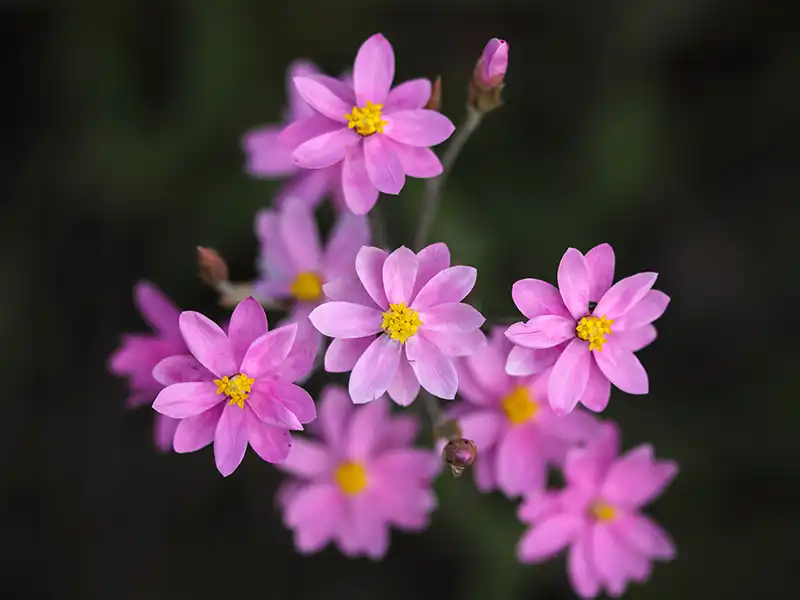
Grow masses of beautiful Australian native everlasting daisies with clusters of bright pink papery flowers and contrasting yellow centres. Pink Cluster Everlasting (Schoenia cassiniana) is an Australian native annual wildflower renowned for producing an impressive display when grown in groups.
Unlike everlastings that produce a single large flower head at the end of each stem, Pink Cluster Everlasting develops terminal clusters of smaller flower heads. The papery bracts range through shades of pink and may fade towards white as the flowers age, surrounding contrasting yellow centres.
Native to Western Australia, South Australia and the Northern Territory, Schoenia cassiniana occurs naturally in grassland and woodland and can form extensive carpets following favourable seasonal rainfall. It is particularly attractive in mass plantings, native wildflower gardens and containers.
Everlasting Daisy Pink Clusters Seed Details
| Botanical name | Schoenia cassiniana |
|---|---|
| Common names | Pink Cluster Everlasting, Pink Everlasting, Cassini’s Everlasting |
| Synonym | Helichrysum cassinianum |
| Family | Asteraceae |
| Plant type | Australian native annual wildflower |
| Approximate height | Typically approximately 10–40 cm; plants can grow taller under some conditions |
| Flower colour | Pink papery bracts with yellow centres; flowers may fade towards white as they age |
| Flowering period | Mainly winter and spring; timing varies with climate and seasonal conditions |
| Position | Full sun preferred |
| Soil | Well-drained soil |
| Sowing depth | Surface sow or press gently into the soil; avoid deep covering |
| Uses | Native gardens, mass plantings, wildflower gardens, borders, containers and cut flowers |
Why Grow Pink Cluster Everlastings?
- Beautiful Australian native annual wildflower.
- Produces clusters of distinctive pink papery flower heads.
- Contrasting yellow centres add colour to the floral display.
- Particularly impressive when grown in mass plantings.
- Excellent for native and wildflower-style gardens.
- Suitable for garden beds, borders and containers.
- Flowers can be harvested for fresh floral displays.
- Performs best in sunny positions with good drainage.
How to Grow Pink Cluster Everlastings from Seed
Pink Cluster Everlastings can be grown from seed, although germination can vary between seed lots and growing conditions. In their natural environment, plants respond strongly to favourable seasonal rainfall.
- Choose a sunny position.
Select an open position receiving plenty of sunlight. Full sun encourages compact growth and a strong flowering display. - Prepare well-drained soil.
Remove weeds and loosen the upper soil surface. Although the species occurs naturally across different soil types, good drainage is recommended for cultivation. - Sow the seeds shallowly.
Scatter seed onto the prepared surface or sow into propagation trays. Press gently into the soil or seed-raising mix and avoid burying the seed deeply. - Water gently.
Use a fine spray or gentle watering method to avoid disturbing the seed. Keep the surface moist during germination without allowing it to become persistently waterlogged. - Allow seedlings to establish.
Continue providing consistent moisture while young plants establish. Germination time can vary considerably according to seed lot, temperature and growing conditions. - Thin crowded seedlings.
Where seedlings emerge densely, thin them to provide sufficient space and airflow for the plants to develop their naturally branching habit. - Protect young seedlings from frost.
Young plants can be vulnerable to frost, so seedlings should be protected where severe frost is likely during establishment. - Maintain moisture while actively growing.
Provide water according to rainfall, temperature and soil type, particularly while plants are establishing and developing flower stems.
Clusters of Pink Australian Everlasting Flowers
The flowering habit is one of the features that distinguishes Schoenia cassiniana from some other Australian everlasting daisies.
Rather than producing only a single prominent flower head, the stems carry open terminal clusters of smaller flower heads. Individual heads are generally around 1–2 cm across and feature papery bracts in shades ranging from pale to deep pink around a yellow centre.
As the flowers mature, the pink bracts may gradually fade towards pale pink or white. Occasional naturally white-flowered plants can also occur within the species.
The clustered flowering habit creates an impressive mass of colour when many plants are grown together.
Growing Pink Cluster Everlastings in Mass Plantings
Pink Cluster Everlasting is particularly effective when grown in groups. In favourable years, the species can form extensive natural carpets, and the same characteristic makes it valuable for mass displays in gardens.
- Native wildflower gardens: combine with compatible Australian annual wildflowers.
- Mass plantings: grow larger groups to create a broad display of pink flowers.
- Garden beds and borders: use groups of plants rather than isolated specimens for greater visual impact.
- Wildflower-style plantings: incorporate into informal seasonal displays.
- Containers: grow in large pots or tubs with good drainage and adequate sunlight.
When Do Pink Cluster Everlastings Flower?
In the wild, Schoenia cassiniana flowers mainly from winter through spring, with botanical records generally placing flowering between approximately June and November. Flowering time varies according to rainfall, temperature and location.
Under cultivation, plants grown from autumn or early-winter sowings can produce a colourful spring display. The Australian Native Plants Society notes that seedlings may flower within approximately three to four months of sowing under suitable conditions.
The strength and duration of flowering can vary considerably between seasons, particularly because this annual species responds strongly to favourable rainfall.
What Soil Is Best for Pink Cluster Everlastings?
Pink Cluster Everlastings are adaptable and occur naturally on a variety of soils, including sandy, loamy, clay and sometimes stony soils.
For garden cultivation, a well-drained soil is recommended. Good drainage helps prevent the root zone from remaining persistently saturated and provides suitable conditions for young plants to establish.
Plants do not require an exceptionally rich soil to produce an attractive display. In garden beds, concentrate on good soil structure, drainage and weed control before sowing.
Do Pink Cluster Everlastings Need Full Sun?
Full sun is the preferred position for Schoenia cassiniana> and provides the best conditions for strong growth and flowering.
Plants can also tolerate some light shade, but an open sunny position is preferable when the aim is to create a dense mass-flowering display.
Good airflow is also beneficial when plants are grown densely in garden beds or containers.
Pink Cluster Everlastings as Cut Flowers
The clustered flowering stems of Schoenia cassiniana can be harvested for floral displays. The flowers have a naturally papery texture and last well in water.
For fresh arrangements, harvest healthy stems while the flower clusters are in good condition.
Pink Cluster Everlastings can also be air dried, although they behave differently from some of the larger classic strawflowers. The pink bracts naturally tend to fade towards pale pink or white as the flowers age, and dried clusters may droop when inverted.
For this reason, their strongest ornamental use is often the spectacular living display they create in the garden, although harvested flowers can still be used for fresh and dried floral work.
Where Are Pink Cluster Everlastings Native?
Schoenia cassiniana is native to western and central Australia, with its natural distribution encompassing Western Australia, South Australia and the Northern Territory.
It occurs naturally in grassland and woodland communities and can produce extensive displays when seasonal rainfall creates favourable germination and flowering conditions.
This natural ability to produce large seasonal displays is one of the reasons the species is so effective when planted in groups in Australian native and wildflower gardens.
Where to Grow Pink Cluster Everlastings
These Australian native annual wildflowers are particularly useful where a seasonal display of pink colour is wanted in a sunny, well-drained position.
- Australian native gardens.
- Wildflower and meadow-style plantings.
- Mass flowering displays.
- Garden beds and borders.
- Naturalistic landscapes.
- Cut-flower gardens.
- Large pots, tubs and containers with good drainage.
Tips for Growing Pink Cluster Everlastings Successfully
- Choose an open, sunny position for the strongest flowering display.
- Prepare a well-drained seed bed before sowing.
- Surface sow or press seed gently into the soil rather than burying deeply.
- Water gently so newly sown seed is not displaced.
- Maintain moisture during germination and early establishment.
- Do not keep the soil persistently waterlogged.
- Thin excessively crowded seedlings to improve airflow.
- Protect young seedlings from severe frost.
- Plant in groups for the strongest visual impact.
Frequently Asked Questions
What is Pink Cluster Everlasting?
Pink Cluster Everlasting is an Australian native annual wildflower botanically known as Schoenia cassiniana. It produces terminal clusters of small pink papery flower heads with contrasting yellow centres.
Is Pink Cluster Everlasting the same as Pink and White Everlasting?
No. Pink Cluster Everlasting is Schoenia cassiniana. Pink and White Everlasting is generally Rhodanthe chlorocephala subsp. rosea. They are different Australian native everlasting daisy species.
Is Pink Cluster Everlasting native to Australia?
Yes. Schoenia cassiniana is native to Western Australia, South Australia and the Northern Territory.
Is Pink Cluster Everlasting an annual or perennial?
It is an annual wildflower. Plants germinate, grow, flower and produce seed during their seasonal life cycle.
How tall does Pink Cluster Everlasting grow?
Botanical descriptions commonly describe plants around 10–40 cm high, although taller plants can occur depending on provenance and growing conditions.
What colour are Pink Cluster Everlasting flowers?
The flower heads have papery bracts in shades of pink surrounding yellow centres. The pink colour often fades towards pale pink or white as individual flowers age.
When do Pink Cluster Everlastings flower?
Flowering occurs mainly during winter and spring. Wild populations are commonly recorded flowering between approximately June and November, although timing depends on rainfall, location and seasonal conditions.
How should Pink Cluster Everlasting seeds be sown?
Surface sow the seed onto prepared soil or seed-raising mix and press it gently into the surface. Avoid burying the seed deeply.
Is Pink Cluster Everlasting difficult to germinate?
Germination can vary. Botanical cultivation references note that seed can sometimes germinate unreliably, while cultivated seed under suitable conditions can germinate readily. Maintaining appropriate moisture, temperature and shallow sowing improves the conditions for successful emergence.
Does Pink Cluster Everlasting need full sun?
Full sun is preferred for the strongest growth and flowering, although some light shade can be tolerated.
Can Pink Cluster Everlastings grow in pots?
Yes. They are suitable for pots and tubs provided the container drains freely and receives adequate sunlight.
Are Pink Cluster Everlastings suitable for mass planting?
Yes. Mass planting is one of the best ornamental uses for this species. In favourable natural conditions it can form extensive carpets of flowers, and groups of plants create an impressive garden display.
Can Pink Cluster Everlastings be used as cut flowers?
Yes. The flowering stems can be harvested and the flowers last well in water. The pink bracts naturally fade with age, so colour retention in dried arrangements is not as strong as in some other everlasting species.
Do Pink Cluster Everlasting seedlings tolerate frost?
Young seedlings should be protected from significant frost during establishment.
Grow Australian Pink Cluster Everlastings from Seed
With their clusters of bright pink papery flowers, contrasting yellow centres and ability to create impressive mass displays, Schoenia cassiniana is an excellent Australian native annual for wildflower gardens, native plantings and seasonal garden colour.
For best results, sow shallowly into well-drained soil, provide plenty of sunlight and maintain consistent moisture while seedlings establish.
Plant in groups to make the most of the species’ naturally clustered flowering habit and create a colourful display of Australian everlasting daisies.
Reviews
There are no reviews yet.