

White Everlastings – Rhodanthe Flower Seeds
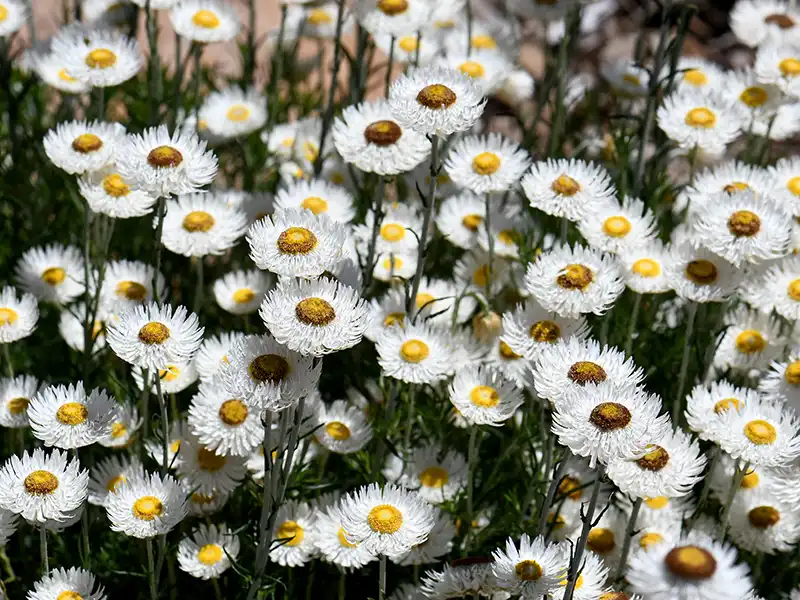
Create seasonal drifts of white Australian paper daisies for garden beds, wildflower displays and dried arrangements. White Everlastings are the white-flowering form of Rhodanthe chlorocephala subsp. rosea, an Australian native annual with slender stems, grey-green foliage and papery flower heads.
The white bracts surround yellow to greenish-yellow centres, producing a delicate daisy-like display. Plant in groups for greater impact, or combine with pink Rhodanthe everlastings for contrasting seasonal colour.
This product is Rhodanthe White Everlastings. It is a different plant from White Strawflower (Xerochrysum bracteatum), although both are commonly described as everlasting daisies or paper daisies.
White Everlastings Seed Details
| Botanical name | Rhodanthe chlorocephala subsp. rosea — white-flowering form |
|---|---|
| Plant type | Australian native annual wildflower |
| Typical height | Approximately 20–60 cm; varies with growing conditions |
| Position and soil | Sunny position with well-drained soil |
| Sowing season | Autumn–winter in non-tropical climates |
| Sowing depth | Surface sow and press in, or cover very lightly |
| Mass-display sowing rate | Approximately 1 g per square metre; use less for a scattered effect |
| Uses | Seasonal garden colour, mass plantings, cut flowers and dried arrangements |
How to Grow White Everlastings
- Prepare the site. Choose a sunny position, remove weeds and lightly rake the soil to create a fine, well-drained seedbed.
- Sow shallowly. Scatter seed evenly. For larger areas, mixing seed with dry sand can make distribution easier. Press into the surface or rake in very lightly.
- Water gently. Use a fine spray and keep the seedbed moist during germination and early establishment.
- Protect seedlings. Watch for slugs and snails, protect from frost and thin overcrowded seedlings where necessary.
- Maintain suitable moisture. Water during dry periods without leaving the soil waterlogged.
Germination and growth depend on temperature, moisture and seed conditions. Plants may flower approximately 3–4 months after sowing, with timing varying by climate and sowing date.
When to Sow in Australia
Autumn–winter sowing is recommended in non-tropical climates. Time sowing for mild conditions and reliable moisture. Later sowing may be possible with irrigation, but flowering time and performance will vary.
Mass Plantings and Dried Flowers
White Everlastings are particularly effective in broad drifts and seasonal wildflower beds. Their long-lasting papery flower heads also dry well, making them useful for floral arrangements.
These are annual plants that complete their life cycle in one season. They may self-seed where conditions are suitable.
Reviews
There are no reviews yet.