
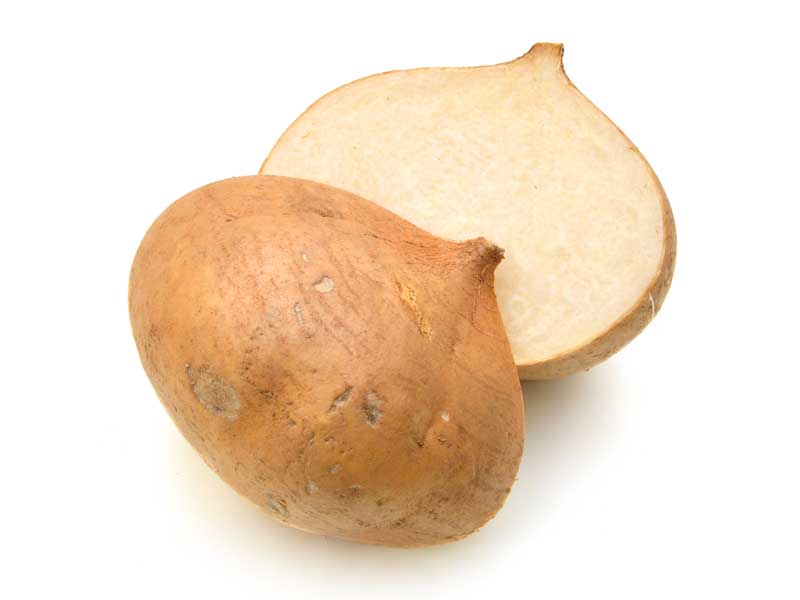


Yam Bean (Jicama) Vegetable Seeds
Botanical Name: Pachyrhizus erosus
Yam Bean (Jicama) is a warm-season climbing vegetable grown for its crisp, juicy underground roots. Popular in Central American and Asian cooking, jicama has a refreshing, mildly sweet flavour often compared with apple, pear and water chestnut.
The peeled root can be eaten fresh, grated into salads and slaws, sliced into spring rolls or added to stir-fries. The vigorous vines perform best in tropical, subtropical and warm temperate climates with a long frost-free growing season.
New to growing jicama? Read our complete Australian Jicama Growing Guide for detailed advice on sowing, climate, trellising, harvesting and common growing problems.
- Crisp, juicy root vegetable with a refreshing, mildly sweet flavour.
- Excellent raw in salads, slaws, spring rolls and fresh snacks, or cooked in stir-fries.
- Produces large edible storage roots during Australia’s warm growing season.
- Vigorous climbing vines grow approximately 2–3 metres with suitable support.
- Best suited to tropical, subtropical and warm temperate gardens.
- Can be grown in garden beds, raised beds or large containers.
- Important: Only the mature, peeled underground root is eaten. Do not consume the leaves, stems, flowers, seed pods or seeds.
Plant Details
- Plant Type: Warm-season climbing root vegetable
- Botanical Name: Pachyrhizus erosus
- Common Names: Jicama, yam bean, Mexican turnip and Mexican potato
- Plant Family: Fabaceae
- Plant Height: Vines approximately 2–3 metres with a trellis or support
- Position: Full sun
- Frost Tolerance: Very low
- Time to Harvest: Approximately 120–150 days in suitable warm conditions
- Edible Part: Mature, peeled underground root only
Sowing Information
- Germination Time: Approximately 7–21 days under suitable conditions
- Optimal Soil Temperature: Approximately 18–30°C
- Sowing Depth: 2–3 cm deep
- Plant Spacing: Approximately 30–45 cm apart
- Row Spacing: Approximately 90–120 cm, depending on the support system
- Position: Full sun, preferably at least 6 hours of direct sunlight each day
- Sow Where: Directly into warm garden soil or start in pots under protection
- Soil Type: Loose, fertile and well-drained soil
- Preferred Soil pH: Approximately 6.0–7.5
- Support: Trellis, fence or strong climbing frame recommended
How to Sow Yam Bean Seeds
- Choose a warm planting time after the danger of frost has passed.
- Prepare loose, deeply cultivated soil and remove stones or compacted clods.
- Sow seeds approximately 2–3 cm deep.
- Cover gently with soil and water carefully.
- Keep the soil evenly moist during germination, but avoid waterlogging.
- Thin or transplant seedlings to approximately 30–45 cm apart.
- Install a strong trellis or climbing support before the vines become large.
Optional seed preparation: Some growers soak jicama seeds in room-temperature water for several hours before sowing to help soften the seed coat. Sow the seeds promptly after soaking.
Growing Tips
- Provide a strong trellis, fence or climbing frame for the vigorous vines.
- Grow in full sun for the best vine and root development.
- Use loose, well-drained soil so the underground roots can expand freely.
- Improve poor soil with mature compost before planting.
- Water consistently to maintain even soil moisture, particularly during establishment and root development.
- Water deeply rather than applying frequent shallow watering.
- Apply mulch around established plants to conserve moisture and suppress weeds.
- Avoid excessive nitrogen fertiliser, which may encourage large vines at the expense of root development.
- Remove flowers and developing seed pods, particularly where children or animals may access the plants.
- Protect plants from frost and prolonged cold weather.
Can Jicama Be Grown in a Container?
Jicama can be grown in a large container, although plants grown in open, well-prepared soil may produce larger roots. Choose a deep, broad container with generous drainage holes and fill it with a loose, fertile potting mix.
Grow one plant per large container, position it in full sun and provide a strong climbing support. Check the soil moisture regularly because containers can dry more quickly than garden beds.
Harvest
Harvest approximately 120–150 days after sowing, once the underground roots have reached a useful size. In cooler districts, harvest before severe frost or prolonged cold damages the plant.
Loosen the soil carefully with a garden fork inserted well away from the base of the plant. Lift the root gently to avoid puncturing or damaging it.
Smaller roots are often tender and crisp, so it is not always necessary to wait for the largest possible tuber to form.
Which Parts of Jicama Are Edible?
| Plant Part | Edible? | Important Information | |
|---|---|---|---|
| Mature underground root | Yes | Remove the skin and eat the clean internal flesh. | |
| Skin | No | Remove the tough, fibrous outer skin before eating. | |
| Keep away from children and animals. | |||
When to Sow Yam Bean in Your Climate
| Climate Zone | Best Planting Time | Growing Notes | |
|---|---|---|---|
| Temperate | Mid-spring to early summer | Sow after frost risk has passed and the soil has warmed. | |
| Start earlier under protection where the growing season is limited. | |||
| Subtropical | Spring to early summer | Plant during warm weather and allow several months for the roots to develop before winter. | |
| Tropical | Late winter through spring, or during another suitably warm period | Best grown outside severe weather periods. Ensure excellent drainage during heavy rainfall. | |
| Transplant after frost risk and use the warmest sheltered position available. | |||
Uses
- Fresh salads
- Slaws
- Fresh snacks
- Rice-paper rolls
- Salsas
- Stir-fries
- Roasted vegetable dishes
- Asian and Central American cooking
Suitable For
- Home vegetable gardens
- Raised garden beds
- Large containers
- Permaculture gardens
- Tropical and subtropical food gardens
- Warm-season vegetable gardens
- Gardeners seeking unusual edible crops
Want complete growing instructions? Read our comprehensive Jicama Planting Guide for Australia to learn more about sowing times, climate requirements, soil preparation, trellising, harvesting, safety and common growing problems.
Reviews
There are no reviews yet.