
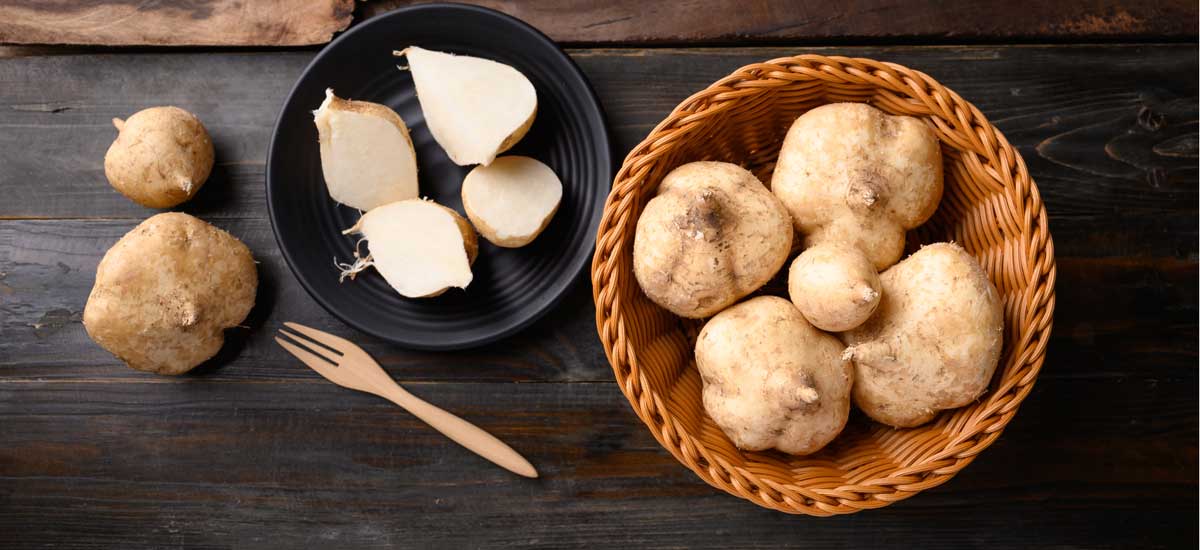
Jicama, also known as yam bean, is a vigorous climbing plant grown for its crisp, sweet and juicy underground tuber. Its botanical name is Pachyrhizus erosus. Jicama thrives in tropical and subtropical Australia and can also be grown in warm temperate districts that provide a long, frost-free growing season.
The edible tuber has pale, crunchy flesh with a mild flavour often compared with apple, pear and water chestnut. It can be eaten fresh or added to salads, stir-fries and other cooked dishes. Although jicama is perennial in frost-free climates, Australian gardeners generally grow it as a warm-season annual and sow fresh seed each year.
Pachyrhizus erosus
Fabaceae
Jicama, yam bean, Mexican turnip and Mexican potato
Warm-season climbing vine
Full sun
Approximately 5–9 months
Very low
Peeled underground tuber only
Tropical, subtropical and warm temperate
What Is Jicama?
Jicama is a leguminous vine native to Mexico and Central America. It has been cultivated as a food crop for centuries and was later introduced to Southeast Asia, where it became widely used in regional cooking. It is now grown in warm climates throughout the Americas, Asia and Australia.
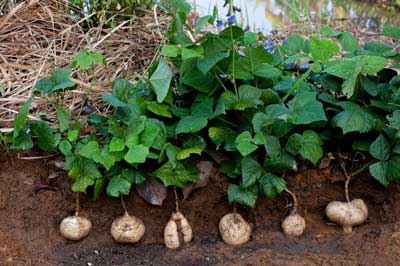
The plant produces vigorous green vines and attractive blue, violet or white pea-like flowers. Below ground, it develops one or more swollen storage roots that are harvested and eaten as a vegetable.
Is Jicama the Same as Yam Bean?
Yes. Jicama and yam bean are common names for Pachyrhizus erosus. In Australia, the crop is usually sold as jicama or yam bean. It may also be known internationally as Mexican turnip, Mexican potato, sinkamas, seng kuang or by other regional names.
Is Jicama a Fruit or a Vegetable?
Jicama is treated as a root vegetable. The part that is harvested and eaten is an enlarged underground storage root rather than a fruit. Although the vine produces pods containing seeds, those pods and seeds must not be eaten.
Can You Grow Jicama in Australia?
Jicama can be grown successfully in many parts of Australia, but it performs best where it receives several months of consistently warm weather. The plants are highly sensitive to frost and require warm soil, full sun and enough time to develop a useful tuber.
Tropical and subtropical areas generally provide the most favourable conditions. Gardeners in warm temperate districts can also grow jicama by sowing early and taking full advantage of the warmer months. In cool temperate areas, the season may be too short unless plants are started under protection and grown in a sheltered position.
Jicama generally requires approximately 5–9 months of warm, largely frost-free conditions. A shorter season may produce smaller roots or prevent worthwhile tuber development.
When to Plant Jicama in Australia
Sow jicama once the weather and soil have warmed. In areas with cool winters, wait until the risk of frost has passed before placing seedlings outdoors. Starting seed under protection can help extend the growing season in temperate districts.
| Australian climate | Suggested sowing period | Growing notes | Likely harvest period |
|---|---|---|---|
| Tropical Darwin, Cairns and similar districts |
Late winter through spring, or at another suitably warm time outside severe weather periods | Provide excellent drainage and avoid waterlogged soil during periods of heavy rain. | Usually 5–9 months after sowing |
| Subtropical Brisbane, northern NSW and similar districts |
Spring to early summer | Sow once soil is consistently warm. Plants usually have enough time to develop before winter. | Autumn to early winter, before damaging cold |
| Warm temperate Sydney, coastal NSW and protected districts |
Mid-spring to early summer | Start seed earlier under protection where necessary and transplant after frost risk has passed. | Late autumn or before the first significant frost |
| Cool temperate Canberra, Hobart and colder inland districts |
Start under protection in late winter or early spring | Outdoor production can be difficult because the warm season may be too short. Use the warmest sheltered position available. | Harvest before frost, even if roots remain relatively small |
| Arid and semi-arid Warm inland districts |
Spring after frost risk has passed | Provide reliable irrigation, mulch and protection from extreme heat or drying winds. | Approximately 5–9 months after sowing |
These periods are a general guide. Local frost dates, soil temperature, rainfall and extreme heat can alter the ideal planting time.
How to Grow Jicama from Seed
Jicama is normally propagated from seed. It is not usually grown by planting pieces of the edible tuber in the way potatoes are grown.
| Growing factor | General guide |
|---|---|
| Sowing depth | Approximately 2–3 cm deep |
| Plant spacing | Approximately 30–45 cm between plants |
| Row spacing | Approximately 90–120 cm, depending on the support system |
| Germination conditions | Warm, evenly moist soil; avoid cold or waterlogged conditions |
| Germination time | Often within 7–21 days under suitable conditions |
| Position | Full sun, preferably at least 6 hours of direct sunlight each day |
| Support | A trellis, fence or strong frame is recommended |
Step-by-Step Sowing Instructions
- Choose a warm planting time.
Sow directly once the soil is warm, or start seed in pots under protection where the outdoor growing season is limited. - Prepare the soil.
Loosen the soil deeply and remove stones, compacted clods and other obstructions that could restrict root development. - Sow the seed.
Plant seeds approximately 2–3 cm deep and cover gently with soil or seed-raising mix. - Keep the soil evenly moist.
Water carefully during germination, but do not leave the growing medium saturated. - Provide strong light.
Move indoor-raised seedlings into bright light as soon as they emerge to prevent weak, stretched growth. - Transplant carefully.
Harden seedlings gradually and transplant after frost risk has passed, taking care not to damage the roots. - Add support early.
Install a trellis or other support before the vines become large and tangled.
Some growers soak jicama seeds in room-temperature water for several hours before sowing to help soften the seed coat. Do not leave the seeds soaking for an extended period, and sow them promptly afterwards.
Jicama Soil, Sun and Water Requirements
Soil
Jicama grows best in loose, fertile and free-draining soil. Sandy loam or well-structured loam allows the storage roots to expand more easily than compacted clay.
Improve poor soil with mature compost before planting. Heavy clay can be grown in raised beds or broad mounds where drainage and soil structure have been improved. Avoid excessive fresh manure or very high-nitrogen fertiliser, which may encourage vigorous vines at the expense of root development.
Sunlight
Select a position receiving full sun. At least six hours of direct sunlight is desirable, although plants may benefit from some protection from extreme afternoon heat in very hot inland locations.
Watering
Keep the soil consistently moist while seedlings establish and while the storage roots are developing. Water deeply rather than applying frequent shallow watering. Allow the upper soil surface to begin drying between applications, but do not permit prolonged drought.
Good drainage is essential. Waterlogged conditions can damage the roots and increase the risk of rot.
Mulching
Apply organic mulch around established plants to conserve moisture, suppress weeds and moderate soil temperature. Keep mulch slightly away from the base of the stems to reduce the risk of rot.
Supporting and Pruning Jicama Vines
Jicama is a vigorous climber and its vines may reach several metres in length. A strong trellis, fence or frame keeps the growth manageable, improves air movement and prevents the plant from sprawling across neighbouring crops.
Light pruning can be used to control excessive vine growth. Some growers also remove flowers as they appear. This prevents toxic seed pods from developing and may direct more of the plant’s energy towards the underground storage root.
Avoid severe or repeated pruning that removes most of the healthy foliage. The plant still requires sufficient leaf growth to produce energy and develop its root.
Can You Grow Jicama in a Pot?
Jicama can be grown in a large container, although plants grown in open, well-prepared soil may have more room to produce substantial roots. Choose a deep, broad container with generous drainage holes and fill it with a loose, fertile potting mix.
Grow one plant per large container to reduce competition. Position the container in full sun, provide a strong climbing support and check moisture regularly, as pots can dry considerably faster than garden soil.
How Long Does Jicama Take to Grow?
Jicama generally requires approximately 5–9 months from sowing to harvest. Development is faster and more reliable in consistently warm conditions. Cool nights, frost, poor sunlight or a late planting can delay growth and reduce tuber size.
Gardeners do not necessarily need to wait until the largest possible root has formed. Smaller tubers are often tender and can be harvested before cold weather damages the plant.
When and How to Harvest Jicama
Harvest jicama when the roots have reached a useful size and before severe frost. Yellowing or declining foliage towards the end of the warm season can indicate that the plant is nearing harvest, although local climate and plant health will also affect leaf appearance.
- Cut back or move the vines so the base of the plant is easy to access.
- Insert a garden fork into the soil well away from the crown to avoid piercing the root.
- Loosen the soil around the plant and lift carefully.
- Remove the vines and smaller fibrous roots.
- Brush off loose soil and allow the surface to dry before storage.
Avoid washing roots until they are required for use, as dry storage generally reduces the likelihood of decay. Keep harvested jicama in a cool, dry and well-ventilated place and inspect it regularly for damage or deterioration.
Common Jicama Growing Problems
| Problem | Possible cause | What to do |
|---|---|---|
| Seeds fail to germinate | Cold soil, excess moisture, old seed or seed planted too deeply | Sow in warm conditions, use free-draining mix and keep the soil moist rather than saturated. |
| Large vines but small roots | Excess nitrogen, heavy shade, overcrowding or insufficient growing time | Provide full sun, moderate fertiliser, adequate spacing and the longest warm season available. |
| Roots are misshapen | Compacted, rocky or poorly prepared soil | Grow in deeply loosened soil, a raised bed or a broad mound. |
| Roots begin to rot | Poor drainage, waterlogging or physical damage | Improve drainage, reduce excessive watering and handle roots carefully. |
| Plants stop growing | Cold weather, frost, drought or root disturbance | Protect plants from cold, maintain steady moisture and avoid unnecessary transplanting. |
| Many flowers and seed pods develop | Flowers have been left on the vine | Remove flowers and pods promptly, especially where children or animals may access the plant. |
Which Parts of Jicama Are Edible?
| Plant part | Edible? | Important information |
|---|---|---|
| Mature underground tuber | Yes | Remove the skin and eat the clean internal flesh. |
| Skin | No | Remove the fibrous outer skin before preparing the tuber. |
| Seeds and seed pods | No | Not edible and should be kept away from children and animals. |
| Leaves, flowers and stems | No | Do not consume or use as animal feed. |
What Does Jicama Taste Like?
Jicama has a mild, lightly sweet flavour and a crisp, juicy texture. It is commonly compared with water chestnut, apple, pear or a mild raw turnip. Unlike potato, it remains relatively firm and crunchy after many forms of cooking.
How to Peel Jicama
Wash the tuber and trim the top and bottom with a sharp knife. Cut through the thick skin and pull or slice it away from the pale flesh. A knife is often more effective than a standard vegetable peeler because the outer layer can be tough and fibrous.
Can Jicama Be Eaten Raw?
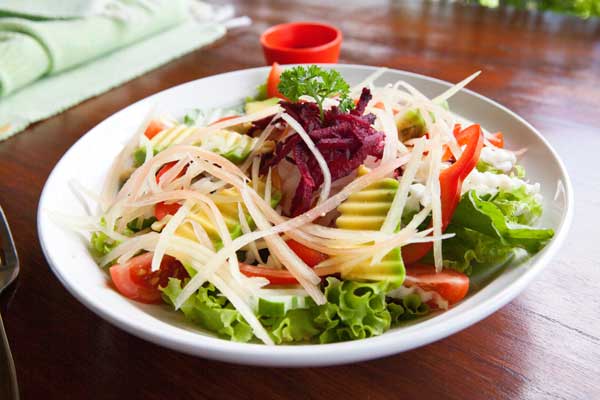
Yes. Peeled jicama is often eaten raw in salads, slaws, salsas and fresh snack plates. Its crisp texture works particularly well with lime, chilli, coriander, cabbage, carrot, mango and other fresh ingredients.
How to Cook Jicama
- Cut into strips and add to stir-fries.
- Steam or boil cubes until they reach the preferred texture.
- Roast seasoned pieces in the oven.
- Add thin slices to salads or fresh rice-paper rolls.
- Grate the peeled tuber into slaws.
Simple Jicama Slaw
Combine peeled and grated jicama with shredded carrot and red cabbage. Add chopped coriander and dress with lime juice, olive oil and a small amount of salt.
The jicama adds a fresh crunch without overpowering the other ingredients.
Jicama Nutrition
Jicama is a water-rich vegetable that supplies dietary fibre and vitamin C. Its exact nutritional content depends on the serving size, maturity and preparation method.
Although jicama is sometimes included in lower-carbohydrate eating plans, it still contains carbohydrate. Its suitability for a ketogenic or medically restricted diet depends on the quantity eaten and the requirements of the individual diet.
Frequently Asked Questions
What is jicama called in Australia?
It is usually called jicama or yam bean. It may also be marketed as Mexican turnip or Mexican potato.
Can jicama grow in Brisbane?
Yes. Brisbane’s subtropical climate generally provides a sufficiently long warm season. Sow in spring once the soil is warm and aim to harvest before cold winter conditions affect the plant.
Can jicama grow in Sydney?
Jicama can be grown in warm, sheltered parts of Sydney. Sow early enough to maximise the warm season and protect young plants from late cold conditions.
Can jicama grow in Melbourne?
It is possible but more difficult because jicama requires a long warm season. Start seed under protection and transplant into the warmest available position after frost risk has passed. Root size may be smaller than in subtropical areas.
Does jicama need a trellis?
A trellis is strongly recommended. The plant produces long, vigorous vines that can otherwise spread across neighbouring crops and garden paths.
Can you grow jicama from a supermarket tuber?
Jicama is normally propagated from seed rather than from pieces of tuber. Planting fresh seed is the most reliable method.
Should jicama flowers be removed?
Removing flowers prevents toxic seed pods from forming and may help the plant direct more energy towards its underground root. Flower removal is especially important where children or animals can access the plants.
How do you know when jicama is ready to harvest?
Harvest approximately 5–9 months after sowing, once the root has reached a useful size. Dig before severe frost or prolonged cold damages the plant.
Can you eat jicama leaves or seed pods?
No. Only the mature, peeled underground tuber is eaten. Do not consume the leaves, stems, flowers, seeds or seed pods.
Is jicama frost tolerant?
No. Jicama is a frost-sensitive warm-season plant. Frost can kill the vines and interrupt root development.
Grow Jicama at Home
Start your jicama crop with quality yam bean seed from Seedmart Australia. Sow during warm weather and allow the plants a long growing season for the best root development.