
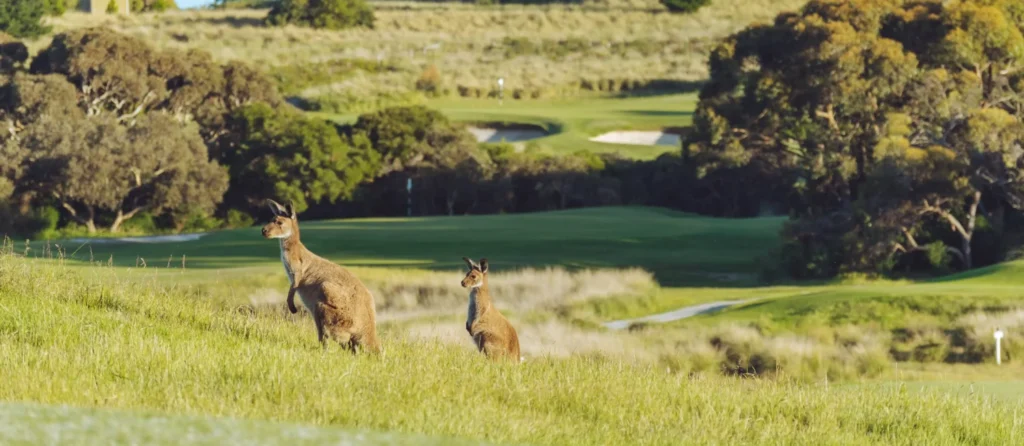
Australian Late Spring & Summer Native Grass Guide
Native grasses can provide hardy, practical planting options for Australian lawns, garden borders and revegetation projects. Griffin Weeping Grass offers a native lawn alternative, Kangaroo Grass provides seasonal colour and naturalistic ground cover, and Spiny-headed Mat-rush creates strong, persistent foliage for landscaping.
Many Australian native grasses tolerate dry periods once established. Their perennial growth makes them useful where the aim is lasting ground cover, lower-maintenance planting and a landscape suited to local conditions.
Late spring and summer can be useful planting periods for warm-season grasses. However, the best time to plant native grass seeds depends on the species, your local climate and whether you can provide reliable establishment moisture.
Griffin Weeping Grass
Kangaroo Grass
Spiny-headed Mat-rush
Common Tussock Grass
Climate, sunlight, soil and intended use
Weed control and dependable moisture
Germinating seeds and young plants need dependable moisture. Avoid sowing immediately before hot, drying weather unless you can keep the seedbed moist.
Buy Native Grass Seeds in Australia
Explore Seedmart Australia’s native grass and grass-like seed range for native lawns, landscape planting and suitable revegetation projects.
Table of Contents
- What Are Native Grasses?
- Why Grow Native Grasses?
- When to Plant Native Grasses in Australia
- Native Grasses for Lawns and Landscaping
- Native Grass Comparison
- How to Choose the Right Native Grass
- Australian Climate Map and Regional Guide
- How to Plant Native Grass Seed
- When to Cut Back Native Grasses
- Frequently Asked Questions
What Are Native Grasses?
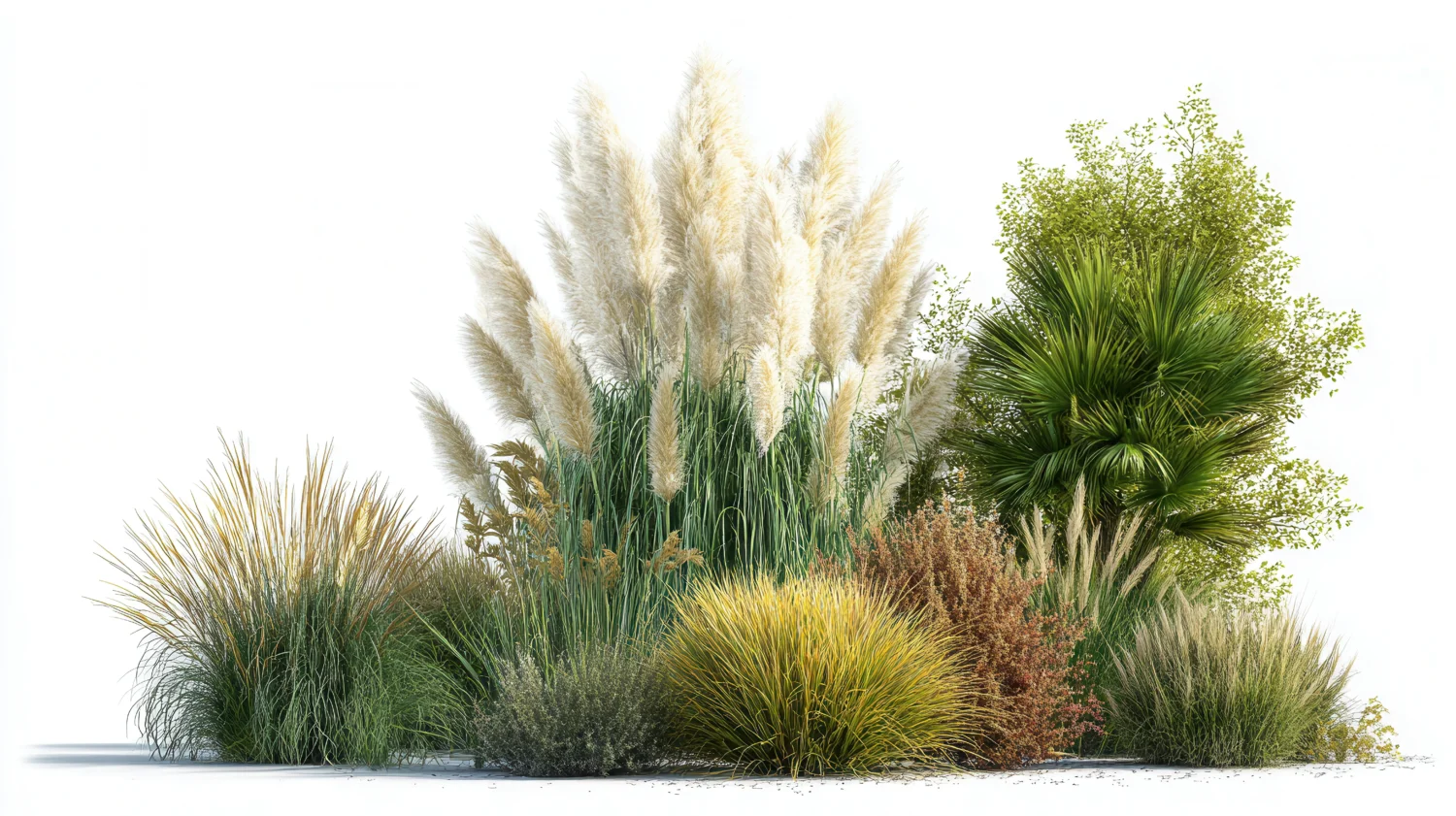
Native grasses are grasses that occur naturally in Australia. They include low-growing species suitable for managed lawns and taller tussock grasses used in landscapes, grasslands and open woodland plantings.
Weeping Grass, Kangaroo Grass and Common Tussock Grass are examples of Australian native grasses. Each has different growing requirements and a different role in the landscape.
Spiny-headed Mat-rush is often planted alongside native grasses because of its tufted shape and strap-like leaves. It is a grass-like perennial rather than a true grass, and is grown as a landscape plant rather than lawn turf.
Why Grow Native Grasses in Australian Gardens and Landscapes?
Suitable native grasses can create a practical ground layer around homes, commercial landscapes and restoration sites. They provide texture and movement while helping maintain living roots and plant cover in the soil.
Many species persist through intermittent drought once their roots have established.
Perennial grasses form an ongoing framework for suitable garden and landscape sites.
Established roots and foliage help hold soil in place and reduce exposed ground.
Seed heads, foliage colour and tussock shapes add interest throughout the year.
Locally appropriate species contribute to the ground layer of suitable native vegetation communities.
Choose lawn forms for mowing or landscape species for borders, mass planting and naturalistic areas.
The strongest results come from matching the species to the site. A grass adapted to a moist valley is not necessarily suitable for a dry, exposed slope, even when both plants are Australian natives.
When to Plant Native Grasses in Australia
The best time to plant native grasses is when the species has suitable temperatures and enough moisture to establish. Late spring and summer can suit warm-season grasses, while autumn or milder spring conditions are often easier for native lawn grasses and cooler-season tussocks.
Warm-Season Grasses
Kangaroo Grass and Red Grass can establish in warm conditions where moisture is available. Seed dormancy, local rainfall and seedbed drying still influence the most practical sowing window.
Native Lawn Grasses
Griffin Weeping Grass can be sown with dependable irrigation, but peak-summer sowing is harder to manage. Without irrigation, a milder period coinciding with rain is generally more practical.
Cooler-Climate Tussocks
Common Tussock Grass is commonly raised from seed during autumn and winter. Summer establishment requires careful watering and is less suitable for continuously hot, dry sites.
Grass-like Landscape Plants
Spiny-headed Mat-rush can be raised in protected nursery conditions and planted out when weather and soil moisture are suitable. Avoid transplanting young plants during a heatwave.
Before sowing, check the weather forecast, soil moisture and your ability to water. A suitable planting window in Brisbane may be very different from one in Perth, Hobart or an inland district.
Native Grasses for Lawns and Landscaping
Griffin Weeping Grass — A Native Lawn Alternative
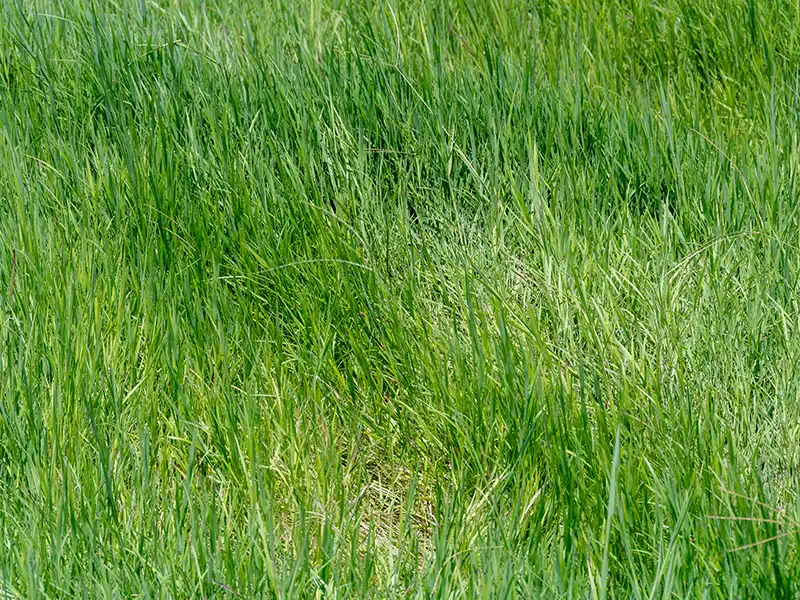
Mown native lawns, fine-leafed ground cover and suitable partially shaded areas.
Prepare a clean seedbed and maintain moisture during germination. Late spring sowing needs reliable watering; avoid unwatered peak-summer establishment.
Griffin Weeping Grass is a selected lawn form of Weeping Grass, grown for its soft foliage and low-growing habit. It is worth considering where a managed native lawn is preferred.
Its shade tolerance makes it useful where buildings or trees reduce sunlight. Under mature trees, also assess root competition and soil moisture.
Established plants tolerate drought, but a consistently green lawn still depends on growing conditions. Protect seedlings from traffic and assess suitability carefully where concentrated wear is expected.
Shop Griffin Weeping Grass Seeds
Kangaroo Grass — Naturalistic Planting and Summer Colour
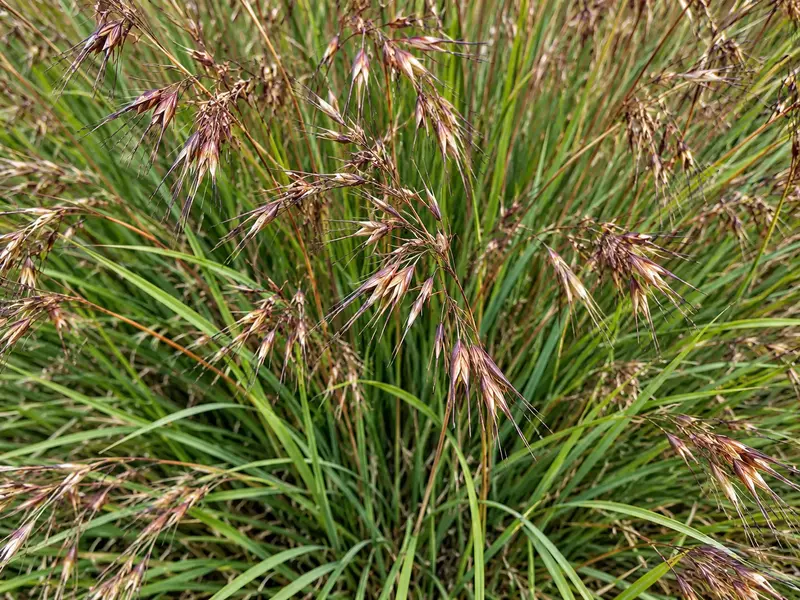
Native garden borders, meadow-style landscapes and suitable grassland or woodland revegetation.
Warm conditions can support establishment, but germination depends on moisture and seed dormancy. Autumn may be more dependable where summer seedbeds dry rapidly.
Kangaroo Grass forms upright tussocks with distinctive reddish-brown seed heads. Its seasonal foliage and flowering stems make it useful for adding colour and texture to native landscapes.
It can grow in full sun to part shade across sandy to clay soils. Established plants generally require relatively little water where the species suits the site.
Allow it to develop as a landscape tussock rather than treating it as a conventional close-mown lawn. For restoration projects, choose appropriate local provenance and follow the instructions supplied for the seed lot.
Spiny-headed Mat-rush — Hardy Borders and Mass Planting
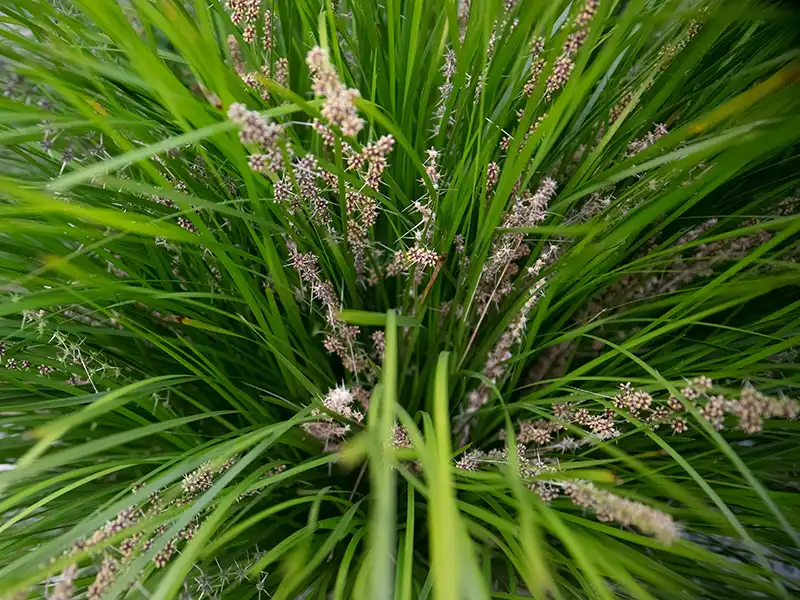
Garden borders, repeated landscape groups and suitable embankment or habitat planting.
Raise seedlings in trays or tubes for controlled placement. Keep the propagation medium moist and provide water while new plantings establish.
Spiny-headed Mat-rush produces dense clumps of tough, strap-shaped foliage. It provides a strong, practical planting around paths, garden beds and larger landscape areas.
Established plants tolerate dry periods and can grow in sun or partial shade across a range of soils.
Seed-grown plants should be allowed room to develop their natural size. They will not reliably reproduce the compact appearance of a named landscaping cultivar.
Shop Spiny-headed Mat-rush Seeds
Common Tussock Grass — Structure for Cooler Landscapes
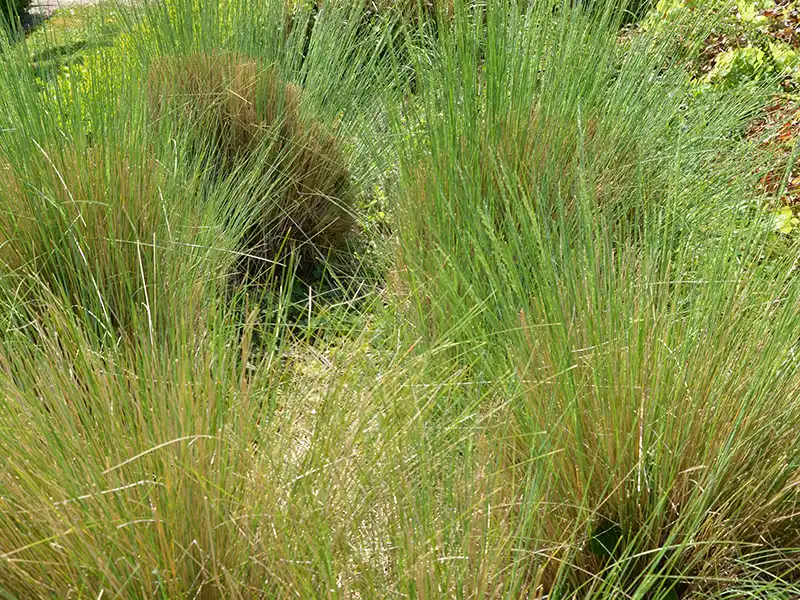
Cooler-climate mass planting, ornamental tussocks and suitable moist woodland or valley sites.
Prefer cooler sowing periods. Young plants need moist soil, and summer establishment requires protection from drying.
Common Tussock Grass develops substantial clumps with grey-green to blue-green foliage and fine flowering stems.
It is useful for repeated groups and naturalistic planting in suitable southern and eastern Australian settings. Its mature form provides structure and movement.
Although established plants can be low maintenance, it is not a universal choice for hot, continuously dry sites. Allow space for mature clumps and retain their natural form.
Other Native Grasses for Larger Projects
Larger grassland and revegetation projects may need a broader, locally appropriate species list.
- Red Grass: a warm-season perennial with useful drought persistence for appropriate eastern Australian sites. Late spring can suit sowing where moisture is available.
- Wallaby Grass: a group of native grasses with different requirements. Choose the particular species rather than assuming every Wallaby Grass has the same planting season or lawn suitability.
Confirm species, provenance and seed availability before specifying these grasses for a project.
Native Grass Comparison: Lawn, Landscaping or Revegetation?
| Plant | Main Use | Late Spring & Summer Suitability | Main Consideration |
|---|---|---|---|
| Griffin Weeping Grass | Mown native lawn | Possible with dependable watering; milder conditions are easier | Keep the seedbed moist and protect young growth from wear |
| Kangaroo Grass | Landscape tussocks and suitable revegetation | Warm conditions can suit establishment with moisture | Seed dormancy and drying can affect results |
| Spiny-headed Mat-rush | Borders and mass planting | Protected propagation and watered planting | Allow room for mature clumps |
| Common Tussock Grass | Cooler landscape planting | Cooler sowing periods are generally more practical | Young plants need reliable moisture |
| Red Grass | Locally appropriate native grass cover | Late spring can suit sowing with moisture | Use a site-appropriate species and seed source |
| Wallaby Grass | Species-specific grassland or lawn planting | Varies; check the particular species | Common name alone is insufficient for selection |
How to Choose the Right Native Grass
Choose according to the job the planting needs to do, then check the growing conditions.
For a Mown Native Lawn
Consider Griffin Weeping Grass on a suitable site. Check sunlight, soil condition, establishment water and expected traffic.
For Hardy Garden Borders
Consider Spiny-headed Mat-rush for strong foliage and repeated clumps. Use Kangaroo Grass where seasonal seed heads and a more natural appearance are wanted.
For Part Shade
Weeping Grass and Spiny-headed Mat-rush can be useful options. Assess dryness beneath trees as well as shade.
For Cooler Landscape Sites
Consider Common Tussock Grass where moisture and local conditions suit. Allow space for substantial clumps.
For Poor or Rubbly Soil
Improve the root zone before planting. Remove major rubble, address compaction and check drainage rather than relying on plant hardiness alone.
For Revegetation Projects
Use the required local species and provenance. Follow the project’s soil preparation, seed quality and establishment specifications.
Australian Climate Map and Regional Planting Guide
Australia’s climate varies widely. Use the map to understand broad conditions, then consider local rainfall, elevation and available irrigation.
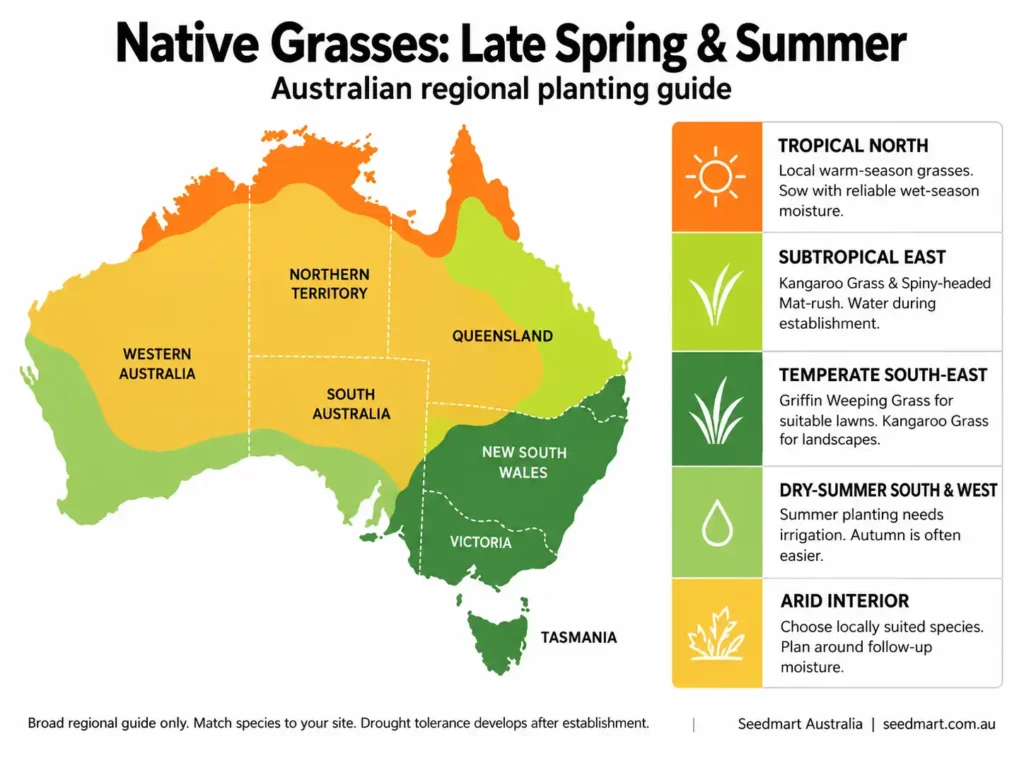
Northern QLD, NT & northern WA
Planting approach: Establish locally appropriate warm-season species around reliable wet-season moisture. Avoid sowing before rainfall likely to wash seed away.
Selection: Choose regional species and provenance. Do not assume southern lawn grasses and tussocks suit every tropical site.
South East QLD & northern NSW
Planting approach: Late spring and summer provide warmth, but establishment still needs rain or irrigation.
Options: Kangaroo Grass for suitable landscape sites and Spiny-headed Mat-rush for borders. Assess Griffin Weeping Grass site by site for lawn use.
Coastal NSW & much of VIC
Planting approach: Late spring may provide a useful window before severe summer drying. Maintain moisture while seedlings establish.
Options: Griffin Weeping Grass for suitable lawns, Kangaroo Grass for landscape tussocks and Spiny-headed Mat-rush for structured planting.
Tasmania, ACT & elevated southern districts
Planting approach: Consider late frost risk and soil warmth for warm-season grasses. Provide water if spring moisture declines before establishment.
Options: Common Tussock Grass and Weeping Grass in suitable settings. Use locally appropriate Kangaroo Grass where conditions suit.
Perth, Adelaide & surrounding winter-rainfall areas
Planting approach: Summer sowing can require considerable establishment watering. Autumn or the local wet season is often more practical for rain-fed planting.
Selection: Match species to the site. For restoration, use locally appropriate plants rather than a general garden selection.
Dry inland areas across Australia
Planting approach: Plan around effective rainfall and follow-up moisture. One storm followed by prolonged heat may not support establishment.
Selection: Obtain local species advice. Drought-tolerant garden plants are not automatically suitable for dryland revegetation.
How to Plant Native Grass Seed
Prepare a weed-controlled seedbed, sow at the depth specified for the seed and maintain moisture until seedlings establish. Native grasses vary in seed size, dormancy and processing, so there is no single sowing depth or rate suitable for every species.
- Choose the right seed. Confirm the species, intended use, seed form and any provenance requirement.
- Control weeds before sowing. Young native grasses can be overtaken by faster-growing weeds.
- Prepare the soil. Address compaction, rubble and drainage problems. For a lawn, create an even, reasonably firm seedbed.
- Follow the supplied sowing instructions. Use the appropriate depth and rate for the species and seed form.
- Water gently. Maintain moisture around the seed without washing it away or leaving the soil persistently waterlogged.
- Protect seedlings. Limit trampling and continue weed control while roots and foliage develop.
- Manage for the intended use. Start mowing lawn grasses when well rooted, or allow landscape tussocks to develop naturally.
Direct Sowing
Useful for native lawns and suitable larger grass plantings. Successful establishment requires even seed distribution and moisture management across the whole area.
Growing in Trays or Tubes
Useful for Spiny-headed Mat-rush and individually placed landscape plants. Raise healthy seedlings, harden them gradually and plant before roots become congested.
Cleaned seed, florets and seed-bearing material can contain very different numbers of viable seeds per kilogram. Lawn sowing rates also differ from revegetation rates.
When to Cut Back Native Grasses
The right time to cut back native grasses depends on the species and whether you are managing a lawn or ornamental tussocks.
- Griffin Weeping Grass: mow once plants are well rooted and able to withstand mowing. Adjust frequency to growth and the finish you want; avoid scalping young plants.
- Kangaroo Grass: remove old seed heads and dead foliage as needed. An early-spring cutback can refresh established ornamental clumps before new growth.
- Common Tussock Grass: maintain as a landscape tussock. Remove tired foliage or renovate established clumps when conditions support recovery.
- Spiny-headed Mat-rush: remove damaged foliage or renovate established clumps when needed. Avoid severe cutting immediately before hot, dry weather without recovery moisture.
For habitat or restoration areas, follow the site’s management plan. Cutting, slashing and retaining seed heads may need to support regeneration and project objectives.
Frequently Asked Questions
Can you plant native grass seeds in summer?
Yes, where the species, temperatures and moisture suit. Warm-season grasses can benefit from warm soil, but young plants still need reliable water. Milder sowing periods are often easier for Weeping Grass and cooler-season tussocks.
What native grass can be used as a lawn?
Griffin Weeping Grass is a selected lawn form worth considering for suitable sites. Check climate, sunlight, soil and expected wear before choosing it.
Which native grasses grow in shade?
Weeping Grass tolerates shade and can suit partially shaded lawns. Spiny-headed Mat-rush is a grass-like option for shaded landscape planting. Beneath trees, moisture competition can be as important as light.
Are native grasses drought tolerant?
Many tolerate dry periods once established, but requirements vary. Drought tolerance does not guarantee year-round green foliage or remove the need to water seedlings.
What is Kangaroo Grass used for?
Kangaroo Grass is used for ornamental tussocks, naturalistic landscapes and suitable native grassland or woodland revegetation. Its seed heads provide seasonal interest. It is generally a better landscape choice than a conventional close-mown lawn.
What does Kangaroo Grass look like?
It forms upright clumps of narrow foliage with distinctive reddish-brown seed heads. Older foliage can develop orange-brown tones, giving the planting seasonal colour.
What is tussock grass?
A tussock grass grows as a clump rather than forming a spreading turf surface. Common Tussock Grass is one native example. The word “tussock” describes a growth habit and does not identify a single species.
Can I scatter native grass seed onto bare soil?
Results are less dependable without weed control, suitable soil contact and establishment moisture. Prepare the seedbed and follow the instructions for the particular seed.
Where can I buy native grass seed in Australia?
Seedmart Australia stocks native grass and grass-like seeds for lawns, landscaping and suitable revegetation projects. Choose according to the species, site and intended use.
Which native grasses should I use for revegetation?
Choose species and seed provenance that match the local vegetation community and project requirements. A garden plant’s ability to grow locally does not automatically make it appropriate for ecological restoration.
Choose Native Grass Seeds for Your Site
Whether you are planning a native lawn, hardy border or larger landscape planting, start with the purpose of the area. Match the plant to your climate, sunlight, soil and establishment water.