

Griffin Weeping Grass Seeds
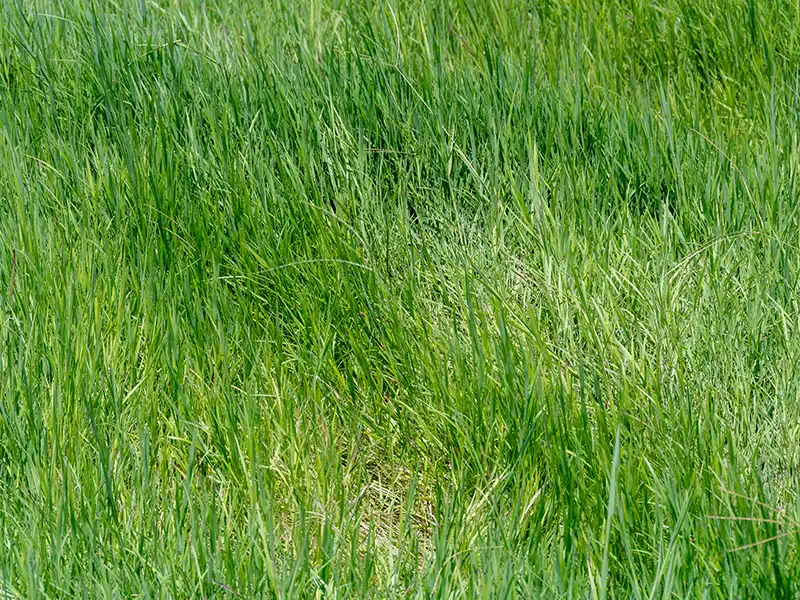
Grow a fine-leafed Australian native lawn with Griffin Weeping Grass (Microlaena stipoides ‘Griffin’), a low-growing perennial grass selected for its prostrate growth habit, soft foliage, excellent shade tolerance and suitability for native lawns and low-maintenance landscapes.
Griffin is a selected cultivar of Australian native Weeping Grass. Unlike taller pasture forms of Microlaena stipoides, Griffin was selected as a fine-leafed, prostrate turfgrass and can form a dense, soft native lawn when established at an appropriate sowing rate and maintained by occasional mowing.
Weeping Grass is naturally widespread through many non-arid parts of Australia and is particularly well adapted to cool and temperate environments, shaded sites and acidic soils. Griffin combines these characteristics with a lower-growing habit suited to lawns, parks, landscaped areas and other sites where persistent native groundcover is required.
Once established, Griffin Weeping Grass has good tolerance of frost and dry periods and can remain green through much of the year where moisture is available. It is particularly valuable for lawns receiving partial shade, including areas beneath open trees or beside buildings and fences.
Griffin Weeping Grass Seed Details
| Botanical name | Microlaena stipoides |
|---|---|
| Cultivar | Griffin |
| Common names | Griffin Weeping Grass, Weeping Grass, Microlaena |
| Family | Poaceae |
| Plant type | Australian native cool-season perennial grass |
| Growth habit | Fine-leafed, low-growing and prostrate; spreads gradually through short rhizomes and tillering |
| Approximate height | Generally low growing and suitable for turf; unmown growth varies with site conditions |
| Foliage | Fine, soft green to blue-green leaves |
| Seed heads | Fine, slender and characteristically weeping |
| Position | Full sun to shade; particularly valuable where shade tolerance is required |
| Soil | Adaptable to a range of soils and particularly tolerant of acidic soils; performs well where adequate moisture is available |
| Sowing depth | Approximately 10 mm |
| Typical germination | Approximately 7–15 days under favourable soil temperatures and moisture conditions |
| Optimum germination temperature | Approximately 20–30°C |
| Lawn sowing rate | Approximately 50 g/m² for establishment of a fine, dense Griffin turf |
| Uses | Native lawns, shaded lawns, parks, gardens, landscaped areas, low-maintenance groundcover and suitable revegetation plantings |
Why Grow Griffin Weeping Grass?
- Australian native perennial grass selected specifically for turf use.
- Fine-leafed, prostrate growth creates a soft and attractive native lawn.
- Excellent shade tolerance for areas where many lawn grasses struggle.
- Can also grow successfully in sunny positions where moisture is suitable.
- Good frost and drought tolerance once established.
- Tolerates acidic soils and can perform in a range of soil types.
- Requires relatively infrequent mowing compared with many conventional lawns.
- Provides persistent perennial native groundcover once established.
How to Grow Griffin Weeping Grass from Seed
Griffin Weeping Grass can be established directly from seed. Good site preparation is particularly important because young Microlaena seedlings establish relatively slowly and can be vulnerable to competition from faster-growing weeds.
- Choose a suitable position.
Griffin can grow in full sun or shade and is particularly useful for lawn areas receiving limited direct sunlight. - Prepare the site thoroughly.
Remove existing weeds and competing vegetation before sowing. A clean seedbed greatly improves establishment because young Weeping Grass seedlings initially develop relatively slowly. - Prepare a fine, firm seedbed.
Rake the surface level and break up large clods. Correct uneven areas before sowing where Griffin is being established as a lawn. - Sow evenly.
For establishment of a fine, dense Griffin lawn, sow at approximately 50 g per m². Divide the seed into two portions and broadcast in different directions to improve distribution. - Cover the seed lightly.
Rake or lightly harrow the seed into the surface so that it is covered by approximately 10 mm of soil. Avoid deep burial. - Firm the surface.
Lightly roll or press the soil after sowing to improve seed-to-soil contact. - Water carefully.
Water using a fine spray and maintain reliable moisture while germination and early establishment occur. - Allow seedlings to establish.
Germination can begin within approximately 7–15 days under favourable conditions, but establishment of a dense lawn takes considerably longer. - Control competing weeds.
Keep weeds under control while the young Griffin plants tiller and gradually form persistent groundcover.
Griffin Weeping Grass for Native Lawns
Griffin was selected specifically as a turf form of Microlaena stipoides.
Its fine leaves and relatively prostrate growth distinguish it from more upright pasture forms of Weeping Grass and make it particularly suitable for establishing an Australian native lawn.
When sown densely and maintained by occasional mowing, Griffin can develop into a soft, fine-textured groundcover.
Unlike rapidly spreading warm-season grasses such as couch, Griffin establishes more gradually. Careful preparation and weed management during establishment are therefore particularly important.
Once established, the perennial plants provide persistent groundcover and generally require less frequent mowing than conventional high-maintenance turf.
A Native Lawn Grass for Shaded Areas
One of Griffin Weeping Grass’s most useful characteristics is its excellent tolerance of shade.
The species naturally occurs in both open and partially shaded environments and can perform well beneath open tree canopies and in areas shaded by buildings, fences and other landscape features.
This makes Griffin particularly valuable for sites where conventional sun-loving lawn grasses become thin or difficult to maintain.
Although shade tolerant, Griffin is not restricted to shaded areas and can also grow in open sunny positions where soil and moisture conditions are suitable.
Fine, Soft Native Grass Foliage
Griffin was selected for its fine-leafed turf characteristics.
The foliage is typically green to blue-green and develops into a low, soft-textured cover when plants are grown densely and maintained as turf.
If left unmown, plants produce the slender, arching seed heads characteristic of Weeping Grass.
Regular or occasional mowing suppresses these flowering stems and maintains a more uniform lawn appearance.
What Soil Is Best for Griffin Weeping Grass?
Microlaena stipoides is adapted to a broad range of soils and is particularly notable for its tolerance of acidic conditions.
It occurs naturally on soils ranging from relatively low to higher fertility and can tolerate soil acidity that restricts some other grasses.
For lawn establishment:
- Control existing weeds before sowing.
- Prepare a reasonably fine and level seedbed.
- Avoid burying the seed too deeply.
- Maintain reliable moisture while germination occurs.
- Firm the soil after sowing to improve seed-to-soil contact.
- Control competing weeds until the developing grass has formed good groundcover.
While Griffin is tolerant of acidic soils, it is not necessary to deliberately acidify otherwise suitable soil simply to establish the grass.
Is Griffin Weeping Grass Drought Tolerant?
Established Weeping Grass has good tolerance of dry periods and is naturally adapted to variable Australian conditions.
Its ability to persist through drought makes Griffin useful where a lower-input native lawn is desired.
However, drought tolerance should not be confused with rapid establishment under dry conditions. Newly sown seed and young seedlings require reliable moisture while roots and tillers are developing.
In lower-rainfall areas, irrigation or well-timed seasonal rainfall may be necessary to establish a dense lawn successfully.
Is Griffin Weeping Grass Frost Tolerant?
Yes. Microlaena stipoides has high frost tolerance and is particularly well suited to many cool and temperate Australian environments.
It is a cool-season C3 perennial grass and can retain active green growth through periods when many warm-season lawn grasses slow considerably or become dormant.
Growth may nevertheless become slower during very cold conditions.
Its combination of frost tolerance, perennial growth and shade tolerance makes Griffin particularly useful in cool-climate and tableland gardens.
Mowing Griffin Weeping Grass
Griffin is a relatively low-growing selection and can be maintained as an attractive native turf with comparatively infrequent mowing.
Mowing encourages a neat, uniform lawn appearance and prevents seed heads from becoming prominent where a conventional turf appearance is desired.
Where a more naturalistic appearance is preferred, the grass can be allowed to grow longer and produce its characteristic weeping seed heads.
Avoid excessively close mowing, particularly while the lawn is young or during periods of environmental stress.
Mowing frequency will depend on rainfall, irrigation, fertility, season and the appearance required.
Watering Griffin Weeping Grass
Reliable moisture is important during germination and establishment.
After sowing, keep the upper soil profile consistently moist without creating prolonged waterlogging. A fine sprinkler or similar gentle irrigation method is useful for preventing seed displacement.
Once established, Griffin is considerably more tolerant of intermittent dry conditions.
Established plants can recover after dry periods when moisture becomes available, although supplementary watering will help maintain greener, more active turf during prolonged drought.
Sowing Griffin Weeping Grass Seed
Griffin seed can be broadcast by hand for smaller lawn areas and can also be established using suitable seeding or hydromulching methods on larger sites.
The awned seed can cling together, making perfectly even distribution more difficult than with smooth lawn seed.
For small areas, dividing the seed into several portions and broadcasting in different directions can improve distribution.
After sowing, lightly rake the seed into the soil to approximately 10 mm depth and firm the surface.
For Griffin turf establishment, a sowing rate of approximately 50 g/m² is recommended where a fine, dense lawn is required.
Establishing a Dense Griffin Native Lawn
The most important stage in establishing Griffin Weeping Grass is the period between germination and development of a dense turf.
Young Microlaena seedlings initially grow relatively slowly. Fast-growing weeds can therefore shade or overwhelm the developing grass if the site has not been properly prepared.
- Prepare first: remove established weeds before sowing.
- Sow densely: use approximately 50 g/m² where a fine Griffin lawn is required.
- Sow shallowly: cover seed by approximately 10 mm.
- Maintain moisture: avoid allowing the seedbed to repeatedly dry during germination.
- Control weeds: minimise competition while seedlings establish.
- Allow time: dense perennial turf develops progressively rather than immediately after germination.
Once established, plants tiller and spread gradually through short rhizomes, increasing the density and persistence of the lawn.
Where to Grow Griffin Weeping Grass
Griffin Weeping Grass is suitable for a range of Australian landscape applications.
- Australian native lawns.
- Shaded lawn areas.
- Lawns beneath open tree canopies.
- Low-maintenance landscapes.
- Native gardens.
- Parks and public landscapes.
- Roadside landscaping.
- Naturalistic grass plantings.
- Areas with acidic soils.
- Cool and temperate climate gardens.
- Sites requiring a frost-tolerant perennial native grass.
For ecological restoration projects, consider whether a named turf cultivar is appropriate for the project and use locally appropriate provenance where required.
Tips for Growing Griffin Weeping Grass Successfully
- Prepare the site thoroughly and remove competing weeds before sowing.
- Sow approximately 50 g/m² for a fine, dense Griffin lawn.
- Cover seed by approximately 10 mm rather than burying it deeply.
- Firm the soil after sowing to improve seed-to-soil contact.
- Maintain reliable moisture throughout germination.
- Expect germination to begin within approximately 7–15 days under favourable conditions.
- Remember that turf establishment takes considerably longer than seed germination.
- Control competing weeds while seedlings are young.
- Use Griffin in shaded areas where many conventional lawn grasses perform poorly.
- Avoid excessively close mowing, especially during establishment.
- Provide supplementary water during extended dry periods where a consistently green lawn is required.
Frequently Asked Questions
What is Griffin Weeping Grass?
Griffin is a selected cultivar of the Australian native perennial grass Microlaena stipoides. It was selected as a fine-leafed, prostrate turfgrass suitable for establishing native lawns.
Is Griffin Weeping Grass native to Australia?
Yes. Microlaena stipoides is an Australian native grass. Griffin is a selected cultivar of this native species.
Is Griffin Weeping Grass annual or perennial?
It is a perennial grass. Once established, plants can persist for many years where growing conditions are suitable.
Is Griffin suitable for lawns?
Yes. Griffin was specifically selected as a turf form of Weeping Grass and is particularly suited to native lawns and low-maintenance landscaped areas.
Is Griffin Weeping Grass good in shade?
Yes. Shade tolerance is one of the major advantages of Weeping Grass. Griffin is particularly useful for lawn areas beneath open trees or around buildings and fences where direct sunlight is limited.
Can Griffin Weeping Grass grow in full sun?
Yes. Griffin can grow in sunny as well as shaded positions where soil and moisture conditions are suitable.
How much Griffin Weeping Grass seed do I need?
For establishment of a fine, dense Griffin lawn, approximately 50 g of seed per square metre is recommended.
How deep should Griffin Weeping Grass seed be planted?
Aim to cover the seed by approximately 10 mm. Lightly rake or harrow broadcast seed into the soil rather than burying it deeply.
How long does Griffin Weeping Grass take to germinate?
Under favourable soil temperature and moisture conditions, Microlaena stipoides seed can germinate in approximately 7–15 days. Establishment of a dense lawn takes substantially longer.
What temperature is best for germination?
An optimum germination temperature of approximately 20–30°C is reported for Microlaena stipoides.
When should Griffin Weeping Grass be sown?
Sow when reliable soil moisture can be maintained. Spring and autumn are particularly useful establishment periods in many temperate areas because conditions are generally milder and moisture is easier to maintain.
Does Griffin Weeping Grass tolerate frost?
Yes. Weeping Grass has high frost tolerance and is well adapted to many cool and temperate Australian environments.
Is Griffin Weeping Grass drought tolerant?
Established plants have good drought tolerance. Newly germinated seedlings require more reliable moisture while their root systems are developing.
Does Griffin Weeping Grass tolerate acidic soil?
Yes. Microlaena stipoides is particularly well known for its tolerance of acidic soils.
Does Griffin Weeping Grass need frequent mowing?
No. Griffin has a low, prostrate growth habit and generally requires less frequent mowing than many conventional lawn grasses. The actual frequency depends on growing conditions and the appearance required.
Does Weeping Grass spread?
Microlaena stipoides forms tufts and has short rhizomes. It gradually increases its groundcover but does not spread in the same aggressive manner as strongly stoloniferous lawn grasses such as couch.
Can Griffin be used beneath trees?
Yes. Its shade tolerance makes it particularly useful beneath open tree canopies where there is sufficient soil moisture and competition from tree roots is not excessive.
Why is weed control important when establishing Griffin?
Young Weeping Grass seedlings develop relatively slowly. Fast-growing weeds can compete strongly for light, moisture and nutrients before the native grass has formed dense groundcover.
Can Griffin be used for revegetation?
It can provide persistent native groundcover in suitable landscape and rehabilitation applications. For ecological restoration projects, however, consider whether a named turf cultivar is appropriate and whether locally sourced provenance is required.
Grow Griffin Weeping Grass from Seed
With its fine foliage, low-growing habit, exceptional shade tolerance and ability to persist through frost and dry periods once established, Griffin Weeping Grass is an excellent Australian native option for lawns and low-maintenance landscapes.
For best results, prepare the site carefully, control competing weeds, sow at approximately 50 g/m² for dense turf, cover the seed by approximately 10 mm and maintain reliable moisture throughout germination and early establishment.
Once established, Griffin develops into a persistent, soft native groundcover requiring relatively little mowing while providing the natural appearance and resilience of an Australian perennial grass.
Reviews
There are no reviews yet.