
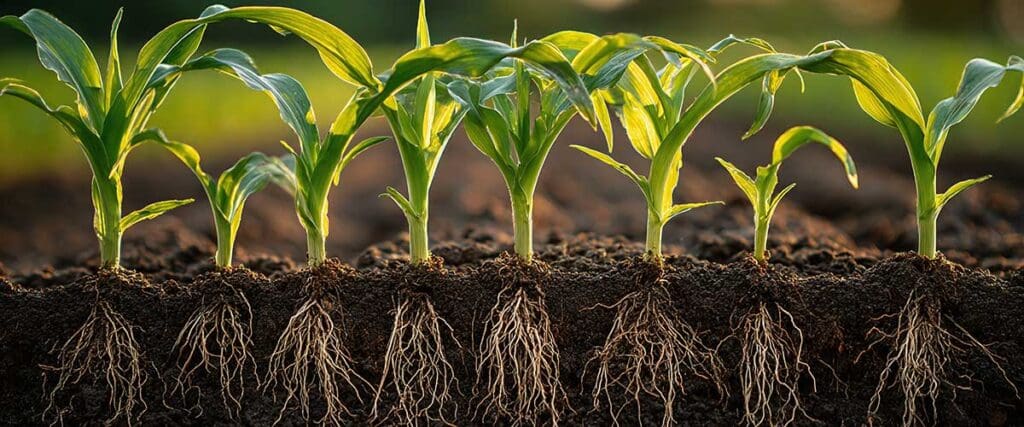
Brisbane’s subtropical climate often meets gardeners with heavy clay soil, poor drainage and compacted ground. But with the right amendments, plant systems and techniques, you can transform even the toughest block into a more fertile, productive garden.
This guide covers both soil amendments and plant-based strategies to improve soil quality in Brisbane’s unique growing conditions.
Soil amendment, claybusting, vermiculite, dolomite, cover crops, soil health, heavy clay soil, radish, chicory and sunflowers.
Table of Contents
Understanding Clay Soil Problems in Brisbane, Australia
Clay soil is rich in minerals but notoriously difficult to garden in Brisbane because it can behave very differently depending on moisture conditions.
Clay can hold large amounts of water, resulting in poor drainage and waterlogging. Prolonged saturation around roots may contribute to root problems and fungal diseases.
Heavy clay can become hard and compact as it dries. Plant roots may struggle to penetrate dense soil and young plants can become stunted.
Some clay soils can have pH conditions outside the optimum range for particular plants, potentially affecting nutrient availability and contributing to symptoms such as pale foliage.
Heavy clay responds slowly to temperature changes. Soil can remain cool through winter and take longer to warm during spring, which may delay germination and early plant growth.
Dig a small hole and fill it with water. If it drains in 1–2 hours, drainage may be adequate. If water remains for 3–4 hours or longer, consider improving drainage, amending the soil or using raised beds before planting sensitive crops.
Drainage is particularly important for root crops and fruit trees, which can suffer when water remains around their root systems for extended periods.
Best Amendments: Vermiculite, Dolomite & More
Improving clay soil in Brisbane often starts with selecting amendments that address the particular soil problem rather than simply adding products indiscriminately.
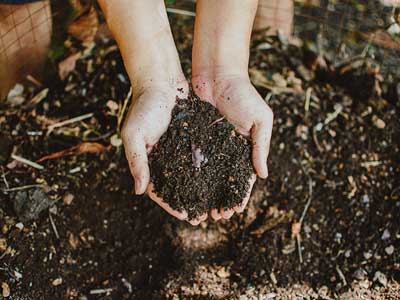
The backbone of long-term clay soil improvement. Organic matter helps improve soil structure, encourages biological activity and can help buffer soil conditions. Compost, well-rotted manure and leaf mould can be incorporated or applied as regular topdressings.
Vermiculite can improve water-holding capacity and aeration, particularly in seed-starting mixes, containers and prepared growing media. It may be used as part of a soil or potting-medium blend.
Dolomitic lime supplies calcium and magnesium and can raise soil pH. Apply only where a soil test indicates that liming is appropriate, as unnecessary applications can push pH too high.
Gypsum can improve the structure of some dispersive or sodic clay soils by helping clay particles aggregate. It is generally most useful where the soil chemistry indicates it is appropriate.
Coarse mineral material may contribute to drainage in some prepared mixes, but adding small quantities of sand to heavy clay is not automatically beneficial. Organic matter and soil structure should remain the main focus.
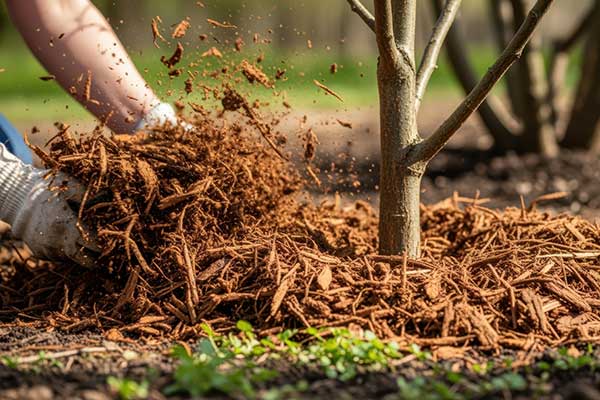
Surface mulch protects clay from baking hard in the sun, reduces moisture loss and supports gradual organic-matter accumulation.
Clay soils vary considerably across Brisbane. Do not assume that every clay soil needs dolomite, lime or gypsum. A soil test gives you a much better basis for deciding what amendments are appropriate.
Clay-Busting Plants & Cover Crops
Plants can play an important role in improving compacted ground. Deep and vigorous root systems create channels through the soil, contribute organic matter and support biological activity.
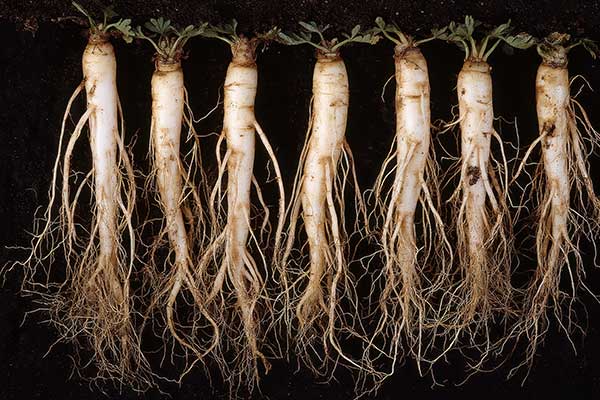
Radish
Radish
is particularly useful for compacted soils because of its strong taproot.
Roots penetrate dense soil and, when allowed to decay in place, leave channels that can improve pathways for air, water and future plant roots.
Chicory
Chicory develops a substantial taproot capable of exploring deeper soil layers. It can be particularly useful in cover-crop rotations where deeper rooting and nutrient cycling are desirable.
Mustard
Mustard is a fast-growing cover crop that produces useful biomass and strong root growth. It can be incorporated as a green manure and used as part of diversified crop rotations.
Cowpea
Cowpea is a warm-season legume suited to Brisbane conditions. Its root system and biomass contribute organic matter while its legume biology makes it valuable in summer cover-crop systems.
Sunflower
Tall sunflowers develop substantial root systems that penetrate clay layers and create natural channels through the soil. When the crop is terminated, the above-ground biomass can also be returned to the soil.
Perennials: Alfalfa, Yarrow & Comfrey
Deep-rooted perennial plants can gradually influence soil structure over multiple seasons. They are particularly useful around borders, orchards and permanent garden areas where the soil does not need to be cultivated frequently.
Over time, vigorous roots help create pores and channels, cycle nutrients and add organic residues below the soil surface without relying solely on mechanical cultivation.
Planting Techniques for Brisbane’s Heavy Clay Soil
Even when amendments are used, planting technique makes a major difference. The aim is to provide sufficient oxygen, drainage and rooting space while gradually improving the surrounding native soil.
Use Raised Beds
Build beds approximately 20–30 cm high where drainage is poor. Raised growing areas give roots access to a more manageable soil profile.
Prepare Wide Planting Areas
For established plants, loosen a broad area around the planting position rather than creating a narrow hole surrounded by highly compacted clay.
Mulch the Surface
Apply straw, sugarcane mulch, bark or another suitable organic mulch to reduce crusting, conserve moisture and moderate soil temperature.
Improve Fertility Gradually
Add compost and organic matter over time rather than attempting to completely replace the soil in one season.
Choose the Right Position
Plant sensitive trees and crops away from low areas where water naturally pools. Slightly elevated positions can offer substantially better drainage.
With these techniques, heavy clay can become much easier to manage while maintaining the mineral and moisture-holding benefits that clay soil naturally provides.
Soil Fertility & Maintenance Over Time
Clay improvement is cumulative. Significant changes generally come from repeated additions of organic matter, active root growth and avoiding practices that recreate compaction.
Rotate crops such as legumes, mustard, sunflower, chicory and other green manures to diversify root systems, residues and seasonal soil cover.
Avoid repeatedly pulverising the soil. Broadforks, garden forks and shallow cultivation can loosen compacted ground while maintaining more of the developing soil structure.
Annual applications of compost or well-aged manure provide a steady supply of organic material that earthworms and soil organisms can gradually incorporate.
Use soil testing and plant symptoms to guide fertiliser and trace-element applications rather than adding nutrients without identifying a deficiency.
Over multiple seasons, repeated organic-matter additions, cover cropping and careful traffic management can make clay easier to work and better suited to productive gardening.
Essential Tools & Practices
Loosens compacted soil without completely turning over the soil profile.
Useful for opening compacted ground, lifting soil and loosening planting areas.
Useful for spreading compost, levelling prepared soil and distributing surface amendments.
Helps identify pH and nutrient conditions before applying amendments.
Essential when moving compost, mulch and other bulky organic materials.
Heavy clay requires durable tools capable of handling dense, sticky soil.
Wet clay compacts easily. Where regular access is required, use defined paths, boards or stepping areas so productive growing zones are not repeatedly compressed.
Frequently Asked Questions
How much vermiculite should I use?
The original guide suggests approximately 10–20% by volume when vermiculite is incorporated into a prepared soil or potting mixture. The amount should be adjusted for the particular application.
Will dolomite raise my soil pH too much?
It can if applied unnecessarily. Test the soil first and only use dolomite where the pH and nutrient conditions indicate that it is appropriate.
Should I replace all of my clay soil?
Usually not. Improving soil progressively with organic matter, cover crops, mulch and better drainage can be more practical than removing large quantities of native soil.
How long before I see improvements?
Initial benefits may become apparent over one or two growing seasons. More substantial structural improvement can require several years of consistent management.
Which plants tolerate clay?
Plant suitability depends on drainage and the particular site. The original guide includes plants such as Lomandra and Callistemon, along with vegetables grown in improved or raised soil.
Conclusion & Action Plan
Clay soil in Brisbane does not have to limit your gardening ambitions. A combination of organic amendments, suitable cover crops, careful drainage management, mulching and reduced compaction can progressively turn dense clay into a more productive growing environment.
Your First 3 Steps
Check Your Drainage
Carry out a simple water-drainage test on a representative area before deciding how intensively the soil needs to be modified.
Improve One Zone
Start with a raised bed, border or other manageable area. Add compost and any soil amendments indicated by your soil conditions, then establish a suitable clay-busting or green-manure crop.
Protect the Improvement
Mulch the soil, minimise unnecessary foot traffic and continue adding organic material and rotating suitable cover crops over time.
Improve Your Soil with Cover Crops
Explore Seedmart’s green manure and cover-crop range for deep-rooted, biomass-producing and soil-building varieties suited to Australian gardens and farms.
Browse Seedmart soil amendments and growing equipment.