
Spiny-headed Mat-rush Seeds
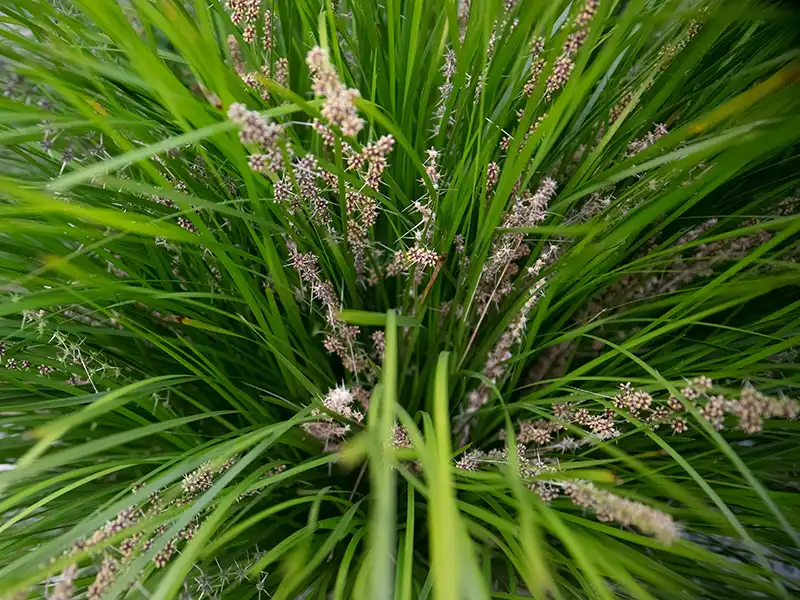
Grow a hardy and versatile Australian native grass-like perennial suited to native gardens, landscaping, revegetation and erosion-control plantings. Spiny-headed Mat-rush (Lomandra longifolia) forms dense tussocks of long, narrow green leaves and develops distinctive flower clusters amongst the foliage.
This adaptable native species occurs naturally across eastern and south-eastern Australia in a range of habitats. Once established, its dense clumping habit, persistent foliage and tolerance of varied growing conditions make it useful for both ornamental and environmental plantings.
Spiny-headed Mat-rush Seed Details
| Botanical name | Lomandra longifolia |
|---|---|
| Common names | Spiny-headed Mat-rush, Long-leaved Mat-rush, Honey Reed |
| Family | Asparagaceae |
| Plant type | Australian native tufted perennial |
| Growth habit | Dense, grass-like tussock with long strap-shaped leaves |
| Approximate height | Approximately 0.5–1 m, depending on growing conditions |
| Foliage | Long, narrow green leaves, commonly approximately 50–100 cm long |
| Flowers | Small cream, yellowish or purplish flowers arranged in clustered, spiny-bracted inflorescences |
| Flowering period | Mainly spring; timing varies with climate and location |
| Position | Full sun to shade |
| Soil | Adaptable to a range of soil types; establishment is best with reliable moisture and suitable drainage |
| Uses | Native gardens, landscaping, mass plantings, revegetation, habitat plantings, embankments and erosion-control projects |
Why Grow Spiny-headed Mat-rush?
- Hardy Australian native perennial with attractive grass-like foliage.
- Forms dense tussocks suitable for mass planting and landscaping.
- Useful for revegetation and erosion-control projects.
- Can grow in full sun or shaded positions.
- Adaptable to a range of soil and landscape conditions.
- Provides year-round foliage and structure in native gardens.
- Suitable for naturalistic, habitat and low-maintenance landscape plantings.
How to Grow Spiny-headed Mat-rush from Seed
Lomandra longifolia can be propagated from seed without the hard-seed scarification treatments required by many Australian legumes. Germination can sometimes be variable or slow, so maintain consistent conditions and allow adequate time for seedlings to emerge.
- Prepare the growing medium. Use a clean, free-draining seed-raising mix in trays, tubes or small pots.
- Sow shallowly. Place the seed onto the prepared medium and cover lightly with fine seed-raising mix.
- Water gently. Use a fine spray or gentle watering method to settle the seed without washing it from the growing medium.
- Maintain moisture. Keep the growing medium consistently moist during germination, but avoid prolonged waterlogging.
- Provide suitable warmth and light. Keep trays in a protected position with good light while seedlings establish.
- Allow time for germination. Emergence can be variable, so continue maintaining suitable moisture rather than discarding trays too quickly.
- Transplant established seedlings. Once seedlings have developed a strong root system and sufficient foliage, gradually harden them before planting into their permanent position.
Spiny-headed Mat-rush for Landscaping
Spiny-headed Mat-rush is particularly useful where a hardy, grass-like Australian native is required. Its dense foliage provides texture and structure without the seasonal appearance of an annual grass.
It can be planted individually as a landscape feature or in groups to create broad areas of native foliage. The species is also useful for planting along embankments, around larger native shrubs and trees, and in naturalistic landscape designs.
Because established plants tolerate both sunny and shaded situations, Lomandra longifolia can be used across a broader range of landscape positions than many sun-dependent native species.
Spiny-headed Mat-rush for Revegetation and Erosion Control
The dense clumping growth and substantial root system of Spiny-headed Mat-rush make it useful in suitable revegetation and soil-stabilisation projects.
Plants can be incorporated into mixed native revegetation plantings alongside locally appropriate grasses, sedges, shrubs and trees. It is particularly useful where permanent ground-level vegetation is required rather than short-lived seasonal cover.
For ecological restoration projects, confirm that Lomandra longifolia is appropriate to the vegetation community and provenance requirements of the planting site.
Flowers and Foliage
Spiny-headed Mat-rush is grown primarily for its dense foliage rather than showy flowers. Mature plants form clumps of long, narrow leaves that create a strong grass-like appearance throughout the year.
Flower clusters develop amongst the foliage, generally during spring. The individual flowers are small, with yellowish, cream or purplish tones, and are surrounded by conspicuous pointed bracts that give the flower heads their characteristic spiny appearance.
Where to Grow Spiny-headed Mat-rush
Lomandra longifolia is adaptable and can be incorporated into many Australian garden and landscape settings.
- Australian native gardens.
- Mass landscape plantings.
- Shaded garden areas.
- Embankments and slopes.
- Revegetation projects.
- Habitat and biodiversity plantings.
- Naturalistic landscapes.
- Areas requiring permanent grass-like foliage.
When to Sow Spiny-headed Mat-rush Seeds in Australia
| Climate Zone | Suitable Sowing Period | Growing Notes |
|---|---|---|
| Cool | Spring to early summer | Sow as temperatures warm and protect young seedlings from severe frost. |
| Temperate | Spring to autumn | Choose a period when mild temperatures and reliable moisture can be maintained during establishment. |
| Subtropical | Autumn to spring | Avoid unnecessary heat stress during early seedling establishment. |
| Tropical | Cooler or milder growing periods | Maintain moisture while avoiding persistently saturated propagation media. |
| Arid / Semi-arid | Mild season with reliable irrigation | Reliable moisture is particularly important during germination and establishment. |
Tips for Growing Spiny-headed Mat-rush Successfully
- Use a clean, free-draining seed-raising medium.
- Cover seed only lightly after sowing.
- Maintain consistent moisture during germination.
- Allow additional time for uneven or delayed germination.
- Avoid keeping young seedlings continuously waterlogged.
- Harden seedlings gradually before planting into exposed landscape positions.
- Water newly planted seedlings regularly while their root systems establish.
- Allow sufficient space for plants to develop into mature tussocks.
Frequently Asked Questions
What is Spiny-headed Mat-rush?
Spiny-headed Mat-rush is an Australian native tufted perennial botanically known as Lomandra longifolia. It produces long, narrow leaves and distinctive flower clusters surrounded by pointed bracts.
Is Spiny-headed Mat-rush a grass?
No. Although it has a grass-like appearance, Lomandra longifolia is not a true grass. It belongs to the family Asparagaceae.
How tall does Spiny-headed Mat-rush grow?
Plants commonly form substantial tussocks approximately 0.5–1 m high, although size varies according to site and growing conditions.
Does Spiny-headed Mat-rush grow in shade?
Yes. One of the useful characteristics of Lomandra longifolia is its ability to grow in both sunny and shaded situations.
Does Spiny-headed Mat-rush need seed treatment?
Special scarification or hot-water treatment is not generally required. Germination can, however, be variable and sometimes slow.
Can Spiny-headed Mat-rush be used for revegetation?
Yes. It can be useful for suitable revegetation, habitat and erosion-control projects. For ecological restoration work, use seed appropriate to the local vegetation community and any project provenance requirements.
When does Spiny-headed Mat-rush flower?
Flowering occurs mainly during spring, although exact timing varies with location and seasonal conditions.
Is Spiny-headed Mat-rush suitable for mass planting?
Yes. Its dense, tufted habit makes it suitable for mass landscape plantings where permanent grass-like foliage is required.
Is Lomandra longifolia perennial?
Yes. It is a perennial species that can persist for many years under suitable growing conditions.
Grow Spiny-headed Mat-rush from Seed
With its dense grass-like foliage, hardy perennial growth and versatility across garden and landscape situations, Lomandra longifolia is a useful Australian native species for landscaping, revegetation and naturalistic planting.
Sow seed shallowly into a free-draining propagation medium, maintain reliable moisture during germination and allow seedlings to establish a strong root system before planting into their permanent position.
Reviews
There are no reviews yet.