
Common Tussock Grass Seeds
Grow a graceful Australian native perennial grass with Common Tussock Grass (Poa labillardierei), a robust tussock-forming species valued for its blue-green to grey-green foliage, delicate flowering stems and usefulness in native landscaping and revegetation.
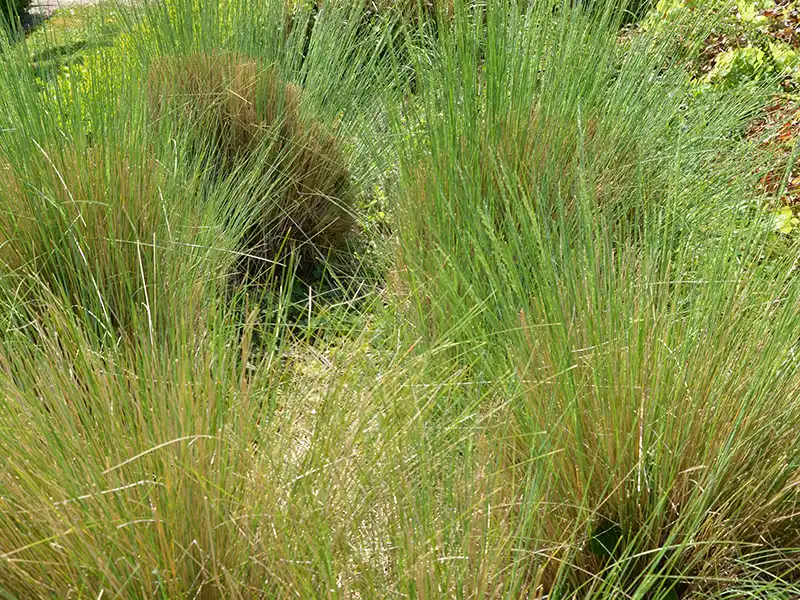
Common Tussock Grass forms dense, rounded clumps of long, narrow leaves, with airy flower heads rising above the foliage. Its soft texture and natural movement make it particularly attractive when planted in groups through native gardens and naturalistic landscapes.
Native to southern and eastern Australia, Common Tussock Grass is particularly associated with moist grasslands, grassy woodlands, drainage lines, gullies and other sites with reliable moisture. It is also useful for revegetation, erosion control, wildlife habitat and larger landscape projects.
Once established, it is a hardy perennial grass with excellent frost tolerance and some ability to withstand temporary dry periods.
Common Tussock Grass Seed Details
| Botanical name | Poa labillardierei |
|---|---|
| Common names | Common Tussock Grass, Common Tussock-grass, Poa Tussock |
| Family | Poaceae |
| Plant type | Australian native cool-season perennial tussock grass |
| Approximate height | Approximately 60–120 cm, including flowering stems |
| Foliage | Long, narrow green, grey-green to blue-green leaves |
| Flower heads | Fine, open and feathery panicles, sometimes with a subtle pinkish or purplish tinge |
| Position | Full sun to part shade |
| Soil | Adaptable to clay, loam and sandy soils; performs particularly well in moist sites with reliable moisture |
| Sowing depth | Surface sow and cover only lightly |
| Typical germination | Approximately 1–6 weeks under suitable conditions |
| Optimum germination temperature | Approximately 15–25°C |
| Flowering | Most prominent through spring and summer |
| Uses | Native gardens, mass plantings, revegetation, wildlife gardens, riparian plantings, erosion control and naturalistic landscaping |
Why Grow Common Tussock Grass?
- Hardy Australian native perennial grass with an attractive tussock-forming habit.
- Produces graceful green to blue-green foliage with delicate flowering stems.
- Excellent for mass planting and naturalistic native landscapes.
- Particularly useful for moist sites, drainage lines and riparian plantings.
- Provides shelter and habitat for native wildlife.
- Useful for revegetation and erosion-control projects.
- Highly frost tolerant once established.
- Can tolerate temporary dry periods after establishing a strong root system.
How to Grow Common Tussock Grass from Seed
Common Tussock Grass can be readily propagated from seed. Establishment is generally straightforward when seed is sown shallowly, kept consistently moist and provided with suitable temperatures.
- Choose a suitable position.
Select a position in full sun to part shade. Sites with reliable soil moisture are particularly suitable, although established plants can tolerate temporary dry periods. - Prepare the soil.
Remove weeds and other competing vegetation before sowing. Loosen compacted soil where necessary and create a reasonably clean seed bed. - Sow the seed shallowly.
Surface sow the seed across the prepared soil or sow into propagation trays. Cover only lightly with fine soil, seed-raising mix or fine gravel. - Ensure good seed-to-soil contact.
Gently press the seed into the growing medium after sowing. Avoid burying the seed deeply. - Water gently.
Use a fine spray or gentle watering method to avoid displacing the seed. Maintain consistent moisture throughout germination. - Provide suitable temperatures.
An approximate temperature range of 15–25°C is favourable for germination, although seed can germinate outside this range when other conditions are suitable. - Allow seedlings to emerge.
Germination commonly occurs within approximately 1–6 weeks. Continue maintaining moisture while young seedlings establish. - Protect seedlings from competition.
Keep vigorous weeds under control until the developing tussocks are large enough to compete effectively.
Soft Green and Blue-Green Tussock Foliage
One of the main ornamental features of Poa labillardierei is its dense clump of long, narrow leaves.
The foliage varies from green and grey-green to attractive blue-green shades, forming a substantial rounded tussock as the plant matures.
The leaves arch naturally from the centre of the plant, creating a softer appearance than many rigid landscape grasses.
When planted in groups, the foliage provides movement, texture and year-round structure in native gardens and larger landscapes.
Delicate Feathery Flower Heads
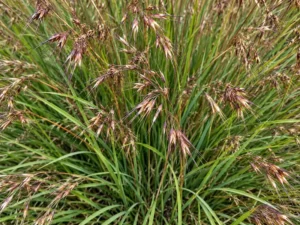
Mature Common Tussock Grass develops tall flowering stems carrying fine, open flower heads above the foliage.
These airy panicles create a delicate contrast with the dense tussock below and may display subtle green, cream, pinkish or purplish tones as they develop and mature.
Flowering is particularly noticeable through spring and summer, although timing varies according to climate and growing conditions.
The flowering stems add height, movement and seasonal interest when plants are used in mass landscape plantings.
Growing Common Tussock Grass in Mass Plantings
Common Tussock Grass is particularly effective when repeated through a landscape rather than grown as isolated individual plants.
- Native gardens: combine with Australian wildflowers, shrubs and other grasses.
- Mass plantings: create broad sweeps of soft, arching foliage.
- Naturalistic landscapes: use repeated tussocks to reproduce the structure of native grasslands and grassy woodlands.
- Moist landscapes: useful around suitable drainage areas and low-lying sites.
- Revegetation: incorporate into appropriate grassland, woodland and riparian restoration projects.
Allow enough space for individual tussocks to develop their natural rounded form.
Common Tussock Grass for Moist Areas
Common Tussock Grass is particularly useful where a native grass is required for sites receiving reliable moisture.
In natural environments, Poa labillardierei is commonly associated with areas such as river flats, drainage lines, gullies, valley floors and other relatively moist locations.
It can therefore be useful for landscape areas that are too moist for some drought-adapted Australian native grasses.
Established plants can withstand temporary dry periods, but Common Tussock Grass generally develops its best foliage where adequate moisture is available.
Young plants should receive reliable water while establishing.
What Soil Is Best for Common Tussock Grass?
Common Tussock Grass is adaptable to a range of soil textures, including clay, loam and sandy soils.
Reliable moisture is generally more important than having a particular soil texture.
For garden establishment:
- Prepare the site by controlling existing weeds.
- Maintain adequate moisture during germination.
- Avoid repeatedly allowing young seedlings to dry out.
- Improve severely compacted soil where necessary.
- Use mulch around established plants if appropriate, while keeping the crown clear.
- Avoid unnecessary heavy fertilising where plants are already growing strongly.
The species is particularly well suited to sites where soil moisture remains reasonably reliable through the growing season.
Does Common Tussock Grass Need Full Sun?
Common Tussock Grass grows well in full sun to part shade.
Open sunny positions generally encourage dense tussock development and strong flowering, while plants can also perform well beneath open tree canopies and in lightly shaded woodland-style gardens.
This flexibility makes it useful for mixed native landscapes where light conditions vary across the planting area.
Is Common Tussock Grass Frost Tolerant?
Yes. Common Tussock Grass is highly frost tolerant and is naturally well suited to many cool and temperate regions of southern and eastern Australia.
Established plants remain perennial through cold conditions and can maintain useful groundcover in climates where some warm-season grasses become dormant or lose colour.
Its combination of frost tolerance, perennial growth and preference for relatively moist sites makes it particularly useful for tableland and cool-climate native landscapes.
Common Tussock Grass for Wildlife Gardens
Dense native grasses provide valuable structure within wildlife-friendly gardens.
The substantial tussocks formed by Common Tussock Grass can provide shelter and habitat for insects and other small fauna, while mature seed heads can provide a food resource for seed-eating birds.
The species is also recorded as a host plant for some native butterfly larvae.
For greater biodiversity value, combine Common Tussock Grass with a mixture of locally appropriate native grasses, groundcovers, wildflowers and shrubs.
Common Tussock Grass for Revegetation and Erosion Control
The dense perennial growth of Common Tussock Grass makes it useful in appropriately designed revegetation and soil-stabilisation projects.
It is particularly useful in moist landscape positions such as drainage lines and gullies, where maintaining perennial vegetation can help protect exposed soil.
Established tussocks provide persistent groundcover while also contributing habitat structure to restored grassland and woodland communities.
For ecological restoration projects, locally appropriate seed provenance should be considered where available.
Maintaining Common Tussock Grass
Established Common Tussock Grass is relatively low maintenance.
Over time, older foliage can accumulate within the tussock. Plants can be cut back during late winter before the main flush of fresh spring growth.
Removing old foliage allows new leaves to emerge cleanly and can rejuvenate older landscape plantings.
Where Common Tussock Grass is being grown primarily for wildlife habitat, consider retaining some mature tussocks and seed heads rather than cutting an entire planting back simultaneously.
Where to Grow Common Tussock Grass
Common Tussock Grass is suitable for a broad range of Australian native landscape applications.
- Australian native gardens.
- Naturalistic landscapes.
- Mass grass plantings.
- Wildlife and biodiversity gardens.
- Grassy woodland-style gardens.
- Moist garden areas.
- Drainage lines and gullies.
- Riparian and revegetation projects.
- Erosion-control plantings.
- Rural properties and larger landscapes.
- Sites requiring a frost-tolerant perennial native grass.
For ecological restoration, use locally appropriate provenance where required.
Tips for Growing Common Tussock Grass Successfully
- Choose a position in full sun to part shade.
- Control competing weeds before sowing.
- Surface sow and cover seed only lightly.
- Maintain good contact between seed and the growing medium.
- Keep the seed consistently moist during germination.
- Aim for approximately 15–25°C where raising seedlings under controlled conditions.
- Allow approximately 1–6 weeks for germination under suitable conditions.
- Provide reliable moisture while young plants establish.
- Control aggressive weeds around young tussocks.
- Cut back old foliage in late winter where rejuvenation is required.
- Consider local provenance when sowing seed for ecological restoration.
Frequently Asked Questions
What is Common Tussock Grass?
Common Tussock Grass is an Australian native perennial grass botanically known as Poa labillardierei. It forms substantial tussocks of green to blue-green foliage with delicate flowering stems.
Is Common Tussock Grass native to Australia?
Yes. Poa labillardierei is native to Australia and occurs particularly through southern and eastern regions, including Tasmania.
Is Common Tussock Grass annual or perennial?
Common Tussock Grass is a perennial grass. Established tussocks can persist for many years where growing conditions are suitable.
How tall does Common Tussock Grass grow?
Plants can reach approximately 60–120 cm in height, including their flowering stems. Size varies according to soil, moisture, climate and growing conditions.
What does Common Tussock Grass look like?
It forms a dense tussock of long, narrow green, grey-green or blue-green leaves. Fine, open flowering stems rise above the foliage and give mature plants a soft, graceful appearance.
When does Common Tussock Grass flower?
Flowering is particularly noticeable during spring and summer, although timing can vary according to local climate and growing conditions.
How do I sow Common Tussock Grass seed?
Surface sow onto prepared soil or seed-raising mix, press gently to create good contact and cover only lightly. Keep the seed consistently moist while germination occurs.
How deep should Common Tussock Grass seed be planted?
Seed should be surface sown and covered only lightly rather than buried deeply.
How long does Common Tussock Grass take to germinate?
Germination commonly occurs within approximately 1–6 weeks under suitable conditions.
What temperature is best for Common Tussock Grass germination?
Approximately 15–25°C is considered a useful optimum range, although germination can occur outside this range when moisture and other conditions are suitable.
Does Common Tussock Grass need full sun?
No. Common Tussock Grass grows in full sun to part shade, making it useful in both open grassland-style plantings and lightly shaded native gardens.
Does Common Tussock Grass like wet soil?
Common Tussock Grass naturally favours relatively moist environments and is often associated with drainage lines, gullies, river flats and valley floors. Reliable moisture generally produces stronger growth.
Is Common Tussock Grass drought tolerant?
Established plants can tolerate periods of dry conditions, but Common Tussock Grass is not primarily a dryland species. It performs best where moisture is reasonably reliable, particularly during establishment.
Is Common Tussock Grass frost tolerant?
Yes. Poa labillardierei is highly frost tolerant and is well suited to many cool and temperate Australian climates.
Can Common Tussock Grass grow in clay soil?
Yes. It can grow in clay, loam and sandy soils where moisture and site conditions are suitable.
Can Common Tussock Grass be grown under trees?
Yes. Its tolerance of part shade makes it suitable for planting beneath open tree canopies where sufficient moisture is available.
Is Common Tussock Grass suitable for mass planting?
Yes. It is particularly attractive when planted in repeated groups or broad drifts, where its rounded tussocks create texture and movement through the landscape.
Is Common Tussock Grass good for wildlife?
Yes. Dense tussocks can provide shelter and habitat for small fauna, while seed can provide a food resource for birds. The grass can also support native insect life.
Can Common Tussock Grass be used for revegetation?
Yes. It is useful in appropriate native grassland, grassy woodland, riparian and other revegetation projects, particularly where soil moisture is reasonably reliable.
Can Common Tussock Grass help with erosion control?
Yes. Established perennial tussocks provide persistent vegetation and can contribute to soil stabilisation, particularly around suitable drainage lines, gullies and other erosion-prone sites.
Should Common Tussock Grass be cut back?
Older ornamental plantings can be cut back in late winter to remove accumulated foliage and encourage fresh spring growth. Where habitat is a priority, stagger cutting so some mature tussocks remain available for wildlife.
Grow Australian Common Tussock Grass from Seed
With its graceful blue-green foliage, delicate flowering stems, dense perennial growth and adaptability to moist Australian landscapes, Poa labillardierei is an excellent native grass for gardens, naturalistic landscapes, biodiversity plantings and revegetation projects.
For best results, surface sow the seed into prepared soil or seed-raising mix, cover only lightly and maintain consistent moisture during germination and early establishment.
Once established, Common Tussock Grass develops into a substantial, long-lived native tussock that provides texture, movement, groundcover and habitat within the Australian landscape.
Reviews
There are no reviews yet.