
Australian Late Spring & Summer Cover Crop Guide
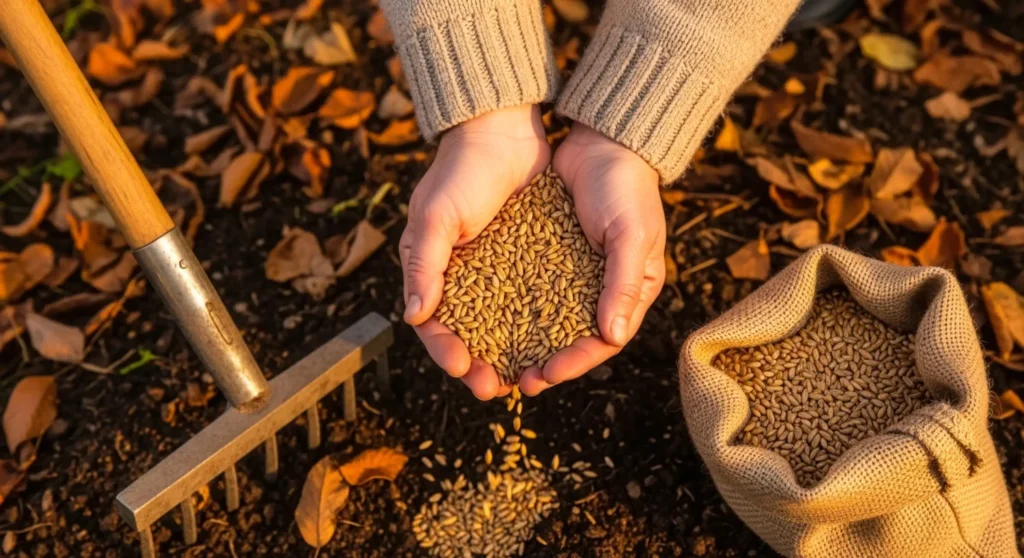
Late spring to summer is one of the best times to grow warm-season cover crop seeds in Australia. Instead of leaving garden beds bare as temperatures rise, green manure crops such as millet, cowpea, lablab, Sunn Hemp, sorghum and buckwheat can help protect soil, suppress weeds, add organic matter and prepare beds for summer planting.
Late spring to summer is an important transition period in the vegetable garden. As soils warm and the risk of frost passes, cool-season cover crops begin to give way to warm-season species that are better suited to hotter conditions.
Cover crops, also called green manure crops, are grown primarily to improve and protect the soil rather than for harvest. They are grown between main crops and later cut down and returned to the system as mulch, compost or green manure.
Late spring to summer
Millet, cowpea and lablab
Cowpea, lablab and Sunn Hemp
Sorghum and millet
Millet and buckwheat
Millet + cowpea
Summer Cover Crops, Green Manure Seeds, Soil Improvement Crops and Warm-Season Cover Crops.
Buy Late Spring and Summer Cover Crop Seeds in Australia
Seedmart Australia stocks warm-season cover crop and green manure seeds for gardens, farms, orchards and soil-improvement projects.
Table of Contents
- What Are Late Spring and Summer Cover Crops?
- Why Plant Cover Crops During Late Spring and Summer?
- Best Cover Crops for Late Spring in Australia
- Late Spring Cover Crop Comparison
- What Cover Crop Can You Plant Now?
- Late Spring Cover Crops by Australian Climate Zone
- Single Cover Crop or a Mix?
- What Not to Plant in Late Spring
- How to Sow Cover Crop Seeds
- When to Cut Down Cover Crops
- Frequently Asked Questions

What Are Late Spring and Summer Cover Crops?
Late spring and summer cover crops are plants grown primarily to cover, protect and improve soil as conditions transition from spring into summer.
They are generally not grown for harvest. Instead, they occupy otherwise bare soil and can later be cut down, mulched, composted or incorporated into the soil as green manure.
In many parts of Australia, late spring and summer is the point at which warm-season species begin to replace traditional winter cover crops.
Living plants reduce the amount of exposed soil vulnerable to wind, heavy rain and erosion.
Fast-growing cover crops occupy space and compete with emerging summer weeds for light and moisture.
Leaves, stems and roots can be returned to the soil after the crop is terminated.
Warm-season legumes such as cowpea, lablab and Sunn Hemp can fix atmospheric nitrogen when effectively nodulated by compatible rhizobia.
Grasses, legumes and broadleaf species develop different root systems throughout the soil profile.
Living roots and decomposing plant residues provide resources for soil organisms.
Late spring and summer cover crops are particularly useful after winter and early spring vegetables have finished, or where an area would otherwise remain bare through the warmer months.
Why Plant Cover Crops During Late Spring and Summer?
Late spring can leave an important gap between cool-season cropping and summer production. Empty garden beds and cultivated paddocks can quickly become exposed to weeds, drying conditions and heavy summer rainfall.
Leaving cultivated soil exposed through late spring and summer can increase the risk of erosion, surface crusting, weed establishment and declining soil condition. Heavy summer rainfall can be particularly damaging to bare soil, as raindrop impact can break down soil aggregates, form a surface crust and increase runoff.
A rapidly growing cover crop creates a living protective layer.
Protect Bare Soil
Warm-season cover crops intercept rainfall and provide roots that help hold soil in place.
Suppress Summer Weeds
Fast-growing millet, sorghum and vigorous legumes can occupy growing space before summer weeds become established.
Build Organic Matter
Leaves, stems and roots can be returned to the soil after termination, adding fresh plant residues above and below ground.
Legumes Support Nitrogen
Cowpea, lablab and Sunn Hemp can fix atmospheric nitrogen when effectively nodulated by compatible rhizobia.
Grasses Produce Biomass
Millet and sorghum establish extensive fibrous root systems and can produce substantial warm-season biomass.
Keep Living Roots in the Soil
Cover crops maintain active roots during periods when the soil might otherwise remain bare between main crops.
Best Cover Crops to Plant in Late Spring and Summer in Australia
The best late spring and summer cover crop depends on climate, soil type, available moisture and what you want the crop to achieve.
Warm-season grasses are particularly useful for rapid biomass and soil cover, while summer legumes add nitrogen-fixing potential.
The grass contributes fibrous roots, biomass and fast ground cover, while the legume contributes broadleaf growth and biological nitrogen fixation when effectively nodulated.
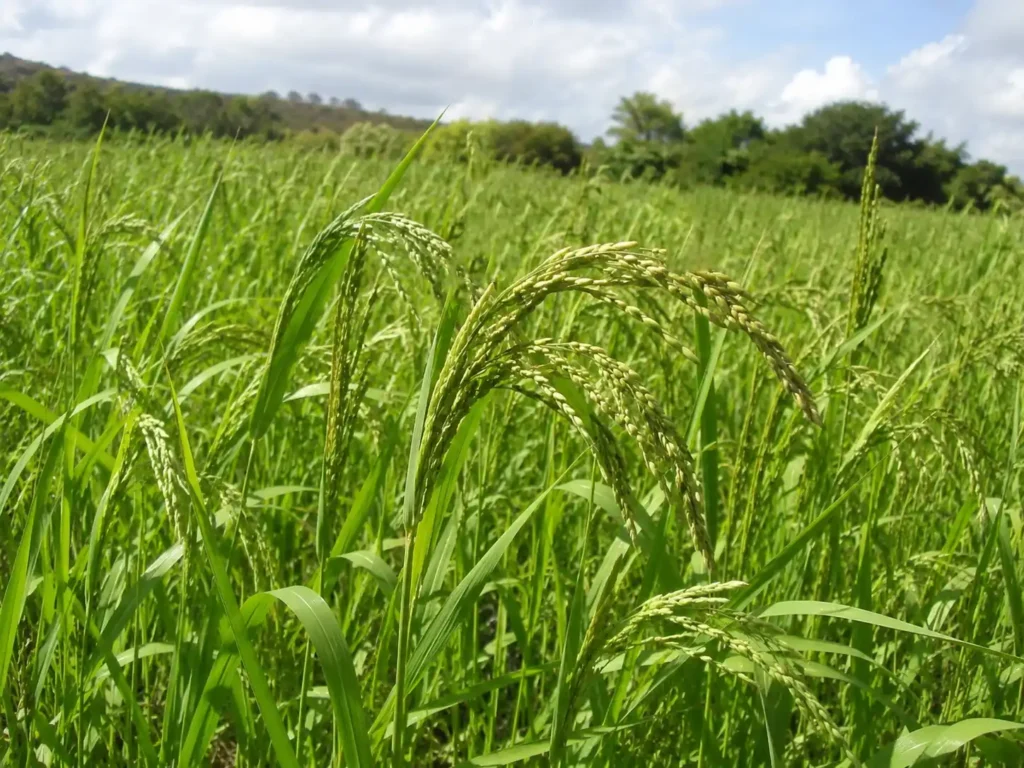
Shirohie Millet
Best ForFast ground cover, biomass, weed competition, erosion protection and summer green manure.
Growing NotesSow once soils are warm and frost danger has passed. Maintain moisture during establishment and terminate before mature seed develops.
Shirohie millet is one of the most useful warm-season cover crops for Australian conditions.
It establishes rapidly in warm soil and develops a dense fibrous root system together with substantial leafy growth.
This makes Shirohie particularly useful where bare soil needs to be covered quickly before summer.
Millet does not fix nitrogen, but it combines well with warm-season legumes such as cowpea.
Japanese Millet
Best ForRapid summer cover, organic matter, fibrous roots and weed suppression.
Growing NotesPlant into warm soil from spring into summer where adequate moisture is available. Terminate before unwanted seed production.
Japanese millet is another fast-growing warm-season annual grass suited to cover cropping and green manure.
It is particularly useful where rapid canopy development is required.
Japanese millet can be grown alone or combined with legumes to create a more diverse cover crop.
White French Millet

Best ForWarm-season biomass, soil cover and inclusion in mixed summer green manure crops.
Growing NotesPlant once conditions have warmed. Suitable for spring and summer sowing where soil moisture is adequate.
White French millet provides another warm-season grass option for cover cropping.
Like other millets, it contributes fibrous roots and carbon-rich plant residues rather than biological nitrogen fixation.
It can be particularly useful as part of a mixed green manure crop where grasses and legumes are being combined.
Cowpea

Best ForNitrogen support, warm-season ground cover, leafy biomass and mixed cover crops.
Growing NotesCowpea requires genuinely warm conditions. Use the appropriate rhizobial inoculant where compatible bacteria are not already present.
Cowpea (Vigna unguiculata) is one of the most useful warm-season legumes for Australian green manure and cover cropping.
It is heat tolerant and becomes particularly useful as temperatures increase through late spring and summer.
Cowpea produces broadleaf growth that complements the upright, fibrous growth of millet and sorghum.
When effectively nodulated by compatible rhizobia, cowpea can fix atmospheric nitrogen.
Useful combinations include:
- Cowpea + Shirohie millet
- Cowpea + Japanese millet
- Cowpea + sorghum
- Cowpea + Sunn Hemp
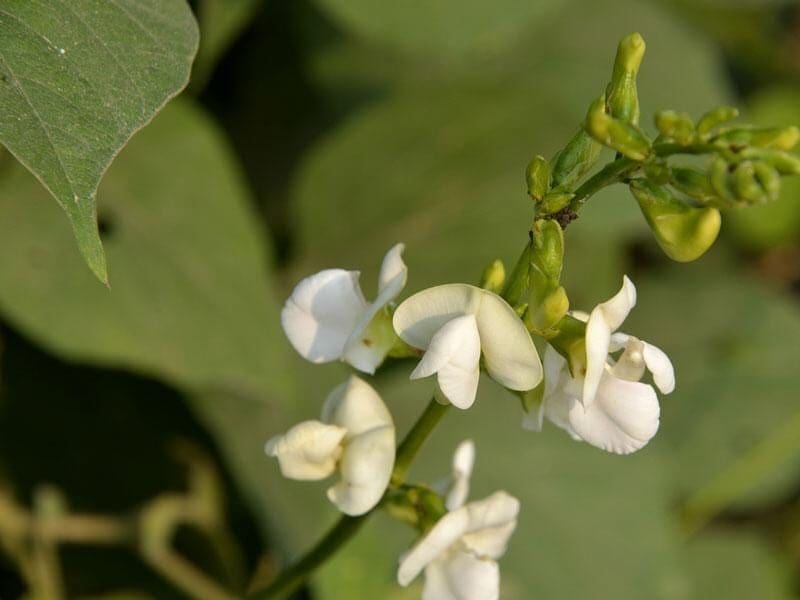
Lablab
Best ForWarm-climate biomass, nitrogen fixation, soil cover and multi-species summer cover crops.
Growing NotesBest suited to warm subtropical, tropical and inland conditions. Growth can be slow where late spring conditions remain cool.
Lablab (Lablab purpureus) is a vigorous warm-season legume capable of producing substantial vines, leaves and root growth.
It becomes particularly useful in warmer Australian regions where the growing season is long enough for it to develop substantial biomass.
Lablab is well suited to mixtures with grasses and other warm-season cover crop species.
Sunn Hemp

Best ForHigh biomass, nitrogen fixation, deep rooting and warm-climate soil improvement.
Growing NotesSunn Hemp is frost sensitive and performs best in warm conditions. Plant after frost risk has passed.
Sunn Hemp (Crotalaria juncea) is a fast-growing tropical and subtropical legume used as a warm-season green manure crop.
It develops strong upright growth and a substantial root system and can produce considerable biomass under favourable conditions.
When effectively nodulated, Sunn Hemp can contribute biologically fixed nitrogen.
It is particularly useful in warm subtropical and tropical areas and as a component of diverse summer cover crop mixtures.
Sugar Drip Sorghum
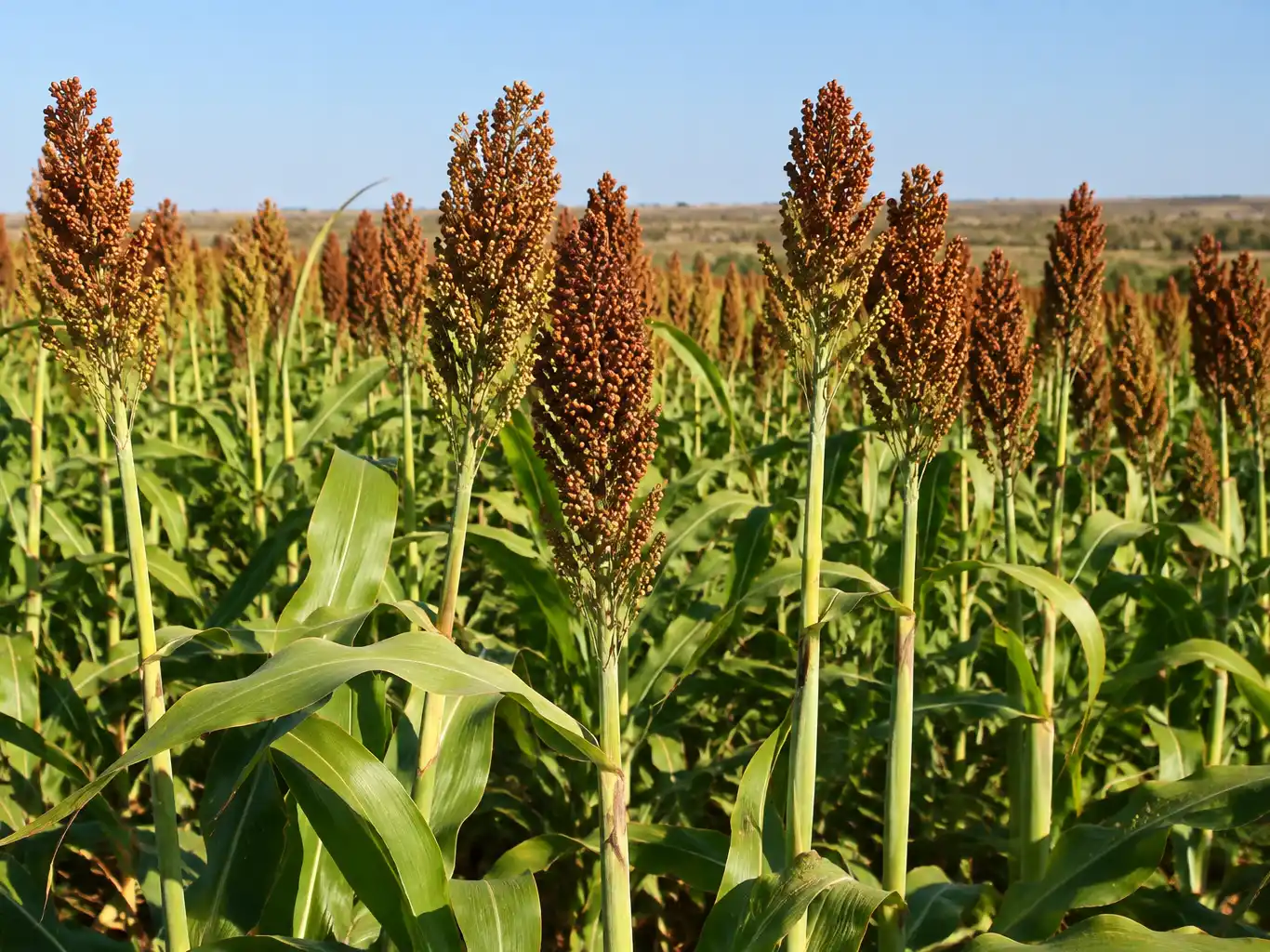
Best ForHigh biomass, strong root growth, soil protection and larger green manure areas.
Growing NotesSorghum requires warm soil and becomes increasingly fibrous as it matures. Terminate earlier where softer green manure material is preferred.
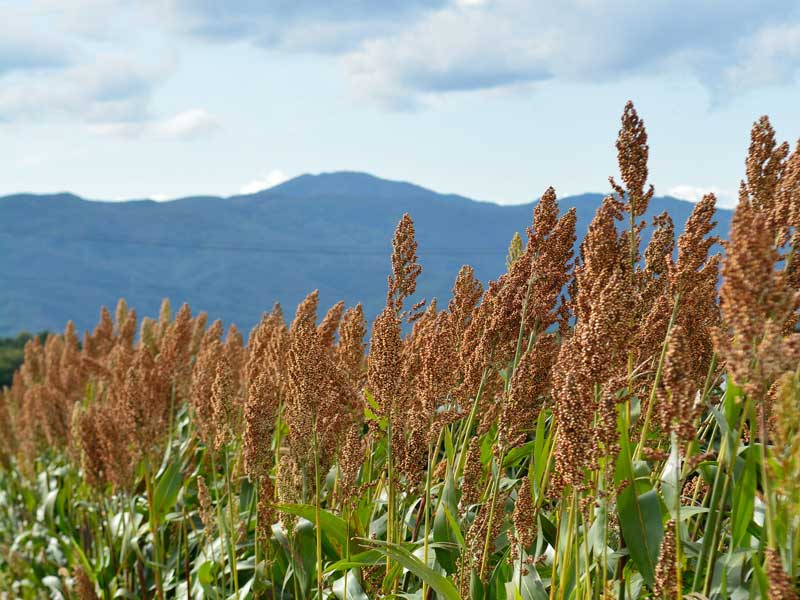
Sugar Drip sorghum (Sorghum bicolor) is a vigorous warm-season grass capable of producing large quantities of above-ground biomass.
Its extensive root system and rapid summer growth make it useful for larger garden areas, market gardens, orchards, farms and soil-restoration projects.
Sorghum can be particularly useful where the objective is to produce substantial quantities of plant material for slashing, mulching or incorporation.
Sorghum can produce much more biomass than a small vegetable bed requires. Millet or buckwheat may be easier to manage where the growing area is limited or another crop needs to be planted relatively soon.
Buckwheat
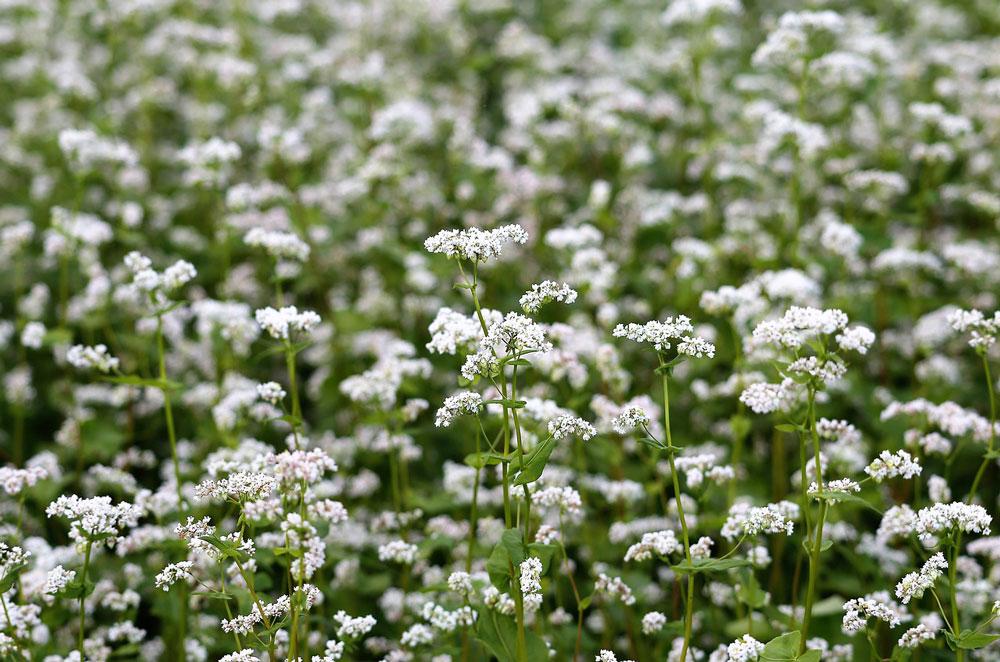
Best ForShort growing windows, fast soil cover, soft biomass and beneficial insects.
Growing NotesFast growing in suitable conditions but less suited to prolonged extreme heat and drought than millet, sorghum or cowpea.
Buckwheat (Fagopyrum esculentum) is one of the fastest options where there is only a short gap between crops.
It establishes quickly, forms useful soil cover and begins flowering relatively early.
The flowers can attract bees and other beneficial insects if the crop is allowed to reach flowering.
Buckwheat does not fix nitrogen.
Late spring can be a useful planting period because buckwheat prefers warmth but may perform less reliably during prolonged extreme summer heat.
Sunflower

Best ForDeep roots, upright biomass, flowering diversity and mixed warm-season cover crops.
Growing NotesBest used as one component of a diverse summer mixture where additional root and structural diversity is wanted.
Sunflower (Helianthus annuus) can be included in warm-season green manure and cover crop mixtures.
Its strong taproot provides a different root architecture from fibrous grasses and sprawling legumes.
Sunflower can also add upright biomass and flowers for pollinating insects when allowed to bloom.
It does not fix nitrogen, so it is generally most useful in combination with other species rather than as a replacement for a legume.
Warm Season Green Manure Cover Crop Mix
For gardeners and growers who want several functions from one planting, a multi-species warm-season green manure mix can provide greater plant and root diversity than a single species.
A warm-season mix can combine fast-growing grasses, nitrogen-fixing legumes and broadleaf species.
Warm-season grasses help occupy bare ground quickly.
Cowpea, lablab and Sunn Hemp add legume diversity and nitrogen-fixing potential.
Fibrous roots, taproots and branching legume roots explore the soil differently.
Multiple species contribute different leaves, stems and root residues.
Different growth habits help occupy more of the available growing space.
Living foliage and roots protect soil through hot weather and summer rainfall.
Want an All-in-One Warm Season Mix?
Seedmart’s Warm Season Green Manure Mix combines summer-growing species selected for ground cover, biomass, root diversity and soil improvement.
Late Spring and Summer Cover Crop Comparison
| Cover Crop | Type | Main Benefit | Heat Suitability | Best Use |
|---|---|---|---|---|
| Shirohie Millet | Warm-season grass | Fast cover and biomass | Excellent | Quick summer soil cover |
| Japanese Millet | Warm-season grass | Biomass and fibrous roots | Excellent | Summer green manure |
| Cowpea | Legume | Nitrogen support and leafy cover | Excellent | Warm-season legume and mixtures |
| Lablab | Legume | Heavy biomass and nitrogen support | Excellent | Warm subtropical and tropical areas |
| Sunn Hemp | Legume | Biomass, deep roots and nitrogen support | Excellent | Warm-climate green manure |
| Sugar Drip Sorghum | Warm-season grass | High biomass and extensive roots | Excellent | Large areas and biomass production |
| Buckwheat | Broadleaf | Rapid short-term cover | Moderate | Short gaps between crops |
| Sunflower | Broadleaf | Deep roots and structural diversity | Very good | Multi-species mixtures |
What Cover Crop Seeds Can You Plant in Late Spring and Summer?
If it is November, many Australian gardeners and growers are moving into the main warm-season cover crop planting period.
The best option depends on how warm your soil has become, whether frost risk has passed, available soil moisture and how long the area can remain under cover crop.
Excellent all-purpose option for fast warm-season ground cover and biomass.
Fast-growing grass for summer soil protection and organic matter.
Heat-loving legume for leafy cover and nitrogen-fixing potential.
Vigorous warm-season legume particularly useful in warmer districts.
Fast-growing tropical legume for high biomass and deep rooting.
Excellent where large quantities of summer biomass are required.
Useful for rapid short-term cover where extreme summer heat is not imminent.
Useful where several root types and plant families are wanted in the same planting.
Millet provides rapid ground cover, fibrous roots and biomass, while cowpea contributes broadleaf growth and biological nitrogen fixation when effectively nodulated.
Late Spring and Summer Cover Crops by Australian Climate Zone
Australia has very different late spring and summer conditions. November in Tasmania, Canberra or the Victorian highlands can still bring cold nights, while Brisbane, northern Queensland and the Northern Territory may already be experiencing summer-like conditions.
Northern QLD, NT & northern WA
Planting window: Late spring and summer into the wet-season transition, depending on local rainfall.
Options: Cowpea, lablab, Sunn Hemp, millet and sorghum.
Warm-season species are well suited to these conditions, but establishment should be timed around reliable rainfall or irrigation.
Brisbane, coastal QLD & northern NSW
Planting window: Spring through summer.
Options: Shirohie millet, Japanese millet, cowpea, lablab, Sunn Hemp, sorghum and buckwheat.
Late spring and summer is an excellent period for transitioning fully into warm-season green manure crops.
Sydney, Melbourne, Adelaide, Perth & southern Australia
Planting window: Late spring once soil has warmed and frost risk has passed.
Options: Millet, buckwheat, cowpea and sorghum where sufficient warmth and moisture are available.
Late spring planting generally provides more reliable establishment for warm-season species than early spring.
Canberra, Tasmania, highlands & inland VIC/NSW
Planting window: Late spring to early summer after frost danger has passed.
Options: Buckwheat and millet once soils are sufficiently warm; cowpea where summer warmth and growing time are adequate.
The shorter warm season makes fast-growing species particularly useful.
Inland SA, WA, NSW & QLD
Planting window: Late spring to summer when adequate moisture is available.
Options: Millet, cowpea and sorghum where rainfall or irrigation is sufficient.
Moisture availability can be more important than the calendar. Avoid allowing a cover crop to use soil moisture required by the following cash or vegetable crop.
Should You Plant a Single Cover Crop or a Mix?
Both approaches can work well.
Single-Species Cover Crop
Useful where there is one clear objective or a short growing window.
Examples:
Millet for rapid biomass and cover.
Cowpea for a warm-season legume.
Buckwheat for a short gap between crops.
Sorghum for substantial summer biomass.
Multi-Species Cover Crop
Useful where greater plant and root diversity is wanted.
A mixture can combine grasses for fibrous roots, legumes for nitrogen-fixing potential and broadleaf plants for additional root architecture and above-ground diversity.
Useful Late Spring Cover Crop Combinations
Simple grass-and-legume combination for biomass, soil cover and nitrogen-fixing potential.
High-biomass combination suited to larger warm-season areas.
Fast grass growth combined with an upright warm-season legume.
Adds fibrous grass roots, a legume and deeper-rooted broadleaf diversity.
What Not to Plant in Late Spring
Not every green manure crop is ideal as conditions become hotter.
Do not automatically use a winter cover crop just because it is still technically spring.
In warm subtropical and tropical districts, late spring is generally better suited to summer crops such as millet, cowpea, lablab, Sunn Hemp and sorghum than traditional winter cereals and legumes.
Consider your climate before abandoning cool-season species.
In Tasmania, the highlands and other cool or frost-prone districts, late spring conditions may still be mild enough for some cool-season species. Local soil temperature and frost risk are more useful than the calendar alone.
Do not let the cover crop become an unwanted seed crop.
Most green manure crops should be terminated before large quantities of mature seed develop, unless self-seeding is specifically wanted.
How to Sow Cover Crop Seeds in Late Spring and Summer
Warm-season cover crops are generally straightforward to establish, but adequate moisture and good seed-to-soil contact are important.
Clear the Area
Remove old vegetable plants, established weeds and heavy crop debris.
Prepare the Surface
Lightly rake or cultivate the upper soil layer where required.
Broadcast the Seed
Scatter seed as evenly as practical by hand or use a broadcast spreader for larger areas.
Rake In
Lightly incorporate the seed to an appropriate depth for the species being grown.
Firm & Water
Good seed-to-soil contact and adequate moisture help produce even establishment.
Build Growth
Allow the crop to develop enough foliage and roots to achieve your soil-improvement objective.
Terminate Before Seed Set
Slash, mow, chop or cut the crop before mature seed becomes a problem.

Cover crop seed can be broadcast using hand, push, ATV or tractor-mounted spreaders. Commercial growers may instead use a seed drill to place seed at a controlled depth.
Approximate Sowing Depths
Small SeedsBuckwheat is not included here; examples include smaller components of mixed covers.
Depth: Usually shallow sowing.
Avoid burying small seed too deeply.
MilletShirohie, Japanese & French Millet
Depth: Approximately 1–2 cm.
Maintain good seed-to-soil contact and moisture during establishment.
Larger LegumesCowpea & Lablab
Depth: Approximately 2–4 cm depending on soil conditions.
Adequate coverage helps prevent the larger seed from drying rapidly.
SorghumSugar Drip Sorghum
Depth: Approximately 2–3 cm in a prepared seedbed.
Avoid excessively deep planting, particularly in heavy soil.
When to Cut Down Late Spring & Summer Cover Crops
Timing depends on why the crop was planted and when the ground is needed again.
Green manure is generally easiest to manage before plants produce mature seed and before stems become excessively tough and woody.
Terminate while growth is still manageable.
Cut before mature seed develops.
Terminate relatively young.
Allow additional growth but avoid excessive maturity.
Residues can remain as surface mulch.
Time termination around when the area is needed again.
What Do You Do With the Cover Crop?
Chop & Drop
Cut plants near ground level and leave the plant material on the surface as mulch. The roots remain in the soil and decompose naturally.
Incorporate as Green Manure
Chop the crop and incorporate the plant material into the upper soil layer where a cultivated green-manure system is being used.
Compost It
Remove above-ground growth and add it to a compost system while leaving the roots to decompose in the soil.
Mow or Slash
For larger areas, mowing, flail mowing or slashing can terminate substantial cover-crop biomass efficiently.
Freshly incorporated green material needs time to begin decomposing. Young leafy material generally breaks down more quickly than mature millet or sorghum stems. The required interval varies with crop maturity, temperature, moisture and the amount of material incorporated.
Frequently Asked Questions About Late Spring and Summer Cover Crops
What cover crops can I plant in November in Australia?
Millet, cowpea, sorghum, buckwheat, lablab and Sunn Hemp can all be considered once conditions are sufficiently warm. The best choice depends on climate, soil temperature and available moisture.
What is the best cover crop for late spring and summer?
Shirohie millet is a practical all-purpose option for fast soil cover and biomass. Cowpea is particularly useful where a warm-season legume is wanted. A millet and cowpea combination provides both grass and legume growth.
What is the fastest-growing summer cover crop?
Millet and buckwheat can establish very rapidly under suitable conditions. Sorghum can also produce vigorous growth once soil temperatures are warm.
What is the best summer cover crop for nitrogen?
Cowpea, lablab and Sunn Hemp are warm-season legumes with nitrogen-fixing potential when effectively nodulated by compatible rhizobia.
What cover crop produces the most biomass?
Sorghum can produce substantial warm-season biomass. Millet, Sunn Hemp and lablab can also produce significant plant material under suitable conditions.
Can I mix millet and cowpea?
Yes. Millet and cowpea are complementary warm-season cover crops. Millet contributes fast grass growth and fibrous roots, while cowpea adds broadleaf growth and nitrogen-fixing potential.
Is buckwheat a summer cover crop?
Yes. Buckwheat is a frost-sensitive warm-season crop suited to rapid short-term cover. It is generally less suited to prolonged extreme heat and drought than millet or sorghum.
Is Sunn Hemp a good cover crop?
Yes. Sunn Hemp is a fast-growing warm-season legume particularly suited to subtropical and tropical conditions. It can produce substantial biomass and biological nitrogen when effectively nodulated.
Can I plant cover crops in a vegetable garden?
Yes. Cover crops can be grown between vegetable crops or while beds would otherwise remain empty. Select a species that can be terminated before the bed is required again.
Do I need to inoculate cowpea and lablab?
Legumes require compatible rhizobia for effective nitrogen fixation. Where the appropriate bacteria are absent or uncertain, use the recommended inoculant for the legume being planted.
Should I dig in green manure or leave it on top?
Both approaches are used. Incorporation mixes chopped plant material into the soil, while chop-and-drop retains it on the surface as mulch and allows the roots to decompose in place.
How do I sow cover crop seed?
Small areas can be broadcast by hand and lightly raked in. Larger areas can be sown with a broadcast spreader, ATV or tractor-mounted seeder, or a seed drill.
When should I cut down a cover crop?
Cover crops are generally terminated after useful biomass has developed but before significant mature seed production. Earlier termination produces softer residues that are usually easier to manage.
What cover crop should I grow in Queensland in late spring and summer?
Cowpea, lablab, Sunn Hemp, millet and sorghum are useful warm-season options for many Queensland districts. Buckwheat can also be useful where extreme heat is not imminent.
What cover crop should I grow in southern Australia in late spring and summer?
Millet and buckwheat can be useful once frost risk has passed and soils have warmed. Cowpea and sorghum can also be considered where summer temperatures and the available growing period are suitable.
Where can I buy cover crop seeds in Australia?
Seedmart Australia stocks individual green manure and cover crop species as well as mixed warm-season cover crop options for gardens, farms and larger soil-improvement projects.
Start Building Better Soil This Spring & Summer
Instead of leaving soil bare, establish a warm-season cover crop to protect the ground, compete with weeds, produce organic matter and maintain living roots through the warmer months.