

Australian Winter Cover Crop Guide
Winter is one of the best times to grow cover crop seeds in Australia. Instead of leaving garden beds bare, cool-season green manure crops such as vetch, oats, barley, field peas, lupins and chicory can help protect soil, suppress weeds, add organic matter and prepare beds for spring planting.
Winter can be a quiet time in the vegetable garden, but it should not be a dead time for your soil. Rain, wind, frost and weeds can all affect exposed beds before spring planting begins.
Cover crops, also called green manure crops, are grown primarily to improve and protect the soil rather than for harvest. They are grown between main crops and later cut down and returned to the system as mulch, compost or green manure.
Autumn to winter
Oats, barley and vetch
Vetch, field peas and lupins
Oats and barley
Chicory
Oats + vetch
Winter Cover Crops, Green Manure Seeds, Soil Improvement Crops and Cool-Season Cover Crops.
Buy Winter Cover Crop Seeds in Australia
Seedmart Australia stocks cool-season cover crop and green manure seeds for gardens, farms, orchards and soil-improvement projects.
Table of Contents
- What Are Winter Cover Crops?
- Why Plant Cover Crops During Winter?
- Best Winter Cover Crop Seeds for Australia
- Winter Cover Crop Comparison
- What Cover Crop Seeds Can You Plant Now?
- Winter Cover Crops by Australian Climate Zone
- Frost-Hardy Cover Crops
- What Not to Plant in Winter
- How to Sow Winter Cover Crop Seeds
- When to Cut Down Winter Cover Crops
- Frequently Asked Questions
What Are Winter Cover Crops?
Winter cover crops are plants grown during the cooler months to cover, protect and improve the soil. They are not usually grown for harvest.
Instead, they are grown to
feed the soil, reduce erosion, improve soil structure and add organic matter
.
They are often called green manure crops because the leafy growth can be cut down and returned to the soil. This helps build organic matter, improve water-holding capacity and support soil biology.
Living plants cover exposed ground during cold, wet and windy weather.
Dense cover competes with winter weeds for light, water and growing space.
Living roots can capture nutrients that might otherwise move out of the active root zone.
Leaves, stems and roots can be returned to the soil after the crop is terminated.
Different root systems create channels and contribute organic residues below ground.
Living roots and decomposing residues provide resources for soil organisms.
Winter cover crops are especially useful after summer vegetables such as tomatoes, capsicums, cucumbers, corn, beans, pumpkins and zucchini have finished.

Why Plant Cover Crops During Winter?
Winter is an important time for soil care. Even when vegetable growth slows down, the soil remains biologically active. Rain, frost, weeds and exposed ground can all influence how well your next crop performs in spring.
Protect Bare Soil
Heavy rain can compact exposed soil, move nutrients and contribute to erosion. Wind can also dry the surface. A cover crop creates a living protective layer.
Suppress Winter Weeds
A dense cover crop competes with weeds for light and growing space, reducing the amount of bare ground available for weeds to establish.
Add Organic Matter
Leaves, stems and roots can be returned to the soil after termination, helping build a softer and more workable growing environment.
Legumes Support Nitrogen
Legumes such as vetch, field peas, lupins, clover and fenugreek can fix atmospheric nitrogen when effectively nodulated by compatible rhizobia.
Grasses Build Root Mass
Oats, barley, wheat and ryegrass develop fibrous root systems that help hold soil together and contribute substantial below-ground organic matter.
Prepare Beds for Spring
Terminating a winter cover crop before spring planting provides organic residues and gives you an opportunity to prepare the bed for the next crop.
Best Winter Cover Crop Seeds for Australia
The best winter cover crop depends on your climate, soil type and what you want to achieve. Some crops are particularly useful for nitrogen fixation, while others excel at biomass production, weed suppression, erosion control or deep rooting.
The cereal contributes fibrous roots, biomass and ground cover, while the legume adds softer growth and biological nitrogen fixation.
Vetch
Nitrogen support, soil improvement, winter green manure and mixed cover crops.
Sow in autumn to winter, keep moist during establishment and terminate before heavy flowering or mature seed production.
Vetch is one of the most useful cool-season green manure crops for Australian gardens and small farms. As a legume, it can contribute biologically fixed nitrogen when effectively nodulated.
Its soft, leafy growth breaks down relatively readily when terminated before becoming overly mature.
Vetch is particularly useful before demanding spring and summer crops such as tomatoes, corn, pumpkins, zucchini, cucumbers and capsicums.
It is often mixed with oats or barley. The cereal gives the sprawling vetch plants structural support while contributing additional root mass and biomass.

Oats
Biomass, weed suppression, erosion control and soil structure.
Sow from autumn through winter where conditions are suitable. Terminate while still leafy and green if rapid residue breakdown is important.
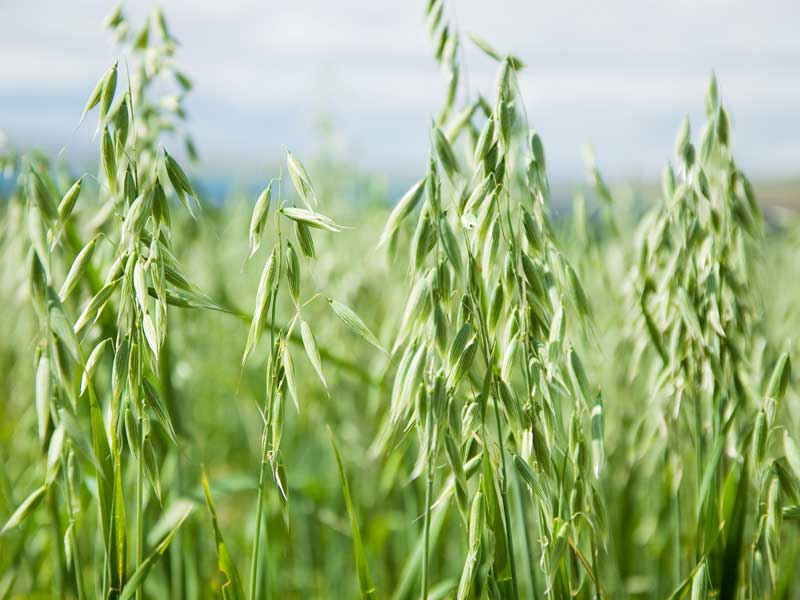
Oats are a reliable cool-season grass cover crop and one of the easiest winter green manure crops to grow.
They establish quickly in suitable conditions, cover bare soil and produce useful leafy biomass along with a fibrous root system.
Oats are a practical choice for protecting garden beds from winter weather, competing with weeds and producing organic matter before spring planting.
Barley
Fast soil cover, weed suppression, organic matter and erosion control.
Terminate before mature seed heads develop, particularly in home gardens where unwanted self-seeding is undesirable.
Barley is a hardy cereal cover crop that performs well in cool conditions. It is useful where fast soil cover, strong fibrous root growth and substantial green manure biomass are required.
It can also be combined with legumes such as vetch or field peas. The cereal contributes carbon-rich plant material while the legume contributes softer, nitrogen-rich growth.

Field Peas
Nitrogen support, soft green manure and cool-season soil improvement.
Sow into moist soil and protect young seedlings from birds where necessary. Terminate before pods mature.
Field peas are a cool-season legume that can be grown as winter green manure. They produce soft stems and leafy growth, making them useful where relatively easy-to-manage plant residue is desirable.
They combine particularly well with oats or barley, which can provide physical support as the pea plants grow.

Lupins
Nitrogen support, sandy soils, strong root growth and soil improvement.
Choose well-drained soil and avoid persistently waterlogged sites. Terminate before plants become excessively mature and woody.
Lupins are legumes with substantial root systems and can be particularly useful in free-draining or sandy soils.
They can contribute organic matter, nitrogen fixation and root diversity over the cooler months. They are less suitable for persistently waterlogged heavy clay.

Fenugreek
Short-season green manure, nitrogen support and quick soil improvement.
Particularly useful in mild winter climates. Heavy frost can slow or damage growth.
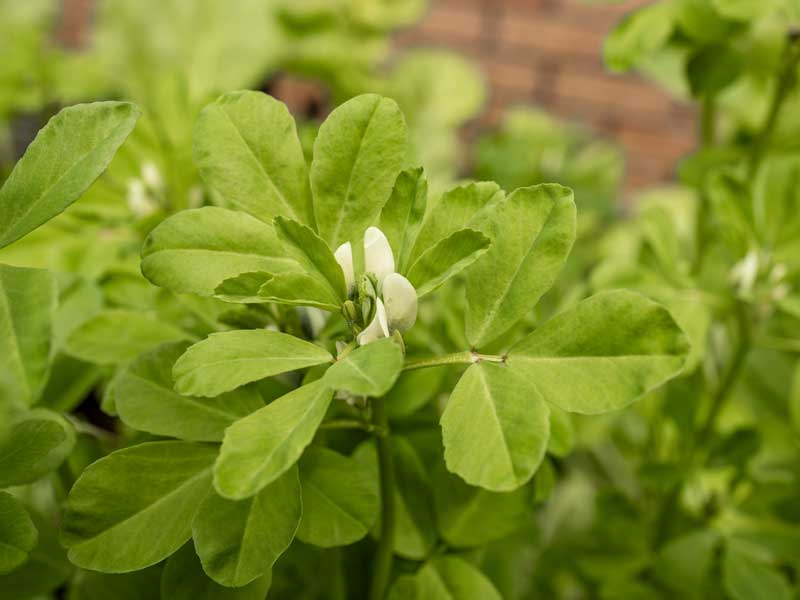
Fenugreek is a relatively short-season legume that performs well in mild conditions. It is a useful green manure option in subtropical and mild temperate areas where there is only a limited growing window before the next crop.
It generally produces less bulk biomass than vigorous cereals such as oats or barley, but this can make it convenient for smaller garden beds and shorter rotations.
Chicory
Deep rooting, soil structure, root diversity and mixed cover crop blends.
Particularly useful as part of a diverse mix. Allow sufficient time for the taproot to develop if deep rooting is your main objective.
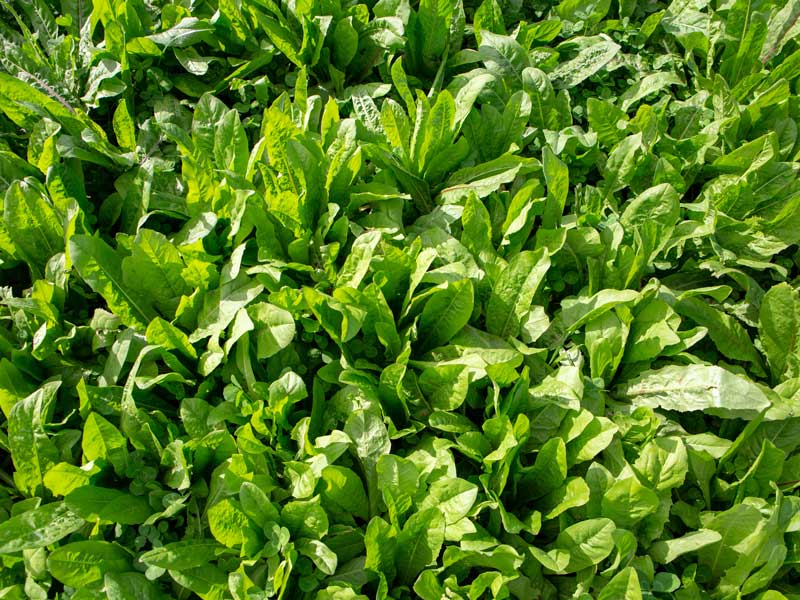
Chicory is a deep-rooted broadleaf plant that can add a different root architecture to a cover crop mixture.
It is not usually the first choice as a standalone short-term green manure crop for a small vegetable bed, but it can contribute useful root diversity in longer-running cover crop mixtures.
Cool Season Green Manure Cover Crop Mix
For gardeners who are unsure which winter cover crop to choose, a mixed blend can often provide a broader range of benefits than growing a single species.
A typical cool-season cover crop mixture may combine cereals such as oats or barley, legumes such as vetch or field peas, and deep-rooted species that contribute additional root diversity.
Combines nitrogen-fixing legumes with biomass-producing grasses.
Multiple species help occupy growing space and compete with winter weeds.
Living foliage and roots protect exposed soil from rain and wind.
Different root systems explore different parts of the soil profile.
A mixture of leaves, stems and roots provides diverse plant residues.
Terminate the mixture before spring planting to prepare the bed for the next crop.
Want an All-in-One Winter Mix?
Seedmart’s Cool Season Cover Crop Mix combines winter-growing species selected to provide ground cover, root diversity and organic matter.

Winter Cover Crop Comparison
This is one section where a table is useful because the information is genuinely comparative. On smaller screens, your Seedmart table styling can convert the rows into easier-to-read stacked entries.
| Cover Crop | Type | Main Benefit | Frost Tolerance | Best Use |
|---|---|---|---|---|
| Vetch | Legume | Nitrogen support and soft green manure | Good, depending on variety | Winter green manure and mixes |
| Oats | Cereal grass | Biomass, roots and weed suppression | Moderate to good | Fast winter soil cover |
| Barley | Cereal grass | Quick cover and organic matter | Good | Winter cover and erosion control |
| Field Peas | Legume | Nitrogen support and leafy growth | Moderate to good | Green manure before spring crops |
| Lupins | Legume | Nitrogen support and root growth | Moderate | Sandy soils and soil improvement |
| Chicory | Deep-rooted broadleaf | Deep roots and soil structure | Good once established | Mixed cover crop blends |
What Cover Crop Seeds Can You Plant Now?
If it is June, many Australian gardeners can still establish winter cover crops, particularly in subtropical, temperate and mild coastal areas.
The best choice depends on how cold your winter becomes, available soil moisture and how soon you intend to plant spring vegetables.
Good all-purpose winter cover crop for biomass, fibrous roots and soil protection.
Fast-growing cereal for covering bare ground and competing with winter weeds.
Useful legume for nitrogen fixation and soft winter green manure.
Cool-season legume producing leafy growth and useful green manure biomass.
Particularly useful in sandy or free-draining soils.
Deep-rooted species particularly useful as part of a mixed cover crop.
Oats provide quick ground cover, fibrous roots and biomass, while vetch contributes legume growth and biological nitrogen fixation.
If you plan to grow tomatoes, capsicums, cucumbers, zucchini or beans in spring, choose a winter crop that can be terminated before it becomes overly mature or woody.
Winter Cover Crops by Australian Climate Zone
Australia has very different winter conditions. A winter cover crop that performs well in Brisbane may behave very differently in Canberra, Hobart, Melbourne, Perth, Adelaide or inland NSW.
Northern QLD, NT & northern WA
Planting window: Dry season, generally autumn to winter.
Options: Millet, cowpea, lablab, mung bean and Sunn Hemp in warmer areas; oats or barley where conditions are suitable.
Many tropical areas remain better suited to warm-season cover crops even during the dry season.
Brisbane, coastal QLD & northern NSW
Planting window: March–August.
Options: Oats, barley, vetch, field peas, fenugreek, lupins and chicory.
An excellent region for winter green manure. Maintain moisture during dry winter periods.
Sydney, Melbourne, Adelaide, Perth & southern Australia
Planting window: March–June, with some sowing continuing into winter.
Options: Oats, barley, vetch, field peas, lupins, clover and chicory.
Autumn sowing provides more time for establishment and winter biomass production.
Canberra, Tasmania, highlands & inland VIC/NSW
Planting window: Early autumn is preferable.
Options: Oats, barley, cereal rye, vetch, field peas, clover and chicory.
Growth can slow considerably during heavy frost. Earlier establishment helps plants enter winter with stronger root systems.
Inland SA, WA, NSW & QLD
Planting window: Autumn–winter when sufficient moisture is available.
Options: Barley, oats, vetch, field peas and lupins where suitable.
Moisture availability is often the main limitation. Seasonal rainfall or irrigation is important for establishment.
Frost-Hardy Cover Crops
In frost-prone parts of Australia, species selection and establishment timing become particularly important. Some cover crops tolerate cold conditions much better than warm-season species.
Better Options for Frost-Prone Areas
- Barley: useful for cold-season soil cover.
- Oats: tolerates cool conditions and light to moderate frost.
- Vetch: useful in winter, depending on species and frost severity.
- Field peas: suitable for cool-season green manure.
- Cereal rye: particularly cold-hardy.
- Chicory: handles cold once established.
Less Suitable for Heavy Frost
- Fenugreek: better suited to mild winter areas.
- Cowpea: warm-season legume.
- Lablab: prefers warm growing conditions.
- Millet: primarily a warm-season cover crop.
- Sunn Hemp: warm-season tropical legume.
Sow early enough in autumn for plants to establish before the coldest part of winter. Small seedlings are generally more vulnerable than established plants.
What Not to Plant in Winter
Not every green manure crop is suitable for winter. Warm-season crops can establish poorly or fail when sown into cold soil.
Avoid warm-season cover crops during cold winters.
In temperate, cool and frost-prone areas, crops such as cowpea, mung bean, soybean, millet, lablab, Sunn Hemp and buckwheat are generally better planted once conditions warm in spring or summer.
Watch brassica rotations.
Be careful with tillage radish and mustard if you plan to follow them with broccoli, cauliflower, cabbage, kale, Asian greens or radish. These crops belong to the brassica family, so crop rotation should be considered.
Most green manure crops should also be terminated before they produce mature seed. Leaving them too long can result in tougher plant material and unwanted self-seeding.
How to Sow Winter Cover Crop Seeds
Winter cover crops are generally straightforward to establish. They do not require a perfectly prepared vegetable bed, but good seed-to-soil contact and adequate moisture are important.
Clear the Bed
Remove old vegetable plants, large weeds and heavy crop debris.
Loosen the Surface
Lightly rake or fork the upper soil layer.
Broadcast the Seed
Scatter the seed as evenly as practical across the growing area.
Rake In
Lightly incorporate the seed to the appropriate depth.
Water Gently
Keep the soil moist while the crop establishes.
Build Growth
Allow the crop to develop good soil cover and useful biomass.
Terminate Before Seed Set
Slash, mow, chop or cut the crop before it becomes excessively woody or produces mature seed.

Approximate Sowing Depths
Clover, mustard, chicory
Depth: Surface sow to approximately 0.5 cm.
Rake in lightly and maintain moisture.
Vetch, fenugreek
Depth: Approximately 1–2 cm.
Good seed-to-soil contact helps establishment.
Field peas, lupins
Depth: Approximately 2–4 cm.
Cover adequately, particularly where birds are a problem.
Oats, barley, wheat
Depth: Approximately 1–3 cm.
Rake into the soil and water after sowing.
When to Cut Down Winter Cover Crops
Timing matters. Green manure is generally easiest to manage before plants set mature seed and before stems become excessively tough and woody.
Allow approximately 4–8 weeks where practical.
Terminate while growth is lush and manageable.
Cut before mature seeds develop.
Time termination around when you need the bed again.
What Do You Do With the Crop?
Chop & Drop
Cut plants near ground level and leave the material on the surface as mulch. Roots remain in the soil and decompose naturally.
Incorporate as Green Manure
Chop the plants and incorporate the material into the upper soil layer where a cultivated green-manure system is being used.
Compost It
Remove the above-ground material and add it to the compost system while leaving roots to break down in the soil.
Mow or Slash
For larger areas, mowing or slashing is a practical method of terminating substantial cover-crop biomass.
If green material is incorporated into the soil, soft leafy material may need roughly 2–4 weeks to begin decomposing. More mature, fibrous material generally takes longer.
Small direct-sown seeds such as carrot, lettuce and basil benefit from a settled seedbed without large quantities of undecomposed plant residue.
Transplanted crops such as tomatoes and capsicums may be easier to establish sooner where the terminated cover crop has been retained primarily as surface mulch rather than heavily incorporated.
Frequently Asked Questions About Winter Cover Crop Seeds
Can I plant cover crop seeds in June in Australia?
Yes, in many parts of Australia. Suitable choices can include oats, barley, vetch, field peas, lupins, mustard and chicory depending on local climate, rainfall and frost risk.
What is the best winter cover crop for home gardens?
Oats and vetch are a practical combination for many gardens. Oats provide rapid cover and biomass, while vetch adds legume growth and nitrogen fixation.
Which cover crops are best for frost?
Oats, barley, cereal rye, vetch, field peas and established chicory are among the better options for cool and frost-prone areas. Fenugreek is better suited to milder winter climates.
What cover crop should I plant before tomatoes?
Oats, vetch, field peas and barley can all be useful. Terminate the crop sufficiently early that the bed is ready when tomato planting begins.
Should I dig in green manure or leave it on top?
Both approaches are used. Incorporation mixes the residue into the soil, while chop-and-drop retains it as surface mulch and leaves the roots undisturbed.
Can I plant mustard before broccoli or cabbage?
If you are carefully managing crop rotations, avoid following mustard immediately with broccoli, cabbage, cauliflower, kale and other brassicas because mustard is also a member of the brassica family.
Where can I buy winter cover crop seeds in Australia?
Seedmart Australia stocks individual winter green manure varieties as well as mixed cool-season cover crop options.
Start Building Better Soil This Winter
Instead of leaving beds empty, establish a cool-season cover crop to protect the soil, compete with weeds, produce organic matter and prepare the ground for your next vegetable crop.