
Feijoa is one of the most interesting backyard fruit trees you can grow, yet it is still relatively little known in Australia.
In New Zealand, feijoas are extremely popular and commonly grown in home gardens, where the fruit is collected during autumn.
Also known as pineapple guava, feijoa produces small green fruit with a sweet, fragrant and tropical flavour. The tree is attractive, evergreen, productive and well suited to many Australian gardens, particularly in cooler and temperate regions.
If you are wondering whether feijoa can be grown in Northern NSW, South East Queensland or other parts of Australia, the answer is generally yes — although success depends heavily on local climate, winter chill, variety selection and planting position.
Acca sellowiana
Feijoa / Pineapple Guava
Evergreen fruiting shrub or small tree
Around 2–5 metres
Full sun with protection from hot drying winds
Usually autumn to early winter
What Is Feijoa?
Feijoa, botanically known as Acca sellowiana, is an evergreen fruiting shrub or small tree native to parts of South America.
It is commonly called pineapple guava because of its tropical aroma and guava-like appearance, although it is not the same as the common tropical guava.
Ornamental
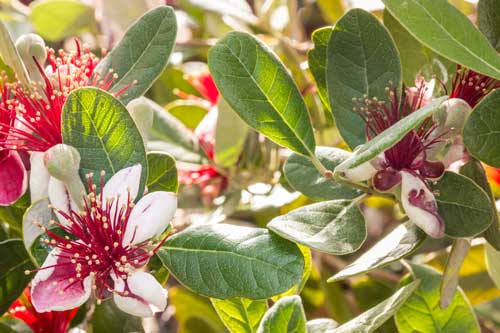
Feijoa has attractive grey-green foliage, a naturally bushy habit and striking flowers with fleshy white and pink petals and bright red stamens.
Productive
The tree produces fragrant green fruit and can be grown as a backyard fruit tree, hedge, screening plant or feature tree.
Trees generally grow to around 2–5 metres tall depending on variety, climate, pruning and growing conditions.
What Does Feijoa Taste Like?
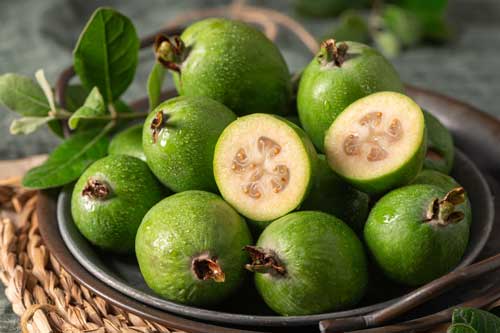
A ripe feijoa has a distinctive flavour that is difficult to compare with any single fruit.
It is often described as a mixture of pineapple, guava, pear, strawberry and mint, with a strong tropical fragrance.
The flesh is soft, juicy and aromatic. Some people love the flavour immediately, while others find it unusual at first because it is more perfumed than many common fruits.
The easiest way to eat feijoa is to cut the fruit in half and scoop out the flesh with a spoon.
The skin is edible, but it is usually more bitter and astringent than the sweet pulp, so many people prefer to eat only the centre.
Why Is Feijoa So Popular in New Zealand?
Feijoa is much better known in New Zealand than in Australia. In many New Zealand gardens, feijoa trees are grown as backyard fruit trees, hedges or informal boundary plants.
Productive trees can yield more fruit than a household can easily use, so sharing surplus fruit with neighbours, friends and family is common.
Feijoa has a relatively concentrated harvest period, which helps make the fruit feel seasonal and special.
In a suitable climate, feijoa is productive and relatively straightforward to maintain.
Evergreen foliage, edible flowers and a naturally bushy habit make it useful even outside the harvest season.
In Australia, feijoa remains something of a hidden gem, but interest is growing as gardeners look for unusual, productive and relatively low-maintenance fruit trees.
Can You Grow Feijoa in Australia?
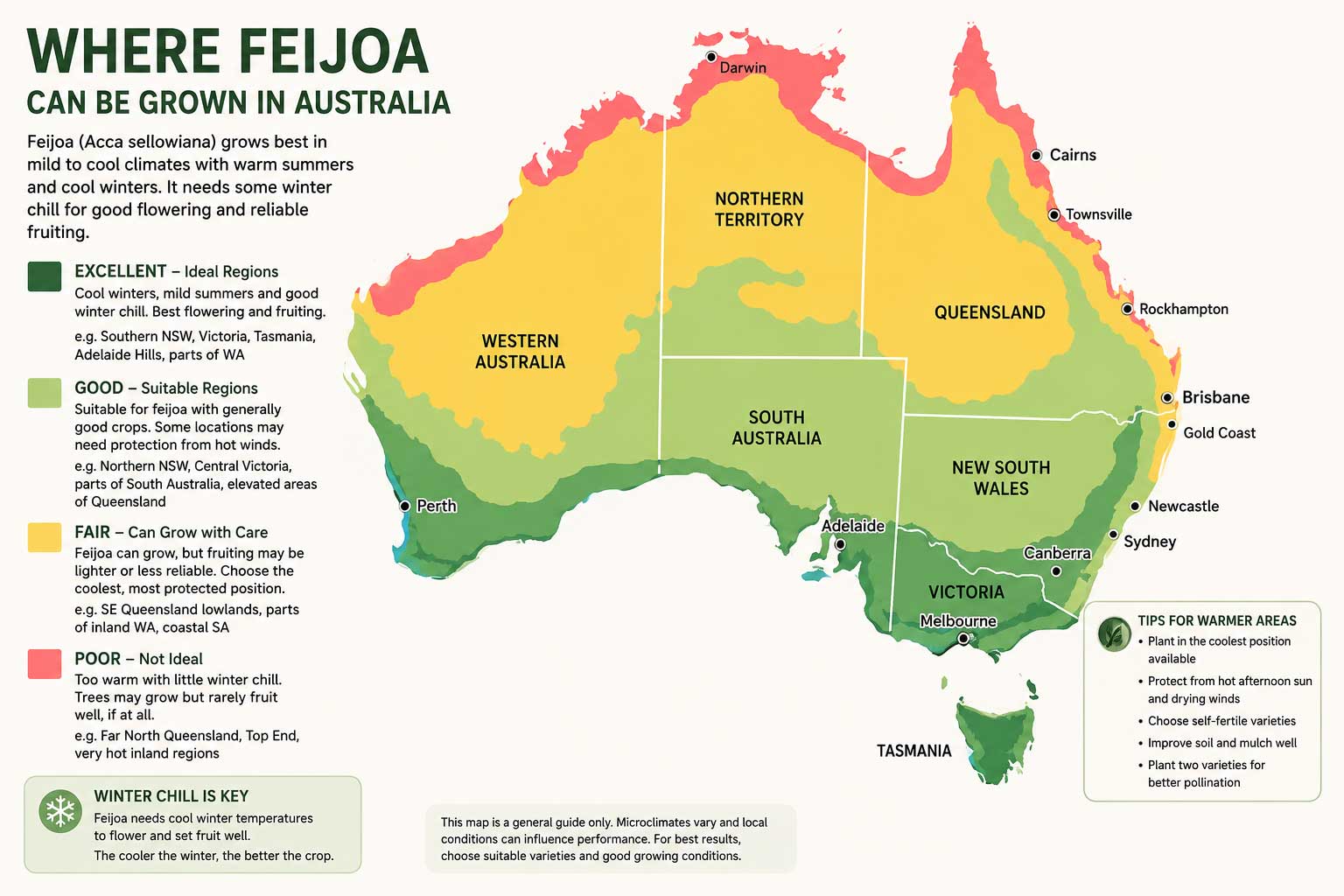
Yes. Feijoa can be grown in many parts of Australia.
It generally performs best in temperate to subtropical regions where winters are cool enough to support flowering and fruit set.
Generally the most reliable
Parts of Victoria, Tasmania, South Australia and southern or inland NSW are generally well suited to feijoa.
Cooler winters can support stronger flowering and more reliable cropping.
Best in elevated and cooler districts
The Northern Tablelands, Dorrigo, Armidale and cooler hinterland areas are generally more suitable than warm coastal lowlands.
Results vary with elevation
Toowoomba, the Blackall Range, Maleny, Montville and Tamborine Mountain offer cooler conditions that are better suited to feijoa.
More experimental
Brisbane, the Gold Coast and lowland Sunshine Coast may still grow healthy trees, but fruiting can be less reliable because winters are warmer.
Full sun, well-drained soil, protection from hot drying winds and reliable moisture during flowering and fruit development.
Can Feijoa Grow in Northern NSW?
Feijoa can grow well in many parts of Northern NSW, particularly elevated and cooler areas.
More Suitable
Northern Tablelands, Dorrigo, Armidale and cooler hinterland areas where winter temperatures are lower.
Less Reliable
Very warm coastal lowlands may produce vigorous trees but lighter crops if winter chill is insufficient.
For Northern NSW growers, choose a sunny but protected position, improve the soil with compost, mulch well and consider planting more than one variety to improve pollination and yield.
Can Feijoa Grow in South East Queensland?
Feijoa can grow in South East Queensland, but results vary significantly according to elevation and winter temperature.
Good region to try feijoa
Cooler elevated conditions
Generally better suited than coastal lowlands
Cooler winter conditions can favour fruiting
Choose the coolest suitable position available, avoid reflected heat from walls and paving, protect the tree from harsh afternoon heat and consider varieties with better self-fertility.
How Long Does Feijoa Take to Fruit?
Grafted Trees
Grafted or named-variety trees are generally the fastest and most predictable option.
They may begin fruiting around 2–4 years after planting, depending on tree size and growing conditions.
Seed-Grown Trees
Seed-grown feijoas usually take longer to fruit.
They may take 4–7 years or more, and seedlings may vary in fruit quality because they are not necessarily true to type.
Named varieties or grafted trees are usually the better option for gardeners primarily interested in reliable fruit production.
How Big Does a Feijoa Tree Grow?
Feijoa trees generally grow around 2–5 metres tall and approximately 2–4 metres wide, depending on variety, climate and pruning.
Natural Habit
Feijoas naturally form dense, bushy evergreen plants, making them useful as fruit trees, hedges or screening plants.
Keep Them Smaller
Regular light pruning can maintain a more compact tree suitable for suburban gardens.
Where to Plant Feijoa
Choose a sunny position for the best flowering and fruit production.
Feijoa does not perform well in persistently waterlogged soil, especially while young.
Improve the planting area with compost before planting.
Strong hot winds can dry flowers, stress young trees and reduce fruit set.
Some protection from intense afternoon heat can help in warmer regions.
How to Plant Feijoa
Autumn and early spring are often good planting times because the tree can begin establishing before extreme summer heat.
Choose the Position
Select a sunny, well-drained location protected from harsh drying winds.
Prepare the Soil
Improve the surrounding soil with compost and loosen a planting area wider than the root ball.
Plant at the Correct Depth
Position the tree at approximately the same soil depth it was growing at in the container.
Backfill & Water
Backfill gently and water deeply after planting.
Mulch
Apply mulch around the root zone, keeping it away from direct contact with the trunk.
Watering Feijoa Trees
Young Trees
Water regularly while the root system establishes. Keep the soil evenly moist without allowing it to remain waterlogged.
Established Trees
Established feijoas are reasonably drought tolerant, but fruiting trees perform better with consistent moisture during flowering and fruit development.
Deeper irrigation encourages roots to explore a larger soil volume and can help established trees cope better during dry periods.
Fertilising Feijoa
Feijoa trees benefit from feeding during spring and early summer.
Apply around the root zone to support soil fertility and organic matter.
Can be used as part of a broader soil-feeding program.
Use according to label directions where additional nutrients are required.
Too much nitrogen can encourage vigorous leafy growth at the expense of flowering and fruit production.
A yearly application of compost and mulch is one of the simplest ways to support long-term tree health.
Do You Need Two Feijoa Trees?
Some feijoa varieties are partially self-fertile and can produce fruit when grown alone.
However, planting two different compatible varieties usually improves pollination and can increase the size and reliability of the crop.
One Tree
A self-fertile or partially self-fertile variety may produce fruit on its own.
Two Varieties
Cross-pollination can improve fruit set and make cropping more reliable.
Bees and other insects contribute to feijoa pollination. Avoid unnecessary insecticide use during flowering and consider flowering companion plants nearby.
When Do Feijoas Fruit in Australia?
In Australia, feijoas generally ripen from autumn into early winter, commonly around March to May depending on climate and variety.
Fruit Drops Naturally
One of the easiest signs of ripeness is that mature feijoas naturally fall from the tree.
Picking From the Tree
Fruit that comes away easily with a gentle twist may be mature. Fruit that is difficult to remove is generally not ready.
How to Harvest Feijoa
Check Daily
During peak season, collect fruit regularly as it falls.
Avoid Leaving Fruit on the Ground
Fruit left too long can bruise, become overripe or suffer pest damage.
Check Ripeness
Ripe fruit should feel slightly soft and have a sweet, fragrant aroma.
Use Quickly
Fresh feijoas have a relatively short storage life, so eat, cook, freeze or preserve them soon after harvest.
Can Feijoa Grow in Pots?
Yes. Feijoa can be grown in large containers, especially if the tree is naturally compact or kept smaller through pruning.
Container Requirements
Choose a large container with excellent drainage and use a high-quality potting mix.
Extra Maintenance
Container-grown trees generally require more regular watering and feeding than trees planted directly in the ground.
Pots can be useful for patios, courtyards and smaller gardens, but the tree still needs plenty of sunlight to flower and fruit well.
How to Prune Feijoa
Feijoa does not generally require heavy pruning. Light pruning is usually sufficient to maintain shape, airflow and manageable size.
Remove Dead Wood
Cut out dead, damaged or diseased branches.
Remove Crossing Branches
Thin crowded branches that rub against one another.
Open the Centre
Improve airflow and light penetration where growth has become overly dense.
Maintain Shape
Lightly trim the tree or hedge without removing excessive fruiting wood.
Excessive pruning can reduce the amount of productive wood available for the following crop.
Common Feijoa Problems
Feijoa is generally hardy and relatively low maintenance, but poor growing conditions can affect tree health and fruit production.
Poor Fruiting
Possible causes: insufficient winter chill, poor pollination, excessive shade, young tree age or too much nitrogen fertiliser.
Strong Growth but Few Fruit
Possible cause: warm winter conditions or excess nitrogen can encourage vegetative growth without strong flowering.
Scale Insects
Inspect stems and foliage regularly and manage infestations before they become severe.
Caterpillars
Check foliage for chewing damage and monitor young growth during periods of insect activity.
Fungal Problems
Good airflow, sensible watering and avoiding persistently wet conditions can help reduce disease pressure.
Tips for Growing Feijoa Successfully
Good light generally supports stronger flowering and fruiting.
Add compost and maintain good drainage.
Mulch helps reduce moisture loss and weed competition.
Consistent moisture during flowering and fruit development supports crop quality.
Cross-pollination can improve fruit set.
Elevated sites and areas protected from harsh afternoon heat can be advantageous.
How to Use Feijoa in the Kitchen
Feijoa is delicious eaten fresh, but its fragrant sweet-tart flavour also works well in a wide range of recipes.
Cut in half and scoop out the pulp with a spoon.
Use chopped or pulped fruit in baking.
Combine with apple or pear for a fragrant dessert.
Blend the aromatic pulp with yoghurt, fruit or milk.
A useful way to preserve a heavy seasonal harvest.
The strong tropical aroma works particularly well in chilled desserts.
Feijoa works particularly well with apple, pear, lemon, ginger, yoghurt and cream.
If you have a heavy crop, feijoas can also be frozen, cooked into pulp or preserved as jam or chutney for use after the short harvest season has finished.
Is Feijoa Worth Growing?
Why Grow It?
Feijoa is productive, ornamental, evergreen and relatively straightforward to care for once established in a suitable climate.
Best Australian Regions
Northern NSW highlands, cooler inland areas and elevated parts of South East Queensland can be particularly suitable.
In warmer coastal areas, feijoa can be more experimental, but it may still be worth trying if you have a cooler planting position and realistic expectations about fruit production.
Final Thoughts
Feijoa is one of the more underrated fruit trees for Australian gardens.
Although it is far better known in New Zealand, it has excellent potential for Australian home growers, especially in cooler and temperate regions.
With fragrant fruit, edible flowers, evergreen foliage and a useful hedging habit, feijoa offers more than just a seasonal crop.
If you are looking for an unusual, productive and rewarding fruit tree, feijoa is well worth considering.
Want to Grow Feijoa from Seed?
Start your own feijoa plants and grow this unusual evergreen fruit tree at home.