
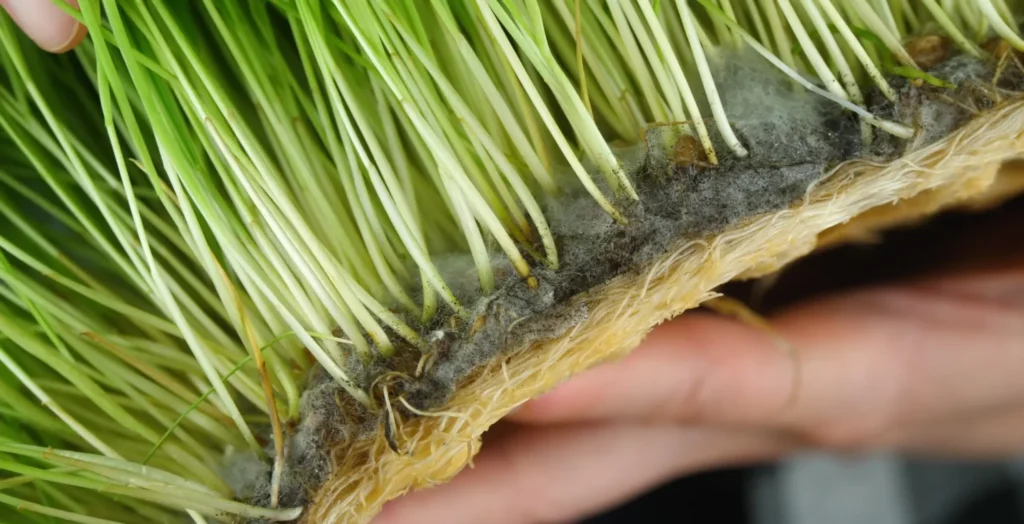
Damping-off is one of the most common problems affecting newly germinated seeds, young seedlings and microgreens. Plants may germinate normally and then suddenly wilt, collapse at the base or develop soft, discoloured stems. In other cases, seeds rot before they ever emerge.Damping-off is not one single disease. It describes a group of seed and seedling diseases associated with pathogens such as Pythium, Rhizoctonia and Fusarium. Problems are usually encouraged by excessive moisture, poor drainage, high humidity, contaminated growing media or equipment, overcrowding and growing conditions that leave young seedlings stressed or slow-growing.The good news is that damping-off is largely a prevention problem. Once badly affected seedlings have collapsed they rarely recover, but improving hygiene, watering, airflow, drainage and growing conditions can greatly reduce the likelihood of the problem returning.
The correct horticultural term is damping-off. “Dampening off” is commonly used when describing the problem, but damping-off is the term generally used for diseases that cause seeds and young seedlings to rot, weaken and collapse.
Seedlings collapse near the growing medium
Germination and young seedlings
Pythium, Rhizoctonia and Fusarium
Excessive moisture
High humidity, overcrowding and poor airflow
Usually not once the stem has collapsed
Prevention and early intervention
Yes, particularly dense or overly wet trays
What Is Damping-Off?
Damping-off is a general term used for diseases that attack seeds and very young plants. It can occur before germination, while a seedling is emerging or shortly after emergence.
Several different soil-borne fungi and fungus-like organisms can be involved. Common causes include species of Pythium, Rhizoctonia and Fusarium. Phytophthora may also cause seedling diseases under suitable conditions.
These organisms can be present in soil, contaminated growing media, plant debris, water, dirty trays, tools and growing areas. Their presence does not necessarily mean that a crop will fail. Disease develops when susceptible seedlings and favourable environmental conditions occur together.
Young plants are particularly vulnerable because their stems and root systems are still soft and developing. As plants become larger and develop stronger stems and established root systems, they generally become less susceptible to classic damping-off.
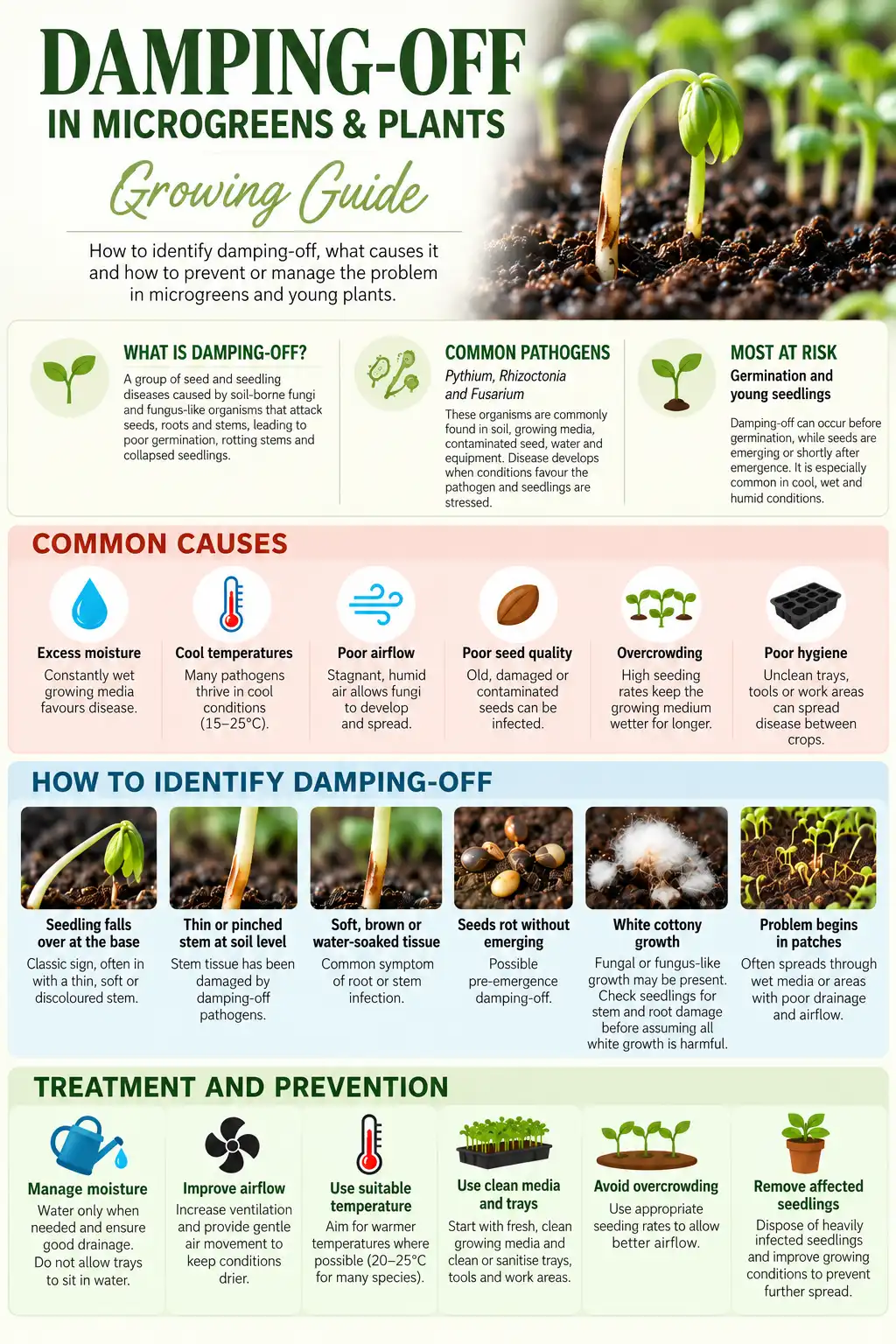
Pre-Emergence vs Post-Emergence Damping-Off
Pre-Emergence Damping-OffThe seed is attacked before the seedling successfully emerges.
The seed may soften, turn brown and decay in the growing medium. A grower may initially assume that the problem is poor germination or low-quality seed.
Typical signs include:
- Very low or patchy emergence.
- Seeds becoming soft or rotten.
- Seeds germinating but failing to reach the surface.
- Small emerging roots becoming brown or decayed.
- Increasing gaps within an otherwise densely sown tray.
Post-Emergence Damping-OffThe seedling emerges but is attacked shortly afterwards.
The stem commonly becomes thin, soft, water-soaked or discoloured close to the growing medium. Eventually it can no longer support the plant and the seedling falls over.
Typical signs include:
- Seedlings suddenly wilting.
- Thin or pinched stems near the base.
- Brown, grey or water-soaked stem tissue.
- Seedlings falling over at growing-medium level.
- Patches of seedlings collapsing together.
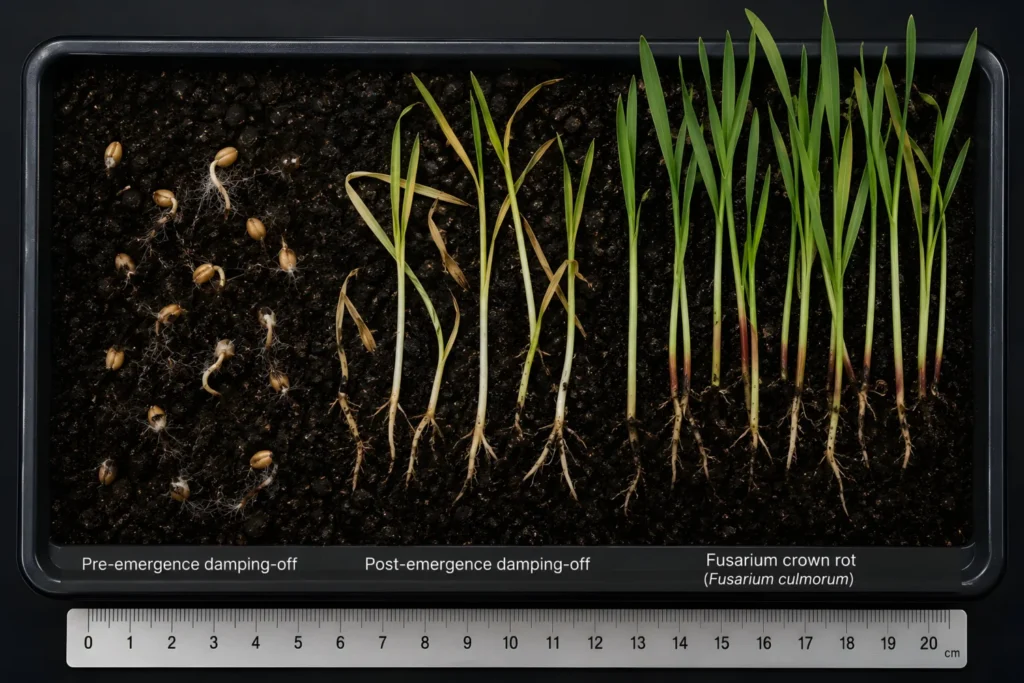
How to Identify Damping-Off
The most characteristic symptom is a seedling that appears reasonably healthy above the growing medium but has developed a thin, weakened or rotting section around the base of the stem.
Look closely at the point where the stem meets the growing medium.
| What you see | What it may indicate |
|---|---|
| Seedling falls over at the base | Classic post-emergence damping-off, particularly when the lower stem is thin, soft or discoloured. |
| Thin or pinched stem at soil level | Stem tissue has been damaged by damping-off pathogens. |
| Soft, brown or water-soaked tissue | Possible root or stem infection, commonly associated with damping-off. |
| Seeds rot without emerging | Possible pre-emergence damping-off, although seed quality, temperature and sowing depth should also be checked. |
| White cottony or cobweb-like growth | Fungal or fungus-like growth may be present. Check the seedlings themselves for stem and root damage before assuming all white growth is harmful. |
| Problem begins in patches | Disease may be spreading through wet growing media or areas with poorer drainage and airflow. |
| Roots are brown, weak or poorly developed | Possible root infection or prolonged waterlogging. |
Once damping-off has damaged the stem sufficiently for a young seedling to fall over, the affected plant is generally lost. Concentrate on removing affected material, correcting the growing conditions and protecting the remaining healthy seedlings.
What Causes Damping-Off?
Damping-off pathogens can survive in soil, growing media and plant debris and can be introduced on contaminated trays, pots, tools, hands, irrigation equipment and water.
Disease becomes much more likely when growing conditions favour the pathogen while simultaneously slowing or stressing the seedling.
Too Much WaterConstantly saturated growing media is one of the most important risk factors.
Roots need both moisture and oxygen. When a tray remains waterlogged, oxygen around the roots is reduced and conditions can become highly favourable for some damping-off organisms.
The objective is not to keep seedlings dry. It is to maintain adequate moisture without prolonged saturation.
Poor Air CirculationStill, humid air allows moisture to remain around stems and foliage for longer periods.
This is particularly important with microgreens because hundreds of young plants may be growing together within a relatively small tray.
Improving airflow can help the crop and growing surface dry more normally between watering cycles.
Excessive Seeding DensityDense sowing creates a humid microclimate around the stems.
Microgreens are intentionally grown at relatively high densities, but excessively heavy seeding can prevent air from moving through the crop and can leave stems and growing media wet for prolonged periods.
Correct seeding density varies considerably between species.
Contaminated Trays & EquipmentReused trays can retain old roots, organic matter and growing-medium particles.
Simply emptying a tray is not the same as cleaning it. Used trays should be thoroughly cleaned before sanitising so that the sanitiser can contact the surface effectively.
Tools, benches and other equipment should also be kept clean.
Poorly Draining Growing MediaA growing medium that retains excessive water can remain saturated long after irrigation.
Use a clean growing medium with a structure suitable for seed raising or microgreen production and ensure trays have adequate drainage.
Unfavourable TemperatureTemperature affects both seedling growth and disease development.
Cold growing media can dramatically slow germination of warm-season plants, leaving vulnerable seeds exposed for longer. Conversely, warm and very humid conditions can favour some pathogens.
Aim for the appropriate germination and growing temperature for the particular crop rather than treating every species identically.
Poor LightInsufficient light after germination produces stretched, weaker seedlings and slows healthy development.
Once seedlings are ready for light, provide adequate light intensity so they develop strong, compact growth.
Excess FertiliserMore fertiliser does not necessarily produce healthier seedlings.
Young seedlings have relatively modest nutrient requirements, and microgreens are harvested very early. Excessive fertiliser can increase soluble salts and stress seedlings, while unnecessarily lush growth may also contribute to dense, humid conditions.
Why Damping-Off Is Common in Microgreens
Microgreens create an unusual growing environment. A large quantity of seed is deliberately sown into a shallow tray, moisture is maintained to support rapid germination and many crops are initially covered or stacked.
These methods can produce excellent germination, but they also mean that problems with moisture, temperature, hygiene or seeding density can escalate quickly.
The objective is a uniformly moist root zone with sufficient drainage and air exchange. A tray that remains saturated, particularly after germination, is much more vulnerable to disease problems.
Common Microgreen Risk Factors
- Overwatering after germination.
- Leaving trays covered or stacked for too long.
- Excessively dense seeding.
- Poor drainage from shallow trays.
- High humidity around the crop.
- Limited airflow between closely positioned trays.
- Reusing trays without adequate cleaning and sanitation.
- Allowing old roots and crop residue to accumulate in the growing area.
- Water remaining on stems and leaves for extended periods.
Is the White Fuzz on Microgreens Damping-Off?
Not necessarily.
One of the most common microgreen growing mistakes is confusing root hairs with mould.
Many young seedlings develop masses of very fine white root hairs immediately around the root. These can look remarkably similar to fungal growth, particularly first thing in the morning or when the growing medium is moist.
Root Hairs
- Usually concentrated immediately around individual roots.
- Often appear as a fine, even halo around the root.
- Appear consistently on many healthy seedlings.
- Seedling stems remain firm and healthy.
- Seedlings continue growing normally.
- Often become much less obvious when thoroughly wetted.
Possible Fungal Growth
- May spread across the growing medium or between seeds.
- Can form irregular patches or web-like growth.
- May accompany soft, brown or collapsing stems.
- Can occur around decaying seeds or dead plant material.
- May spread from one affected area into surrounding seedlings.
- Can be accompanied by an unpleasant or musty smell when decay is advanced.
Healthy seedlings with firm stems and white fuzz restricted to the immediate root zone may simply be displaying normal root hairs. Collapsing, water-soaked or rotting seedlings require much closer investigation.
Damping-Off or Another Growing Problem?
Not every collapsed microgreen or seedling has damping-off.
| Problem | Typical clues | What to check |
|---|---|---|
| Damping-off | Stem narrows, softens or discolours near the growing medium before the seedling collapses. | Stem base, roots, moisture, drainage, hygiene, humidity and airflow. |
| Underwatering | Many seedlings wilt together but stems are not rotten or pinched at the base. | Moisture level throughout the growing medium. |
| Heat stress | Rapid wilting during hot conditions, often affecting exposed areas of the tray. | Air temperature, growing-medium temperature and water availability. |
| Leggy seedlings | Long, pale or weak stems without characteristic rotting at the base. | Light intensity, duration and distance from artificial lights. |
| Root hairs | Fine white hairs clustered directly around healthy roots. | Whether seedlings remain firm and healthy and whether the fuzz is attached specifically to roots. |
| Surface mould | Fungal growth over seed hulls, dead seeds or growing medium without widespread stem collapse. | Dead organic material, humidity, airflow and watering practices. |
| Algae | Green growth or a green film develops across persistently wet growing media. | Excessive surface moisture, light reaching the wet medium and poor drying between watering. |
| Poor germination | Seed remains firm and intact rather than soft and rotten. | Seed age, temperature, moisture, sowing depth and species-specific germination requirements. |
What to Do When Damping-Off Appears
Once a seedling has collapsed from damping-off, there is usually little benefit in trying to save that individual plant. The immediate objective is to reduce conditions that favour further disease.
Inspect the affected area
Check the stem bases and roots. Look for soft, narrowed, brown or water-soaked tissue rather than assuming every wilted seedling has damping-off.
Remove badly affected seedlings
Remove collapsed plants and obviously decaying material. Avoid unnecessarily spreading contaminated growing medium across healthy areas.
Check moisture immediately
If the growing medium is saturated, stop watering until excess moisture has drained and the root zone begins returning to an appropriate moisture level.
Increase air movement
Improve ventilation around the crop. Gentle air movement can help reduce prolonged surface wetness and excessive humidity.
Separate affected trays
In a larger microgreen operation, move suspicious trays away from unaffected crops where practical and avoid moving drainage water from affected trays into healthy ones.
Review seeding density
If the crop is extremely dense, reduce the seeding rate in the next planting.
Review your watering method
Avoid repeatedly soaking stems and foliage. Once established, bottom watering or sub-irrigation can help keep the upper crop drier where appropriate.
Clean before the next crop
After harvest or disposal, thoroughly clean trays, tools and growing surfaces before sanitising and reusing them.
If disease is widespread, stems are rotting or large areas of a tray have collapsed, discarding the affected crop is generally preferable to attempting to harvest around visibly diseased material. This is particularly important where microgreens are being grown as food.
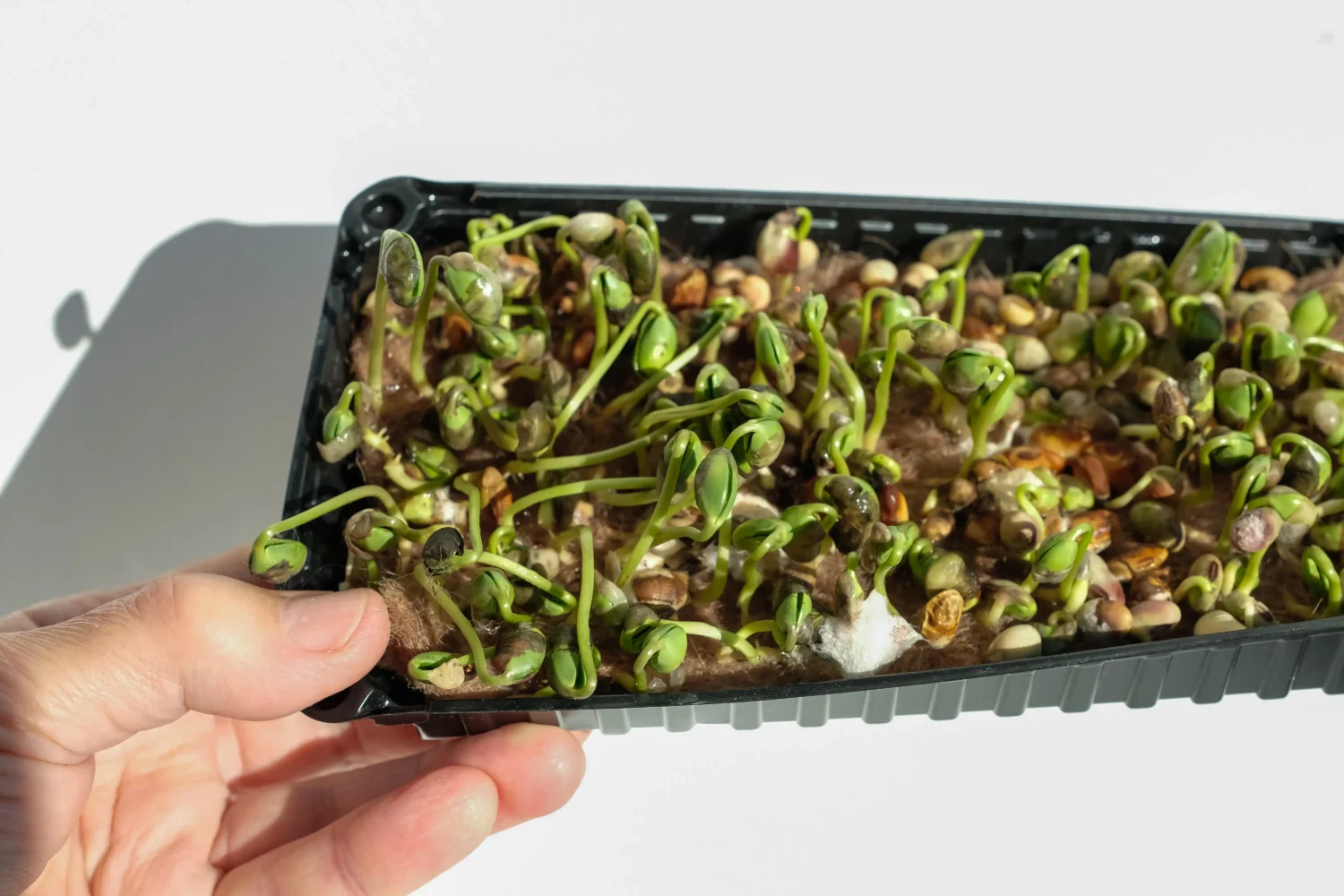
How to Prevent Damping-Off in Microgreens
For microgreen growers, consistency is one of the best forms of disease prevention. Record the seeding rate, growing medium, germination period, temperature and watering routine for successful crops so that problems can be traced when conditions change.
Start with clean trays
Remove all old roots, growing media and organic residue. Wash thoroughly before applying an appropriate sanitising procedure.
Use clean growing media
Use a good-quality medium suitable for seedlings or microgreens rather than garden soil or previously used growing media.
Use an appropriate seeding rate
Aim for good tray coverage without creating an excessively dense mat of stems.
Manage germination carefully
Maintain the moisture required for germination but do not allow trays to sit continuously saturated.
Uncover at the appropriate stage
Once the crop has completed the required covered or blackout period, provide appropriate light and ventilation rather than unnecessarily extending humid enclosed conditions.
Water according to the crop
Check the tray rather than watering solely according to a fixed schedule. Water use changes with seedling size, temperature, humidity, growing medium and airflow.
Provide air movement
Maintain sufficient spacing and ventilation around trays so humid air does not remain trapped within dense crops.
Keep the growing area clean
Remove crop debris, failed trays and spilled growing medium promptly.
Top Watering vs Bottom Watering Microgreens
Both methods can be useful at different stages.
During GerminationFine overhead watering or misting may be useful when establishing freshly sown trays because the upper growing medium and seeds need adequate moisture.
Avoid using excessive water pressure that moves seeds or compacts the growing surface.
The objective is even moisture—not standing water.
After EstablishmentBottom watering can be particularly useful once roots have developed sufficiently to draw water from below.
Water is placed into the lower tray and absorbed through drainage holes into the growing medium.
This can help keep foliage and stems drier and reduce repeated overhead wetting.
Do not leave trays standing indefinitely in excess water.
Preventing Damping-Off in Vegetable, Herb & Flower Seedlings
The same principles apply when raising conventional garden seedlings.
Use clean pots or seedling trays and fresh, free-draining seed-raising mix. Avoid garden soil in propagation trays, particularly where previous seedling diseases have occurred.
Keep the growing medium moist enough for germination but not continuously waterlogged.
Once seedlings emerge, provide strong light and suitable temperatures so they develop rapidly rather than remaining weak and vulnerable for an extended period.
Conditions that delay germination or slow seedling growth can extend the period during which young plants are particularly vulnerable. Match sowing temperature, depth and watering to the species being grown.
Should You Use a Fan?
Gentle air movement can be very useful when growing seedlings or microgreens indoors.
A fan should improve circulation rather than blast young seedlings continuously. The leaves may move slightly, but seedlings should not be bent over by strong airflow.
Air movement helps reduce stagnant humidity and encourages the crop and growing surface to dry more normally after watering.
A fan does not compensate for waterlogged growing media. If trays are continually saturated, the watering or drainage problem still needs to be corrected.
Should You Reuse Microgreen Growing Media?
Reusing growing media increases the difficulty of maintaining consistent hygiene because old roots, seed hulls and decomposing organic material remain within the medium.
Where a tray has experienced damping-off or another suspected disease problem, do not reuse the affected growing medium for another microgreen crop.
For consistent commercial production, beginning each crop with clean growing media makes disease management considerably easier.
Can Damping-Off Spread Between Trays?
Yes. Disease-causing organisms can be moved in contaminated growing media, irrigation water, crop debris, hands, tools and equipment.
This is one reason good workflow is important in a microgreen growing area.
Avoid handling a badly affected tray and immediately handling healthy trays without cleaning your hands or equipment. Avoid allowing drainage water from a diseased tray to move into other trays.
Do Fungicides Treat Damping-Off?
Some fungicides and seed treatments are registered for particular damping-off diseases in particular crops, but damping-off can be caused by several different organisms and a product effective against one pathogen may not necessarily control another.
For home growers and microgreen producers, prevention through hygiene, moisture management, drainage, temperature and airflow should be the primary strategy.
For commercial production, only use crop-protection products that are legally registered or permitted for the specific crop, disease and use situation, and follow the current label directions. This is particularly important for microgreens because they are harvested very young and consumed as food.
Damping-Off Troubleshooting Checklist
| Question | If the answer is yes… |
|---|---|
| Is the growing medium constantly wet? | Reduce watering frequency and check drainage. |
| Are trays sitting in water? | Drain excess water after the medium has absorbed what it requires. |
| Are seedlings extremely crowded? | Reduce the seeding rate for future trays. |
| Does the growing area feel stagnant and humid? | Improve ventilation and gentle air circulation. |
| Are trays reused without thorough cleaning? | Introduce a consistent cleaning and sanitation procedure. |
| Is old growing media being reused? | Change to clean growing media, particularly following disease problems. |
| Are stems wet for long periods? | Review overhead watering and consider bottom watering once roots are established. |
| Are seedlings weak and stretched? | Improve light and review growing temperature. |
| Are problems repeatedly occurring in the same location? | Investigate trays, benches, drainage, watering equipment and growing-area hygiene. |
Frequently Asked Questions
What does damping-off look like?
The lower stem often becomes thin, soft, brown, grey or water-soaked. Eventually the damaged area cannot support the seedling and it falls over near the growing medium.
Can a seedling recover from damping-off?
A seedling that has already collapsed because its stem has rotted will rarely recover. Remove affected plants and concentrate on preventing the disease from spreading.
Does overwatering cause damping-off?
Overwatering does not create the pathogen itself, but persistently wet growing media and high moisture levels can create conditions that strongly favour damping-off diseases.
Why are my microgreens falling over?
Check the base of the stems. Soft, narrowed or brown stems may indicate damping-off. If stems remain healthy, investigate underwatering, excessive heat, low light, physical damage or other environmental problems.
Is white fuzz on microgreens mould?
Not always. Fine white growth immediately surrounding healthy roots is often normal root hairs. Fungal growth is more concerning when it spreads between seeds or across the growing medium and occurs with decay or collapsing seedlings.
Should microgreens be bottom watered?
Bottom watering is useful once roots are established because it allows the growing medium to absorb water without repeatedly wetting the stems and foliage. Avoid leaving trays standing in excess water.
Can I reuse a tray after damping-off?
Yes, but remove all plant and growing-medium residue and thoroughly clean and sanitise the tray before using it again.
Can I reuse soil after damping-off?
It is better not to reuse affected growing media for seed raising or another microgreen crop. Starting with clean growing media reduces the opportunity for disease organisms to carry into the next crop.
Does cinnamon stop damping-off?
Cinnamon is sometimes suggested as a home remedy, but it should not replace proper disease management. Correct excessive moisture, poor airflow, contaminated equipment and unsuitable growing conditions first.
Does hydrogen peroxide cure damping-off?
Hydrogen peroxide is sometimes promoted as a treatment, but attempting to rescue collapsed seedlings is generally ineffective. Concentrate on sanitation, watering, drainage and environmental management rather than relying on a home remedy.
Why does damping-off keep returning?
Recurring problems suggest that one or more underlying conditions remain unchanged. Check growing-medium moisture, tray sanitation, seeding density, airflow, temperature, drainage and whether contaminated crop residue or water is moving between trays.
Are some microgreens more prone to problems?
Risk varies with the crop, seed size, germination speed, seeding density and growing environment. Dense, slow-drying trays are generally more vulnerable than well-ventilated crops grown at an appropriate seeding rate.
Grow Healthier Microgreens from Seed
Successful microgreens start with quality seed and a consistent growing system. Keep trays clean, manage moisture carefully and provide appropriate airflow, light and temperature for strong, even growth.