
Radish Growing Guide
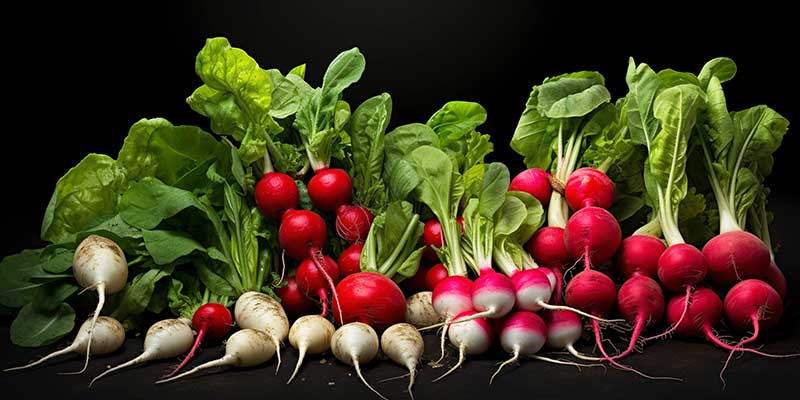
Radishes (Raphanus sativus) are fast-maturing, colourful root vegetables prized for their crisp texture and peppery flavour.
They are ideal for beginners, small gardens, containers and intensive vegetable beds because many varieties can be harvested only a few weeks after sowing.
Radish seed is also unusually versatile. Depending on the variety and how it is grown, it can be used for root vegetables, sprouts, microgreens or green manure and cover cropping.
Raphanus sativus
Cool weather
Around 3–4 weeks for many salad types
Full sun to light shade
Around 1 cm
Sprouts, microgreens and cover crops
Radish, Daikon, Mooli, Watermelon Radish, Cherry Belle and French Breakfast.
Why Grow Radishes?
Radishes are one of the quickest rewards in the vegetable garden. Many small-rooted varieties are ready in around three to four weeks, making them useful for beginner gardeners, succession sowing and spaces where a long-season crop is impractical.
Harvest many salad varieties in weeks rather than months.
Ideal for containers, narrow garden beds and gaps between slower-growing crops.
Choose from crisp red salad radishes, mild Daikon, colourful Watermelon Radish and more.
Deep-rooted types such as Daikon and Tillage Radish are also used for soil improvement.
Suitable varieties can also be grown as sprouts or microgreens.
Radishes establish quickly and are relatively straightforward to grow in suitable cool conditions.
Sow a small amount every 10–14 days during suitable weather instead of planting the entire packet at once.
Understanding Radish Varieties
Radishes vary considerably in shape, colour, flavour and intended use. Some are bred for fast salad production, while larger types such as Daikon are more suited to cooking, pickling or soil improvement.
Daikon
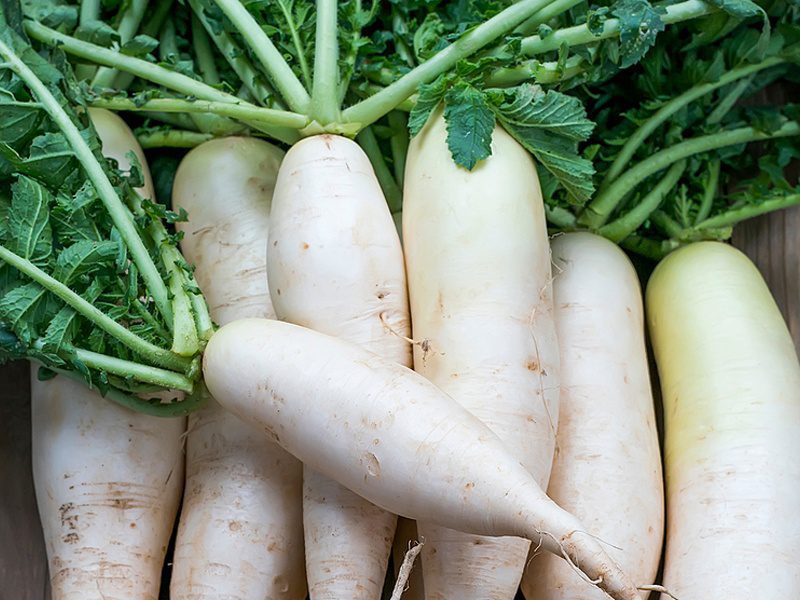
Long, white and mild.
Daikon, also called mooli, develops long cylindrical roots that can reach approximately 30–40 cm depending on variety and growing conditions.
It is widely used in Asian cuisine and is also useful as a deep-rooted cover crop because the strong taproot penetrates deeper soil layers.
Best for: Pickling, cooking, winter crops and soil improvement.
White Icicle
Elongated, white and crisp.
White Icicle is a slender, quick-growing radish with crunchy roots that work particularly well when sliced into salads.
Best for: Fresh eating, salads and spring garden beds.
Watermelon Radish
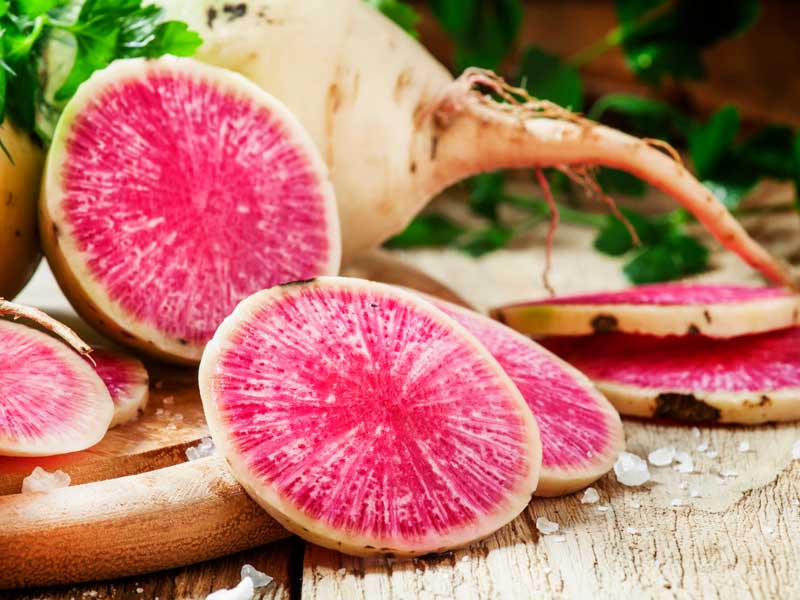
Green-white outside with a vivid pink centre.
Watermelon Radish is particularly valued for its dramatic interior colour and relatively mild flavour when harvested at the right stage.
Best for: Platters, salads, garnishes and pickling.
Cherry Belle
Classic round red salad radish.
Cherry Belle is a familiar fast-growing type producing small round roots with crisp flesh.
Best for: Quick garden crops, salads and beginner growers.
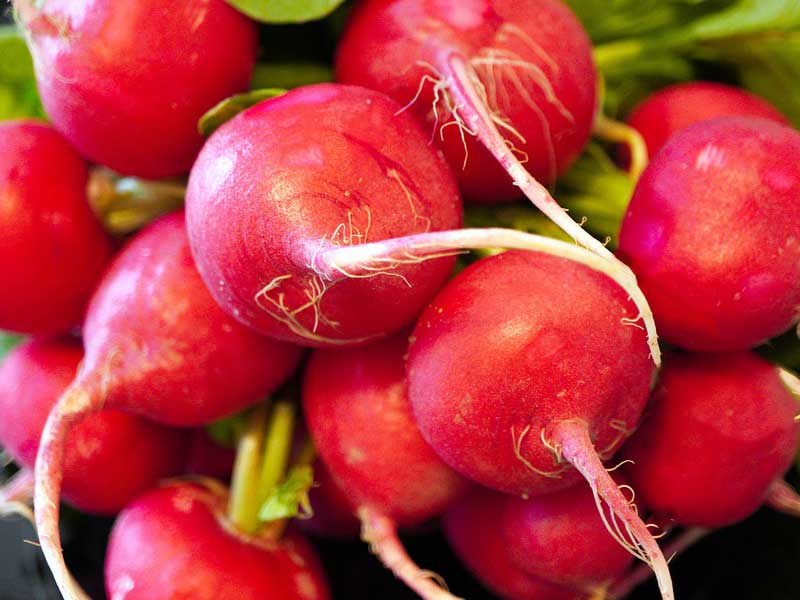
French Breakfast
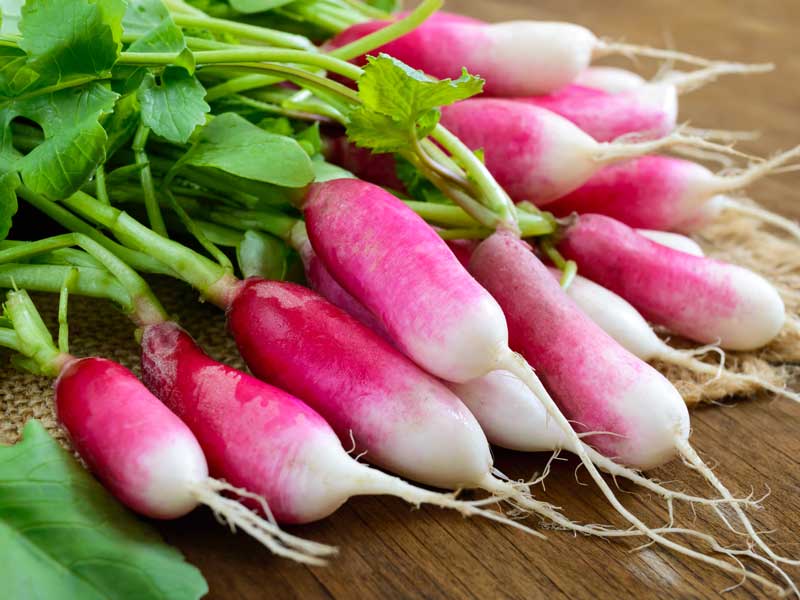
Elongated red roots with a white tip.
French Breakfast radishes have a crisp texture and slightly peppery flavour.
Best for: Fresh eating, dipping, salads and small-space growing.
Pink Radish
Bright pink roots with crisp flesh.
Pink radish varieties provide the fast growth and fresh texture of classic salad radishes with a softer pink appearance.
Best for: Salads, colourful garden harvests and fresh eating.
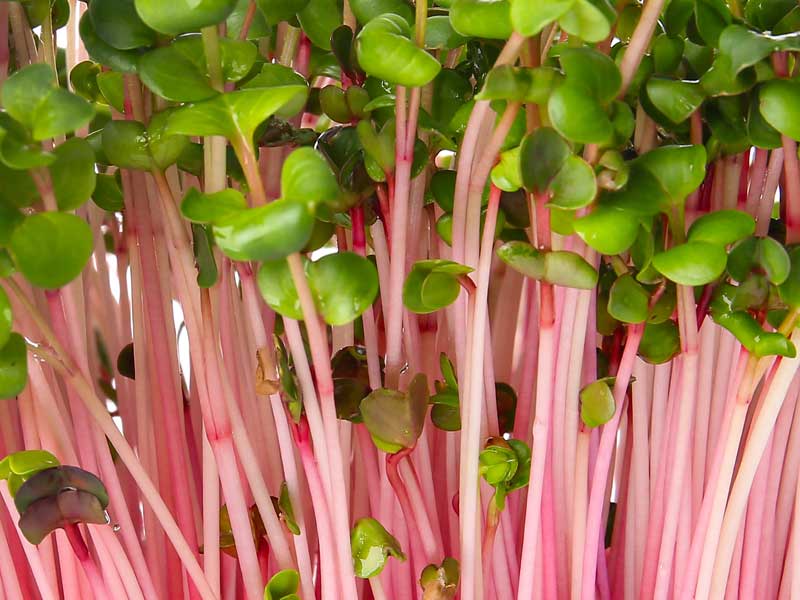
Purple Radish
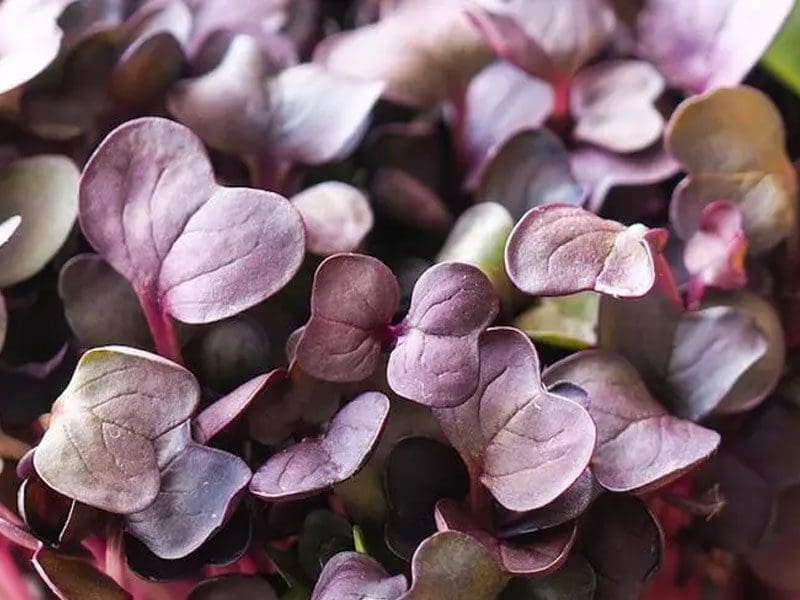
Deep purple skin with pale flesh.
Purple radishes add strong visual contrast to salads and pair well with milder leafy greens.
Best for: Colourful salads, garnishes and fresh kitchen use.
Tillage Radish
Tillage Radish is generally grown as a cover crop rather than as a conventional salad radish. Its large taproot penetrates compacted soil and is used for soil structure, nutrient capture and green-manure systems.
Radish Roots, Microgreens & Green Manure — What’s the Difference?
Radish seed can be grown in very different ways depending on what you want to harvest — or whether you intend to harvest anything at all.
Seeds are germinated and harvested after only a few days while the root and shoot are still very young.
Harvest: Approximately 2–5 days.
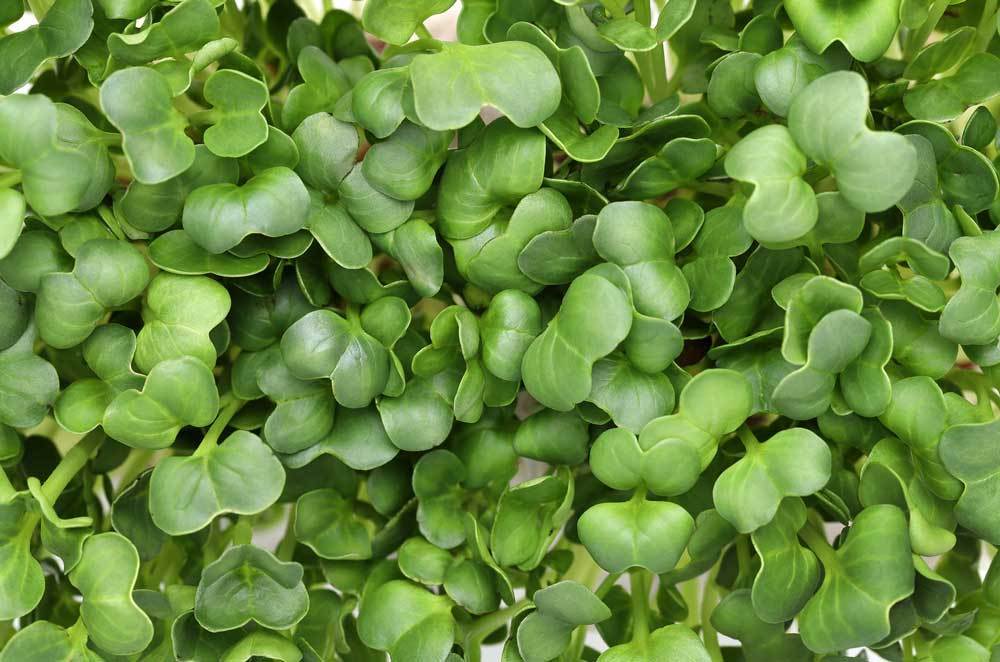
Seed is sown densely in trays and harvested once the cotyledons are open and before plants develop into mature roots.
Harvest: Usually around 7–14 days.
Daikon or Tillage Radish is grown much longer so the roots penetrate the soil and the crop produces substantial biomass.
Purpose: Soil improvement rather than food harvest.
Seed intended for sprouts or microgreens must be suitable for edible-shoot production. Do not use chemically treated field seed for sprouts or microgreens.
How to Grow Radishes from Seed
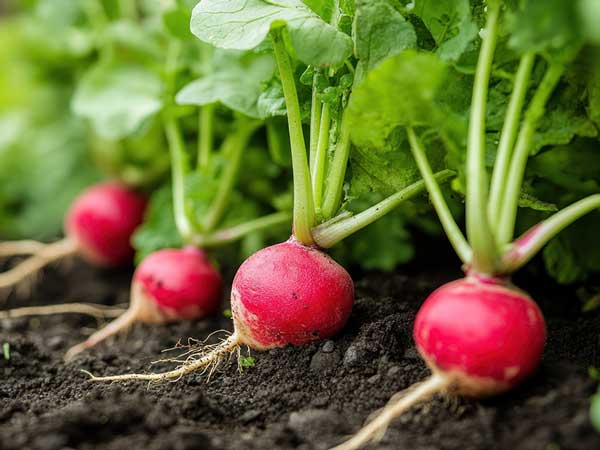
Radishes grow quickly, so problems such as crowding, heat stress or irregular watering can affect root quality in a relatively short time.
Choose Cool Weather
Sow during cooler periods. Early spring and late summer into autumn are often productive planting windows.
Prepare Loose Soil
Work the soil to approximately 15–20 cm deep and remove stones or hard clods that may interfere with root development.
Sow Approximately 1 cm Deep
Space root radish seed around 2–3 cm apart, then thin seedlings if necessary.
Keep Moisture Even
Maintain consistent moisture during germination and root development.
Thin Early
Remove excess seedlings before roots begin crowding one another.
Harvest Promptly
Check roots regularly and harvest once they reach a useful size rather than allowing them to become old and woody.
Thin to approximately 3–5 cm
Around 12–15 cm
Often around 3–4 weeks
Usually takes longer
Growing in Containers
Use containers at least around 15–20 cm deep for small round radishes.
Longer-rooted Daikon varieties require substantially deeper soil.
Succession Sowing
Sow a fresh small batch every 10–14 days during suitable weather to spread the harvest over a longer period.
Bulk Seed & Treated Seed — What You Need to Know
Some agricultural radish seed may be treated for field sowing. Seed treatments can be used to protect seed or seedlings against particular pests or diseases.
Treated Field Seed
Intended for planting according to the treatment label.
Do not use treated seed for sprouts or microgreens intended for eating.
Seed for Edible Shoots
Use untreated seed specifically appropriate for sprouting or microgreen production.
Season, Soil & Vermiculite Tips
Radishes generally perform best during cool conditions. Hot weather can encourage bolting and may produce roots that become pithy, coarse or excessively pungent.
For Spring Crops
Sow once conditions are suitable and soil can be worked, while temperatures are still relatively mild.
For Autumn Crops
Wait until the strongest summer heat begins to decline before sowing.
A modest amount can help retain moisture while keeping the growing medium light. This can be particularly useful in trays where consistent surface moisture is important.
See this
research reference on vermiculite.
Troubleshooting Common Radish Problems
Poor Germination
Possible causes: Old seed, incorrect depth or inconsistent moisture.
What to do: Sow fresh seed at the correct depth and keep the seedbed evenly moist.
Flea Beetle Damage
Signs: Numerous small holes in young leaves.
What to do: Protect young plants where necessary and monitor seedlings regularly.
Bolting
Likely cause: Warm temperatures or plant stress.
What to do: Shift sowing into a cooler part of the season.
Woody or Pithy Roots
Likely causes: Roots left too long, heat or irregular growing conditions.
What to do: Harvest promptly once roots reach useful size.
Root Maggots
Crop rotation and physical barriers can form part of an integrated management approach.
Misshapen Roots
Possible causes: Crowding, stones or compacted soil.
What to do: Thin seedlings and prepare a loose, stone-free seedbed.
Harvesting, Storing & Using Radishes
Harvest radishes once roots are firm and have reached the size you want. Small salad types are generally best harvested promptly rather than being left oversized in the ground.
Check the Root
Brush soil away gently around the crown to estimate root size.
Pull Carefully
Harvest by gently pulling the root from moist, loose soil.
Trim the Tops
Remove the leafy tops before storing the roots.
Refrigerate
Keep harvested roots cool and use while they remain crisp.
Simple Ways to Use Radishes
Thinly slice fresh radishes and combine with herbs, lemon dressing and a little salt.
Halve larger radishes, coat lightly with oil and roast until tender for a milder flavour.
Watermelon Radish and Daikon work particularly well sliced and pickled.
Finely chopped radish can be combined with softened butter and herbs for a savoury spread.
Daikon-style radishes are commonly used in fermented preparations with chilli, garlic and ginger.
Young healthy leaves can be cooked or incorporated into pesto-style preparations.
Sprouts & Microgreens
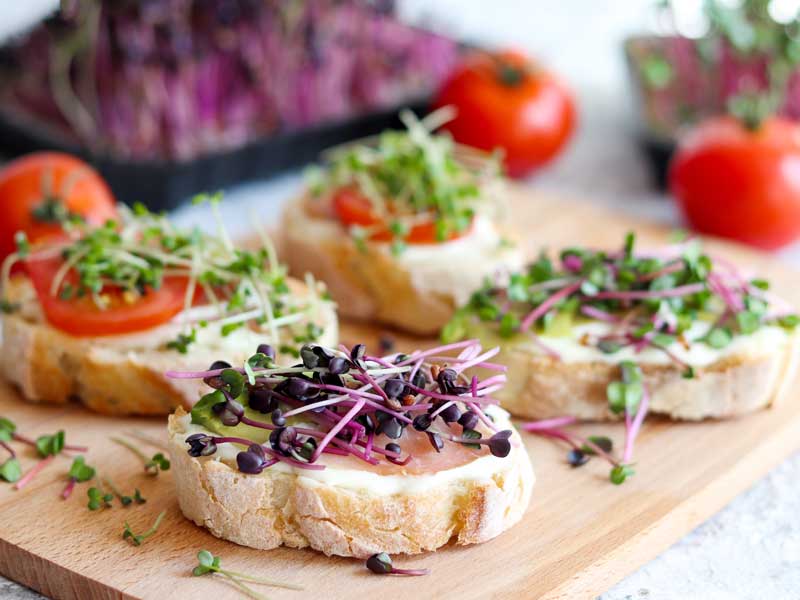
Radish sprouts and microgreens provide an intense peppery flavour and work well in salads, sandwiches and as garnishes.
Green Manure & Soil Use
Daikon and Tillage Radish can be grown as cover crops to provide deep rooting, ground cover and nutrient capture.
Start Growing Radishes
Radishes are a particularly versatile crop. You can grow quick salad roots, larger Daikon types, colourful microgreens or deep-rooted cover crops depending on the seed and growing method you choose.
For conventional root radishes, concentrate on cool weather, loose soil, even moisture and prompt harvesting. Succession sowing every 10–14 days can provide a longer and more consistent harvest.
Explore Radish Seeds
Compare radish varieties for vegetable growing, microgreens, sprouting and green manure use.