
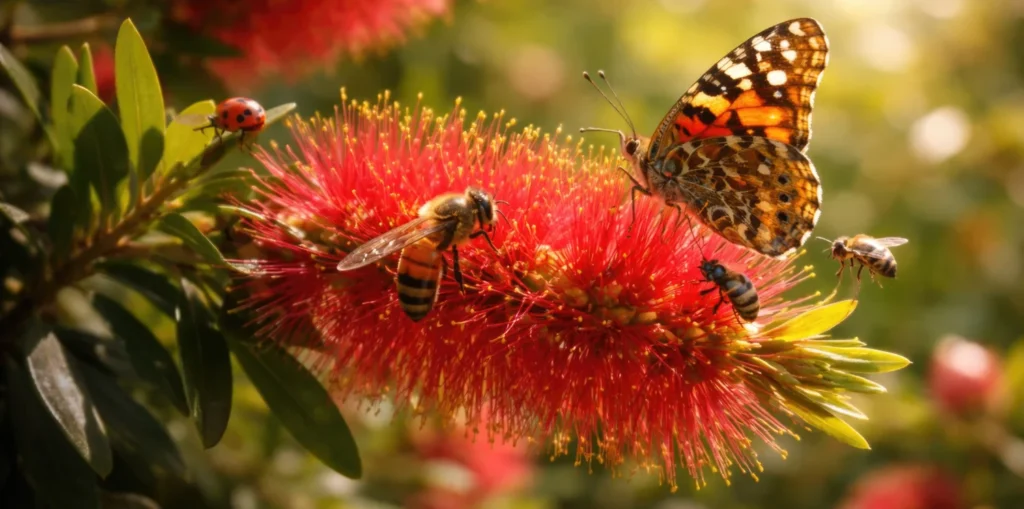
South East Queensland Native Pollinator Garden Guide
Native daisies, bottlebrushes, tea trees and native pea flowers are useful choices for attracting bees and other pollinating insects to South East Queensland gardens. Combine flowering groundcovers with shrubs or a climber, choose plants suited to your soil and available space, and aim for flowers across different seasons.You do not need a large garden to begin. A sunny border, a few containers or a flowering plant beside your vegetable patch can provide a starting point. For gardens in Brisbane, Ipswich, Logan, the Gold Coast and Sunshine Coast, drainage, summer humidity and local frost exposure all influence which plants will grow well.This guide covers native plants for bees and pollinators, options for small gardens and pots, and how to grow selected Australian natives from seed.
Easy Seed Starting PointEverlasting daisies
Low Growing OptionsYellow buttons and cut-leaf daisies
Flowering ShrubsBottlebrush and tea tree
Winter & Spring FlowersPurple coral pea
For Small SpacesDaisies in beds or containers
Garden EssentialsFlowers, shelter and nesting habitat
Australian native does not always mean locally native. A species native to Western Australia or southern Australia may need different conditions from a plant naturally found in South East Queensland. For bushland restoration or gardens adjoining natural areas, select locally indigenous species and suitable local provenance with advice from your council, Landcare group or native plant nursery.
Explore Australian Native Seeds for Your Garden
Browse Seedmart’s native flower, shrub and tree seeds, then match each species to your garden’s conditions and mature planting space.
Table of Contents
- Why Grow Native Plants for Pollinators?
- Native Plants to Consider for South East Queensland
- Native Pollinator Plant Comparison
- Plants for Small Gardens, Pots and Partial Shade
- How to Create a Native Pollinator Garden
- When to Plant in South East Queensland
- How to Grow Native Plants from Seed
- Common Planting Mistakes
- Frequently Asked Questions
Why Grow Native Plants for Bees and Pollinators?
Flowering native plants provide food for visiting insects and can help create a more diverse garden. Combining plants with different flower shapes, growth habits and flowering seasons provides a wider range of resources than relying on one species.
In South East Queensland, a mixed native planting can support stingless bees, solitary native bees and other flower-visiting insects. Suitable plants also add colour, shelter and structure to gardens, courtyards and spaces beside vegetable beds.
Provide Nectar and Pollen
Flowers supply important food resources. Nectar provides energy, while pollen supplies protein and other nutrients that bees use to feed their developing young.
Native daisies, pea flowers, bottlebrushes and tea trees offer different feeding opportunities, although the insects visiting each plant will vary.
Extend the Flowering Season
A garden with several flowering species can provide food across more of the year.
Combine winter and spring flowers with plants that bloom during the warmer months. Observe flowering in your own garden and add suitable species where seasonal gaps occur.
Support Vegetable and Fruit Pollination
Many garden crops depend on, or benefit from, insect pollination. Bees transfer pollen between flowers as they forage, helping crops such as pumpkins and zucchini develop fruit.
Nearby flowering plants can provide additional food between crop flowering periods. They support the surrounding pollinator habitat, although they do not guarantee visits to every crop.
Create Habitat for Other Insects
A native garden can provide resources for butterflies, moths, flower-visiting flies and other insects as well as bees.
Some beneficial insects use flowers for food during part of their life cycle. Include locally appropriate caterpillar host plants if you also want to support breeding butterflies and moths.
Add Shelter and Nesting Opportunities
Pollinators need more than flowers. Some native bees nest in the ground, while others use cavities in timber or hollow stems.
Retaining suitable patches of undisturbed soil, stems and timber can complement your flowering plants. A mixture of groundcovers and shrubs also creates sheltered spaces for garden wildlife.
Build Local Plant Diversity
Locally indigenous plants contribute to the region’s plant diversity and can support relationships between native plants and local wildlife.
Select species suited to your soil, sunlight and moisture conditions. Australian native plants come from many different environments, so local suitability matters more than the “native” label alone.
These plantings also bring practical garden benefits. Low-growing daisies can soften edges, flowering shrubs can provide screening, and native climbers can add flowers to fences and trellises. Choosing an appropriate mature size makes it easier to combine wildlife value with the way you use your garden.
Start small and build diversity. A manageable patch of native flowers is a useful first step. Add plants with complementary flowering seasons, retain suitable habitat and reduce pesticide exposure to help support visiting pollinators.
Bee Aware’s native bee guidance identifies native peas, daisies, banksias, eucalypts, wattles and bursarias among useful bee forage plants, alongside the importance of nesting habitat and minimising pesticide use.
Native Plants to Consider for South East Queensland
The best native plants for bees and pollinators depend on your garden’s sunlight, soil, drainage and available space.
Low-growing daisies provide flowers near ground level, shrubs add longer-term structure, and native climbers make use of fences and trellises.
A useful strategy is to combine plants with different growth habits and flowering seasons. A planting of native daisies, a suitably sized bottlebrush or tea tree, and a winter–spring flowering native pea can provide more variety than a single species.
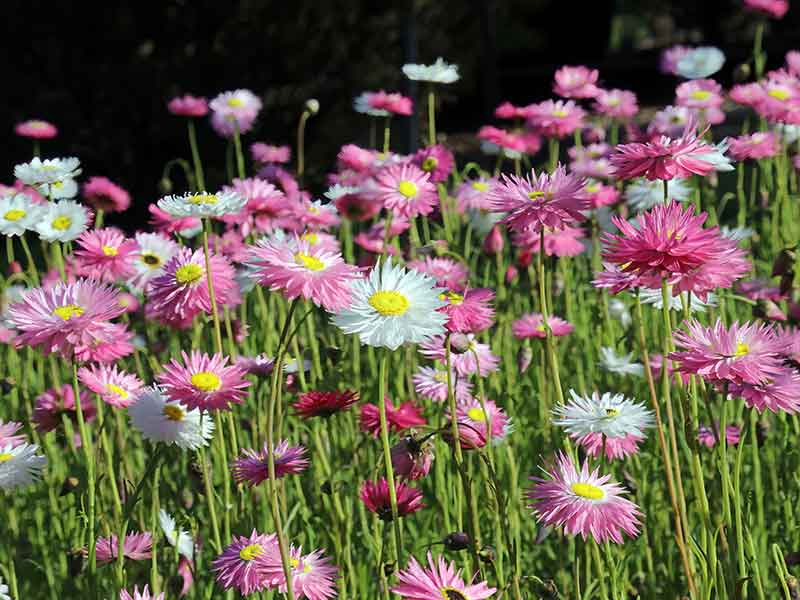
Everlasting Daisy — Xerochrysum bracteatum
Best ForSeasonal colour, sunny flower beds, cut flowers, containers and starting a native pollinator garden from seed.
Growing NotesGrow in full sun with good drainage and reliable moisture during establishment. Seed generally requires no pretreatment. Check the selected variety’s mature height.
Everlasting daisy is a colourful Australian native also known as strawflower or golden everlasting.
Its distinctive flower heads have firm, papery bracts surrounding a central cluster of small true flowers. The bracts retain their colour and texture as they dry, making everlasting daisies useful for both fresh and dried flower arrangements.
Garden selections are available in yellow, white, pink, orange and red shades. Growth habit varies from compact forms to taller, upright plants, so the selected variety determines where it fits in a garden bed.
Annual and perennial forms occur. Seed-grown varieties can provide seasonal flowers among slower-growing native shrubs, adding colour while the permanent planting develops.
The central florets offer feeding opportunities for visiting insects. For a pollinator planting, choose flowers with accessible centres and leave some blooms in the garden rather than harvesting every stem.
Everlasting daisies are particularly useful in sunny borders, mixed flower beds and containers. Taller selections can also be grown in a dedicated cutting patch.
Explore Everlasting Daisy Mixed Seeds.
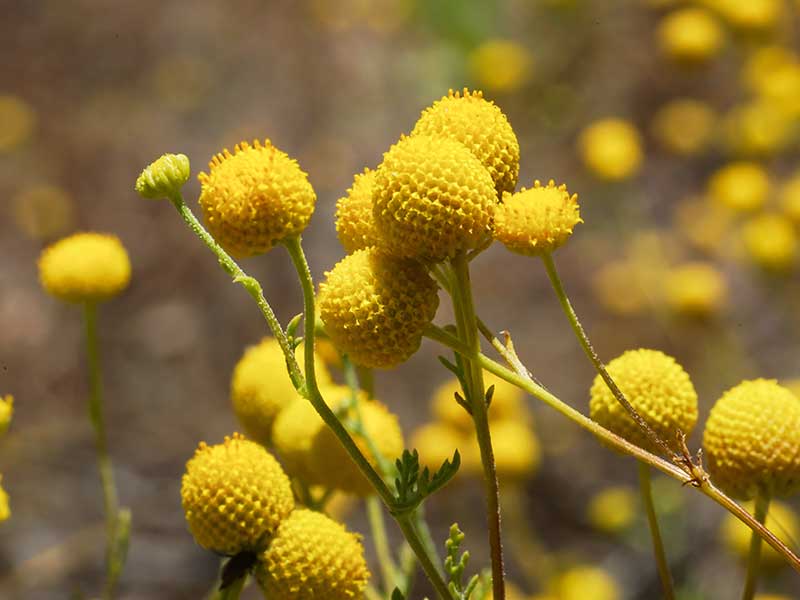
Yellow Buttons — Chrysocephalum apiculatum
Best ForLow flowering borders, sunny containers, rockeries and the front of a mixed native pollinator garden.
Growing NotesProvide a sunny position and good drainage. Growth and spread vary between forms. Seed generally needs no pretreatment; use cuttings to preserve named cultivars.
Yellow buttons, also called common everlasting, is a spreading native perennial with clusters of small, bright yellow flower heads.
Its foliage is often grey-green or silvery, providing a soft contrast with the yellow flowers and the greener foliage of surrounding plants.
Many forms grow to approximately 30 cm tall and spread around 50 cm to 1.5 metres wide. Some spread by suckering, so allow enough room for the particular form being planted.
The low growth habit makes yellow buttons useful along garden edges, between larger plants and beside paths where its flowers can be seen easily.
Flowering is commonly strongest in summer and autumn, although flowers may appear at other times under suitable conditions. This can help extend a mixed garden’s flowering display beyond spring.
Yellow buttons is included in Brisbane City Council’s pollinator garden guidance. It offers a low-growing flowering layer beneath shrubs and complements native daisies with larger flower heads.
Because the species occurs across a wide range of Australian environments, select material suited to local conditions. Good drainage is especially important when growing it through humid, wet summers.
Cut-leaf Daisy — Brachyscome multifida
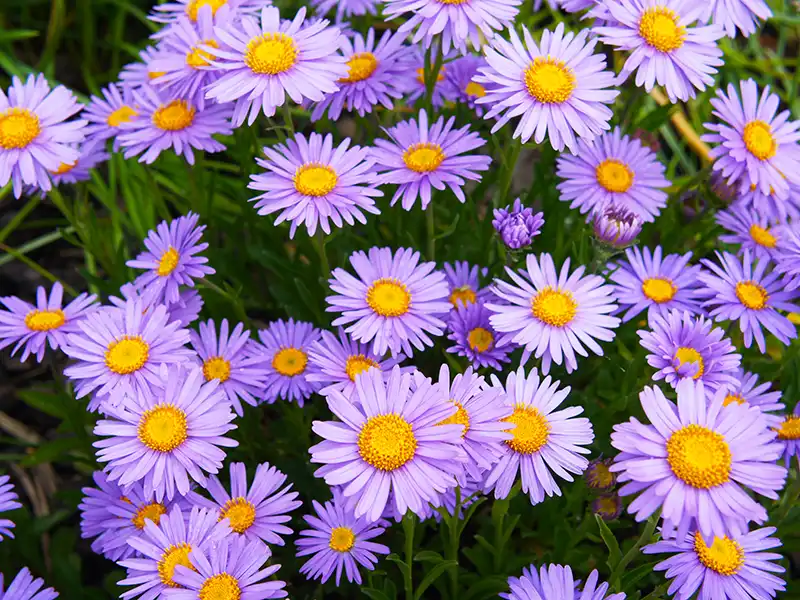
Best ForFlowering groundcover, small garden borders, hanging baskets, containers and softening the edges of retaining walls.
Growing NotesGrow in sun to semi-shade with adequate moisture. Cuttings or nursery plants are often more practical than seed, particularly when a specific cultivar is wanted.
Cut-leaf daisy is a low, spreading perennial native to parts of southern Queensland, New South Wales and Victoria.
It produces small daisy flowers above finely divided foliage. Flower colour varies between forms and includes mauve, blue, pink and white.
The branching stems form a dense, spreading mat, making it useful as a flowering groundcover. It can also trail over the edges of pots, hanging baskets and retaining walls.
Plants in a suitable sunny position can flower over a long period, sometimes throughout the year. This makes cut-leaf daisy useful where ongoing flowers are wanted alongside shrubs with shorter flowering seasons.
Its open daisy flower heads provide accessible feeding surfaces for flower-visiting insects.
Cut-leaf daisy can grow in semi-shade, although a brighter position generally supports a stronger flowering display. Maintain moisture during establishment and monitor container plants during hot weather.
It is a different species from Swan River daisy, Brachyscome iberidifolia. Named cut-leaf daisy cultivars should be propagated from cuttings to retain their particular flower colour and growth habit.
Bottlebrush — Callistemon Species
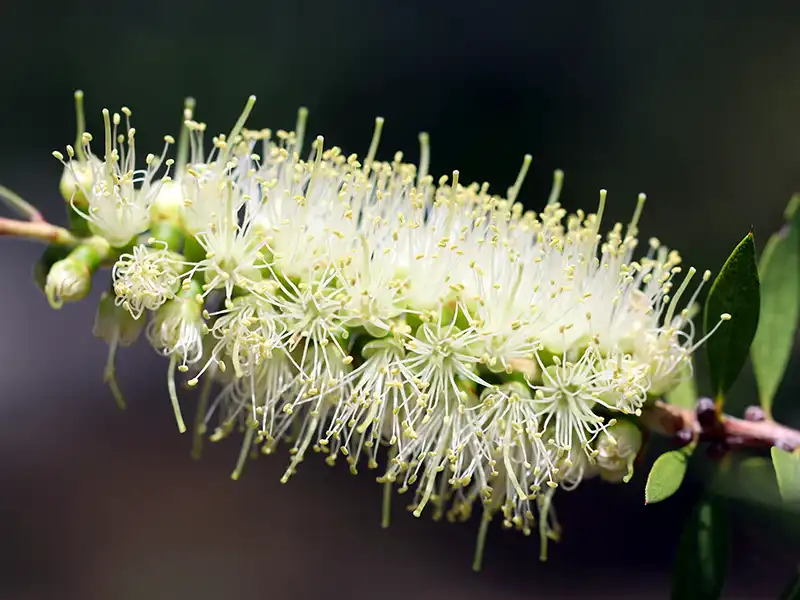
Best ForFlowering shrubs, garden structure, screening and providing food for bees, other insects and nectar-feeding birds.
Growing NotesA sunny position usually produces the best flowering. Match the species to the available space and soil conditions. Light pruning after flowering can help maintain shape.
Bottlebrushes are woody native shrubs and trees recognised by their cylindrical flower spikes.
Each spike contains many individual flowers. Their long, colourful stamens create the familiar bottlebrush appearance, with colours varying between species and forms.
The flowers attract nectar-feeding insects and birds, making bottlebrush useful as a larger flowering component in a mixed pollinator garden.
Crimson bottlebrush, Callistemon citrinus, produces bright red flower spikes and commonly develops into a substantial shrub around 4 metres tall. It is useful where a flowering shrub is wanted and sufficient space is available.
Willow bottlebrush, Callistemon salignus, has narrow foliage, pale flower spikes and attractive papery bark. It can develop into a tree approximately 5–12 metres tall, making it more appropriate for larger gardens than a small flower bed.
Different bottlebrush species tolerate different soil and moisture conditions. Many cope with periods of damp soil, but their requirements should be checked individually.
Bottlebrush can be grown from seed, although seedlings may vary. A seed-grown plant should not be expected to reproduce the compact habit of a named dwarf cultivar.
Choose by mature size. For a small garden or container, a nursery-propagated compact cultivar may be more suitable than a seed-grown shrub or tree species. Bottlebrush species may also be listed under the botanical genus Melaleuca.
Explore Crimson Bottlebrush Seeds and Willow Bottlebrush Seeds.
Tea Tree — Leptospermum polygalifolium
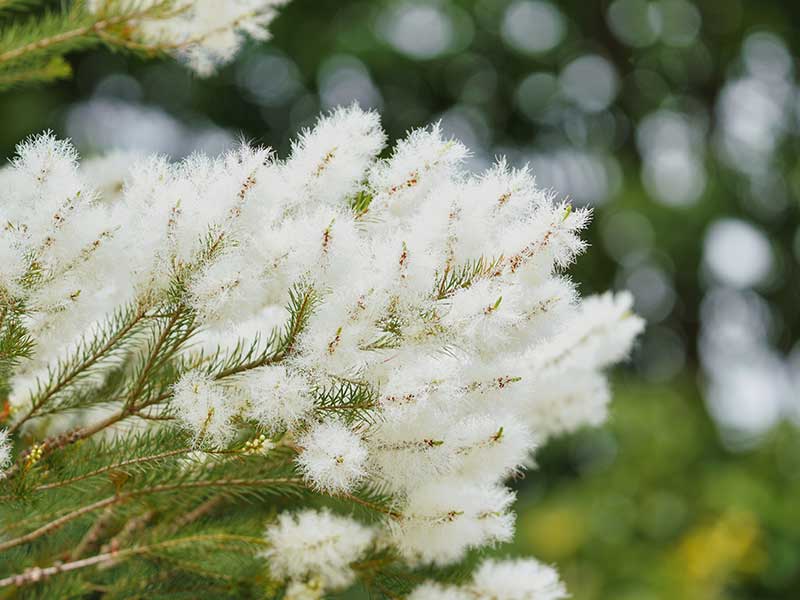
Best ForFlowering shrub layers, informal screening and adding small, open flowers to a mixed native pollinator garden.
Growing NotesSelect a locally suitable form and allow for its mature size. The species can be propagated from seed or cuttings; growth habit varies between forms.
Leptospermum polygalifolium is an eastern Australian tea tree occurring in Queensland and New South Wales.
It commonly forms a rounded shrub with small leaves and masses of white flowers. Typical forms grow approximately 1–4 metres tall and 1–3 metres wide, although lower-growing forms also occur.
The flowers are generally around 1–2 cm across and appear mainly in late spring and summer. Their open shape provides a different flower structure from the dense spikes of bottlebrush or the pea flowers of native climbers.
Tea trees are useful for adding a permanent shrub layer to a garden. Their branching growth can provide structure behind lower-growing daisies and help create a more varied planting.
The species is variable, and some forms flower more heavily than others. Choose a locally proven form or suitable seed provenance rather than assuming all plants will have the same size and flowering performance.
Seed-grown plants can be useful where variation is acceptable. If a particular compact or weeping form is required, choose nursery stock propagated to maintain those characteristics.
Purple Coral Pea — Hardenbergia violacea
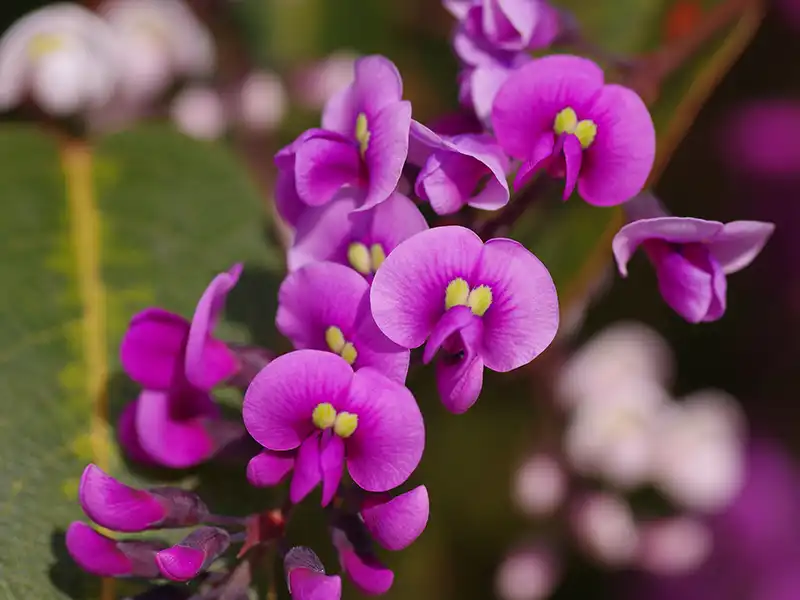
Best ForWinter and spring flowers, fences, trellises and adding a native flowering climber to a pollinator garden.
Growing NotesProvide support for climbing forms and a well-drained position in sun to partial shade. Seed needs suitable scarification or hot-water pretreatment before sowing.
Purple coral pea, also called native sarsaparilla, is a native pea-flowered plant that usually grows as a twining climber.
Its stems wind around nearby supports, while dark green leaves provide a leafy backdrop to clusters of small flowers.
Flowers are usually violet-purple, although pink and white forms also occur. Flowering is concentrated in winter and spring, making it useful alongside plants that bloom mainly during the warmer months.
Native pea flowers provide a different feeding opportunity from open daisies, helping broaden the range of flowers available to visiting bees.
Climbing forms can be trained over a trellis or fence, allowing gardeners to add flowers without using the same ground space as another shrub. Shrubby and trailing forms also exist, but their growth habit should be confirmed before planting.
Sunnier positions generally produce better flowering. Select material from a similar climate, as forms originating in different environments can perform differently in humid subtropical conditions.
The seed has an impermeable coat. Suitable pretreatment allows water to enter and helps initiate germination. Follow the supplier’s instructions for the specific seed lot.
Growing a named form? Seedlings may differ from the parent plant. Choose plants propagated from cuttings if you need a particular flower colour, compact habit or named cultivar.
Native Pollinator Plant Comparison
| Plant | Garden Role | Position | Starting Method |
|---|---|---|---|
| Everlasting Daisy | Seasonal flowers, borders and containers; size varies | Full sun and good drainage | Seed; generally no pretreatment |
| Yellow Buttons | Low spreading flowers; many forms around 30 cm tall | Full sun and good drainage | Seed or cuttings; cuttings for named cultivars |
| Cut-leaf Daisy | Flowering groundcover, pots and hanging baskets | Sun to semi-shade | Cuttings or nursery plants often most practical |
| Bottlebrush | Flowering shrub or tree; check mature size | Full sun; soil requirements vary by species | Seed for species; cuttings for named cultivars |
| Tea Tree Leptospermum polygalifolium |
Flowering shrub; typical forms around 1–4 m tall | Choose a site suited to the selected form | Seed or cuttings |
| Purple Coral Pea | Native climber with winter and spring flowers | Sun to partial shade and good drainage | Pretreated seed; cuttings for named cultivars |
Native Plants for Small Gardens, Pots and Partial Shade
Small Gardens and Groundcovers
Use yellow buttons or cut-leaf daisies at the front of beds. Add everlasting daisies for seasonal colour. Check mature spread as well as height before planting.
Containers and Balconies
Choose compact forms, pots with drainage holes and a suitable native potting mix. Containers need regular moisture checks, especially during hot or windy weather.
Partial Shade
Cut-leaf daisy and purple coral pea can suit semi-shaded positions. Deep shade is different: plants may survive but flower sparsely. Use the brightest suitable area for your main flowers.
Larger Gardens
Consider a flowering shrub or tree only where there is room for its mature canopy. A nursery-grown compact cultivar may be more manageable than a seed-grown tree species.
A container garden can provide flowers, but it cannot supply every habitat requirement. Nearby vegetation and undisturbed nesting areas also influence which insects visit.
How to Create a Native Pollinator Garden
Begin with the conditions you have, then build diversity gradually. A practical starting combination is a patch of daisies, one appropriately sized flowering shrub and purple coral pea where a support is available.
- Check the site. Observe sunlight, drainage, wind and space. Coastal gardens and frosty inland sites need different selections.
- Plant in small groups. Use repeated patches of flowers rather than scattering single plants throughout the garden.
- Extend the flowering period. Combine winter–spring flowers with plants that bloom in warmer months. Observe your own flowering gaps rather than expecting fixed dates.
- Retain habitat. Where appropriate, keep undisturbed soil, stems and timber. Avoid covering every possible nesting area with paving or deep mulch.
- Reduce pesticide exposure. Use other pest controls where possible. Follow product labels and avoid exposing bees on flowering plants.
- Include safe water access. A shallow dish with stones above the water offers landing places. Refresh and clean it regularly.
Butterflies also need suitable host plants for their caterpillars. Choose host species for butterflies found locally; a nectar flower alone does not complete their life cycle.
For local design ideas, see Brisbane City Council’s pollinator garden guide.
When to Plant Native Flowers in South East Queensland
There is no single sowing month for every native species. Follow the seed packet’s temperature and seasonal guidance, and separate seed sowing from transplanting established plants.
As a practical garden-planning approach, mild autumn conditions can make establishment easier where moisture is available. Spring can also work, provided seedlings receive water as temperatures rise. Avoid transplanting during heatwaves, into saturated soil or immediately before an expected frost.
Fine-seeded plants raised in trays need protection from drying winds and heavy rain. Summer sowing is possible for suitable species, but requires closer moisture management. Inland frost pockets need more caution than sheltered coastal gardens.
How to Grow Native Plants from Seed
Native seed germination depends on the species. Some flower seeds need no pretreatment, while hard-coated seeds require their dormancy to be broken.
Fine Flower Seeds
Sow everlasting daisies into a clean, free-draining seed-raising mix. Follow packet directions for surface sowing or very light covering; do not bury fine seed deeply.
Hard-coated Seeds
Purple coral pea requires pretreatment. Scarification or the correct hot-water method can help water enter the seed. Treatment is species-specific.
- Confirm the botanical name and read the supplier’s instructions.
- Use clean trays or tubes with drainage and a suitable seed-raising mix.
- Apply only the pretreatment recommended for that species.
- Sow at the recommended depth and label the tray.
- Keep the mix evenly moist without leaving it saturated.
- Gradually acclimatise established seedlings before planting out.
Do not apply boiling water or smoke treatment to every native seed. Everlasting daisies and yellow buttons generally need no pretreatment. Germination and time to flowering vary; woody plants need more patience than seasonal flower crops.
Seed versus cultivar: seed-grown plants can vary in height, colour and habit. If you need a particular dwarf form, buy a plant propagated to preserve that cultivar.
Common Mistakes When Planting for Bees
- Choosing by “native” alone: check climate suitability and local ecological relevance.
- Ignoring mature size: some bottlebrushes become trees, even if the seedling starts small.
- Expecting flowers in deep shade: place sun-loving plants where they receive enough light.
- Scattering seed onto thick lawn or mulch: prepare a weed-free seedbed or start in trays.
- Expecting instant drought tolerance: seedlings and new transplants need establishment watering.
- Growing only one flowering species: broaden flower types and seasons as space allows.
Frequently Asked Questions
What native plants attract bees in Brisbane?
Native daisies, bottlebrushes, tea trees and native peas are useful groups to consider. Choose plants that suit your soil, sunlight and available space, rather than relying on a single “best” species.
Do bees like bottlebrush?
Yes. Bottlebrush flowers attract nectar-feeding insects, including bees. Species differ in size and flowering behaviour, so select the plant for your garden conditions.
Do bees like strawflowers?
Everlasting daisies, also called strawflowers, can provide accessible flowers for visiting bees. Their papery bracts surround the true flowers in the centre; choose forms with exposed centres.
Can I grow native plants for pollinators in pots?
Yes. Compact daisies are useful options. Match the container to the mature plant, provide drainage and keep watering consistent. A potted flowering plant can contribute food even in a small space.
Can I just scatter native flower seeds?
Some species can be direct-sown, but seed needs contact with a suitable prepared surface and reliable moisture. Scattering onto established grass or deep mulch usually gives poor establishment.
Do all native seeds need smoke or hot water?
No. Requirements depend on the species. Everlasting daisies generally need neither, while purple coral pea has a hard seed coat that benefits from suitable pretreatment.
Will native flowers attract butterflies as well as bees?
Some will provide nectar for adult butterflies. Include locally appropriate caterpillar host plants as well if you want to support breeding butterflies.
Where can I buy Australian native seeds?
Seedmart stocks Australian native seeds for garden planting. Read the individual product’s botanical name and growing information before choosing. For restoration, seek confirmed local provenance suitable for your project.
Start Your Native Pollinator Garden
Begin with a manageable patch of flowers, choose plants suited to your conditions and add diversity over time. Growing from seed can be a practical way to establish seasonal native flowers alongside longer-lived garden plants.