
Crimson Bottlebrush Seeds
Grow one of Australia’s classic native flowering shrubs, producing brilliant crimson-red bottlebrush flowers that attract bees, birds and other pollinators. Crimson Bottlebrush (Callistemon citrinus) is a hardy evergreen shrub valued for its colourful flower spikes, aromatic foliage and adaptability to a wide range of garden and landscape conditions.
Native to eastern and south-eastern Australia, Crimson Bottlebrush occurs naturally in Queensland, New South Wales and Victoria. It is particularly associated with moist sites, including swampy areas and rocky watercourses, but is adaptable in cultivation.
Its dense red flower spikes make it an excellent choice for native gardens, screening, habitat plantings and landscape projects.
Crimson Bottlebrush Seed Details
| Botanical name | Callistemon citrinus |
|---|---|
| Synonym | Melaleuca citrina |
| Common name | Crimson Bottlebrush |
| Family | Myrtaceae |
| Plant type | Australian native evergreen shrub |
| Approximate height | Usually approximately 1–3 m; size varies with form and growing conditions |
| Foliage | Narrow green leaves, approximately 3–7 cm long; foliage has a lemon-like scent when crushed |
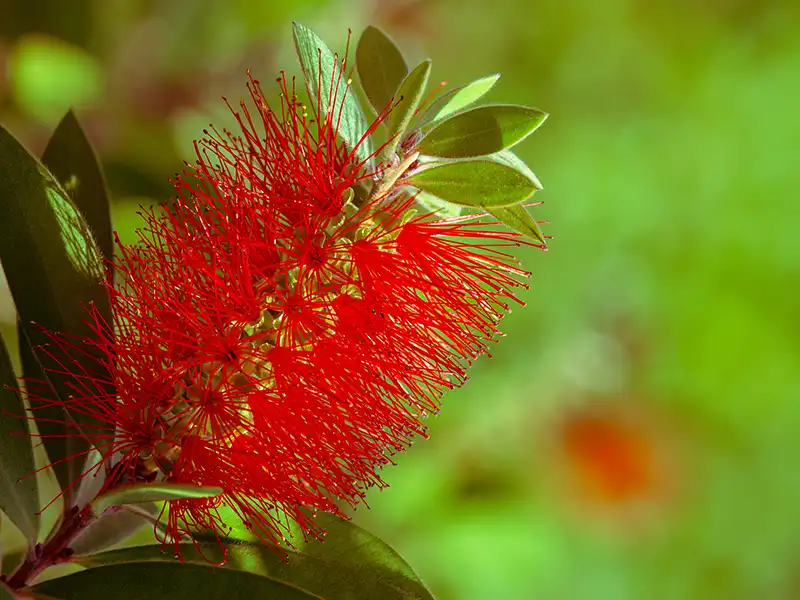
| Flower colour | Bright crimson to red |
| Flower form | Dense cylindrical bottlebrush-shaped flower spikes |
| Flower spike size | Approximately 6–10 cm long and 4–7 cm across |
| Flowering period | Mainly spring to early summer; additional flowering may occur depending on climate and conditions |
| Position | Full sun preferred for strongest flowering; some partial shade tolerated |
| Soil | Adaptable to a range of soils; generally performs best with reasonable drainage and regular moisture |
| Sowing depth | Surface sow or cover only very lightly; seed is very fine |
| Uses | Native gardens, screening, hedging, habitat gardens, pollinator plantings and landscaping |
Why Grow Crimson Bottlebrush?
- Classic Australian native flowering shrub.
- Produces striking crimson-red bottlebrush flower spikes.
- Flowers provide a valuable nectar resource for birds, bees and other pollinators.
- Evergreen foliage provides year-round structure in gardens and landscapes.
- Adaptable to a broad range of soils and growing conditions.
- Responds well to pruning and can be maintained as a denser shrub or screen.
- Suitable for native gardens, habitat plantings, screening and general landscaping.
How to Grow Crimson Bottlebrush from Seed
Crimson Bottlebrush can be readily propagated from seed. The seed is extremely fine and should be sown close to the surface rather than buried deeply.
- Prepare the growing medium. Fill trays, punnets or small pots with a fine, clean and freely draining seed-raising mix. Level and gently firm the surface.
- Sow shallowly. Scatter the fine seed thinly over the surface. Press gently into the growing medium or cover with only a very fine layer of seed-raising mix.
- Water carefully. Use a fine mist or gentle watering method to avoid washing the tiny seeds away.
- Maintain moisture. Keep the growing medium consistently moist while germination occurs, but avoid unnecessarily saturated propagation conditions.
- Provide good light. Keep trays in a warm, bright position protected from harsh direct conditions while seedlings are very small.
- Allow seedlings to establish. Continue gentle watering and good airflow as seedlings develop.
- Transplant when established. Pot seedlings individually once they are large enough to handle, then gradually acclimatise them before planting into their permanent position.
Brilliant Crimson Bottlebrush Flowers
The flowers are the defining feature of Callistemon citrinus. Numerous small flowers are arranged closely together in cylindrical spikes, with the long bright-red stamens creating the familiar bottlebrush appearance.
Flower spikes are commonly approximately 6–10 cm long and can create a striking display against the evergreen foliage.
Flowering occurs mainly during spring and early summer, although plants may produce additional flowering flushes under favourable conditions.
Bottlebrush for Pollinator and Habitat Gardens
The conspicuous flowers make Crimson Bottlebrush a useful addition to wildlife-friendly gardens and mixed Australian native plantings.
- Bird-friendly gardens: nectar-rich flowers attract visiting nectar-feeding birds.
- Pollinator gardens: flowers are visited by bees and other insects.
- Native gardens: combines well with other Australian shrubs, grasses and flowering species.
- Screening: established plants can be pruned to encourage denser branching.
- Landscape plantings: evergreen foliage provides structure between flowering periods.
What Soil Is Best for Crimson Bottlebrush?
Crimson Bottlebrush is adaptable to a broad range of soil conditions. In its natural habitat it is frequently associated with swampy areas and rocky watercourses, demonstrating its ability to cope with sites that receive regular moisture.
In gardens, plants generally perform well where moisture is available but the site has reasonable drainage. Once established, plants are hardy and adaptable, although growth and flowering will vary with local soil, rainfall and climate.
Does Crimson Bottlebrush Need Full Sun?
A sunny position is recommended for the strongest flowering. Plants can tolerate some partial shade, but flowering is generally more prolific where the canopy receives good sunlight.
For screening or landscape plantings, allow enough room for plants to develop their natural branching habit or prune after flowering where a denser shape is required.
Pruning Crimson Bottlebrush
Crimson Bottlebrush responds well to pruning. Light pruning after flowering can help maintain shape, encourage branching and keep established shrubs denser.
More substantial pruning can also be tolerated by established plants where rejuvenation or size control is required.
Tips for Growing Crimson Bottlebrush Successfully
- Surface sow the fine seed or cover only very lightly.
- Use gentle watering during propagation to avoid washing seed away.
- Maintain consistent moisture while seedlings establish.
- Provide good light and airflow as seedlings develop.
- Choose a sunny permanent position for stronger flowering.
- Water young plants regularly during establishment.
- Prune established plants where a denser shrub or screen is desired.
- Allow sufficient space for the plant’s mature height and spread.
Frequently Asked Questions
What is Crimson Bottlebrush?
Crimson Bottlebrush is an Australian native flowering shrub botanically known as Callistemon citrinus. It is known for its bright-red cylindrical flower spikes.
Is Callistemon citrinus the same as Melaleuca citrina?
Melaleuca citrina is a botanical synonym of Callistemon citrinus. Classification of the bottlebrushes within Callistemon or the broader genus Melaleuca has varied between botanical authorities.
Is Crimson Bottlebrush native to Australia?
Yes. The species occurs naturally in eastern and south-eastern Australia, including Queensland, New South Wales and Victoria.
How tall does Crimson Bottlebrush grow?
PlantNET describes the species as a shrub usually approximately 1–3 m high. Size can vary between individual plants and according to growing conditions.
What colour are Crimson Bottlebrush flowers?
The stamens are typically bright red, producing the characteristic crimson-red bottlebrush flower spikes. Rare colour variation can occur in naturally occurring plants.
When does Crimson Bottlebrush flower?
Flowering is mainly during spring and early summer. Depending on climate and growing conditions, plants may also produce another flowering flush at other times of the year.
How deep should Crimson Bottlebrush seeds be planted?
The fine seed should be surface sown or covered only very lightly. Avoid burying bottlebrush seed deeply.
Do Crimson Bottlebrush seeds need pre-treatment?
Special scarification or hot-water treatment is not normally required. Bottlebrushes can be propagated readily from seed.
Does Crimson Bottlebrush need full sun?
A sunny position is recommended for the best flowering performance, although established plants can tolerate a range of garden conditions.
Can Crimson Bottlebrush tolerate wet soil?
The species naturally occurs around swamps and rocky watercourses and has useful tolerance of moist conditions. In cultivation, it is adaptable but generally performs well with regular moisture and reasonable drainage.
Can Crimson Bottlebrush be pruned?
Yes. Callistemon citrinus responds well to pruning and established plants can tolerate relatively substantial pruning where required.
Will Crimson Bottlebrush grown from seed be identical to a named cultivar?
No. Seed-grown plants can vary. Named bottlebrush cultivars should normally be propagated vegetatively if the characteristics of the cultivar need to be retained.
Grow Australian Crimson Bottlebrush from Seed
With brilliant crimson-red flower spikes, evergreen foliage and a hardy, adaptable growth habit, Callistemon citrinus is an excellent Australian native shrub for gardens, screening, habitat plantings and landscaping.
For best results, sow the fine seed shallowly, maintain consistent moisture during propagation and establish plants in a sunny position with adequate moisture for healthy growth and strong flowering.
Reviews
There are no reviews yet.