
Willow Bottlebrush Seeds
Grow an attractive Australian native bottlebrush with soft willow-like foliage, papery bark and cream to pale-yellow flower spikes. Willow Bottlebrush (Callistemon salignus) is a hardy evergreen shrub or small tree valued for its graceful foliage, colourful pinkish new growth and attractive bottlebrush flowers.
Native to eastern Australia, Willow Bottlebrush occurs naturally from south-east Queensland through New South Wales, particularly around damp creeks, river flats and other moist locations. Established plants are adaptable in cultivation and can tolerate periods of dry weather once established.
Its combination of pale flowers, narrow foliage and papery bark makes it useful for native gardens, screening, habitat plantings and larger landscape projects.
Willow Bottlebrush Seed Details
| Botanical name | Callistemon salignus |
|---|---|
| Synonym | Melaleuca salicina |
| Common name | Willow Bottlebrush |
| Family | Myrtaceae |
| Plant type | Australian native evergreen shrub or small tree |
| Approximate height | Approximately 3–10 m; commonly around 7–8 m in cultivation |
| Growth habit | Upright shrub or small tree with flexible branches and soft, somewhat pendulous foliage |
| Bark | Soft, papery and peeling |
| Foliage | Narrow, willow-like leaves, mostly approximately 6–9 cm long; new growth may be pink to purplish-pink |
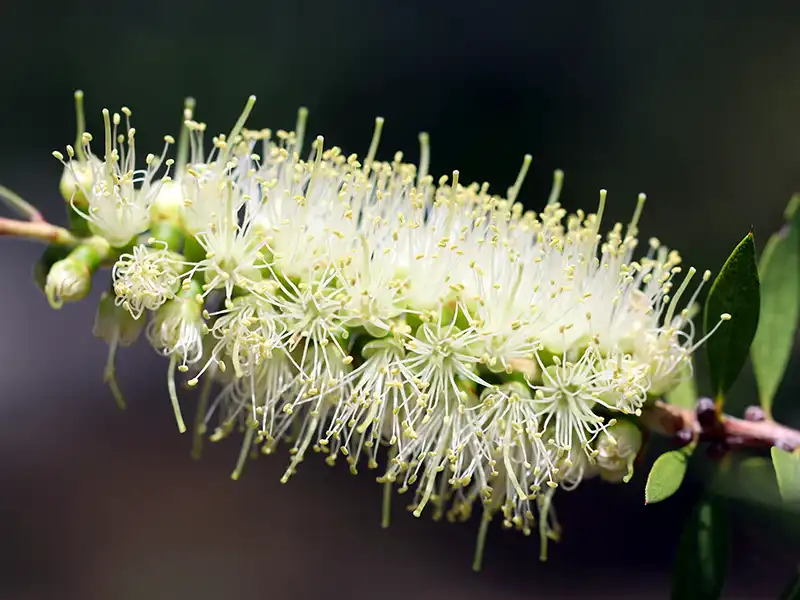
| Flower colour | Creamy-white to pale yellow |
| Flower form | Cylindrical bottlebrush-shaped flower spikes |
| Flower spike size | Usually approximately 4–5 cm long and 3–3.5 cm across |
| Flowering period | Mainly spring to summer; timing varies with climate and location |
| Position | Full sun to light shade; flowering is generally strongest in a sunny position |
| Soil | Adaptable to a range of soils and tolerant of moist conditions; grows best where adequate moisture is available |
| Sowing depth | Surface sow or cover only very lightly; seed is extremely fine |
| Uses | Native gardens, screening, habitat plantings, larger gardens, parks, windbreaks and landscape projects |
Why Grow Willow Bottlebrush?
- Attractive Australian native shrub or small tree with graceful willow-like foliage.
- Produces cream to pale-yellow bottlebrush flower spikes.
- Colourful pink to purplish-pink new foliage adds ornamental interest.
- Distinctive papery bark provides year-round character.
- Flowers provide nectar for visiting birds and insects.
- Adaptable to a range of garden soils, including sites with imperfect drainage.
- Tolerates periods of dry weather once established.
- Useful for screening, native gardens, habitat plantings and larger landscapes.
How to Grow Willow Bottlebrush from Seed
Willow Bottlebrush can be readily propagated from seed. The seeds are very fine and should be sown close to the surface rather than buried deeply.
- Prepare the growing medium. Fill trays, punnets or small pots with a fine, clean seed-raising mix. Level and gently firm the surface.
- Sow shallowly. Scatter the fine seed thinly over the surface. Press gently into the growing medium or cover with only a very fine layer of seed-raising mix.
- Water carefully. Use a fine mist or gentle watering method to avoid washing the small seeds away.
- Maintain moisture. Keep the growing medium consistently moist during germination without leaving it unnecessarily waterlogged.
- Provide good light. Keep the propagation trays in a bright position protected from harsh conditions while seedlings are very small.
- Allow seedlings to establish. Maintain good airflow and consistent moisture as the seedlings develop.
- Transplant when established. Pot seedlings individually once they are large enough to handle, then gradually acclimatise them before planting into their permanent position.
Willow-like Foliage, Papery Bark and Pale Flowers
Willow Bottlebrush has a softer appearance than many other bottlebrush species. The narrow leaves are generally approximately 6–9 cm long, while the flexible branches can give established plants a graceful appearance.
New foliage is particularly ornamental, developing pinkish to purplish-pink colouring before maturing to green. Mature plants also develop characteristic soft, papery bark.
The cylindrical flower spikes are generally creamy-white to pale yellow and approximately 4–5 cm long. PlantNET records flowering mainly from September to November in New South Wales, while cultivated plants may continue flowering into summer depending on climate.
Willow Bottlebrush for Gardens and Landscaping
The combination of evergreen foliage, ornamental new growth, pale flowers and papery bark makes Willow Bottlebrush useful for a range of landscape applications.
- Native gardens: suitable as a larger feature shrub or small tree.
- Screening: established plants can provide substantial evergreen screening.
- Habitat gardens: flowers provide resources for visiting wildlife.
- Moist sites: particularly useful where soil remains periodically moist.
- Large landscapes: suitable for parks, acreage and larger garden settings.
- Mixed native plantings: cream flowers contrast effectively with red, pink and mauve-flowering Australian natives.
Where Does Willow Bottlebrush Grow Naturally?
Willow Bottlebrush is native to eastern Australia. Its natural range extends from south-east Queensland through New South Wales. PlantNET records it primarily from low-lying river flats and damp creeks, while ANPSA describes it as occurring in forests and woodlands, usually in damp locations.
This natural association with moist sites makes the species useful for garden locations where regular moisture is available. However, established plants are considerably more adaptable than their natural habitat might suggest.
What Soil Is Best for Willow Bottlebrush?
Willow Bottlebrush is adaptable to a broad range of soils. It performs particularly well where adequate moisture is available and can tolerate soils with less-than-perfect drainage.
ANPSA notes that the species is hardy in cultivation and can withstand extended dry periods once established.
Young plants should still receive regular watering while developing their root systems, particularly during hot or dry weather.
Willow Bottlebrush for Wildlife and Pollinator Gardens
Bottlebrush flowers provide nectar when in bloom and can form part of a diverse Australian native habitat garden.
The pale flowers are especially useful for adding another flowering colour to native landscapes dominated by red and pink bottlebrush varieties. Combine Willow Bottlebrush with other native plants flowering at different times to provide a longer seasonal sequence of floral resources.
Tips for Growing Willow Bottlebrush Successfully
- Surface sow the very fine seed or cover only lightly.
- Use a fine mist or gentle watering method during propagation.
- Maintain consistent moisture while seedlings establish.
- Provide good light and airflow after germination.
- Choose a sunny position where strong flowering is required.
- Water young plants regularly during establishment.
- Allow sufficient room for the plant to develop into a substantial shrub or small tree.
- Once established, plants can tolerate periods of comparatively dry conditions.
Frequently Asked Questions
What is Willow Bottlebrush?
Willow Bottlebrush is an Australian native shrub or small tree botanically known as Callistemon salignus. It is distinguished by its narrow willow-like foliage, papery bark, colourful new growth and pale bottlebrush flowers.
Is Callistemon salignus the same as Melaleuca salicina?
Melaleuca salicina is a botanical synonym of Callistemon salignus. Classification of bottlebrushes within Callistemon or the broader genus Melaleuca varies between botanical treatments.
Is Willow Bottlebrush native to Australia?
Yes. It is native to eastern Australia and occurs naturally in Queensland and New South Wales.
How tall does Willow Bottlebrush grow?
PlantNET records Willow Bottlebrush as a large shrub or small tree approximately 3–10 m high. ANPSA notes that cultivated plants are commonly around 7–8 m tall.
What colour are Willow Bottlebrush flowers?
The typical species produces creamy-white to pale-yellow flower spikes. Pink-flowered cultivated forms also exist, but seed sold as the species should not be assumed to reproduce the characteristics of a named cultivar.
When does Willow Bottlebrush flower?
PlantNET records flowering from September to November in New South Wales. ANPSA describes flowering from late spring into mid-summer, with occasional additional flowers in autumn. Timing varies with climate and growing conditions.
Why is it called Willow Bottlebrush?
The common name refers to the plant’s elongated, narrow leaves and soft foliage, which have a willow-like appearance. The botanical name salignus also refers to this resemblance.
How deep should Willow Bottlebrush seeds be planted?
The very fine seed should be surface sown or covered only very lightly. Avoid burying bottlebrush seed deeply.
Do Willow Bottlebrush seeds require pre-treatment?
Special scarification or hot-water treatment is not normally required. Willow Bottlebrush can be propagated readily from seed.
Does Willow Bottlebrush tolerate wet soil?
Yes. The species naturally occurs around damp creeks and low-lying river flats and is tolerant of soils with imperfect drainage.
Is Willow Bottlebrush drought tolerant?
Established plants can tolerate extended dry periods, although the species generally grows best where adequate moisture is available.
Can Willow Bottlebrush be used for screening?
Yes. Its evergreen foliage and potential size make it suitable for screening, larger hedges and landscape plantings where sufficient space is available.
Will Willow Bottlebrush grown from seed reproduce a named cultivar?
Not reliably. Named cultivars should be propagated vegetatively where their specific flower colour or growth characteristics need to be maintained.
Grow Australian Willow Bottlebrush from Seed
With graceful willow-like foliage, colourful new growth, pale bottlebrush flowers and attractive papery bark, Callistemon salignus is a versatile Australian native for gardens, screening, habitat plantings and larger landscapes.
For best results, sow the fine seed shallowly, maintain consistent moisture during establishment and provide sufficient space for plants to develop into substantial shrubs or small trees.
Reviews
There are no reviews yet.