

Holy Basil Tulsi Red Herb Seeds
Botanical name: Ocimum tenuiflorum
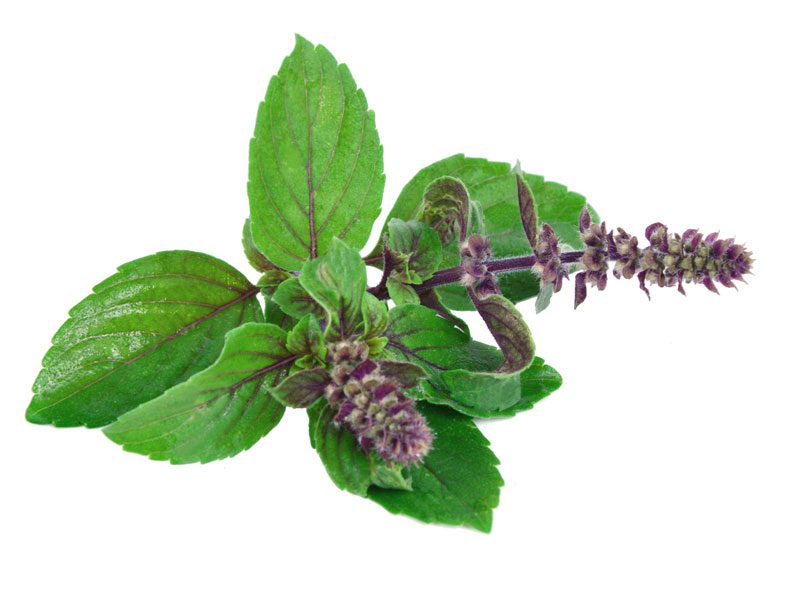
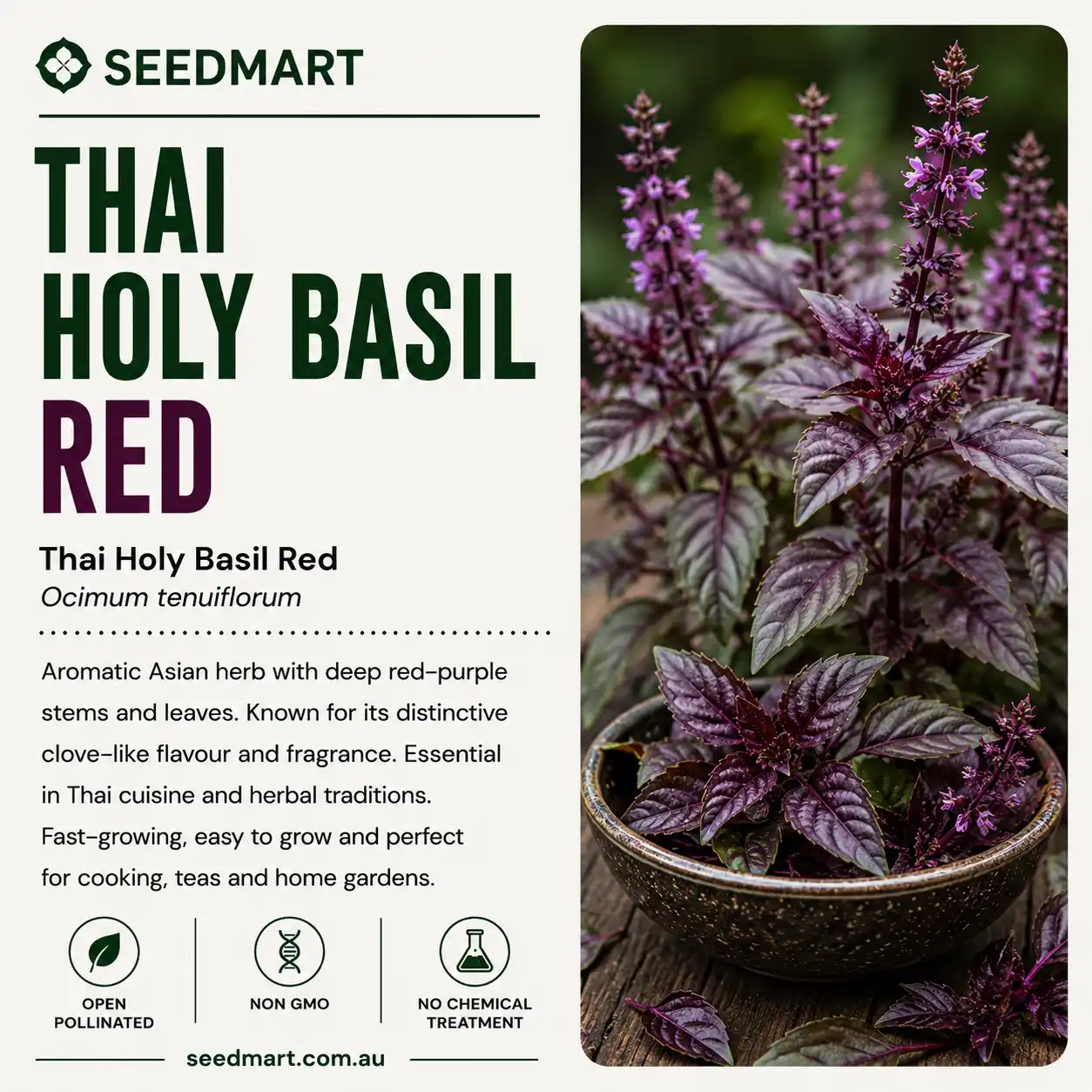
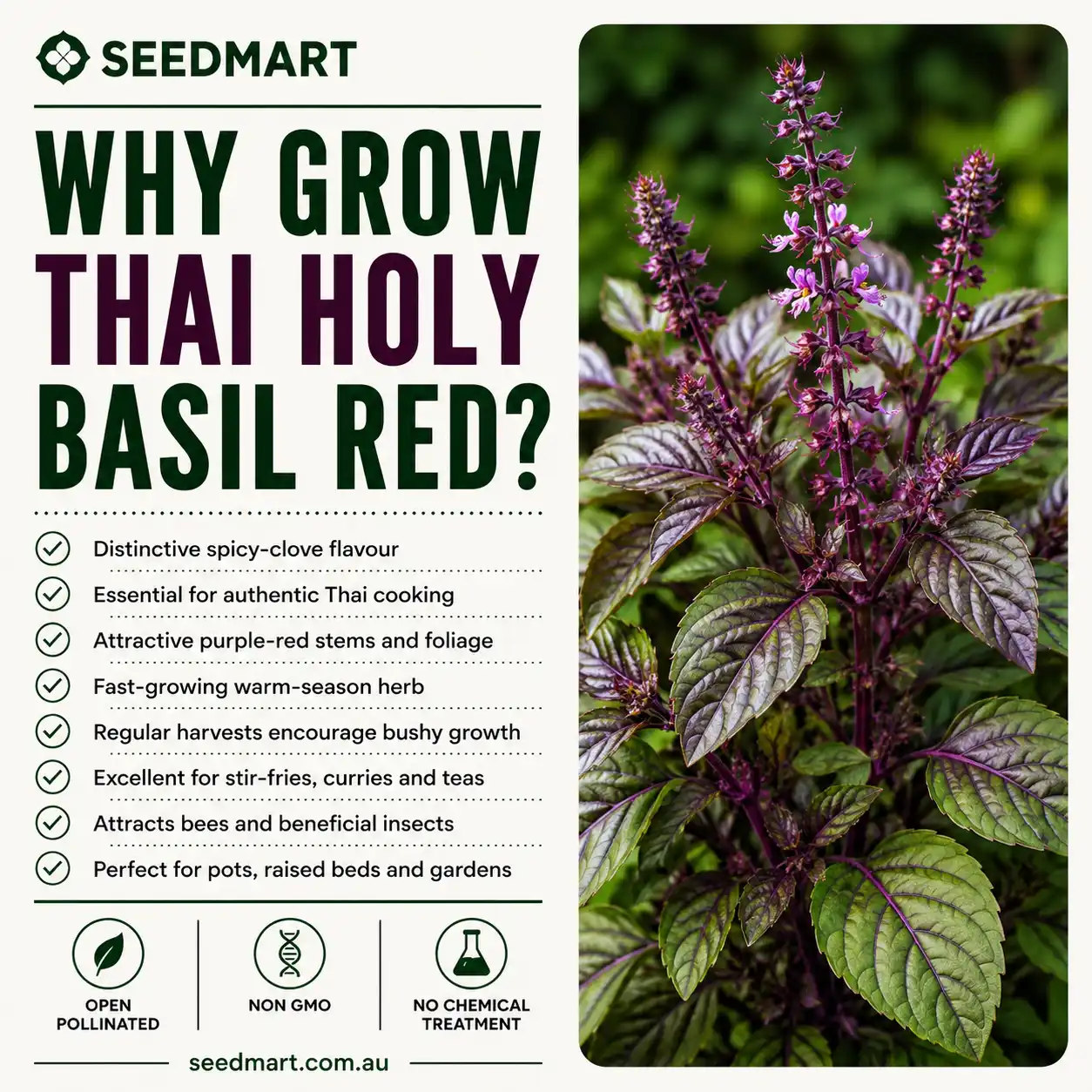
Holy Basil Red is a fragrant, warm-season herb from the Holy Basil or Tulsi group. Also known as Sacred Basil, Tulasi or Red Tulsi, it is valued for its spicy, clove-like aroma, attractive purple-red stems and traditional use as a culinary and aromatic herb.
This vigorous basil variety is ideal for herb gardens, kitchen gardens, raised beds and containers. It grows quickly in warm conditions and responds well to regular harvesting.
Key Attributes
Traditional Tulsi HerbAromatic Holy Basil grown for its distinctive foliage, culinary uses and herbal infusions. |
Spicy, Aromatic LeavesDistinctive clove-like flavour with peppery, warm basil notes. |
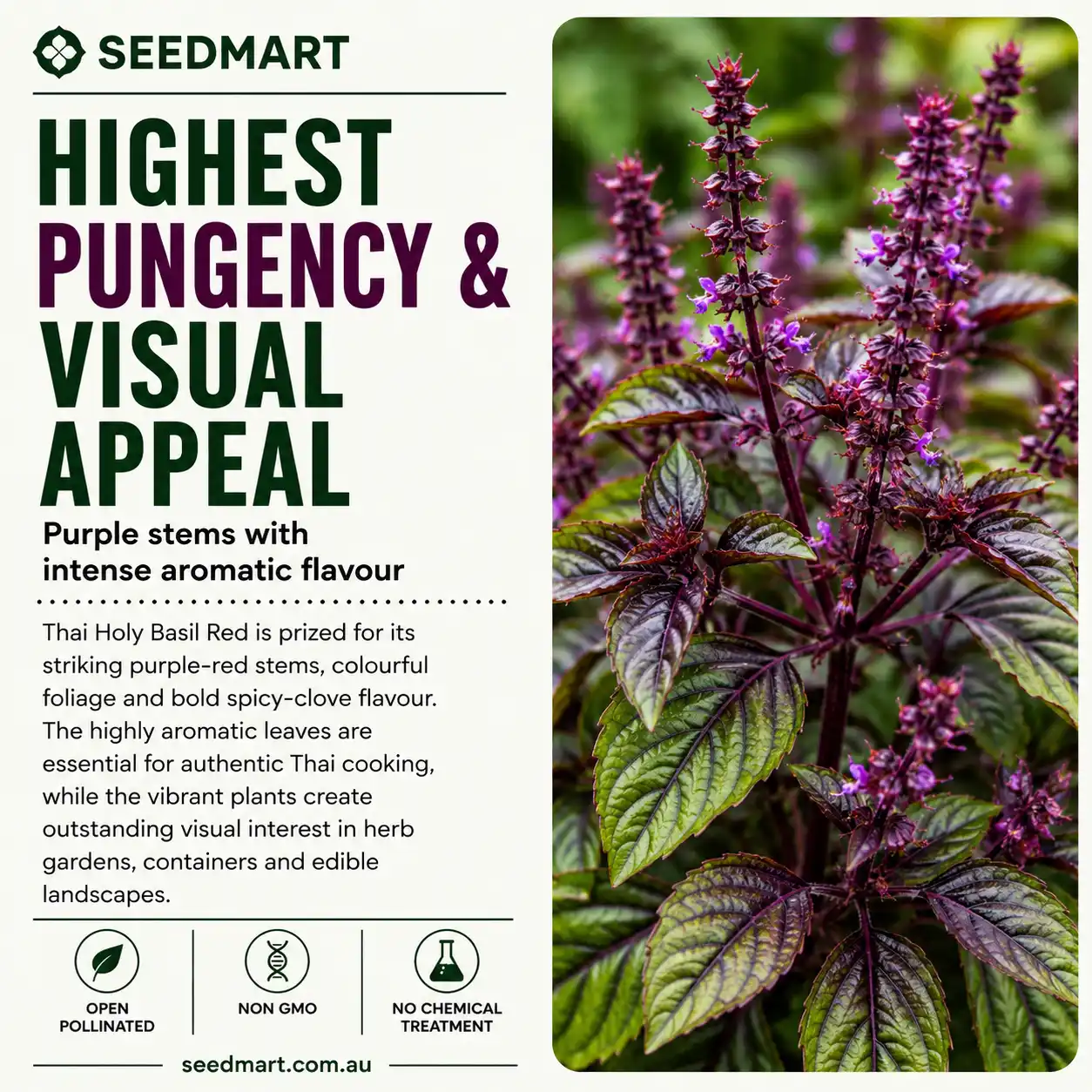
Purple-Red ColourAttractive purple-red stems and green to purple-tinged foliage add colour to herb gardens. |
Fast GrowingEstablishes quickly in warm conditions and produces well with regular picking. |
Pollinator FriendlyFragrant flower spikes attract bees and other beneficial insects when allowed to bloom. |
Suitable for PotsWell suited to containers, raised beds, balconies, patios and kitchen gardens. |
About Holy Basil Tulsi Red
Holy Basil Tulsi Red produces upright, branching plants with strongly aromatic leaves, colourful stems and fragrant flower spikes. The leaves are generally green with varying degrees of purple colouring, while the stems commonly develop distinctive red-purple tones.
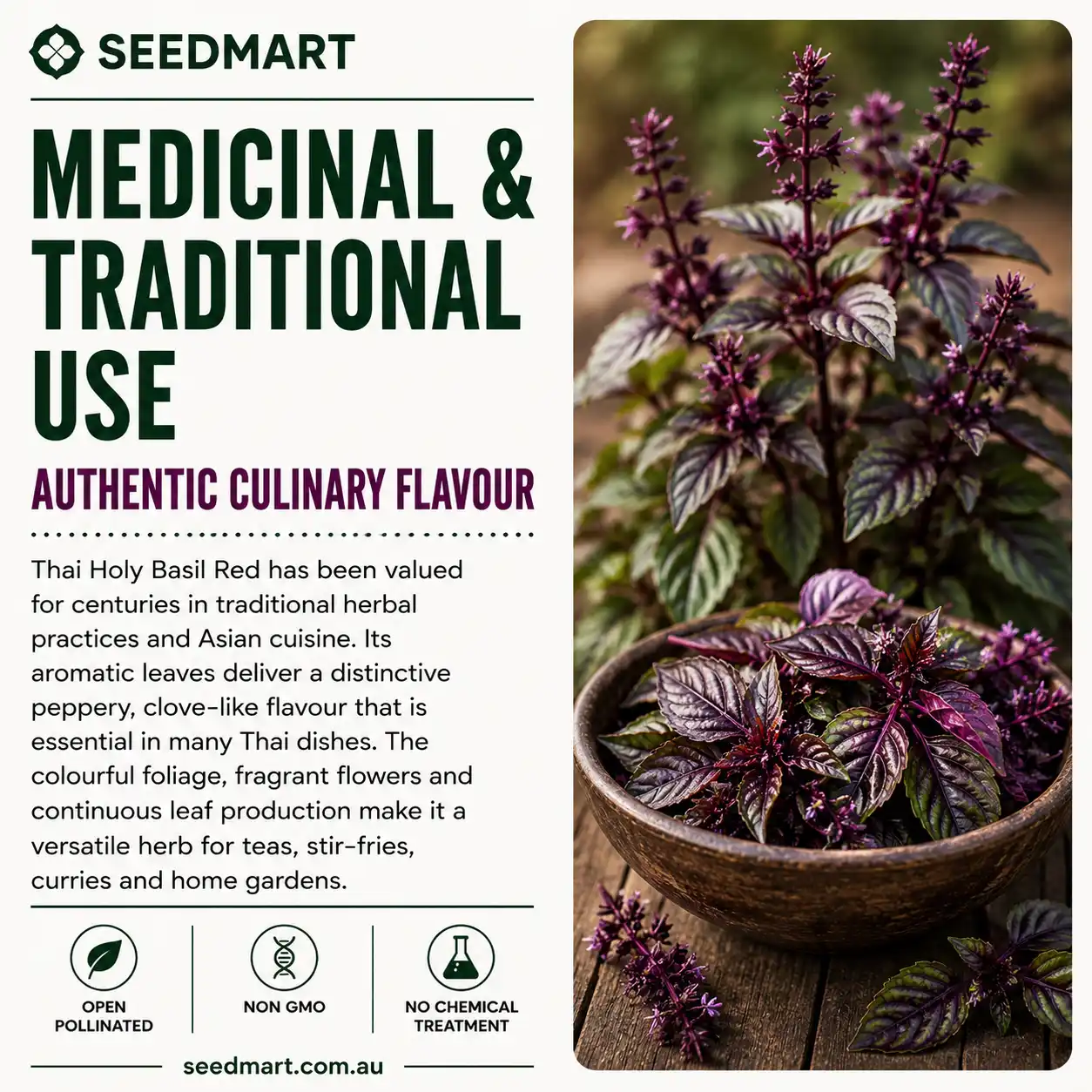
The foliage has a stronger and spicier flavour than sweet basil, with warm clove and peppery notes. The fresh leaves can be used in cooked dishes, herbal infusions, seasonings and aromatic garnishes.
Plants grow vigorously during warm weather and respond well to frequent harvesting. Pinching and picking the young shoot tips encourages branching, produces bushier plants and extends the productive leaf-harvesting period.
What Is Tulsi or Sacred Basil?
Tulsi is the traditional name used for Holy Basil or Sacred Basil. The name is commonly applied to aromatic forms of Ocimum tenuiflorum cultivated throughout South and Southeast Asia.
Tulsi may also be written as Tulasi. Different Tulsi varieties can vary in leaf colour, flavour, aroma and growth habit, but they share the characteristic spicy fragrance that distinguishes Holy Basil from common sweet basil.
Red Tulsi is particularly attractive for its purple-red stems and strongly aromatic foliage. It can be grown as both a useful culinary herb and an ornamental addition to warm-season herb gardens.
Holy Basil Red vs Rama Tulsi
Holy Basil Red and Rama Tulsi are both forms of Holy Basil, but they are commonly selected for slightly different characteristics.
Rama Tulsi is generally green-leaved with a comparatively mild, clove-like aroma. It is often grown for herbal infusions, aromatic gardens and general home use.
Holy Basil Red develops more pronounced purple-red colouring and has strongly aromatic, peppery foliage. Both varieties perform well in warm conditions and can be regularly harvested to encourage bushy growth.
Why Grow Holy Basil Tulsi Red?
- Traditional Holy Basil from the Tulsi group.
- Also known as Sacred Basil, Tulasi and Red Tulsi.
- Distinctive spicy, clove-like and peppery aroma.
- Attractive purple-red stems and colourful foliage.
- Fast-growing herb suited to warm Australian conditions.
- Suitable for garden beds, raised beds and containers.
- Regular harvesting encourages bushy, productive plants.
- Flowers attract bees and other beneficial insects.
Plant Details
| Plant type | Warm-season annual herb |
| Botanical name | Ocimum tenuiflorum |
| Common names | Holy Basil, Red Tulsi, Sacred Basil, Tulasi |
| Growth habit | Upright and branching |
| Plant height | Approximately 40–70 cm |
| Foliage | Aromatic green to purple-tinged leaves with purple-red stems |
| Flavour | Spicy, peppery and clove-like |
| Position | Full sun to light afternoon shade |
| Days to harvest | Approximately 60–80 days |
| Frost tolerance | Frost tender |
Sowing Information
| Sowing method | Raise in seedling trays or direct sow once conditions are warm |
| Sowing depth | Surface sow or cover very lightly, approximately 1–2 mm |
| Germination time | Approximately 7–21 days |
| Germination temperature | 18–25°C |
| Plant spacing | 25–30 cm apart |
| Row spacing | 40–60 cm apart |
| Soil | Fertile, moist and well-drained |
| Water requirements | Keep evenly moist without waterlogging |
When to Sow Holy Basil Tulsi Red in Australia
| Climate Zone | Suggested Sowing Time | Growing Notes |
|---|---|---|
| Cool | October–January | Start indoors with warmth or sow after frost danger has passed. |
| Temperate | September–February | Sow after soil and daytime temperatures are consistently warm. |
| Subtropical | August–March | Performs well throughout the warm season with regular moisture. |
| Tropical | Year-round | Provide free-draining soil and good airflow during humid weather. |
| Arid | September–March | Water regularly and provide light afternoon shade during extreme heat. |
How to Grow Holy Basil Tulsi Red
Sow seeds on the surface of moist seed-raising mix and press them gently into place. Cover only very lightly, as Holy Basil seed benefits from exposure to light during germination.
Keep the seed-raising mix consistently moist but not saturated. Use a fine mist or gentle watering method to avoid dislodging the small seeds.
Maintain a temperature of approximately 18–25°C at seed level. In cool and temperate areas, starting seeds indoors or using a heat mat can improve germination. Transplant seedlings after the danger of frost has passed and the weather is consistently warm.
Choose a position that receives at least six hours of direct sunlight each day. In very hot inland climates, light afternoon shade may help reduce heat stress.
Prepare the soil with compost or well-rotted organic matter before planting. The soil should retain adequate moisture while remaining free draining.
Water regularly to maintain tender leaf growth, particularly when plants are grown in pots. Avoid leaving the roots in saturated soil.
Pinch out the central growing tip once plants are established. Continue harvesting just above a leaf node to encourage branching and produce a fuller, bushier plant.
Harvesting Holy Basil
Begin harvesting young leaves and tender shoot tips once the plants are well established. Pick regularly rather than removing a large proportion of the foliage at one time.
For the best flavour and aroma, harvest in the morning after the foliage has dried. Cut stems just above a pair of leaves to encourage new side shoots.
Use the leaves fresh or dry them gently for later use in herbal infusions and seasoning blends.
Remove flower spikes if the main goal is continued leaf production. Alternatively, allow some plants to flower to attract pollinators or produce seed.
Culinary Uses
- Cooked savoury dishes
- Soups and broths
- Rice and vegetable dishes
- Aromatic garnishes
- Herbal infusions
- Fresh kitchen and herb gardens
Growing Holy Basil Tulsi Red in Pots
Holy Basil Tulsi Red grows well in pots, planters and raised beds. Choose a container at least 20–25 cm wide with unrestricted drainage.
Use a premium-quality potting mix and position the container in a warm, sunny location. Container-grown plants may dry out faster than plants grown in the ground, so check the moisture level regularly during warm weather.
Frequent picking and occasional applications of a balanced liquid fertiliser will help maintain vigorous, leafy growth.
Perfect For
- Herb and kitchen gardens
- Herbal infusions
- Fresh culinary use
- Raised beds, containers and patio pots
- Warm-season herb production
- Aromatic gardens
- Bee-friendly and beneficial-insect plantings
Frequently Asked Questions
Is Holy Basil a type of Tulsi?
Yes. Holy Basil belongs to the Tulsi group and is generally classified as Ocimum tenuiflorum. Tulsi is also commonly called Sacred Basil or Tulasi.
Is Tulsi the same as Sacred Basil?
Yes. Tulsi, Holy Basil and Sacred Basil are common names associated with Ocimum tenuiflorum. Tulasi is an alternative spelling.
What does Holy Basil Tulsi Red taste like?
It has a pronounced clove-like aroma with peppery, warm basil notes.
Can Holy Basil Tulsi Red be grown in pots?
Yes. It performs well in containers when supplied with warmth, direct sunlight, free-draining potting mix and regular water.
Is Holy Basil annual or perennial?
It is usually grown as a warm-season annual in most Australian climates. It may survive for longer in tropical or frost-free subtropical locations.
Why are my Holy Basil seeds not germinating?
Cold conditions, deep sowing and inconsistent moisture are common causes of poor germination. Surface sow the seed, cover very lightly, maintain even moisture and keep the temperature close to 18–25°C.
How should Holy Basil be harvested?
Cut young shoot tips just above a leaf node. This encourages the plant to branch and produce more tender new growth.
Should Holy Basil flowers be removed?
Remove flower spikes if you want to maximise leaf production. Allow some flowers to develop when growing for pollinators or seed collection.
Explore Holy Basil and Tulsi
Compare available varieties in Seedmart’s Holy Basil and Tulsi seed collection.
Reviews
There are no reviews yet.