

Seca Stylo Seeds – Green Manure, Soil Improvement & Pasture
Botanical Name: Stylosanthes scabra
Cultivar: Seca
Common Names: Seca Stylo, Shrubby Stylo
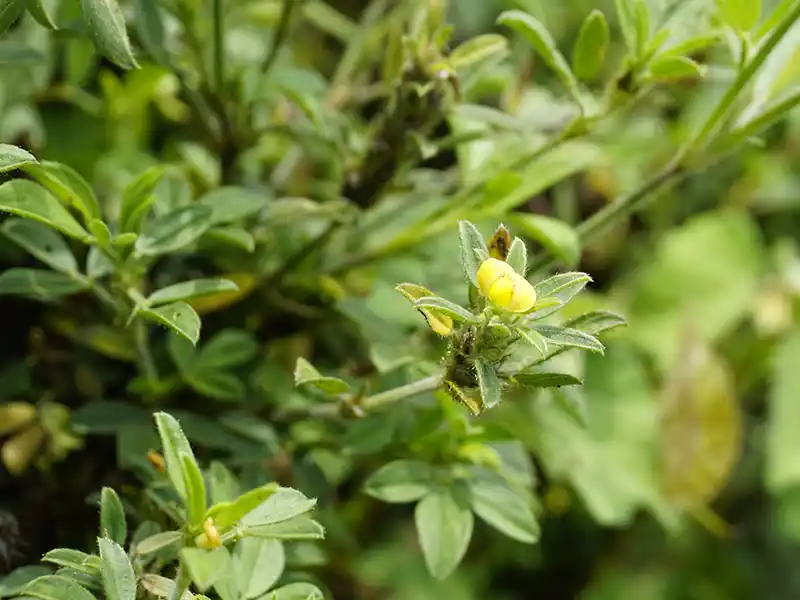
Seca Stylo is a drought-hardy, warm-season perennial legume grown for pasture improvement and longer-term soil fertility. Well suited to appropriate tropical and subtropical Australian conditions, it develops a deep taproot and an upright, branching habit with small yellow flowers.
For green manure and soil improvement, Seca Stylo contributes plant residues and can fix atmospheric nitrogen through effective root nodules. Establishment is relatively slow, particularly during its first season, making it better suited to longer-term plantings than a quick green manure crop between vegetable rotations.
- Warm-season perennial legume for pasture and longer-term soil improvement.
- Fixes atmospheric nitrogen when effectively nodulated with suitable rhizobia.
- Deep-rooted and highly drought tolerant once established.
- Adapted to suitable well-drained, acidic and relatively low-fertility soils.
- Provides a legume component in compatible grass pastures.
- Contributes organic residues through leaf fall, roots and managed cut material.
Plant Details
- Plant Type: Introduced warm-season perennial pasture legume
- Botanical Name: Stylosanthes scabra
- Cultivar: Seca
- Family: Fabaceae
- Growth Height: Can reach approximately 2 m under favourable conditions
- Growth Habit: Upright, branching and shrubby; stems become woody with age
- Root System: Deep taproot
- Flowers: Small and yellow
- Frost Tolerance: Low; heavy frost can damage plants
- Drought Tolerance: High once established
- Best Position: Open, sunny sites
- Native Status: Introduced; not an Australian native plant
Best Uses
- Permanent tropical and subtropical pasture improvement
- Compatible grass–legume pasture mixtures
- Longer-term biological nitrogen inputs
- Managed green manure and organic residue production
- Grazing systems suited to shrubby perennial legumes
Sowing Information
- Best Sowing Time: A warm growing period with reliable establishment rainfall or irrigation
- Germination: Variable; hard seed can delay and spread emergence over time
- Seed Preparation: Check whether seed has been scarified; commercially treated seed can improve prompt germination
- Sowing Method: Surface or very shallow sowing with good seed-to-soil contact; avoid deep burial
- Soil Type: Suitable well-drained sandy soils and loams; generally poorly suited to heavy clays and prolonged waterlogging
- Watering: Maintain adequate moisture during germination and early establishment
- Inoculation: Use a suitable stylo rhizobial inoculant according to supplier instructions, particularly where effective rhizobia may be absent
- Companion Plants: Compatible native or sown pasture grasses, with competition managed during establishment
Sowing Rate and Coverage
A commonly cited pasture establishment rate is approximately 1–2 kg per hectare. Adjust for seed purity, germination, hard-seed content, coating and local recommendations. This is a pasture establishment guide, rather than a rate for rapid, dense garden-bed green manure.
| Use | Indicative Rate | Growing Notes |
|---|---|---|
| Pasture establishment | Approximately 1–2 kg/ha | Adjust to seed quality, preparation and site conditions. |
| Mixed pasture plantings | Use a locally recommended mixture rate | Allow seedlings access to light and moisture. |
| Green manure / soil improvement | Seek a site-specific recommendation | Allow for slow initial growth and plan how the perennial stand will be terminated. |
Seed Quantity Guide
The following calculations use the indicative pasture rate of 1–2 kg per hectare.
| Seed Quantity | Approximate Pasture Coverage |
|---|---|
| 100 g | 500–1,000 m² |
| 250 g | 1,250–2,500 m² |
| 500 g | 2,500–5,000 m² |
| 1 kg | 0.5–1 hectare |
| 5 kg | 2.5–5 hectares |
Coverage is a calculation guide, not a guarantee of establishment or complete ground cover. Coated seed may require a different product weight.
When to Sow Seca Stylo Seeds in Australia
Choose sowing conditions according to local suitability, soil warmth and follow-up moisture. Broad climate zones alone do not determine whether Seca Stylo will perform well.
| Climate Zone | Sowing Guide | Growing Notes |
|---|---|---|
| Cool | Generally unsuitable | Cold conditions and short summers restrict establishment and growth. |
| Temperate | Assess local suitability first | Consider only suitable warm districts with adequate growing time before cold weather. |
| Subtropical | Spring to summer with reliable moisture | Sow into warm conditions and avoid a rapidly drying seedbed. |
| Tropical | Early wet season when follow-up rain is likely | Choose a well-drained site and avoid sowing immediately before scouring rain. |
| Arid / Semi-arid | Only where locally suitable and moisture is adequate | Established drought tolerance does not remove the need for establishment moisture. |
How to Sow Seca Stylo Seeds
- Confirm that Seca Stylo suits the site, climate and intended planting period.
- Check the seed label for germination, hard-seed content, coating and scarification details.
- Prepare a firm seedbed and reduce competing weeds or excessive grass cover.
- Apply a suitable rhizobial inoculant where required, following its storage and application directions.
- Distribute seed evenly and sow at or close to the soil surface.
- Firm lightly to improve seed-to-soil contact and provide follow-up moisture.
- Monitor seedlings and manage competition while the stand establishes.
Growing Tips
- Allow time for establishment; first-season growth can be limited.
- Protect young plants from heavy grazing and strong competition.
- Use soil testing to identify nutrient limitations rather than assuming nitrogen fixation supplies every nutrient.
- For green manure, manage growth while stems are relatively soft and before mature seed develops.
- Plan termination before planting; cutting a perennial does not necessarily kill it.
Forage and Grazing
Seca Stylo is primarily used as a persistent legume in suitable warm-climate grazing systems. It can complement grass pastures and improve the legume content of livestock diets. Allow plants to establish before grazing and adjust management to maintain a useful balance between grasses and stylo.
Green Manure and Soil Benefits
Effectively nodulated Seca Stylo can introduce biologically fixed nitrogen into a planting system. Nitrogen contained in plant material becomes available to other plants as residues decompose; it is not an immediate fertiliser application.
Leaf fall, roots and managed cut material can contribute organic matter. For a temporary green manure planting, allow for the longer establishment period, increasingly woody stems and the need to control regrowth when returning the area to another crop.
Important Notes
- Seca Stylo is an introduced perennial legume, not an Australian native seed.
- It is best known as a pasture legume and is less suited to short, fast-turnaround green manure rotations.
- Hard seed can produce delayed emergence and later volunteer plants.
- Effective nitrogen fixation depends on suitable rhizobia and growing conditions.
- Manage seed production and spread where plants are not wanted.
Quick Growing Guide
| Feature | Details |
|---|---|
| Plant Type | Warm-season perennial legume |
| Botanical Name | Stylosanthes scabra ‘Seca’ |
| Main Uses | Pasture improvement and longer-term soil fertility |
| Establishment | Slow initially; hard seed can delay emergence |
| Soil | Suitable well-drained sandy soils and loams |
| Nitrogen Fixation | Yes, with effective rhizobial nodulation |
| Green Manure Management | Allow sufficient growing time and plan control of regrowth and seed. |
Reviews
There are no reviews yet.