
Desmanthus Seeds – Green Manure, Soil Improvement & Pasture
Botanical Name: Desmanthus spp.
Common Name: Desmanthus
Family: Fabaceae
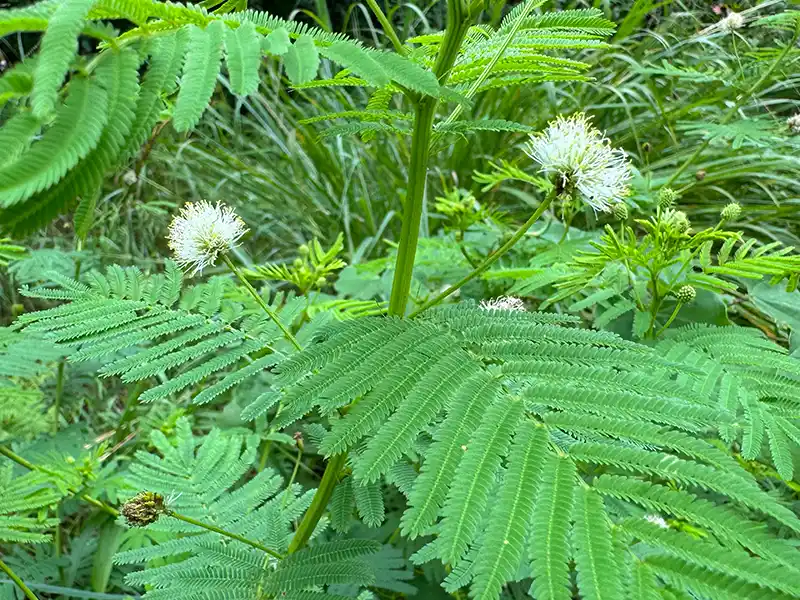
Desmanthus is a warm-season perennial legume grown for pasture improvement, livestock forage and longer-term soil fertility. Its leafy, branching growth and drought tolerance once established make it a useful option for suitable tropical and subtropical Australian plantings, particularly on clay soils.
For green manure and soil improvement, effectively nodulated Desmanthus can fix atmospheric nitrogen and contribute organic residues. As a persistent perennial with stems that become woody, it requires a longer growing window and more deliberate termination than a short-term annual green manure crop.
- Warm-season perennial legume for pasture and longer-term soil improvement.
- Fixes atmospheric nitrogen when effectively nodulated with suitable rhizobia.
- Well suited to appropriate clay and clay-loam soils.
- Drought tolerant once established, with a strong taproot.
- Provides leafy forage in compatible grass–legume pastures.
- Contributes organic residues through roots, leaf fall and managed cut material.
Plant Details
- Plant Type: Introduced warm-season perennial legume
- Botanical Name: Desmanthus spp.
- Family: Fabaceae
- Growth Height: Varies by species and cultivar; commonly approximately 30–150 cm in pasture types
- Growth Habit: Branching, spreading to upright, with increasingly woody stems
- Foliage: Fine, fern-like compound leaves
- Root System: Strong taproot
- Frost Response: Frost can damage top growth; established crowns of adapted types may regrow in warm conditions
- Drought Tolerance: Good once established
- Best Position: Full sun
- Native Status: Introduced; not an Australian native plant
Best Uses
- Permanent pasture improvement
- Compatible tropical grass–legume pasture mixtures
- Longer-term biological nitrogen inputs
- Managed green manure and organic residue production
- Livestock forage in suitable grazing systems
Sowing Information
- Best Sowing Time: Warm conditions with reliable rainfall or irrigation and sufficient growing time before winter
- Germination: Depends on seed treatment, hard-seed content, temperature and moisture
- Seed Preparation: Check whether seed has been scarified; untreated hard seed may remain dormant
- Sowing Depth: Approximately 5–10 mm into a firm, moist seedbed; avoid deep burial
- Position: Full sun
- Soil Type: Generally suited to neutral to alkaline clay and clay-loam soils; adaptation varies with species and cultivar
- Drainage: Avoid prolonged waterlogging
- Watering: Maintain moisture during germination and early establishment
- Inoculation: Use an appropriate Desmanthus rhizobial inoculant according to supplier instructions
- Companion Plants: Locally suitable perennial pasture grasses, with competition controlled during establishment
Sowing Rate and Coverage
The following rates are pasture establishment guides. Adjust for the cultivar, seed purity, germination, hard-seed content, coating and local conditions. They are not recommendations for rapid, dense garden-bed green manure.
| Use | Indicative Sowing Rate | Growing Notes |
|---|---|---|
| Pure pasture stand | Approximately 2–3 kg/ha of germinable seed | Follow cultivar-specific establishment advice. |
| Mixed pasture planting | Approximately 2 kg/ha of germinable seed | Manage grass competition while seedlings establish. |
| Green manure / soil improvement | Seek a site-specific recommendation | Plan the growing period, residue management and termination before sowing. |
Seed Quantity Guide
The following calculations use a pasture rate of 2–3 kg of germinable seed per hectare. Product weight requirements increase where purity or germination is lower, or where seed is coated.
| Germinable Seed Quantity | Approximate Pasture Coverage |
|---|---|
| 100 g | 330–500 m² |
| 250 g | 830–1,250 m² |
| 500 g | 1,670–2,500 m² |
| 1 kg | 0.33–0.5 hectare |
| 5 kg | 1.67–2.5 hectares |
Coverage is a calculation guide, not a guarantee of establishment or complete ground cover. Check the seed analysis and supplier recommendations before calculating the quantity required.
When to Sow Desmanthus Seeds in Australia
Match sowing to local soil warmth, reliable moisture and cultivar suitability. Allow enough growing time for plants to establish before cold weather.
| Climate Zone | Sowing Guide | Growing Notes |
|---|---|---|
| Cool | Generally unsuitable for reliable production | Short summers and cold soils can restrict establishment and growth. |
| Temperate | Late spring to early summer in suitable warm districts | Confirm local adaptation and allow establishment before winter. |
| Subtropical | Late spring to summer with reliable moisture | Avoid cold soil and rapidly drying seedbeds. |
| Tropical | Early wet season when follow-up rain is likely | Avoid prolonged waterlogging and sowing immediately before scouring rain. |
| Arid / Semi-arid | A suitable warm-season rainfall window | Confirm cultivar suitability and adequate stored and follow-up moisture. |
How to Sow Desmanthus Seeds
- Confirm the species or cultivar suits the soil, climate and intended use.
- Check seed treatment, germination and hard-seed information before calculating the sowing rate.
- Prepare a firm seedbed and reduce competing weeds and grass.
- Inoculate with a suitable rhizobial product where required, following its application directions.
- Sow shallowly, approximately 5–10 mm deep, into moist soil.
- Firm lightly to improve seed-to-soil contact.
- Maintain establishment moisture and monitor seedlings for competition.
Growing Tips
- Established drought tolerance does not remove the need for moisture during establishment.
- Check for effective root nodulation rather than assuming nitrogen fixation is occurring.
- Use soil testing to identify nutrient limitations.
- For green manure, manage growth before stems become excessively woody and mature seed develops.
- Allow time to control regrowth before planting the next crop.
Forage and Grazing
Desmanthus is primarily a perennial forage legume used alongside suitable pasture grasses. Its leafy growth provides a useful legume component in warm-climate livestock systems. Establish the stand before sustained grazing and follow management advice for the cultivar supplied.
Green Manure and Soil Benefits
When effectively nodulated, Desmanthus can fix atmospheric nitrogen and contribute nitrogen-containing plant residues. Roots, fallen leaves and managed cut material also add organic inputs to the soil.
These benefits develop through plant growth and residue breakdown. For temporary green manure plantings, plan termination carefully: Desmanthus can regrow after cutting, and woody stems can complicate incorporation and subsequent cultivation.
Important Notes
- Desmanthus is an introduced perennial legume, not an Australian native seed.
- Species and cultivars differ in height, maturity and adaptation.
- Hard seed may remain dormant and produce volunteer plants later.
- Manage seed production and spread where plants are not wanted.
- For a short rotation, consider whether a faster annual green manure better suits the available growing window.
Quick Growing Guide
| Feature | Details |
|---|---|
| Plant Type | Warm-season perennial legume |
| Botanical Name | Desmanthus spp. |
| Main Uses | Pasture, forage and longer-term soil improvement |
| Sowing Depth | Approximately 5–10 mm |
| Soil | Generally neutral to alkaline clay and clay-loam soils |
| Nitrogen Fixation | Yes, with effective rhizobial nodulation |
| Green Manure Management | Manage before woody maturity and seed production; control regrowth before the next crop. |
Reviews
There are no reviews yet.