

Pink Radish Microgreen Seeds
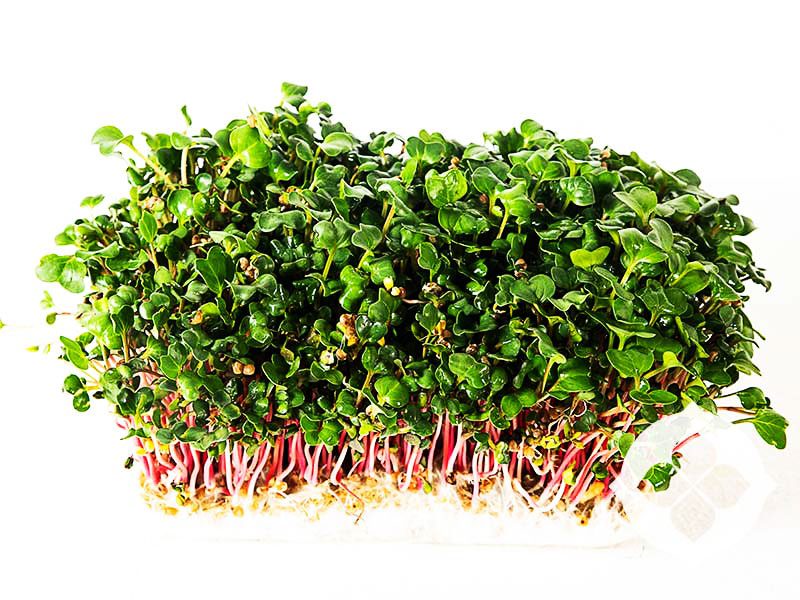
Fast-growing pink radish microgreen seeds producing colourful pink stems, fresh green leaves and a crisp, peppery radish flavour. Pink radish microgreens are an attractive, quick-growing crop suitable for home growers, chefs, cafés, market gardeners and commercial microgreen production.
These Raphanus sativus microgreens combine the characteristic spicy flavour of radish with colourful stems that stand out in salads, sandwiches, wraps, garnishes and mixed microgreen trays.
Pink radish microgreens are easy to grow in soil, coir or on suitable hydroponic growing mats. They do not normally require pre-soaking and are commonly ready to harvest approximately 7–10 days after sowing.
Pink Radish Microgreen Seed Details
Why Grow Pink Radish Microgreens?
- Fast-growing microgreen with a short crop cycle.
- Attractive pink stems with fresh green leaves.
- Crisp texture and distinctive peppery radish flavour.
- No pre-soaking normally required.
- Suitable for soil, coir and hydroponic growing mats.
- Useful for adding colour to mixed microgreen trays.
- Suitable for home and commercial microgreen production.
- Available in retail and bulk quantities.
Pink Radish Microgreen Colour and Appearance
Pink radish microgreens produce colourful pink to reddish-pink stems topped with fresh green seed leaves. The contrast between the coloured stems and green foliage makes them particularly useful for growers producing attractive mixed microgreen trays and chefs looking for colourful fresh garnishes.
Colour intensity can vary between individual seedlings and according to growing conditions, light and harvest stage.
For additional colour variation, pink radish can also be grown alongside Purple Radish Microgreen Seeds.
What Do Pink Radish Microgreens Taste Like?
Pink radish microgreens have a fresh, peppery flavour similar to young radish, together with crisp stems and tender green leaves.
Their spicy flavour makes them a good contrast to milder microgreens such as broccoli and pea shoots. Use them in salads, sandwiches, wraps, burgers, rice bowls, tacos and fresh garnishes, or add them to mixed microgreen crops for extra colour and flavour.
How to Grow Pink Radish Microgreens
Pink radish is a relatively straightforward microgreen to grow and is suitable for beginners as well as experienced and commercial growers. The small seeds can normally be sown directly without soaking.
- Prepare the growing tray.
Add approximately 2–3 cm of moist soil or coir to a shallow growing tray and gently level the surface. A suitable hydroponic microgreen growing mat can also be used. - Sow the pink radish seeds.
Spread the seeds evenly across the growing surface. Approximately 25 grams provides a useful starting rate for a standard 10 × 20 inch microgreen tray. Adjust the quantity according to your tray dimensions and preferred crop density. - Press and moisten.
Gently press the seed into contact with the growing medium and mist thoroughly. Keep the surface evenly moist without saturating it. - Cover during germination.
Cover the tray with another tray or suitable lid for approximately 2–3 days while the seedlings germinate and establish. - Move the seedlings into light.
Once the seedlings are established and pushing upward, remove the cover and move the tray into suitable natural light or beneath a grow light. - Water as required.
Maintain consistent moisture while avoiding waterlogged conditions. Once roots are established, bottom watering can help keep the stems and foliage drier. - Harvest the pink radish microgreens.
Pink radish microgreens are commonly ready approximately 7–10 days after sowing. Harvest when the seed leaves have opened and the shoots have reached your preferred size, cutting cleanly just above the growing medium.
Pink Radish Microgreen Seeding Rate
Approximately 25 grams of pink radish seed per standard 10 × 20 inch microgreen tray provides a useful starting sowing rate.
Actual requirements will vary according to tray dimensions, growing method and preferred crop density. Smaller containers require proportionally less seed, while commercial growers can adjust their sowing rate over successive crops to suit their production system.
For best results, distribute the seed evenly rather than allowing it to accumulate heavily in particular areas of the tray.
Best Growing Medium for Pink Radish Microgreens
Pink radish microgreens can be grown in soil, coco coir or on suitable hydroponic microgreen growing mats.
Soil and coir provide reliable moisture retention and root support. Hydroponic growing mats offer a convenient soil-free alternative for growers who prefer a cleaner growing system.
Whichever medium you use, maintain consistent moisture while allowing excess water to drain freely.
Pink Radish Microgreen Yield
Pink radish is a fast-growing crop capable of producing a substantial harvest from a relatively small quantity of seed.
As a general guide, approximately 25 grams of seed can produce up to around 250 grams of fresh microgreens under favourable conditions. Actual yield can vary considerably according to seed density, tray size, temperature, light, moisture, growing medium and harvest stage.
Commercial growers should conduct their own tray trials to establish the sowing rate and expected yield for their particular growing system.
Tips for Growing Pink Radish Microgreens
- Use clean trays and growing equipment for each crop.
- Pre-soaking is not normally required.
- Distribute seeds evenly across the growing surface.
- Avoid excessive watering and persistently saturated growing media.
- Provide good airflow around developing trays.
- Provide suitable light once the initial germination stage is complete.
- Bottom water once roots are established where appropriate.
- Harvest using clean scissors or a suitable microgreen harvesting knife.
Frequently Asked Questions
How long do pink radish microgreens take to grow?
Pink radish microgreens are commonly ready to harvest approximately 7–10 days after sowing. Growing time varies according to temperature, light, moisture and growing conditions.
Do pink radish microgreen seeds need to be soaked?
No. Pink radish microgreen seeds do not normally need to be soaked before sowing and can be planted directly onto a moist growing medium.
What do pink radish microgreens taste like?
Pink radish microgreens have a fresh, crisp and peppery flavour similar to young radish.
Are pink radish microgreens actually pink?
The stems develop pink to reddish-pink colouring beneath green seed leaves. The intensity and uniformity of the colour can vary according to the individual crop and growing conditions.
How much pink radish seed should I use per 10 × 20 tray?
Approximately 25 grams provides a useful starting point for a standard 10 × 20 inch microgreen tray. Growers can adjust the rate according to their preferred crop density and growing system.
Can pink radish microgreens be grown in coir?
Yes. Coco coir is a suitable growing medium for pink radish microgreens and provides good moisture retention and root support.
Can pink radish microgreens be grown on hemp mats?
Yes. Pink radish can be grown on suitable hemp microgreen mats. Keep the mat consistently moist during germination and avoid allowing the root zone to become waterlogged.
Can pink radish microgreens be grown hydroponically?
Yes. Pink radish is suitable for soil-free microgreen production using an appropriate hydroponic growing mat or medium.
What is the difference between pink and purple radish microgreens?
Both are fast-growing radish microgreens with a peppery flavour. The primary difference is their stem colouring, making them useful for creating different colour combinations in mixed microgreen trays and fresh dishes.
Where can I buy pink radish microgreen seeds in Australia?
Seedmart supplies pink radish microgreen seeds in retail and bulk quantities for home growers, chefs, market gardeners and commercial microgreen production throughout Australia.
Need More Help Growing Pink Radish Microgreens?
Growing your own Pink Radish microgreens? Follow our step-by-step guide to growing Pink Radish microgreens for advice on sowing, germination, blackout, watering, light and harvesting.
Ross Cotton –
First time growing the ping strike rate looks great.
Sharon Sutherland –
love it, great product. Beautiful to grow.