
Native Millet Seeds – Panicum decompositum
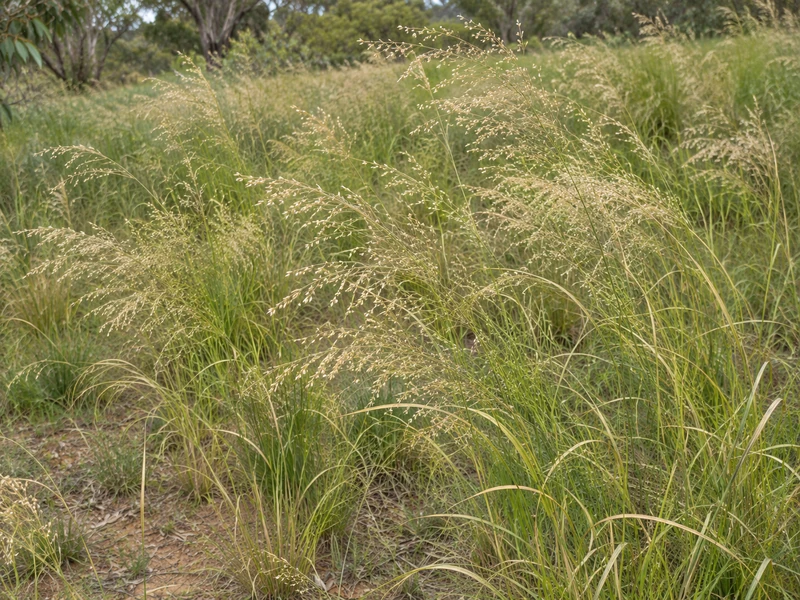
Grow an Australian native tussock grass for native gardens, grassland plantings and suitable revegetation projects. Native Millet (Panicum decompositum), also known as Australian Millet, produces blue-green foliage and open, finely branched seed heads.
This warm-season perennial occurs widely across mainland Australia. It is particularly associated with floodplains and moisture-retaining soils, making it an option for plantings on suitable clay and alluvial sites.
Native Millet Seed Details
| Botanical name | Panicum decompositum |
|---|---|
| Common names | Native Millet, Australian Millet |
| Family | Poaceae |
| Plant type | Australian native warm-season perennial grass; sometimes short-lived |
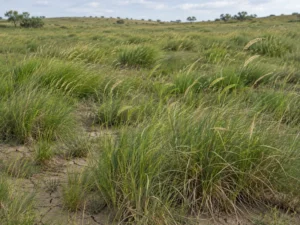
| Growth habit | Upright, densely tufted tussock |
| Approximate height | Commonly around 0.5–1 m; may reach approximately 1.5 m in favourable conditions |
| Foliage | Blue-green leaves with a conspicuous pale midrib |
| Seed heads | Open, branched panicles up to approximately 40 cm long |
| Flowering period | Summer to autumn, depending on location and seasonal conditions |
| Position | Full sun |
| Soil | Particularly suited to clay, clay loam and alluvial soils with available moisture |
| Uses | Native gardens, naturalistic grass plantings, suitable revegetation and native pasture projects |
Why Grow Native Millet?
- Australian native grass with upright foliage and airy seed heads.
- Adds height and texture to naturalistic garden plantings.
- Useful for restoring suitable native grassland and floodplain vegetation.
- Can be incorporated into locally appropriate native grass mixes.
How to Grow Native Millet from Seed
Choose a warm growing period and maintain moisture throughout germination and early growth. Seedlings can develop quickly under favourable conditions, but are vulnerable to drying out.
- Prepare the growing medium. Use clean seed-raising mix in trays or tubes. For direct sowing, prepare a fine, weed-free seedbed.
- Sow shallowly. Cover lightly with fine mix or soil rather than burying the small seed deeply.
- Water gently. Settle the seed with a fine spray.
- Maintain moisture. Keep the seed zone moist and check regularly during hot or windy weather.
- Support early growth. Provide good light and protect young plants from frost and weed competition.
- Plant out established seedlings. Gradually harden tube-grown plants before transplanting, then water regularly while roots establish.
Native Millet for Landscaping
Plant Native Millet in sunny native gardens or informal grass borders where its tussock habit has room to develop. Its branching seed heads provide a lighter texture above the foliage.
Allow for seasonal changes in appearance. This is a warm-season grass, rather than a consistently green lawn substitute.
Native Millet for Revegetation and Native Pasture
Use Panicum decompositum where it matches the site’s vegetation community, soil and moisture conditions. Confirm seed provenance requirements before including it in ecological restoration work.
In native pastures, manage grazing to allow recovery and seed production. Establish new plants before introducing livestock.
Foliage and Seed Heads
The leaves form a substantial clump beneath loose panicles. Mature seed heads can detach and move with the wind, helping disperse seed.
Where to Grow Native Millet
Choose an open position with sufficient soil moisture for establishment. Moisture-retaining ground is generally a better choice than a dry, exposed bank.
When to Sow Native Millet Seeds in Australia
The following periods are a practical guide for this warm-season species. Adjust sowing to local frost conditions, soil warmth and water availability.
| Climate Zone | Suitable Sowing Period | Growing Notes |
|---|---|---|
| Cool | Late spring to early summer | Wait until soil warms and frost risk has passed. |
| Temperate | Spring to early summer | Allow establishment before peak summer heat. |
| Subtropical | Spring to summer | Match sowing to reliable rainfall or irrigation. |
| Tropical | Early wet season | Avoid sowing immediately before scouring rain. |
| Arid / Semi-arid | Warm weather with sustained moisture | Use suitable moisture-collecting sites or irrigation. |
Tips for Growing Native Millet Successfully
- Control competing weeds before sowing.
- Keep newly emerged seedlings from drying out.
- Check batch germination and purity results when planning larger sowings.
- Base project sowing rates on seed quality, site preparation and the intended mix.
Frequently Asked Questions
Is Native Millet perennial?
Yes. Panicum decompositum is generally a perennial tussock grass, although plants may be short-lived under some conditions.
Is Native Millet drought tolerant?
Established plants tolerate periods of drought, but young seedlings need reliable moisture. Flooding tolerance does not remove the need for careful establishment.
Does Native Millet stay green in winter?
It is frost sensitive and may dry off during winter, resuming growth as warmth and moisture return.
Is Native Millet the same as Japanese Millet?
No. They are different species. Select seed by its botanical name when specifying a native planting.
How long does Native Millet take to germinate?
Emergence depends on seed quality, temperature and moisture. Use batch-specific test information rather than a fixed germination promise.
Grow Native Millet from Seed
Bring the texture of an Australian native grass into a suitable garden or revegetation planting. Sow shallowly during warm conditions, maintain establishment moisture and give young plants time to develop before exposing them to grazing or dry conditions.
Reviews
There are no reviews yet.