
Curly Mitchell Grass Seeds – Astrebla lappacea
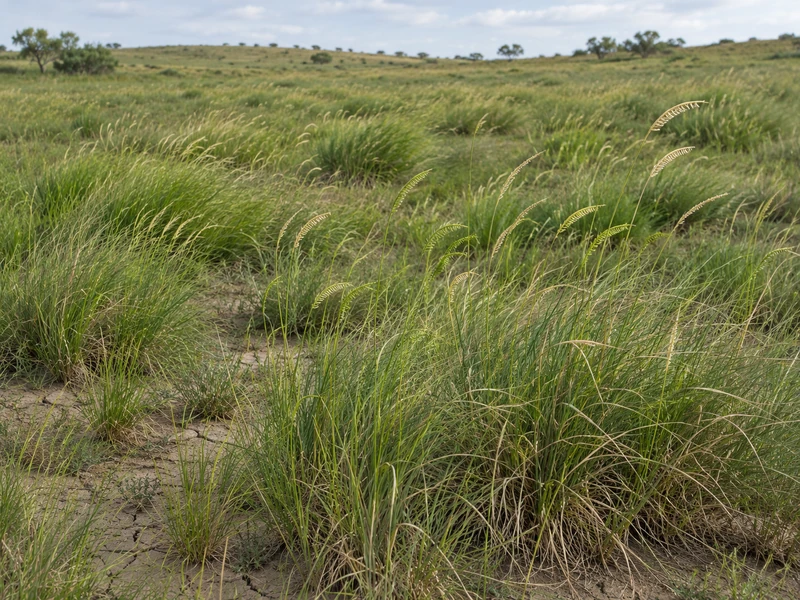
Grow a long-lived Australian native perennial grass suited to clay-soil grasslands, native pasture and appropriate revegetation projects. Curly Mitchell Grass (Astrebla lappacea) forms compact tussocks of blue-green foliage, with leaves that curl as they dry.
A characteristic species of inland Australian grasslands, it occurs especially on floodplains and heavy, self-mulching clays. Its seasonal foliage and distinctive seed heads also suit naturalistic native plantings.
Curly Mitchell Grass Seed Details
| Botanical name | Astrebla lappacea |
|---|---|
| Common name | Curly Mitchell Grass |
| Family | Poaceae |
| Plant type | Australian native warm-season perennial grass |
| Growth habit | Densely tufted, with short underground rhizomes |
| Approximate height | Approximately 30–90 cm |
| Foliage | Narrow, blue-green leaves that curl on drying |
| Seed heads | Rigid, spike-like heads approximately 5–30 cm long |
| Flowering period | Responds to rainfall and available moisture |
| Position | Open, sunny position |
| Soil | Best suited to heavy cracking clays with stored subsoil moisture |
| Uses | Native pasture, grassland restoration and suitable native landscape plantings |
Why Grow Curly Mitchell Grass?
- Long-lived native tussock grass for suitable inland conditions.
- Distinctive curled dry foliage adds seasonal texture.
- An option for restoring locally appropriate Mitchell grass communities.
- Can be included in site-specific native grass mixes.
How to Grow Curly Mitchell Grass from Seed
Successful establishment depends on moisture after germination, as well as suitable warmth. Prepare the site before sowing and plan for follow-up watering or rainfall.
- Prepare the seedbed. Remove competing weeds and create a surface that allows good seed-to-soil contact.
- Check soil moisture. Sow into a well-moistened soil profile rather than relying on a brief surface shower.
- Sow shallowly. Cover seed lightly, no more than approximately 1 cm deep.
- Settle the seed. Light harrowing after broadcasting can improve contact without burying seed deeply.
- Maintain establishment moisture. Monitor the seedbed and provide irrigation where rainfall is insufficient.
- Protect young plants. Limit trampling, grazing and weed competition while seedlings develop.
Curly Mitchell Grass for Landscaping
Use small groups in open native plantings where the tussocks and seed heads can be appreciated. Allow room for mature growth and access for weed control.
Plan for a seasonal appearance rather than a permanently green display. Select companion plants that suit the same soil and watering conditions.
Curly Mitchell Grass for Revegetation and Native Pasture
For restoration work, confirm that Astrebla lappacea belongs in the local vegetation community and meets project provenance requirements.
In pasture plantings, allow establishment before grazing and provide recovery periods. Seek local advice when specifying a mix, sowing rate or grazing plan.
Foliage and Seed Heads
The blue-green leaves become curled as they dry, giving Curly Mitchell Grass its common name. Seed heads are narrow and spike-like, with spikelets arranged in two rows along one side.
Where to Grow Curly Mitchell Grass
Assess soil, drainage and local climate before planting. Heavy clay sites within its natural range are a better starting point than assuming suitability across every Australian garden.
- Locally appropriate native grasslands.
- Suitable inland pasture projects.
- Clay-soil native gardens.
- Naturalistic landscape and restoration plantings.
When to Sow Curly Mitchell Grass Seeds in Australia
Use these periods as a guide, adjusting for local rainfall, frost and soil temperatures. Warm conditions alone are insufficient if the seedbed dries out.
| Climate Zone | Sowing Guide | Growing Notes |
|---|---|---|
| Cool | Assess local suitability first | Avoid exposing young seedlings to winter frost. |
| Temperate | Spring to early summer | Choose warm soil and a reliable establishment moisture window. |
| Subtropical | Spring or late summer | Avoid peak heat where watering cannot prevent drying. |
| Tropical | Suitable warm, wet-season conditions | Confirm site suitability and avoid prolonged inundation. |
| Arid / Semi-arid | Warm season after substantial rain | Stored soil moisture and follow-up rain are critical. |
Tips for Growing Curly Mitchell Grass Successfully
- Prepare and control weeds before sowing.
- Check seed quality and batch germination information.
- Match sowing equipment to the supplied seed form.
- Inspect emerging seedlings regularly.
- Adjust maintenance to weather and plant development.
Frequently Asked Questions
Is Curly Mitchell Grass perennial?
Yes. It is a perennial species that can persist for many years in suitable conditions.
Why is it called Curly Mitchell Grass?
Its leaves curl as they dry.
Is Curly Mitchell Grass drought tolerant?
Established plants can withstand drought, but seedlings require reliable moisture.
Does Curly Mitchell Grass tolerate waterlogging?
It occurs on floodplains, but is susceptible to flooding. Avoid treating it as a plant for permanently saturated ground.
What sowing rate should I use?
Base the rate on seed purity, germination, seed form and the intended planting. A mixed restoration planting requires a different specification from a seed-production stand.
Grow Curly Mitchell Grass from Seed
Choose a suitable site, prepare thoroughly and sow when follow-up moisture is available. Care during establishment gives this Australian native grass the best opportunity to develop into a lasting planting.
Reviews
There are no reviews yet.