

Native Pigface Seeds
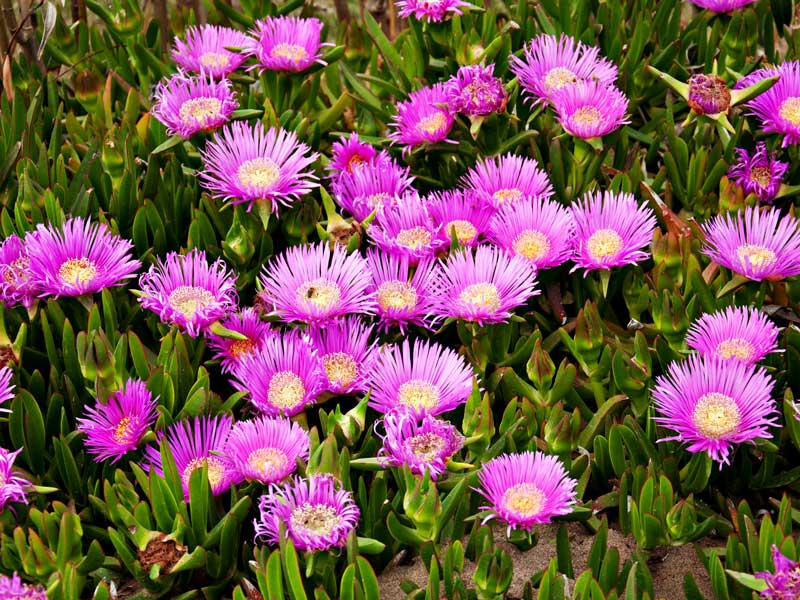
Grow a spreading Australian native succulent with colourful flowers and edible fruit, suited to coastal gardens, sunny landscapes and locally appropriate revegetation. Native Pigface (Carpobrotus rossii), also known as Karkalla, forms a low groundcover of fleshy leaves and trailing stems.
This perennial occurs naturally in southern Australian coastal habitats, including dunes and cliffs. Established plants tolerate dry conditions and coastal exposure, making them useful where attractive ground-level cover is required.
Native Pigface Seed Details
| Botanical name | Carpobrotus rossii |
|---|---|
| Common names | Native Pigface, Karkalla, Coastal Pigface |
| Family | Aizoaceae |
| Plant type | Australian native perennial succulent groundcover |
| Growth habit | Prostrate, creeping and mat-forming, with trailing stems |
| Approximate size | Approximately 10–20 cm high, spreading 1–2 m or more under suitable conditions |
| Foliage | Thick, fleshy green to blue-green leaves, triangular in cross-section and often curved |
| Flowers | Showy pink-purple to mauve flowers, generally pale toward the centre |
| Flowering period | Often spring to summer; flowering can extend beyond this period depending on location |
| Position | Full sun to part shade |
| Soil | Well-drained soil, including sandy coastal soils; avoid prolonged waterlogging |
| Seeds per gram | To be confirmed for the supplied seed lot and preparation |
| Uses | Coastal gardens, succulent landscapes, edible gardens, embankments and suitable coastal revegetation |
Why Grow Native Pigface?
- Low-growing native succulent with colourful flowers.
- Spreading foliage suited to groundcover plantings.
- Tolerates drought and soil salinity once established.
- Suitable for exposed coastal landscapes.
- Flowers attract bees and other visiting insects.
- Produces edible fruit and leaves.
- Useful for suitable sand-binding and soil-stabilisation plantings.
How to Grow Native Pigface from Seed
Carpobrotus rossii can be propagated from seed without routine hot-water treatment or scarification. Germination performance varies between seed lots, so maintain suitable conditions and allow time for uneven emergence.
- Prepare the growing medium. Use clean trays or small pots filled with a fine, free-draining seed-raising mix.
- Sow shallowly. Press seed gently onto the damp surface. Cover only lightly with fine washed sand or a thin layer of fine gravel.
- Water gently. Use a fine mist or gentle watering method to avoid washing the small seeds away.
- Maintain moisture. Keep the sowing surface moist during germination while allowing excess water to drain.
- Provide a protected position. Keep containers in good light, sheltered from frost, drying winds and intense heat.
- Allow time for emergence. Some nursery guidance gives approximately 2–4 weeks, but germination may be slower, uneven or limited by seed viability.
- Transplant established seedlings. Once seedlings can be handled safely, move them into individual pots. Harden gradually before planting outdoors.
Native Pigface for Landscaping
Native Pigface provides low foliage cover and seasonal colour in well-drained landscape beds. Its trailing growth suits embankments, rock gardens and planting beside paths where stems have room to spread.
Allow approximately 1–2 m of spreading space where practical. Trim stems when needed to keep paths clear and prevent plants from covering smaller neighbouring species.
Native Pigface for Revegetation and Erosion Control
On suitable coastal sites, Pigface can contribute to sand-binding and soil cover. Incorporate it into mixed plantings with locally appropriate grasses, herbs and shrubs rather than relying on a single species.
For ecological restoration, confirm species identity and provenance. Introduced Carpobrotus species and hybrids occur in Australia and can resemble native Pigface.
Flowers and Foliage
Native Pigface combines fleshy leaves with conspicuous flowers that resemble daisies. The pink-purple flower segments are modified sterile stamens, surrounding the central fertile stamens.
Flowering is often prominent in spring and summer, although timing varies. Fleshy fruits develop after flowering and contain numerous small seeds.
Edible Leaves and Fruit
The leaves and ripe fruits of Carpobrotus rossii are edible and have a history of use as Aboriginal food. The succulent leaves have a salty flavour, while fruit pulp can be eaten fresh or used in preserves.
Harvest leaves sparingly from established plants. Pick mature fruits when they have filled out and softened, rather than relying on a fixed calendar date. Wash harvested produce before use.
Where to Grow Native Pigface
- Coastal native gardens.
- Well-drained succulent and rock gardens.
- Sunny embankments and landscape edges.
- Edible native plant gardens.
- Containers with suitable drainage.
- Locally appropriate coastal restoration projects.
When to Sow Native Pigface Seeds in Australia
These are general nursery planning guides rather than fixed species-specific dates. Spring and autumn are useful starting points where mild conditions and reliable surface moisture can be maintained.
| Climate Zone | Suitable Sowing Period | Growing Notes |
|---|---|---|
| Cool | Spring to early summer under protected conditions | Protect emerging seedlings from severe frost and maintain surface moisture. |
| Temperate | Spring or early autumn | Choose mild conditions and shelter containers from drying winds. |
| Subtropical | Milder periods, where locally suitable | Avoid excessive tray temperatures and prolonged saturation. |
| Tropical | Milder periods under controlled nursery conditions, where appropriate | Assess suitability of this southern coastal species and protect trays from heavy rain. |
| Arid / Semi-arid | Mild periods with dependable irrigation, where suitable | Maintain moisture during emergence and provide establishment watering. |
Tips for Growing Native Pigface Successfully
- Use a free-draining propagation medium.
- Sow shallowly and water gently.
- Maintain moisture while seed germinates.
- Allow for variable emergence between seed lots.
- Harden seedlings gradually before planting outdoors.
- Water newly planted seedlings while roots establish.
- Avoid poorly drained planting positions.
- Allow room for trailing stems to spread.
Frequently Asked Questions
What is Native Pigface?
This product is Carpobrotus rossii, a native perennial succulent also known as Karkalla.
Is Native Pigface edible?
Yes. Its leaves and ripe fruits are edible. It can be grown as part of an edible native garden.
Does Native Pigface need seed treatment?
Routine hot-water treatment or scarification is not generally required. Follow any additional instructions supplied for the seed lot.
How long does germination take?
Approximately 2–4 weeks is reported in some nursery guidance, but emergence can be uneven and seed viability varies.
Is Native Pigface drought tolerant?
Established plants tolerate dry conditions. Seed and young seedlings still need reliable moisture during establishment.
Can Native Pigface grow in part shade?
Yes. It can grow in full sun or part shade in suitable well-drained soil.
Can it be used for coastal revegetation?
Yes, where the species and seed provenance suit the local vegetation community and project requirements.
Grow Native Pigface from Seed
With its succulent foliage, spreading habit and colourful flowers, Native Pigface is a useful groundcover for suitable coastal landscapes and edible native gardens.
Sow shallowly, maintain moisture during emergence and establish seedlings in well-drained soil with room to spread.
Reviews
There are no reviews yet.