
Purple Flag Seeds
Grow an attractive Australian native perennial with striking purple flowers and distinctive upright, iris-like foliage. Purple Flag (Patersonia occidentalis) is a tuft-forming native plant valued for its vivid flowers, architectural foliage and suitability for native gardens, naturalistic landscapes and revegetation plantings.
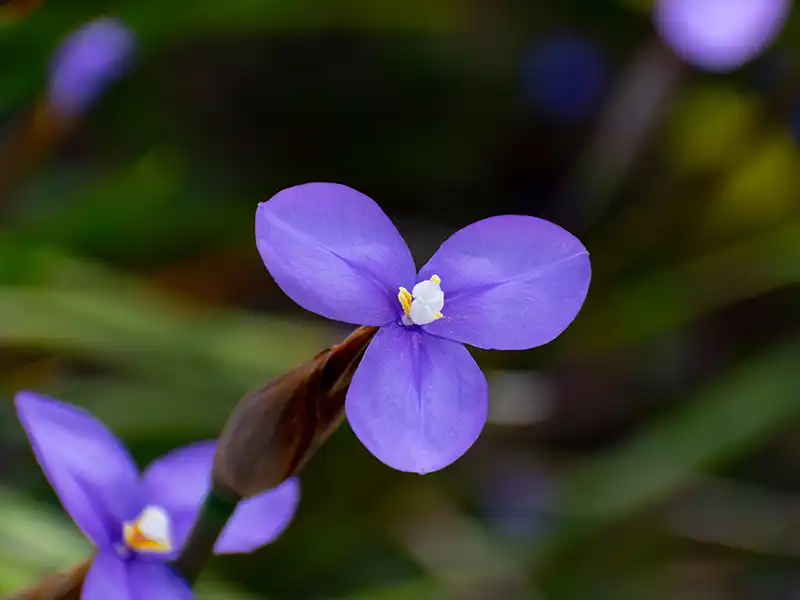
The plant forms clumps of narrow, upright leaves with flowering stems carrying rich purple to blue-purple flowers. Individual flowers are relatively short-lived, but flowers are produced successively during the flowering season, creating an attractive display.
Purple Flag occurs naturally across parts of Western Australia, South Australia, Victoria and Tasmania and is found growing in a range of soil types and habitats.
Purple Flag Seed Details
| Botanical name | Patersonia occidentalis |
|---|---|
| Common names | Purple Flag, Western Patersonia, Koma |
| Family | Iridaceae |
| Plant type | Australian native tufted perennial herb |
| Growth habit | Dense, upright clumps of narrow, strap-like foliage |
| Flower colour | Usually purple to blue-purple; occasional colour variations occur naturally |
| Flowering period | Generally spring to early summer |
| Position | Full sun to light shade |
| Soil | Adaptable to a range of soils; free-draining sandy soil is suitable for cultivation |
| Approximate germination | Approximately 6–13 weeks under favourable conditions; germination can vary between seed lots |
| Seed treatment | Smoke treatment may assist germination |
| Approximate seeds per gram | Approximately 320 seeds |
| Uses | Native gardens, naturalistic plantings, rockeries, borders, landscaping and suitable revegetation projects |
Why Grow Purple Flag?
- Attractive Australian native perennial.
- Produces distinctive purple to blue-purple flowers.
- Forms neat clumps of narrow, upright foliage.
- Suitable for native and naturalistic garden designs.
- Adaptable to a range of naturally occurring soil conditions.
- Can be grown in full sun or light shade.
- Useful for garden, landscape and suitable revegetation applications.
How to Grow Purple Flag from Seed
Purple Flag can be propagated from seed, although germination may take several weeks and can vary according to seed quality, temperature and treatment.
- Prepare the seed. Smoke treatment may help stimulate germination. Follow the directions supplied with your chosen smoke-water or smoke-treatment product.
- Prepare the growing medium. Use a clean, free-draining native seed-raising mix or similar propagation medium.
- Sow the seeds. Distribute seed evenly over the prepared medium and cover lightly.
- Water gently. Use a fine spray to moisten the medium without disturbing the seed.
- Maintain moisture. Keep the propagation medium evenly moist but not persistently waterlogged while germination occurs.
- Allow time for germination. Germination can take approximately 6–13 weeks under favourable conditions and may be irregular.
- Pot seedlings on. Once seedlings are established and large enough to handle safely, transplant them into individual containers before planting into their permanent position.
Distinctive Purple Native Flowers
Purple Flag is grown primarily for its attractive purple flowers and tufted foliage. The flowers have the characteristic iris-like appearance of the Patersonia genus and are usually purple to blue-purple.
Individual flowers are short-lived, but additional flowers can open successively from the same flowering structures, extending the overall display.
The combination of slender foliage and vivid flowers makes Purple Flag particularly useful in informal Australian native gardens and naturalistic landscapes.
Where to Grow Purple Flag
Purple Flag can be incorporated into a range of Australian native and landscape plantings.
- Australian native gardens.
- Naturalistic landscapes.
- Rockeries and gravel gardens.
- Garden borders.
- Mixed native perennial plantings.
- Low-maintenance landscaped areas.
- Suitable revegetation and habitat plantings.
Sun and Soil Requirements
Purple Flag is adaptable in its natural habitat and occurs on a variety of soil types. In cultivation, a free-draining position is a practical choice, with sandy soils particularly suitable.
Plants can be grown in full sun or light, broken shade. Adequate moisture during establishment will help young plants develop, while good drainage reduces the risk of prolonged waterlogging around container-grown or garden plants.
When Does Purple Flag Flower?
Purple Flag generally flowers during spring and early summer, with flowering commonly occurring from approximately September to December in its natural range.
The exact flowering period varies with location, rainfall, temperature and seasonal growing conditions.
Frequently Asked Questions
What is Purple Flag?
Purple Flag is an Australian native perennial herb botanically known as Patersonia occidentalis. It forms clumps of narrow foliage and produces distinctive purple to blue-purple flowers.
Is Purple Flag native to Australia?
Yes. Patersonia occidentalis is an Australian native species occurring naturally across parts of Western Australia, South Australia, Victoria and Tasmania.
Is Purple Flag an annual or perennial?
Purple Flag is a perennial plant that can persist and flower over multiple seasons when grown under suitable conditions.
What colour are Purple Flag flowers?
Flowers are normally purple to blue-purple. Naturally occurring pink and white forms have also been recorded.
When does Purple Flag flower?
Flowering generally occurs during spring and early summer, commonly from approximately September to December depending on location and seasonal conditions.
How long do Purple Flag seeds take to germinate?
Germination can take approximately 6–13 weeks under favourable conditions. Germination time and percentage can vary between seed lots and growing conditions.
Does Purple Flag seed require smoke treatment?
Smoke treatment is commonly recommended for commercial seed propagation of Patersonia occidentalis and may help improve germination.
How many Purple Flag seeds are in a gram?
There are approximately 320 seeds per gram. Seed size varies naturally, so this should be treated as an approximate guide.
Can Purple Flag grow in shade?
Yes. Purple Flag can grow in full sun or light shade. A bright position with good drainage is suitable for garden cultivation.
Can Purple Flag be grown in pots?
Yes. Purple Flag can be grown in containers provided the potting medium drains freely and plants receive suitable light and moisture.
Grow Australian Purple Flag from Seed
With its distinctive purple flowers, narrow foliage and tufted perennial growth habit, Patersonia occidentalis is an attractive choice for Australian native gardens, naturalistic landscapes and suitable revegetation projects.
For propagation, use a free-draining seed-raising medium, consider smoke treatment and allow sufficient time for germination. Once established, plants can provide an attractive combination of architectural foliage and seasonal purple flowers.
Reviews
There are no reviews yet.